
Who Needs Tech Innovation When We Have Art?
Moving from a tech economy to creative culture.
Several weeks ago, I made what I thought was a bold statement: the U.S. economy is addicted to tech innovation. I believe that addiction fuels climate change and degrades human health and well-being.
Now I am writing to fill the void left in the wake of my innovative smackdown.
Once an addiction has been stripped away, there is an empty space… a longing to connect with something that had previously been fulfilled by that addictive substance/behavior/person.
It is no different with our addiction to tech. I am not living in complete oblivion. I acknowledge there are very real underpinnings that fuel technology use and innovation. Likewise, there would be a void if we were to actually follow my suggestion and decrease our use and reliance on both.
This piece will address all of that through the following:
- Why innovative tech isn’t the end goal we thought it would be
- The intersection of tech and the creative arts
- The devaluation of art and creativity
My hope: we heal our addiction to technology and create instead a culture emphasizing creative human expression that’s not tied to an economic and product culture. And, in doing so, we ease our economy’s contributions to climate change.
We need to transform societal mentality from being firmly affixed to the belief that technology is a savior to one where creativity is affirmed as a necessary divine expression.
Why Innovative Tech Doesn’t Work
In 2014, Laura Callanan, while serving as senior deputy chairman of the National Endowment for the Arts, was looking at a graphic representing how much impact-investment capital was targeted to different economic sectors. There was a category for “arts and culture,” but because of rounding, its assets were 0%. (barrons.com)
The same statement can not be said of the tech world. In fact, the 2019 estimate for worldwide tech spending was (drumroll, please): $4 trillion.
There is a brilliant article about tech and the economy that Darrell M. West wrote in 2011 titled Technology and the Innovative Economy. Much has changed since then, but I am arguing that it hasn’t changed for the better.
West made the compelling statement that we must continue spending money on tech innovation to advance our economy.
Over the years, America’s well-being has been furthered by science and technology… Both public and private sector investment created jobs, built industries, fueled innovation, and propelled the U.S. to leadership in a number of different fields. (brookings.edu)
Well-stated. This was true, and West cited all his sources to prove it.
Now, precisely 10 years later, I ask — is it still accurate? How do we actually measure “America’s well-being”? What does it mean to have “been furthered by science and technology”?
West (and many others) taut the innovations of science and tech that have made our country so prosperous and our lives so full — but is that really true?
Let’s take a look at a comprehensive report meant to answer the question of well-being. The Washington Post reported in March 2019 (well before the pandemic swallowed us whole) on the one tool that’s closest to a scientific report for the measurement of well-being: the World Happiness Report.
The Post’s headline read: “Americans are the unhappiest they’ve ever been…”
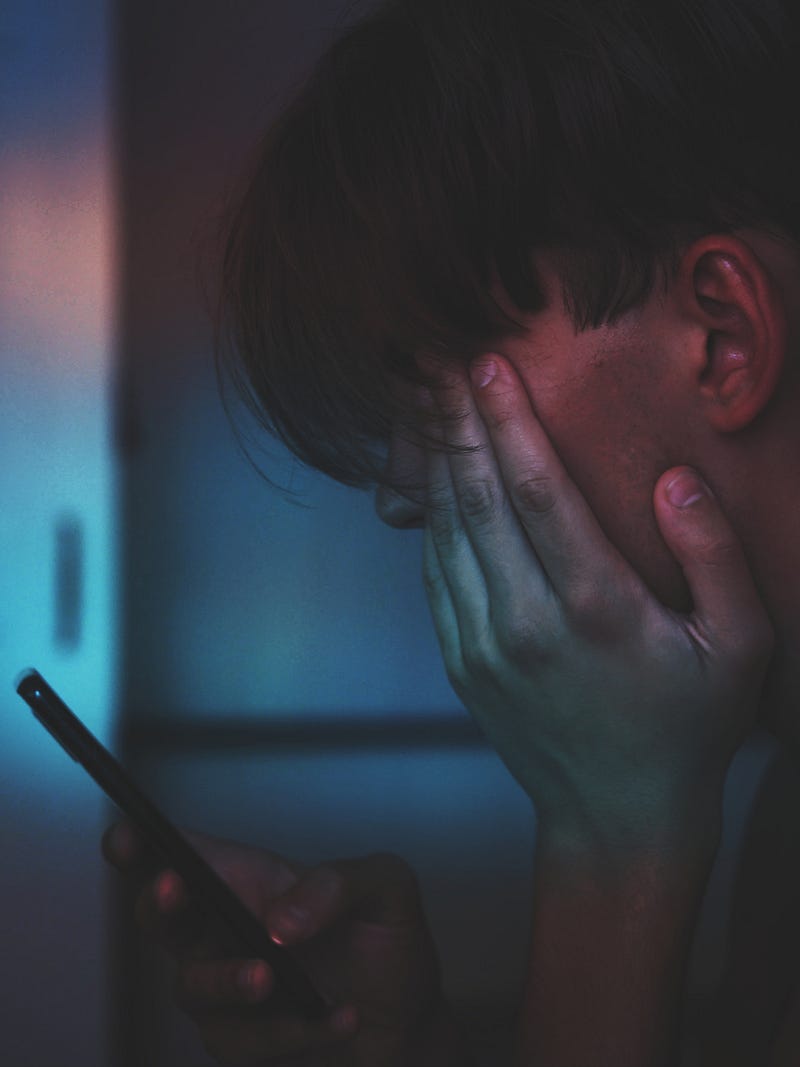
‘This year’s report provides sobering evidence of how addictions are causing considerable unhappiness and depression in the US,’ Jeffrey Sachs, director of the Sustainable Development Solutions Network and a co-author of the report, said in a news release. ‘The compulsive pursuit of substance abuse and addictive behaviors is causing severe unhappiness. Government, business, and communities should use these indicators to set new policies aimed at overcoming these sources of unhappiness.’
In the report, Sachs describes the U.S. as ‘a mass-addiction society.’
Yes, you read that right. Americans are unhappy because we are addicted. And yes, I am absolutely using this as proof that we are addicted to tech innovation that harms us (and the planet).
In the ten years since West wrote his article, our GDP may have gone up — but at what expense? It seems that our happiness has not risen with our dollar signs. So, going back to West’s argument, has our well-being really been furthered by science and technology? Or, are we simply making a tiny portion of the population exceedingly and disgustingly rich — all under the guise of “innovation” and “well-being” for all U.S. citizens?
The World Happiness Report would suggest that the answer is no — technology is not making us happy. Interestingly, the Post’s article posited that the number of hours adolescents spent “absorbed in their electronic devices” contributed to their lower happiness levels.
Will your unhappiness and life dissatisfaction be cured by adding another new app, buying another new iPhone, or innovating another unnecessary tech gadget? Or will those things continue to line the pockets of the elite while binding you to a job behind a computer that leaves you unhealthy and constantly empty — devoid of authentic human creative expression?
I’ll let you decide.
Moving from Tech Innovation to Creativity
Please hear me loud and clear: I am not suggesting we halt all technological and scientific advancements and go back to painting pictures on cave walls.
At least, not yet.
I am sounding the alarm to say that creating more technology will not — I repeat, will not — make us happier. It will not inherently help our mental health. It will not inherently make us feel more fulfilled.
Though, I know something that will.
Scientific studies have shown countless times that music, writing, and dance have myriad positive effects on the human mind, body, and emotions. Art positively affects the individual, but it also helps uplift the collective too.
So, why are the arts under-funded in schools? Why are artists underpaid? Why are people less likely to buy tickets to a theater show than purchase the newest iPhone model?
Why are the creative arts still struggling to catch a break?
And why — going back to where we began — in 2014, was there 0% investment capital for arts & culture?
Stop Devaluing Art
I think it’s mostly a values issue. Society values science and technology but has deeply undervalued art for far too long. Unless, of course, you are a child. Then somehow art is allowed to be an important part of your life.
Jake Romm wrote a brilliant article in 2017 called Art is Completely Useless — Here’s Why That’s a Good Thing. In it, he discussed various issues surrounding the National Endowment for the Arts (NEA) and laid down this bombshell truth:
And here is the fundamental problem with all defenses of the NEA — people simply do not agree on the value of art. Because we cannot agree on the value of art, on why we should even create it in the first place, instrumental justifications for the NEA are doomed to fail. Someone who does not understand what makes art an essential part of life will never be convinced that it is deserving of public money, regardless of how many glittering lists or charts are provided as evidence.
Part of Romm’s article touched on the difference between something that our capitalist society loves to sell, like technological innovation, versus something that is considered useless in capitalist society unless it can sell. Like the creative arts.
We cannot eat art, or wear it, or use it as shelter, or use it to shoot things, thus, it does not serve a public purpose. But… it is precisely art’s uselessness that makes it so important, so necessary — its purpose is that it has no purpose.
Romm continues by explaining the point of art is not to sell it! The point of art is to create it because it needs to be done.
Many artists create their work not out of monetary concerns, but simply because they are compelled by something illimitable and internal to themselves. Art will be made even if there is no one willing to buy it.
Art will continue to be made because it is part of our natural human expression. It is our birthright to be creative. And our society’s artists are our truest visionaries. We need them. They can help shape the collective and heal our world.
The issue is… these artists also live in our capitalist society and they need to survive. But the money still isn’t there to help them.
Artists continue to be undervalued for their work and therefore underpaid. For example, many writers, recording artists, dancers, and musicians struggle to pay their bills. And that continues to be normalized through our society’s “starving artist” archetype. It is as though society expects them to be happy simply because they are doing their passion. And that should be enough.
Nice try but, are you going to pay their rent then?
Of equal importance is the question, why don’t we tell app developers the same thing? Believe me, I want to — I wish I could say:
“You shouldn’t want money for spending your time, energy, and brainpower on that app that may or may not be very useful to most humans. You should be happy doing it because it is your passion.”
We don’t dare say that, though, because we’ve been brainwashed to believe an app is more important than any other type of creative expression. Which is just fundamentally untrue.
We Must Pay Artists As Much As We Pay Tech Innovators
The way I see this is twofold.
The first is that we need to stop devaluing art and creative expression. The second is that we need to actively be funding it.
Not just at the private levels, since it’s obvious most artists are struggling to make an actual living — even with these fabulous and innovative “content creation” tech platforms. (Yes, that was sarcasm. And yes, there is another article coming on that topic as well.)
We need community funding for artists at the local, state, and federal levels.
And, while the NEA’s grants are a fabulous start — they’re not enough. I was shocked when I researched how much NEA was willing to pay for an Individual Creative Writing Fellowship. It was a measly $25,000. That is less than the 2020 federal poverty level for a household of four living in the lower 48. Let’s get real, a $25,000 grant is barely enough to pay for housing and 3 meals a day for just one person, let alone an artist attempting to support a family.
It’s more upsetting when you recognize that an “Analyst- Technology Innovation salary in the United States is $105,900 as of February 26, 2021, but the range typically falls between $90,000 and $120,900.”
Can you imagine if we paid that same NEA Creative Writing Fellowship artist $100,000 a year?
Imagine what would happen if they could afford comfortable housing. Or if artists could have access to all of their particular art supplies. Imagine, what kind of world would it be if artists didn’t need to be famous stars to be valued, recognized, and paid well?
I bet there would be fewer app developers and a whole lot more musicians if this were the case.
Let Artists Make Art — And Don’t Expect Them to Sell It
Don’t misunderstand. I am not suggesting that we monetize art the way we did tech innovation. I’m not saying we should expect artists to tailor their art to produce what other people will approve of or will purchase. That just perpetuates the current system.
I’m saying — we need to let artists create because that’s what they were born to do. What they express is of absolute importance — more important to human evolution and survival than what most technology has to offer.
Yes, I just said that. Because I believe it in my bones.
We need to transform societal mentality from being firmly affixed to the belief that technology is a savior to one where creativity is affirmed as a necessary divine expression.
We need to throw money at artists the way we throw money at tech. And then watch as the world changes.
And, we need to get real with ourselves. We need to get in touch with our creativity. Each one of us possesses unique creative energy that wishes to express itself in the world.
We must heed the call for creative living and artistry that the world desperately needs.
Then, we can sit back and watch the magical transformation of our communities, our lives, and our mental health.
Thank you for reading. I appreciate being able to share my thoughts and opinions. This an ongoing theme that I’m passionate about so I welcome your feedback. Please follow me on Medium for future installments regarding my visions for creativity to positively impact the well-being of humans and the planet.