
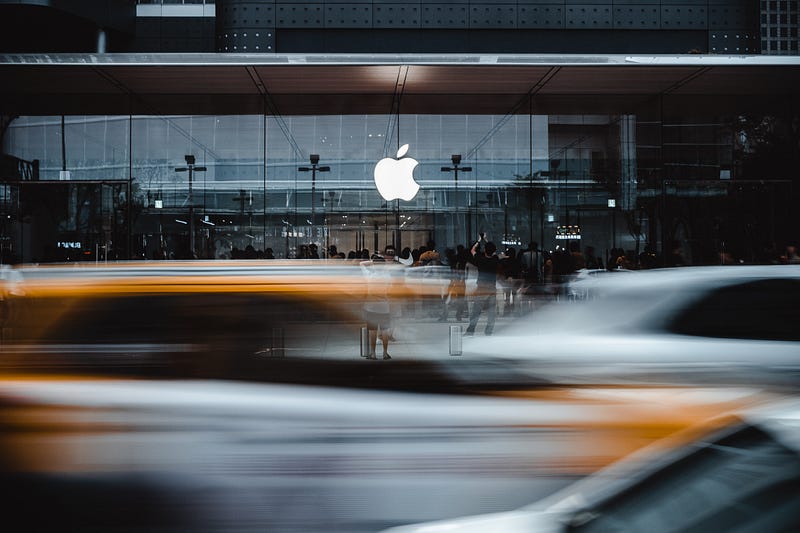
Who Killed The Apple Car?
Picture this: It’s 2014, and rumours are swirling around the tech industry that Apple is working on a secret car project. The project, codenamed Project Titan, was supposed to be Apple’s grand entrance into the automotive industry, a revolutionary new car that would take the world by storm. The project was shrouded in secrecy, with only a few hints leaking out to the public. Everyone was eagerly anticipating the big reveal, but it never came. In the end, the project was scrapped, and the Apple Car became a thing of myth and legend. So, what happened? Who killed the Apple Car?
Project Titan
When news of Project Titan first broke in 2014, it immediately captured the imagination of the tech industry. Apple, a company that had already disrupted the music and smartphone industries, was now turning its attention to cars. According to reports, the project was being led by Steve Zadesky, a former Ford engineer who had worked on the iPod and iPhone teams. Zadesky was tasked with building a team of experts to work on the top-secret project.
In the early days, Project Titan was focused on building a car from scratch. Apple was reportedly hiring automotive experts from around the world, including engineers from Tesla, Ford, and General Motors. The company was even rumoured to be in talks with BMW about a potential partnership. The goal was to create a car that was sleek, innovative, and unmistakably Apple.
But the project was far from smooth sailing. According to insiders, there were disagreements within the team about the direction of the project. Some wanted to build a fully autonomous car, while others believed that the car should be more like Tesla’s electric cars, with advanced driver assistance features. These differences of opinion led to delays and setbacks, which only added to the secrecy surrounding the project.
Despite the challenges, Project Titan continued to move forward. Apple was reportedly working on building a top-secret facility in Sunnyvale, California, where the car would be designed and tested. The company was also said to be working on a new type of battery that would revolutionize the industry.
But then, in 2016, everything changed. Steve Zadesky, who had been leading the project, left Apple for personal reasons. His departure left a leadership vacuum that was difficult to fill, and it signaled the beginning of the end for Project Titan as we knew it.
Struggles And Setbacks
As Project Titan moved into its later stages, it became clear that the project was facing a range of significant struggles and setbacks that would ultimately lead to its downfall. One of the most significant issues was the difficulty of obtaining the necessary permits to test autonomous vehicles on public roads. Apple was reportedly frustrated by the slow pace of the regulatory process and the lack of clarity around the rules.
Another major problem was the internal disagreements within the team. As the project continued to evolve, there were disagreements about the direction of the project, the technology that should be used, and the overall vision for the car. These differences of opinion led to delays and setbacks, and ultimately, to a loss of momentum.
In addition to these internal struggles, Project Titan was also facing significant competition from other players in the industry. Companies like Tesla, Google, and Uber were already making significant strides in the development of autonomous vehicles, and Apple was struggling to keep up. The company was also facing competition from traditional automakers, many of whom were investing heavily in electric and autonomous vehicles.
To make matters worse, there were also changes in leadership at Apple. With Steve Zadesky gone, the project was handed over to Bob Mansfield, a veteran Apple executive who had previously worked on hardware engineering. Mansfield was tasked with reining in the project and focusing on the development of autonomous technology. But even with his expertise, it was clear that Project Titan was struggling to gain traction.
As the challenges mounted, rumours began to circulate that Apple was considering pulling the plug on the project altogether. In late 2016, the company issued a statement confirming that it was “focusing on autonomous systems” rather than building its own car. It was a significant pivot that signaled the end of Project Titan as we knew it.
The Pivot
After the announcement that Apple was shifting its focus to autonomous systems, the company began to make a series of strategic moves that would position it as a player in the autonomous technology space. One of the first moves was the acquisition of a startup called Drive.ai, which was developing a self-driving car platform. The acquisition brought on board a team of engineers with expertise in artificial intelligence and computer vision, key areas for the development of autonomous technology.
Apple also began testing autonomous vehicles on public roads, albeit with a reduced fleet compared to some of its competitors. The company received permits to test autonomous vehicles in California and began to test them in a variety of conditions. This testing allowed Apple to gather data and refine its technology, giving it a better chance of success in the highly competitive autonomous vehicle market.
In addition to these moves, Apple also invested heavily in research and development. The company reportedly has a team of hundreds of engineers working on autonomous technology, with a focus on machine learning and computer vision. Apple is also said to be working on a range of other projects, including lidar sensors, mapping technology, and artificial intelligence.
While Apple’s shift to autonomous technology was a significant pivot, it was not entirely unexpected. Many industry analysts had speculated that Apple’s original goal of building a car from scratch was too ambitious and that the company was better suited to focusing on autonomous technology. By shifting its focus, Apple was able to play to its strengths in areas like software and artificial intelligence.
Speculation Time
And that brings us to today. Is Apple still making a car? That would be a solid no. What Apple does appear to be working on is AI technology for self-driving vehicles.
Now when I first realized just how much Apple had invested in self-driving tech I was extremely suspicious. Why would Apple be making self-driving tech if they did not have a car? It doesn’t make sense.
But to say that Apple does not have any automotive ambitions would be incorrect. Because they technically do have a pretty popular system in the car. It’s called CarPlay. And it has recently got a big update at WWDC.
Oh, CarPlay 2, whatever happened to it? Well, turns out Apple is still planning to release it. They just announced it extremely early.
Perhaps they should have waited for WWDC 2023 to announce it rather than WWDC 2022. Anyways, the important thing is it’s still happening.
So CarPlay is Apple’s only connection to the car. And Apple also appears to be investing a lot in the car. So it stands to reason that the AI tech they are working on will eventually be incorporated into CarPlay.
Now, I know it’s a bit of a stretch. It’s called CarPlay not CarDrive. But they could always rebrand it to… I don’t know, CarOS. Or carOS. And this carOS would handle everything software related about your car. It’s like Microsoft Windows… but for your car and it doesn’t suck, it’s not full of ads, and it’s not trying to do everything in its power to switch you to Edge.
Now I’m highly skeptical if car manufacturers truly want a ‘Windows for your car’. Because companies are already investing a lot in their own self-driving tech. But, you could say the same thing about mobile operating systems before Android. Or you could say the same about desktop operating systems before Windows. So it is possible. If Apple were to make a good enough product it could be the Windows for your car.
And it’s a huge market. According to the Organization of Motor Vehicle Manufacturers in 2019 over 75 million new cars were sold. Now, of course, this has fallen somewhat due to the pandemic, but we’re still over 65 million in 2022. And the average cost of a new vehicle is almost $40,000. So what if Apple were to be the OS for, I don’t know, just 10% of all cars. And what if the cost for this hypothetical carOS would be 1% of the cost of the average vehicle? Let’s just round that down to $300 per vehicle. Then Apple would be making 2.25 billion dollars per year from this business.
It’s not that large of an amount of money for Apple though as their other revenue sources bring in hundreds of billions of dollars. But it’s not small either. And these are some conservative estimates. If Apple were to instead get 50% market share and charge 5% it would mean 56 billion dollars rivalling some of their other income sources.
Final Thoughts
Making a ‘Windows for cars’ is going to be a pretty big task. Especially as many companies already have advanced driving features. And some companies are actually dropping support for CarPlay and Android Auto.
So it’s going to be challenging. But if any company can do it it’s Apple.
If you liked this article consider following me on one of my publications: Lost But Coding (for programming content) or The Rest Of The Story (for everything else). You can do so with my RSS reader Echo available one [iOS (and Apple Silicon Macs) and Android. GPT contributed to this post.


