
Who Is The Terminator?
With major elections around the corner, a new threat has emerged: deepfakes. Now, the race between AI creating deepfakes and AI detecting deepfakes is on.
In 1984, the now-famous filmmaker James Cameron had his breakthrough success with the film The Terminator, starring Sylvester Stallone. Stallone, who had previously enjoyed success as boxer Rocky Balboa in the Rocky series, was thrilled to play the role of “the Terminator”. In a 1991 cast interview for the sequel, in which Stallone repeated the role, the actor remarked that the role was his favourite yet. “But to be honest,” Stallone said in the interview, “the best part of playing the character are the action scenes. They are very fun to shoot, and we have a great team pulling off incredible stunts. The movie [Terminator 2] was just as fun to make as it hopefully is to watch.”
Below is a clip from Terminator 2, in which the Terminator ends up fighting a group of men playing pool.
Or at least, that’s what The Terminator could have been like, if we re-wrote history a little. As most people are very well aware of, The Terminator film series was actually starring actor Arnold Schwarzenegger. Below is a real clip of the same scene, again from Terminator 2.
The clip starring Sylvester Stallone is an example of the usage of a technique known as deepfake. It is a technique based on artificial intelligence, which allows the user to create fake videos and images that not only look incredibly convincing, but also sound the part. The term “deepfake” comes from the terms “deep learning”, a form of artificial intelligence, and of course “fake”, meaning something that isn’t real.
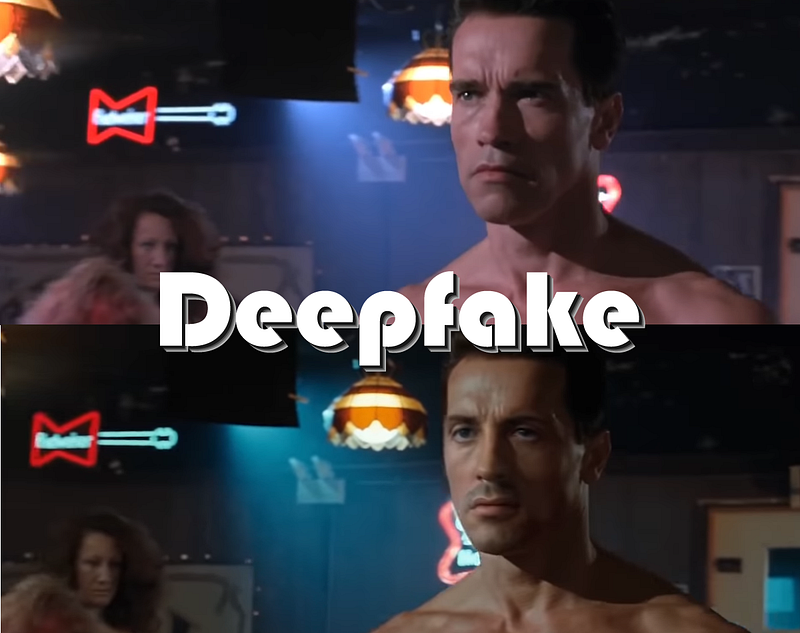
The particular example described above, featuring The Terminator, is not perfect. In certain scenes, you can tell that Stallone isn’t really supposed to be there. It also helps that the Terminator does not display many emotions o speak much, which makes it an easier face to replace. But bear in mind that this video was made by one single person, using the DeepFaceLab software, who goes under the alias ctrl shift face.
If one single person can make that video with today’s technology, just imagine what a team of a hundred people can accomplish in the year 2030.
In another video, made by “3 guys fooling around with deepfake, vfx, and things we find on internet”, published in June of 2019, the Game of Thrones character Jon Snow, portrayed by Kit Harington, is seen apologizing for the quality of the last season of Game of Thrones.
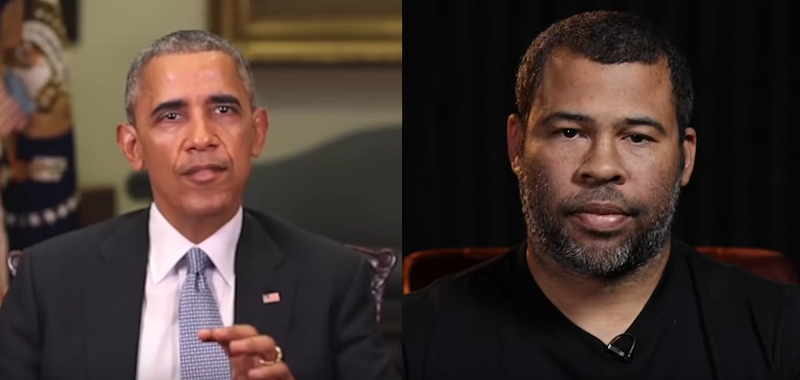
Meanwhile, in April of 2018, Buzzfeed (of all places, I know) shared a deepfake video featuring former US president Barack Obama:
The two videos above are quite clearly fake, but the technology is only going to become more convincing. The video featuring Obama raises an important PSA. Hollywood movies are cool and all, but falsified political videos are a major threat to our society. If a video featuring a country’s president is convincing enough, the content of the video could have enough power to start a war or crash an economy. What more, with many elections on the way, deepfakes are high on the agenda in congresses around the world.
“Hollywood movies are cool and all, but falsified political videos are a major threat to our society.”
One thing is for certain: deepfakes will only become more and more convincing. There is no doubt in my mind that private actors aren’t the only ones exploring this technology, but governments as well. The power in being able to both create and prevent deepfakes will be immense.
Deepfakes Will Spread Fast Through Social Media
You may or may not have heard of deepfakes, and you may or may not have seen the videos I presented above previously. If you have never heard of it before, you may be quick to toss it off as something that you won’t encounter in your daily life. Unfortunately, nothing could be further from the truth.
Scroll through any social media feed for just a couple of minutes and count the amount of articles, links, and information you scroll by. It’s quite staggering. We, as users, have been taught to digest very large amounts of information very quickly. It’s has become increasingly common to simply read headlines and assume they are true, and if you happen to actually click on an article, such as this one, chances are high that you are simply skimming through it. Maybe it’s because you have so much other content to digest, maybe it’s because you need your next dopamine fix, or maybe it’s because you have a very busy life style. Regardless, you may feel as though you do not have time to examine the veracity of the content, and instead trust in the number of upvotes or shares the content has received — which may or may not have been provided by bots to seem more credible. Regardless, there is already an immense amount of fake news being spread on social medias. In the same way, deepfakes will without a doubt be shared through social media — and some of them will be believed.
Use Cases
Deepfakes have a wide range of uses, ranging from small to large, from personal attacks to political satire and even falsified declarations of war.
Political Leaders
Obviously, creating videos of politicians saying things that aren’t real is a strong use case for deepfakes. Companies, individuals, and governments can make world leaders say things that benefit their own interests. Political activists can use deepfake to create videos which smear the reputation of those they do not agree with — which is already happening today through paid articles rather than deepfake. Organizations which benefit from warfare or political chaos may use this technology for financial or political gain.
You can certainly imagine many scenarios for how deepfakes can be used to mimic world leaders.
Terrorist Groups
A massive threat is the usage of deepfakes to create fake messages from terrorist groups. This can ignite fear and even military action, and can urge political policies that would otherwise never occur.
Fake Crime
Innocent people can be the face of a crime they had nothing to do with. It may be difficult, and time-consuming, for innocents to prove that the content of them committing a crime is fake.
Revenge Porn
Already an existing phenomenon, revenge porn is the distribution of one or more individuals performing sexual acts. Whether or not the videos were filmed with consent to begin with, the act of uploading them online is typically done in an act of revenge, perhaps by one member of a former relationship. Using deepfake, creating revenge porn will be easier than ever before. You can add anyone’s face to a pornographic video, which, as you can imagine, could have severe consequences for the affected individual. People may use this technique to hurt anyone they dislike.
Bullying
Other forms of bullying, beyond revenge porn, can also be executed. If the technology becomes easy enough to use, even kids can create and spread embarrassing videos that can devastate their classmates. Levels of anxiety, depression, and even suicide could severely increase due to deepfakes.
The Good Uses
It may be an abrupt transition to go from bullying to entertainment, but I do feel a need to mention that not all uses of deepfakes are malicious. While the bad far, far outweigh the good, deepfake technologies could also be used to create entertaining videos among friends, or to recreate old movies with modern actors, perhaps revitalizing them to a new audience without the need for a large budget.
Levels of anxiety, depression, and even suicide could severely increase due to deepfakes.
How To Combat Deepfakes
Thankfully, there are solutions to determinate and terminate deepfakes.
AI vs. AI
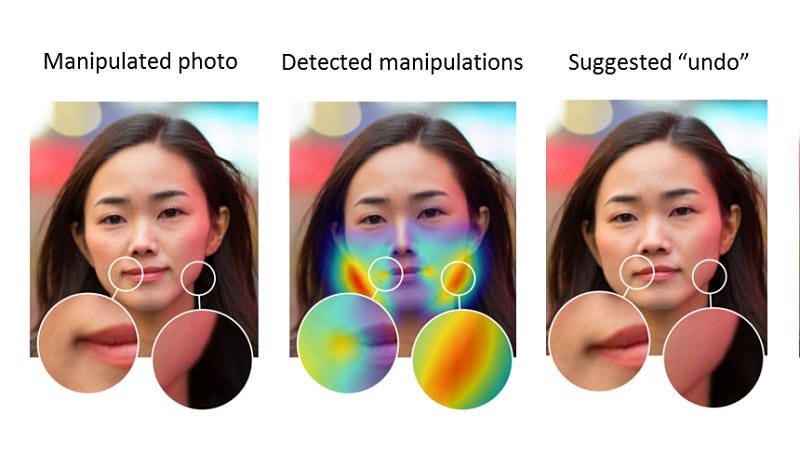
Artificial intelligence-tools that have been trained to identify deepfakes are already in the works. It will inevitably become a race between AI algorithms: Deepfake algorithms will train to become more and more convincing, while prevention algorithms will train to become better and better at spotting deepfakes. You can think of it a bit as the classic race between viruses and anti-virus software. This kind of software can be implemented into major social medias to detect deepfake content automatically, and flag or remove fake content.
Verification
Another solution to combating deepfakes, could be through the usage of verification codes.
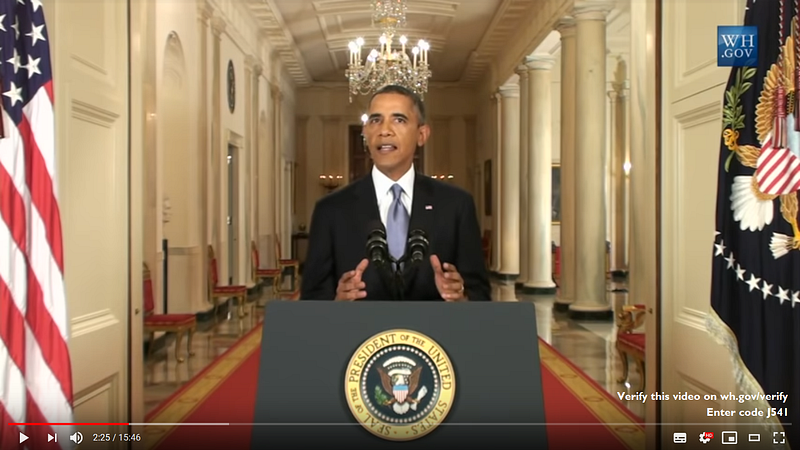
Through these codes, videos can be verified straight from the alleged source. These kind of codes aren’t anything new. For instance, my university transcript automatically features a verification code, along with a URL to enter it. If anyone wanted to verify the document, they could go to that URL, enter said code, and receive an exact copy of that document, should it exist. If the document is fake, the code will either return nothing, or a different document, depending on whether the code is in use or not. This kind of technology is simple, reliable, and doesn’t require an AI to implement, though AI could be implemented to automate the process of checking codes. This will not, however, protect individuals from personal attacks.
A Slower Society
Sometimes, human behaviour is the answer. Unfortunately, technology is a lot easier to change that humans. If everyone slowed down their scrolling through feeds, closely examined sources, and questioned everything they saw, we could potentially combat deepfakes without the need for any technology. Still, even the most careful and reflective of individuals might find themselves stumped between reality and fiction when extremely convincing videos seemingly filmed by amateurs gets shared online. “A Slower Society” isn’t a complete solution to the issue, but it is a good mentality to keep in mind.
Quite Frankly, It’s Down To The Good AI Vs. The Evil AI
At the end of the day, whether The Terminator is really Stallone or Schwarzenegger will come down to AI. There will be a race between AI trying to create and detect deepfakes, as both sides try to become the Terminator — to be the force determining the future. All the rest of us can do is to slow down our scrolling, and take a minute to consider whether what we’re seeing is actually real.
But for the record, the answer to the question is Schwarzenegger.
Just in case.

Interested in artificial intelligence? Here are a few more articles you might enjoy.


