
Who is part of a Product team?
In this text, we are going to show who’s who within a product team and how each one can help connect business objectives to product vision and thus develop incredible solutions for its users.
Product Manager
The Product Manager is responsible for being the guardian of the product vision, ensuring that everyone involved is on the same page — and here those involved can be both the team itself, as well as stakeholders, partners, board and the CEO.
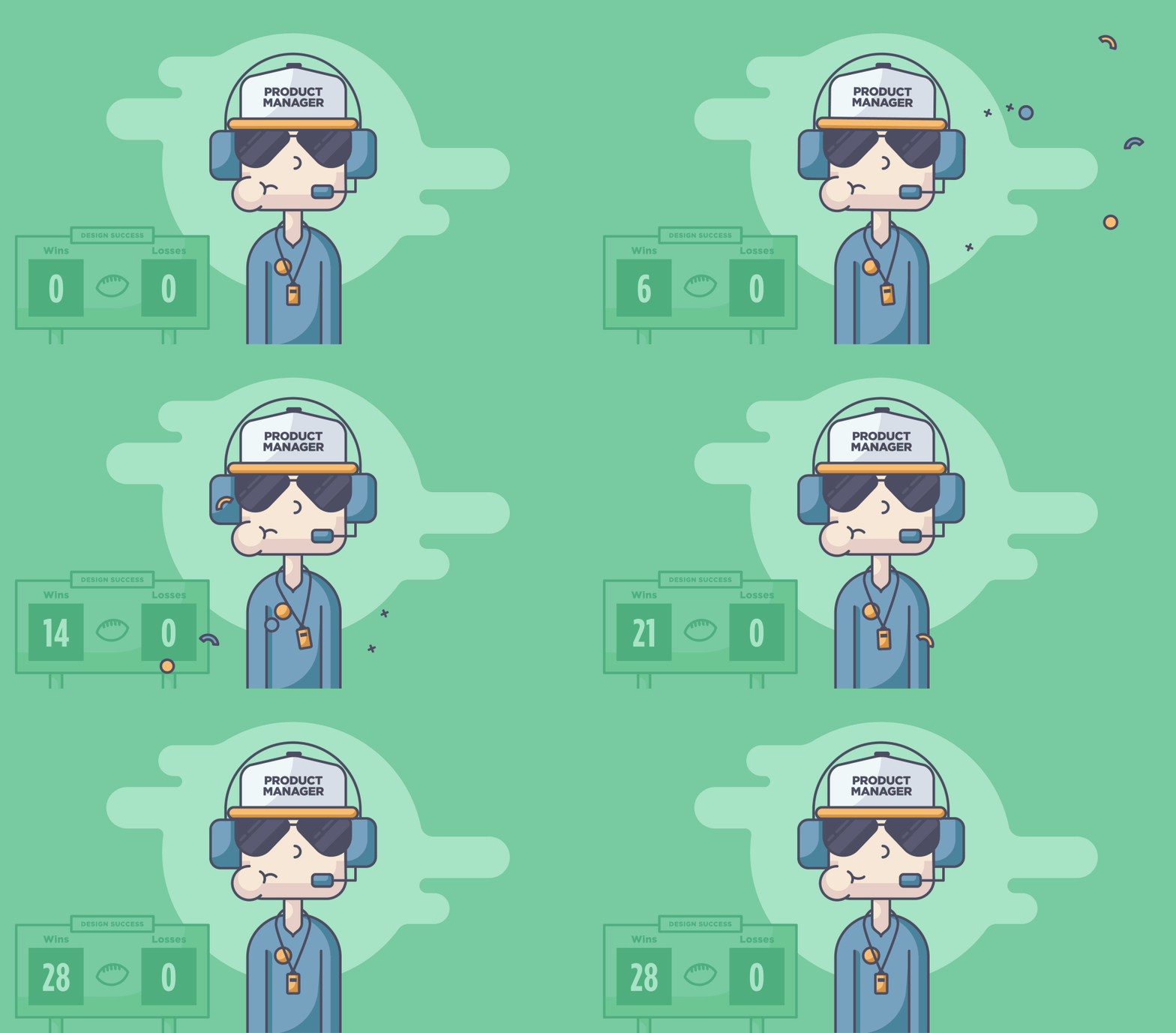
The PM will spend a good part of his week aligning with stakeholders, board members, leadership from other areas, discussing opportunities with the team and of course, prioritizing what will be developed throughout the sprints, to generate value for the user and consequently for the company. Another very important responsibility of the PM is to be in constant contact with its users, whether participating in interviews and working throughout the discovery process or even doing data analysis to understand the user’s behavior in the product and finding opportunities for improvement from that.
Project Manager (Not a product manager!)
A Project Manager, or Project Manager, is one who puts the schedule under his arm and will help keep the project on schedule, removing any impediments that are preventing teams from moving forward.

As a Product Manager, you will mainly work with the Project manager on large, closed-scope projects that involve more than one team and different suppliers. Your job will involve communicating your team’s progress versus the agreed schedule, working together with the Agilist / ScrumMaster / Engineering Manager / Technical Leader so that the team meets the deadlines. The PM can help a lot at this point by cutting scope and re-prioritizing work as the project progresses.
In many companies — usually digital ones — the Product Manager performs part of the role of a Project Manager, which ends up eliminating the need to have someone dedicated to being a Project Manager. But it is very important to remember that in open scope projects the PM must be more concerned with generating value for the customer than with delivering the features via detailed schedules.
Developer
Devs or Software Engineers are responsible for the “how”. Developers turn generated ideas into real resources. If the products were buildings, they would be the builders.

Maintaining a fluid communication channel with engineers is key to the success of many products, especially when PMs bridge the gap between devs and the end customer, thus helping engineers to have a real understanding of customer pain and thus propose solutions realistic to be developed.
Having engineers involved in Discovery processes is essential, as they can suggest simpler and more efficient ways of solving the problems that users are facing.
Quality Engineer
The famous QA, or Quality Control Engineer are those who will test the code made by the developers, as well as the usability of the product, ensuring that it behaves the way it was designed by the Product Manager.

They work with Product Managers to understand what to test. Sometimes, the importance of Quality Control Engineers can be overlooked, but as they are responsible for maximizing the performance of the final product, they are a valuable asset for any product team. Currently, QA has a very important role in helping to develop automated tests and integration that make product maintenance much easier. You as PM can (and should) prioritize the automation part because it will save a lot of time for the team (and the PM itself) in the long run when much of the regression (or bug-hunting) process is done automatically.
UX / UI Designer or Product Designer
Designers or DPs will be responsible for 5 steps in the product development process, which are: Understanding, Ideation, Definition, Prototyping and Validation.
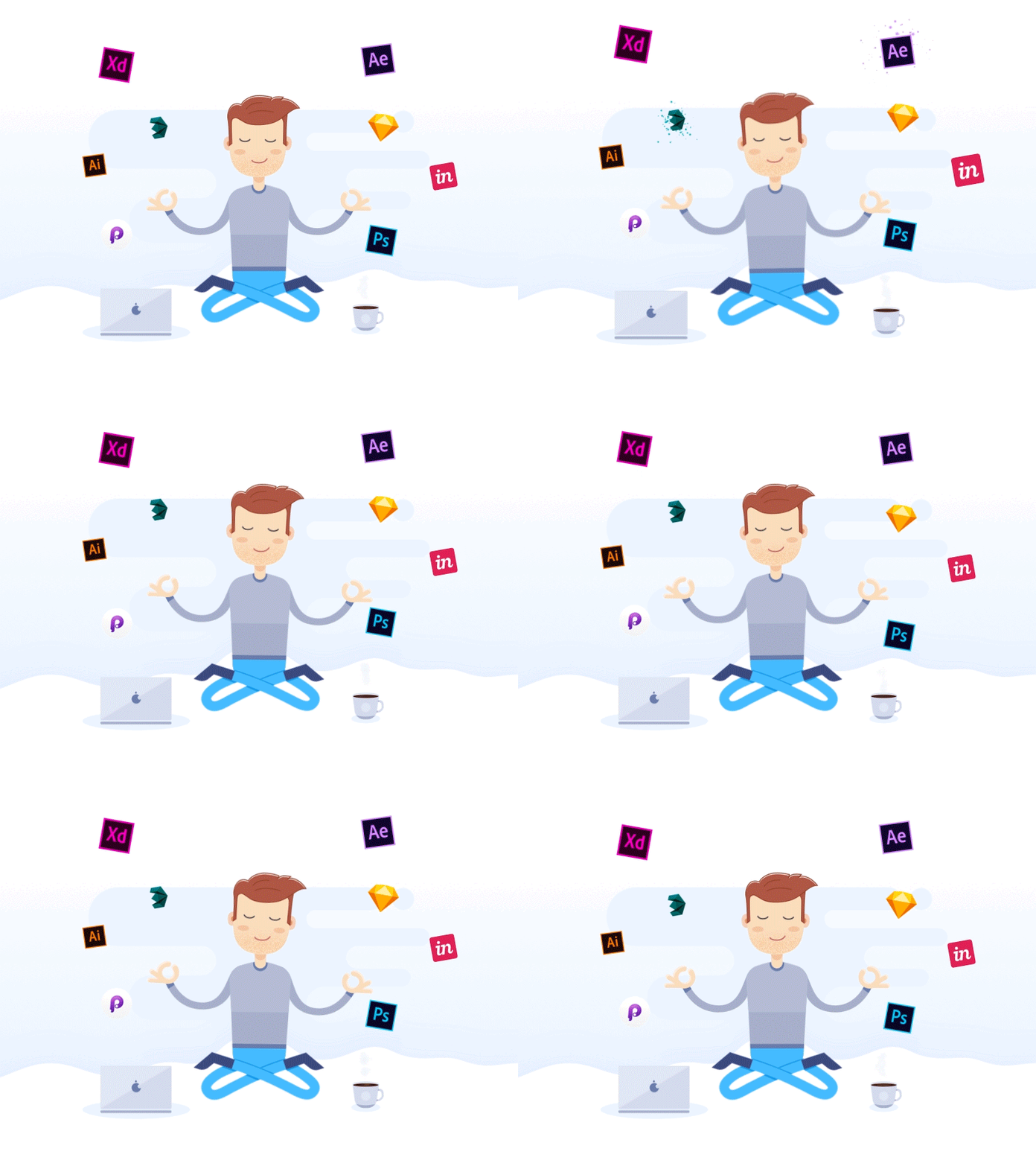
In these steps they will do a little bit of everything, starting with the Discovery process to understand the user’s pain, in addition to benchmarking the competition; later in Ideação, the DP will create some hypotheses to solve these pains; in the Definition, the DP will select these best ideas and move to a slightly more dynamic and practical use, which is Prototyping, when the DP will give a little more life to how it will solve this problem and thus gather a lot of feedback of test users. After that happens, the Validation of these ideas that are selected for development with the engineering team. It is essential that the PM participates in this process of defining the solution to help you cut the MVP / MVF, avoiding waste and reducing the time needed to generate value for users.
Designers must ensure that the product is easy to navigate, simple to understand and pleasing to the eye. The UX designer has a technical role, taking care of the Discovery process, the wireframe, the prototyping and reaching the high fidelity of what will be used by the user.
Customer knowledge will be the main point of discussion between UX / UI Designer and Product Manager. Anyway, it is important to note that all these tasks that UX Designer does must always be well aligned with the Product Manager and, in many cases, perform them together as pairs.
Product Marketing Manager
If there is anyone who knows the customer as deeply as a Product Manager, this is the Product Marketing Manager.

PMMs will look at the price, promotion, square and understand if the strategy is aligned with the product. Often ahead of the A / B tests that are developed, as well as go-to-market campaigns whether it is a new feature or new feature about the product, a PMM will orchestrate that both internal and external teams know about the latest news about the product.
PMM will help in the strategy of acquiring customers, as well as telling a consistent story in the onboarding process, through marketing techniques and user behavior.
And at the end of the day, what is an above-average product team made of?
Empathy: First of all, everyone within the team must have as much empathy with each other as with the user. Truly understanding the pains users are facing and finding the best solutions for this is what will make teams successful.
Trust: A cohesive team trusts each other. PMs must trust both their Product Designers and Devs to create the best solutions, just as Devs must respect the strategy that will be addressed by PMM when launching to the market. It is obvious that good discussions must be generated, but it is essential that the team knows that each one who is there is an expert in their area, respecting their expertise but without creating silos. Collaboration is very important in everyday life for a product team to be successful.
Execution power: When the team performs well you can see from afar, when everyone is very involved and focused on delivering at the highest level of quality, to avoid unnecessary rework and delays. Therefore, finding a work framework like OKRs, can help the team to focus well on delivery.
Discovery: According to a survey by CB Insights magazine , 42% was the number that came to the survey of why startups fail, the reason: the company did not meet a market need. Not having a well-developed Product Discovery process is what will also make your team fail.
Applauding is love because it encourages the author. If you liked this text, you can applaud 👏👏 👏 .
In addition, my deep gratitude for staying with me here. Leave your feedback in the comments below, it is essential to keep evolving with each new content!