
Who Gets Jesus? Meaning of Communion and Eucharist
Different understandings of Communion are the primary difference between Catholicism and Protestantism
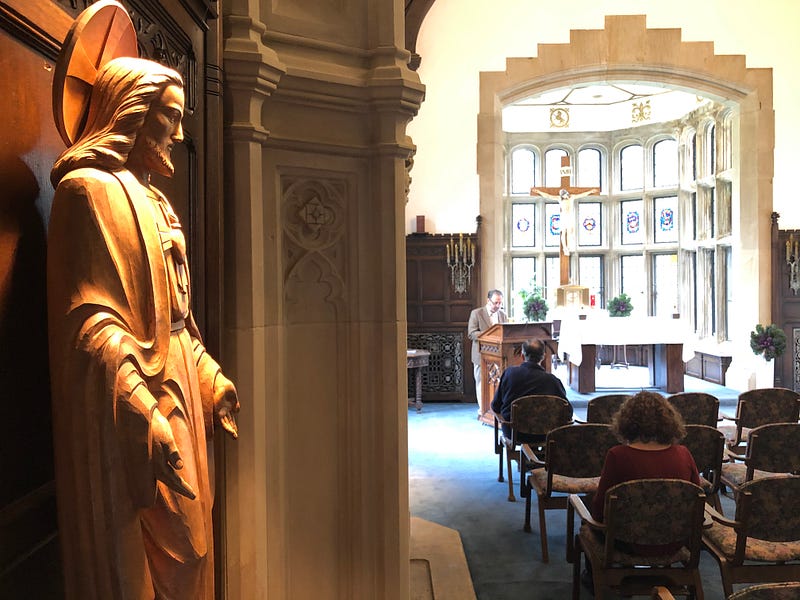
Most U.S. Catholics are confused. The cases of Joe Biden and a Michigan judge help explain the Eucharist and Communion.
The United States was primarily founded by Protestants who consider communion to be symbolic and open to all: share Jesus with everyone. A new Pew study, meanwhile, shows Protestants are far more likely to have a close relationship with their clergy.
Nearly 80 percent of Protestants say they have a close relationship with their pastor, verus 61 percent of Catholics. However, just 8 percent of Catholics feel “very close’’ to their priest.
Similarly, 77 percent of Protestants (vs. 60 percent of Catholics) have “a lot of confidence’’ that their clergy can help them grow closer to God.
Communion explains Christian differences
The Catholic Church has passed down the tradition of transubstantiation. Begun by Jesus and His Apostles at the Last Supper, priests turn bread and wine into His Real Presence, His Body and Blood.
Protestants focus on the Word and message of Jesus: the best delivery of that word and message via the spoken word as well as the word via music. This is why the average Protestant is better at quoting the Bible than the average Catholic.
Catholics consider the Eucharist, turning bread and wine into Jesus, the “Source and Summit’’ of the faith. We consume Jesus, join with Him. This is why we attend Mass, why Masses are available every day of the week. Our Churches are like castles because we believe our King rests in our Tabernacles. We go to Mass to absorb God into our own bodies. All else is secondary.
Eating flesh? Is that Biblical? Jesus explains:
“Truly, truly, I say to you, unless you eat the flesh of the Son of man and drink his blood, you have no life in you; he who eats my flesh and drinks my blood has eternal life, and I will raise him up at the last day. For my flesh is real food, and my blood is real drink. He who eats my flesh and drinks my blood abides in me, and I in him. As the living Father sent me, and I live because of the Father, so he who eats me will live because of me. This is the bread which came down from heaven, not such as the fathers ate and died; he who eats this bread will live forever” (John 6:53–58).
Because of that belief in the Real Presence, taking this portion of the Bible literally, Catholics don’t believe anyone is ready and able to experience the Eucharist unprepared. Therefore, children and new Catholics are educated before receiving their First Holy Communion.
All Catholics are expected to go to Confession (at least once a year but preferably more often) to be more worthily prepared. This brings us back to…
Joe Biden and Judge Sara Smolenski
Imagine telling your spouse, “I have big problems with everything you stand for — and will work against your views in my career. Now let’s make love because I’m always entitled to join with you as your spouse.’’
Doesn’t sound like a loving or close relationship?
The Church, very similarly, teaches it is problematic — and harmful — for Catholic public officials to expect communion while they are openly and publicly challenging Church doctrine developed over the past 2,000 years. St. Paul himself explained:
“Whoever, therefore, eats the bread or drinks the cup of the Lord in an unworthy manner will be guilty of profaning the body and blood of the Lord. A person should examine himself and so eat the bread and drink the cup. For anyone who eats and drinks without discerning the body, eats and drinks judgment on himself.” (1 Cor. 11:27–29).
While once quite supportive of Church teachings, Biden has increasingly gone against the Church, particularly on abortion. The Archdiocese of St. Louis similarly denied communion to 2004 Democrat nominee John Kerry.
Judge Smolenski challenged and defied the Church — specifically her parish priest — on the issue of gay marriage. The Church supports the traditional view of marriage that the Sacrament of Matrimony is between a husband and wife, one man and one woman forming a family.
Judge Smolenski entered into a civil (but not sacramental) marriage to another woman three years ago and wore a gay pride pin when she went to receive communion. Her priest gave her communion that day but called her and said she shouldn’t expect to receive the sacrament if she continued the protests. So she went to the media, expanded her protest, going with her wife to a Protestant church for communion.
Definition: Difference between Communion and Holy Eucharist
What’s the difference between Communion and the Eucharist? Communion is the verb (being a part of Communion or being in Communion with the saints), while the Eucharist is the noun (the person of Jesus Christ).
Communion refers to the Sacrament of Holy Communion, celebrated at every Mass. Communion comes from the Latin word “communionem,’’ meaning “fellowship’’ or sharing something together. We are in communion as a community joining with God. We believe the Church is His Body, and He is the head.
The word Eucharist is derived from the Greek word for Thanksgiving. The Holy Eucharist refers to the Body and Blood of Christ itself, the Real Presence of Jesus created from the bread and wine during the Mass. Catholics are supposed to examine their consciences before receiving this gift and know they are joined with Christ Himself when entering into this act.
How anyone and everyone can participate in communion: Catholics may receive the Eucharist while non-Catholics and unprepared Catholics are encouraged to instead come forward and receive a blessing.
American Catholics vs. the rest of the Church
The first time I attended Mass in Poland, I was stunned to see roughly half the parishioners at a Sunday morning Mass not go up for communion. In America, nearly everyone marches straight up to the altar.
Why the difference? The Church teaches that if we go to communion without “sanctifying grace,’’ we risk profaning the Eucharist and must therefore confess any mortal sins.
American Catholics, living in a secular nation largely formed by Protestants, don’t tend to understand Catholic teachings on the Eucharist. For example, a recent Poll poll shows only 28 percent believe in transubstantiation.
Most importantly, Pew found that 63 percent of Catholics attending Mass weekly believe that bread and wine become the body of Christ. In comparison, 37 percent shared the Protestant view that communion is symbolic.
Among Catholics who seldom or never attend Mass, 87 percent thought Communion is symbolic, and just 13 percent believe the Eucharist becomes the Body and Blood of Christ.
“Jesus, who reveals to us that God is a God of life, is a God who takes away our shame, is a God who is inviting us into this Mission of giving life to others,’’ Father Mathias Thelen explains. “All we need to do is give Him what we have… He takes what we give to Him, He multiplies it and feeds the nation.’’
Most Catholic questions, in fact, can be traced to an understanding or lack of understanding of the true meaning of the Eucharist. To learn more, please read “Satisfy the Hungry Heart.’’


