
Who Drives The Economy?
A basic question we need to think for ourselves. The key word is “DRIVE.”

The government “manages” the economy, today that is an oxymoron. It is more like “Mismanage” the economy. In previous articles (here), the mismanagement is discussed. Another important factor to understand and be knowledgeable about is who drives the economy. In short:
People drive the economy.
Who “intervenes” in the economy is Congress through their Appropriations Bills. These “Bills” are really the subsidies for their pet projects in the Administrative Government. They are not necessarily to create an environment conducive for the private sector to create more jobs. No matter what they do, the “Central Planning Agencies”, known to us as the “Administrative Government” (find the known list here), can only “manage”, if at all. However, they are not interested in managing, they are only interested in Controlling through regulations.
Who drives the economy is you and me with the purchase power we have. This was discussed in a previous article (here).
The purchase power we have organizes the “demand” that exists for products in the market. That product, some that we don’t know we need, for example, the Japanese Betamax video tape player in the 70s, created a revolution in electronic demand that led to an explosive progress in electronics. Nobody before that, went to a store and said, “I would like to purchase a “video tape player please.” This is what makes the difference in the pursuit of success of an economy, people creating new markets. The multiplication of products in the market increases demand, competition, and progress in many others unexpected new markets. Like the computer industry drive for faster and faster computers. Smaller and smaller electronics. Individuals, through their purchase choices signal to the market what is in demand. It is up to the suppliers to provide us with competitive products at a competitive price. We are free to choose which product fits our needs best.
For example: Between the 70s to the turn of the 21st century (30 years), we accelerated the rate of change in computing power to today. We hold in our hands a computer 26,000 times more powerful than the largest IBM 360 most powerful mainframe of those days (8MB of memory). We communicate at near the speed-of-light across the world.
Two point to make:
1. Competition is the incentive for corporations to make affordable products. It also drives improvements of the product. When Apple came out with the iPhone it created a revolution in the phone industry. Apple single handedly revived AT&T who was circling the drain in those days.
2. When a government shuts-down the economy machine, like Trump did in 2020, it is catastrophic. Millions of people go home without a paycheck. It might be okay for China to do this, they have a totally different economic systems and central planning. However, an economy like ours is one of the most difficult machines the start-up again. Today we have empty shelve problems, partly because of that, partly because of regulations the government has that has the transportation system looking for boot straps that work in an emergency like this. Regulations that were created with false assumptions (we will never shutdown the economy). Boats at ALL ports cannot be unloaded fast enough for logistics to make distributions (truck traffic and unloading limitations and more). Prices have to be re-established, based on lacks and needs of that product or other products. Prices are higher but people will spend based on their need.
While spending drives the economy. Meanwhile, the government borrowed a ton of money that was not used to goose the economy forward. It was also used to pay people NOT TO WORK and other things that have nothing to do with improving a “startup” economy, the Fed poured 4 trillion dollars, 38% cash into the economy, banks have money available. For the next 12 months, the economy will look rosy to us, we (our government) still are holding money we have not spent on our children’s credit cards, to use Brian Wesbury’s words.
In 2022, accumulated demand and money are available. Industry will have jobs, retail sales will continue to grow higher than in normal times, profits will be up. What we do after the next 12 months will be tricky. It will require us to yell very loud for the right things to happen or we will sink into debt even more. The money received so far, was used by the people to purchase or pay for things as soon as they got their checks. Entitled people will want more “free” money. Based on what we have seen so far, people will not want to go back to work. The gap in their resumes will be more than a year and employers will give preference to continuous employment over gaps of employment.
However, be aware. This much is knowledge today-“Individuals do not benefit from any increase in the money supply, that increases money and bank credit. This only causes inflation and business cycles.” The credit expansion and subsequent contraction that occurred in 1987 was predictable, Mises theory had predicted it before his death in 1973, credit expansion by the banks, “in addition to causing inflation, makes contractions (depressions like 1929) inevitable by causing “malinvestment,” i.e. by inducing businessmen to overinvest in “higher orders” of capital goods (machine tools, construction, etc.) and to underinvest in consumer goods.” People that bought houses at high prices were caught with unrealistic mortgages they could no longer pay, and houses they could not sell because the prices collapsed. People were caught with negative mortgages, i.e., they had to take money they did not have to the closing to sell a house they could not afford.
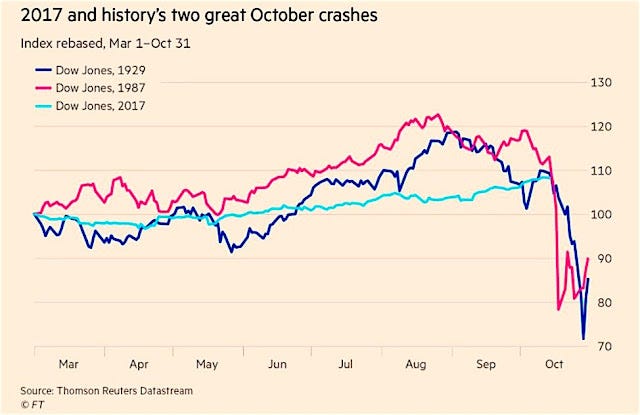
“The piano has only as many keys as an arm can reach” (author)— Everything has a limit
For over 100 years we (the government) have been acting the same way. Making the same economic decisions and expecting different results. Creating waves of excessive money supply to fake good times “for all,” allowing banks to lend money to all, while at the same time regulating businesses. Business behavior is to look for profits where they can find them, thus creating bubbles by investing in bad markets. When they reach that limit, the bubble bursts and we have a crash. Ultimately, WE pay. Both, Government and Business need to change their behavior but the government has to lead the change by advocating for the people, NOT curtailing business. Today, because of government spending, we are at the precipice of default on our foreign loans. We have gotten to the level of borrowing where we can barely make the “interest” payments on those loans. We are flirting with the ultimate failure, Government failure (Germany 1932, here and here), because the “Peoples arms for purchasing” are at their limit, and the economy rolls to a halt.


