
Self-Help|Inspiration|Education
Who do you listen to more than anyone else in your life?
If the answer isn’t you — there’s a problem
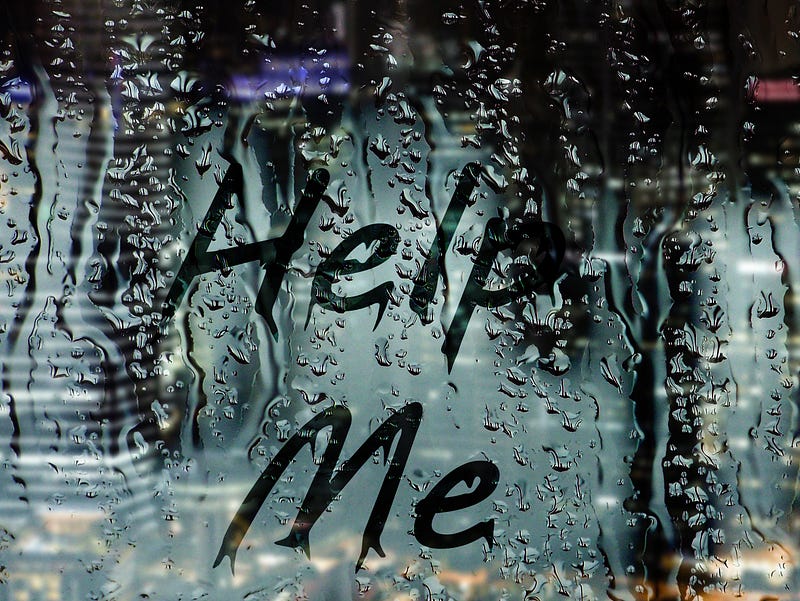
The Self-Help industry is booming and is projected to top $13 Billion per year by 2022. In the U.S., an industry survey done in mid-2019, showed that — 1 out of every 5 people had read a self-help book in the previous year. In the U.K. alone, sales of self-help books for 2019 was a record-setting 3 million plus units and on the rise.
People everywhere are reaching out to someone, somewhere for help.
Are you one of these people?
If the answer is yes, why did you feel the need to seek help from someone else?
WHERE IT STARTS
I went to the bookstore and asked the saleswoman, “Where’s the self-help section?’ She said if she told me, it would defeat the purpose.” — George Carlin
We all need help and we ask for it every day. In the form of directions, the best pizza place, or a referral for an electrician at a fair price.
But 99% of what we ask about is out here — in the world of things and places. Where worst case scenario, we buy a bottle of Bordeaux that isn’t very good or a pair of sun glasses we have to return.
But when it comes down to us, the one living inside the body that everyone is talking to, why are we constantly looking for others to answer questions about the innermost workings of the person we know the best?
Don’t we trust ourselves?
ORIGINS
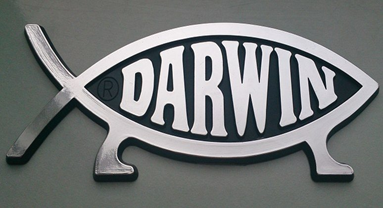
Samuel Smiles (perfect name, don’t you think) started the self-help genre when he published, Self-help, in 1859. It became a runaway bestseller, outselling another well-known book of the times, The Origin of Species by Charles Darwin.
Its basic theme or idea was the promotion of self-empowerment through the adoption of a “never say die” attitude in life, as one was continually presented with new challenges. Believe in yourself, stick to your goals, never give up. A theme that has resonated with many people ever since the book was published.
In fact, it’s pretty much the blueprint for all self-help books, courses and seminars.
If there weren’t any barriers getting in our way; if there wasn’t a nagging voice inside our heads, telling us we’ll never make it, then what would be the need for outside help?
The thing about Self-help books though, is that they are written by others, who have gone through unique difficulties in their lives, who believe that their solutions and their programs will solve your problems.
But do they?
MOTIVATION
Science believes motivation is fundamental and that without it, we won’t achieve what we feel is essential to our lives.
“The study of motivation is a behavioral science that concerns those internal processes that give behavior its energy, direction, and persistence.”
“Being passive is not our default mode as human beings. Otherwise, we would have been born as a sloth or a panda bear (no offense to these lovely creatures). It is in our nature to strive, to want, and to move in a direction of something we desire and deem valuable.” PositivePsychology.com
We are motivated to succeed, however that might be defined. We are motivated to come in first; to find the perfect mate, the perfect job, the perfect car and when all of these are under one roof, to go about creating an even more perfect life with them.
We are motivated — full stop.
Then why do we pay often and dearly for seminars, weekend conferences and one-on-one coaching to get us motivated?
Aren’t we already there?
TRAINING WHEELS
We use them when we’re learning to ride a bike, and to keep us from failing before we get there. But as a metaphor, they become an inevitable by-product of established patterns and behavior that extends far deeper into our lives, whether we care to acknowledge them or not.
· We keep asking the boss for answers to questions we’re 99% sure of already.
· We bring our girlfriend home to mom and dad for final “approval.”
· We ask a friend to call another friend to tell them we’re sorry for what we did.
· We send a text to break up. An Instagram to show her how we feel.
· We share a problem and ask our neighbor if our solution is good enough to implement.
How we process information and analyze life critically, day in and day out, will determine how well we address the problems that we’ll be facing in the future. In other words, if we use “training wheels” too often in dealing with life and especially in dealing with people, we will become more and more dependent on outside help and less on our innate ability to get things done. The more we rely on others to help us, the less that mechanism within, that is designed for that purpose, will be used.
SELF-HELP IS JUST THAT
Self-help is exactly that — helping ourselves overcoming whatever is in front of us. When we get involved with 2000 others in a conference hall and are run through a process of “motivational enhancement” it is hard not to get jazzed and excited by everyone else getting jazzed and excited.
There is no harm in having one’s spirits lifted higher than they’ve been for a while. No harm in feeling like you can now get things done.
But at the end of the day, whatever day that happens to be, you are the one that will be lifting up your own spirits. You will be the one, changing bad behavior or habits. And the one making all the micro-decisions on how to improve your life.
It always has and always will come down to you — helping yourself.
A HELPING HAND
Learning in life is a never-ending process. So, we should listen and read and improve, whenever we can. But there should be a hierarchy of personal self-help. If you’re constantly looking outside of yourself to figure out what you need to do, then something is wrong with the process you are using to solve your own problems.
A load can be too heavy to carry on your own — so you get a friend to help.
A problem may be too difficult to see through, so you ask someone to help define it.
Living life alone, isn’t living much at all. But with help comes responsibility. That you never allow the help to interfere with who you are and what you are capable of getting done on your own.
As Bill Withers so eloquently put it–
Lean on me, when you’re not strong And I’ll be your friend I’ll help you carry on For it won’t be long ’Til I’m gonna need Somebody to lean on
Selma Amy Marley P.G. Barnett Paul Myers MBA Tom Byers Trista Ainsworth Michele Till George J. Ziogas Sherry McGuinn Kathryn A. LeRoy, Ph.D. Linda Caroll Caroline de Braganza
Joe Luca is writer and editor for ILLUMINATION and a published author and writer of children’s stories, short fiction, non-fiction articles, screenplays and poetry. Publications include Child’s Life, Children’s Playmate and others. There are some other articles below — have a read. And thank you for stopping by.