Who Do I Write For?
I thought this would be a simple answer. It’s not.
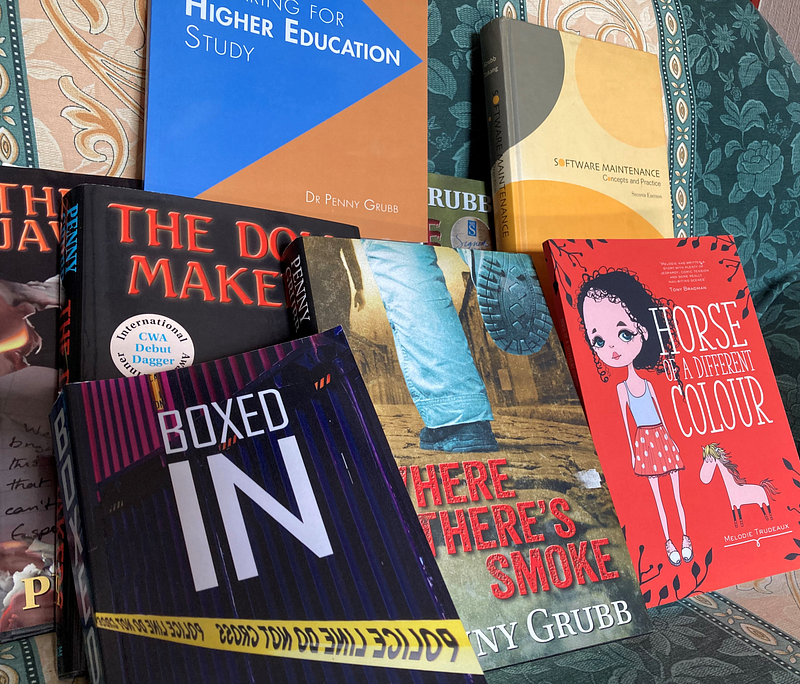
Who do I write for? I’d like to say I write for myself because it feels like a neat answer. But, thinking about it, it’s way off the mark.
Who was I writing for when I was putting together witness statements and tribunal reports? Usually, some poor sod who’d reported a nefarious, sometimes criminal, practice that they thought should be stopped before someone got hurt; someone who believed that the hierarchy of the organisation would right the injustice, put a stop to the dangerous practice and award them their due thanks. Of course, the sort of organisation that allows dangerous practices to flourish hasn’t a clue what to do when faced with a whistleblower.
They routinely had multipage policies on whistleblowing — I helped to write a few of those, too, now I think about it — but they never tried to follow them. This is what they could have said:
Public Interest Disclosure Policy
Step 1: Find a way to sack the whistleblower
Step 2: That’s it.
That would have saved some writing effort. As for all those detailed reports… if I’d been writing them for me, I’d have left it at:
You dunderheads! This is as clear as 2 plus 2. Put your damned preconceptions away for half a second, get your brain cell in gear, and just look at the effing facts…
But no, it was pages and pages of detail, all researched and referenced, written in the certain knowledge that it would be ignored. The point was to present the detail, so that at a later stage we could say:
Just look what will be in the public domain if this goes to court.
They usually caved in long before we got to the court steps — though there was one memorable occasion actually on the physical steps outside the courthouse. There was satisfaction in seeing the frustration generated by those detailed documents. Some of the dunderheads came close to saying it out loud:
But we’ve already ignored those, it’s not fair to bring them out now.
So yes, some satisfaction, but I wasn’t writing for me. I wish I could write for me now, and tell some of those stories — but confidentiality precludes it.
Here’s another one: totally different job, miles away from that interminable legalese. I volunteered to take on a stepping stone module for people who wanted to become nurses, health visitors, paramedics, operating department practitioners, etc, but who didn’t have the standard qualifications to get a place on a university degree course. We had a term to teach them how to dive headfirst into higher education and not sink like stones.
They came in their hundreds. Three times a year. Most of them made it to the other side. We had twenty weeks to process each cohort. The eagle-eyed amongst you will be multiplying 3 by 20 and noting a discrepancy. It was hectic and the overlaps were chaotic.
However, it was a fascinating set of students — the most interesting mix I ever encountered. Although the would-be healthcare professionals had been vetted for their potential to succeed, they ranged from those who had had no formal schooling to those who were already degree holders but in the wrong subjects. That latter group could have managed without me, but they were invaluable because they declared unprompted that they wished they’d done this stepping stone course prior to their first degree, affirming for those who were struggling, that this was the right way to go.
I was passing on concepts I knew well, to an audience who found them both new and alien. In terms of writing, it was a tricky balance. I had to write explicitly for them.
We had enough students that we could follow up on the effects (which were positive) of adding non-standard topics to the course — something I experimented with a lot. So I wrote about the students as well as writing for them. I was once grilled at length by a radio presenter who was fascinated by the idea of teaching embryo nurses elements of creative writing techniques. I don’t know how it went down with his audience but I enjoyed the chat. It wasn’t an entirely new initiative, I was following in the footsteps of Yale School of Nursing.
In the end, the basics of that course ended up as a textbook. And there was a clear element of self-interest — does that count as writing for me? — I was training the generation of healthcare professionals who would be on the front line when I was at an age to need them most.
How about the novels? In part at least, they’ve been written for agents and publishers. I’ve set aside a lot of stuff that I’d have kept if it had been just for me. Even so, the novels must be the nearest to pure ‘writing for me’. Indeed, I can reread and enjoy them. I know people who never reread their own stuff, but I can read mine and even get excited to know what’s going to happen — maybe I should worry about that.
I’ve had short-term jobs with no writing involved: hospital canteen (knives and forks, not pens and paper), research lab in a steelworks (numbers, graphs, no words), headless wonder (time to read but … let’s not go there). And what about this, right now … who am I writing this for? I’m not saving whistleblowers or teaching students, so am I writing this for me?
But never mind ‘who’ for a moment — Why am I writing this at all? I know the answer to that one. I’m writing this because Will Hull tagged me in:
… after kasey sparks asked:
And who am I writing this for? Honest answer — I’m really not sure.
You can access more stories like this and support me and thousands of other writers on Medium via this link.


