
The 6 Unlikely Nations That Totally Annihilated the Formidable Mongols
Indians, Hungarians and Poles, Mamluks, Japanese, and Vietnamese were lethal against the Mongols
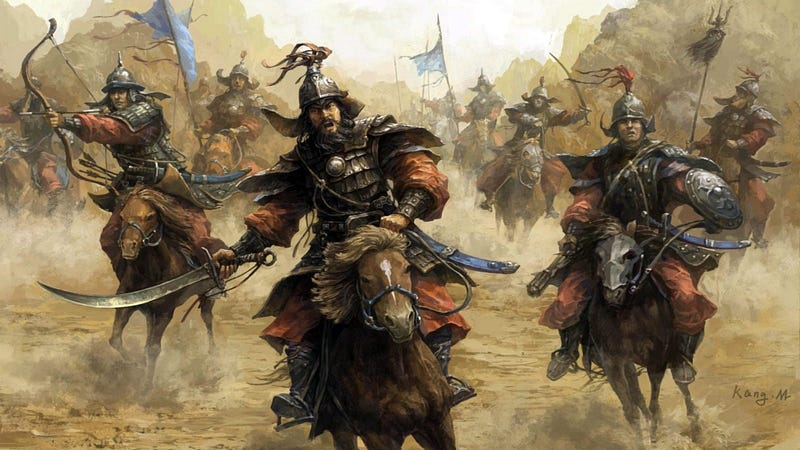
Genghis Khan united wild and hardcore Mongol tribes into an unstoppable war machine that created the largest land empire in history!
However, as it is the nature of everything that it eventually ends, so did Mongol supremacy!
Eventually, Mongols became soft, less disciplined, and less methodical. They lacked brilliant generals.
“I hate luxury. I exercise moderation…It will be easy to forget your vision and purpose once you have fine clothes, fast horses and beautiful women. [In which case], you will be no better than a slave, and you will surely lose everything.”
— Genghis Khan
Also, their opponents learned about Mongol tactics and weaknesses.
In a nutshell, the Mongols could be defeated if their horses were defeated. Consequently, the lack of pasture, hot and humid climate, and dense forests stopped the Mongol invasions.
If a nation couldn’t use anything of the above, they built lots of stone castles to stop the fast movement of the Mongols.
The Europeans noticed crossbowmen were a very successful (and cheap) way to stop the Mongols. They u needed two weeks to train crossbowmen, while you needed a lifetime to train horse archers.
Let’s have a look at 6 nations that effectively stopped Mongols.
1. The Mamluks used Mongol tactics to defeat the Mongols
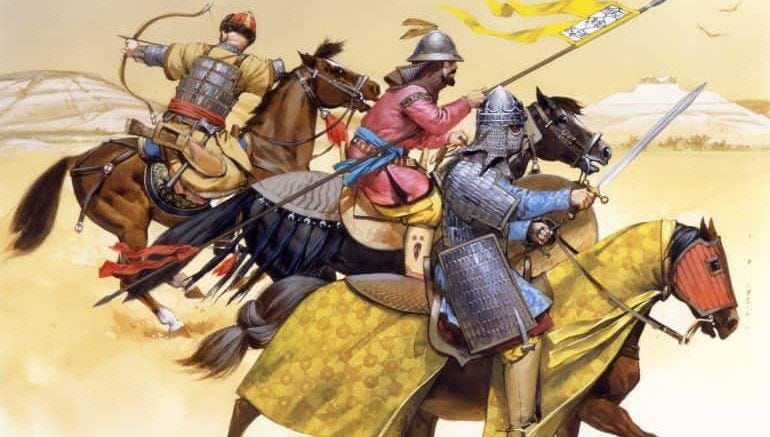
The Mamluks were former slave soldiers who overthrew their masters and took over the government of Egypt and Syria. They were experienced horsemen who were well-adjusted to the desert heat.
Over decades of constant victories, the Mongols became overconfident in their abilities.
At the Battle of Ain Jalut in 1260, the Mongols fell into the trap of feigned retreat set up by the Mamluks and lost!
The Battle of Ain Jalut was the first serious defeat of the Mongols in the west, which shattered their aura of invincibility. The Mamluks saved Islam from the Mongol threat!
The Mamluks defeated the Mongols again at the Second Battle of Homs in 1281.
There were multiple reasons for the success of the Mamluks against the Mongols:
- Mamluks used the same steppe tactics as Mongols, therefore they knew Mongol tricks
- Strict discipline and good tactics of the Mamluks
- Scorched earth policy and desert terrain deprived Mongol horses of pasture.
2. The Delhi Sultanate fielded enormous armies to destroy the Mongols
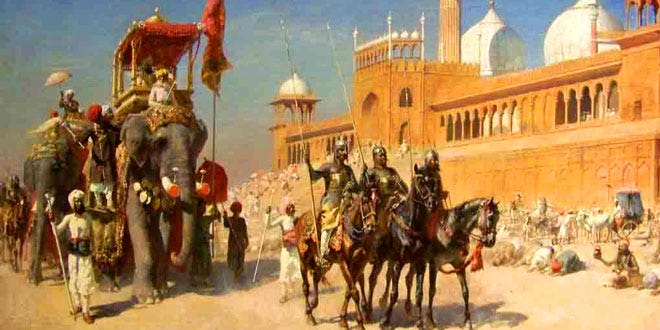
Yes, India has been conquered by the Mughals, but it was never conquered by the Mongols.
The Mongol military was regularly by the ruler of the powerful Delhi Sultanate, Alauddin Khalji (reigned 1296-1316).
Alauddin was disciplined, methodical, and ruthless — characteristics that the Mongol invaders had forgotten after too many successful wars.
Delhi Sultanate in northern India was ruled by the powerful ruler Alauddin, who was capable of raising enormous armies.
- India was very hot and humid, something that didn’t suit the Mongols and their horses
- Alauddin’s army comprised archers and light and heavy cavalry, therefore it was very similar to the Mongol army
- Mongol refugees and years of Mongol raids taught Indians how to fight against the Mongols
- The Delhi Sultanate build many fortresses near the border with the Mongolian Empire, which slowed down the Mongol advance.
Between 1292 and 1307, the Delhi Sultanate defeated the Mongols in six large battles. After 1307, it even went on the offensive and began raiding Mongol territories.
3. & 4. Hungarians and Poles built stone castles to slow down the Mongols
In 1221, the Mongols defeated both the Polish army on April 9th and the Hungarian army on April 11th — two days apart! This was an unprecedented feat of coordination for the 13th century.
However, the Europeans learned from the painful experience. They studied the Mongols and their tactics.
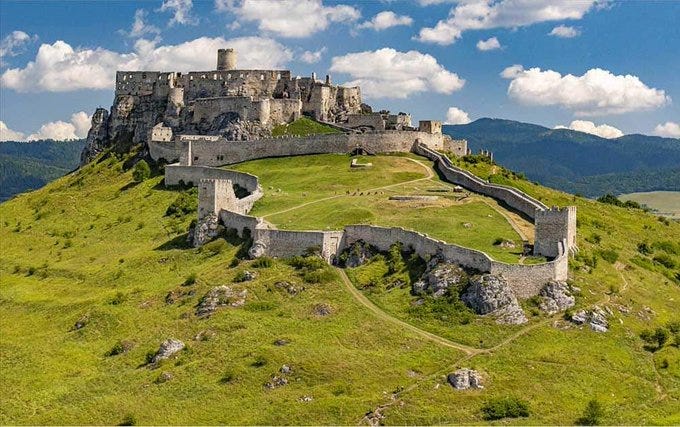
Although good at besieging, the Mongol superiority was blitzkrieg-style warfare. The Mongols were unable to conquer European stone castles.
Consequently, the Europeans built lots of formidable castles which were close to each other. They fortified their cities with walls. Stone walls replaced the former wooden palisades.
They noticed the crossbowmen were very effective against the Mongols, therefore they hired lots of them.
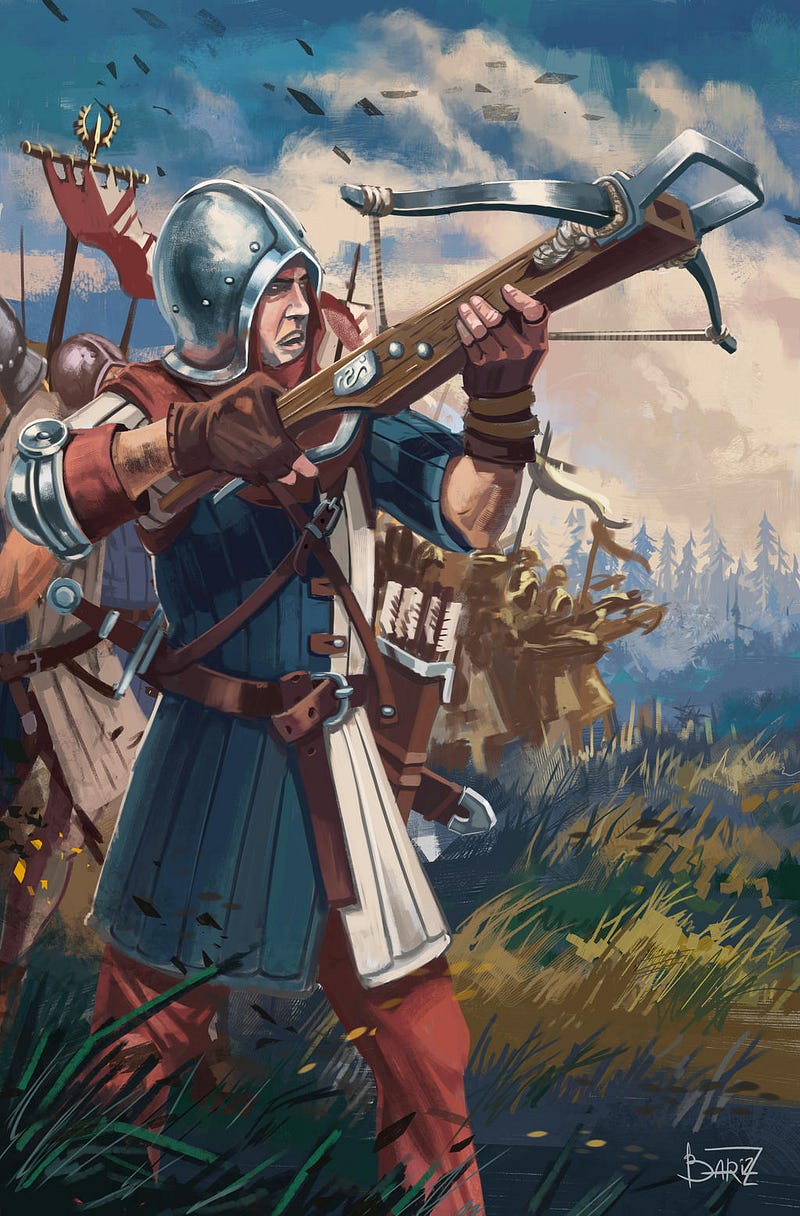
The Europeans used the following 3-step defense:
- The Poles and Hungarians used scorched-earth tactics, causing the invading Mongols and their horses to starve.
2. Using small skirmish units, they harassed the invading Mongols until they split into smaller units.
3. At that point, the large European army annihilated the Mongols.
By slowing down the Mongols with the stone castles and killing them with crossbowmen, the Poles and the Hungarians destroyed the Mongol army.
The second Mongol invasion of Hungary in 1285-1286 resulted in the victory of the Hungarians.
The third Mongol invasion of Poland in 1287-1288 resulted in Polish victory.
From then onwards, the Mongols resorted only to the occasional raids. The Mongol threat to Europe was effectively over!
5. The Japanese had pure luck with storms
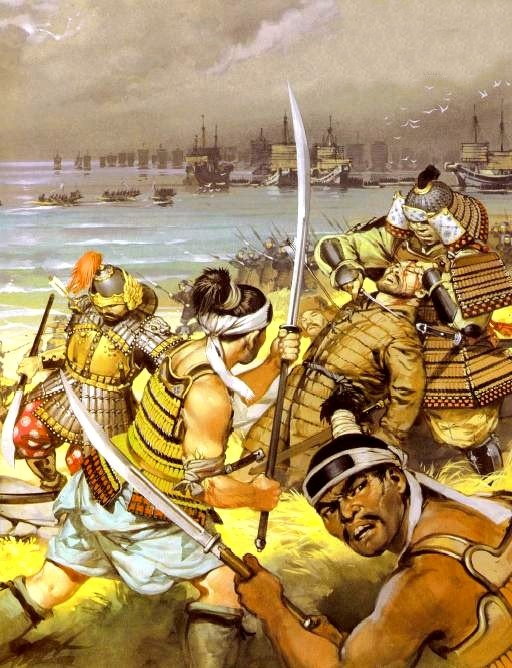
Kublai Khan (ruled 1264-1294) was a grandson of Genghis Khan and the ruler of the enormous Mongol Empire. Obviously, he wanted to continue conquering, just like his grandfather! One of his targets was Japan.
Kublai Khan ordered the Koreans to build a fleet and the Mongols invaded Japan twice. The first time was in 1274 with 30,000 men.
The invading Mongols had mixed success with the Japanese samurai and retreated back to their ships. However, a mighty storm came and half of the ships and men were lost.
For the second invasion of Japan in 1281, Kublai Khan built an enormous fleet of 1500 ships and 140,000 soldiers and sailors. It was the second biggest invasion fleet just behind D-Day in 1944.
Japan had only a few suitable landing places and the Japanese built huge two meters (6.6 feet) high defensive walls on beaches. They were able to hold the defense against the Mongols, yet they knew they would eventually lose.
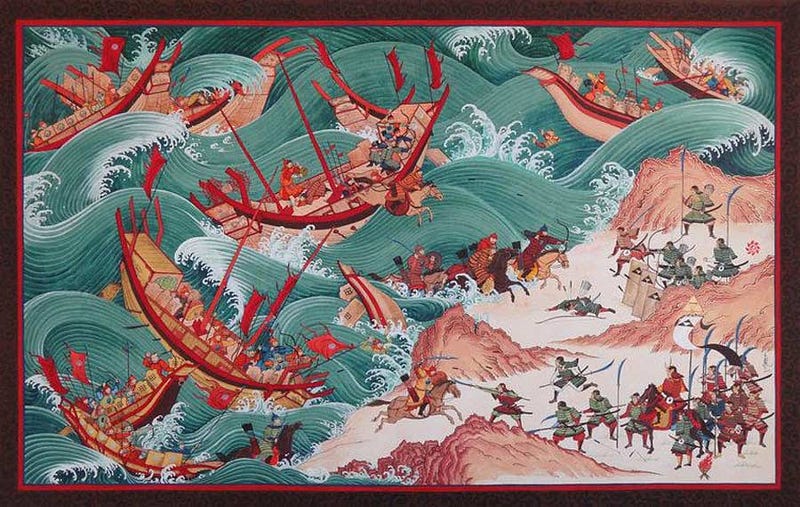
However, a miracle happened again. Just like seven years earlier, another mighty storm happened and destroyed the Mongol fleet. Mongols lost over 100,000 men.
The Japanese needed only to wait on the beach for the Mongols to swim ashore and slaughter them.
The Japanese called the storm that saved them a kamikaze (in Japanese divine wind). 700 years later, kamikaze would mean the Japanese suicide pilots trying to stop the advancing US navy at the end of WWII:
But we should ask ourselves what are the odds of an enormous storm striking twice?
6. The Vietnamese guerillas annihilated the Mongols
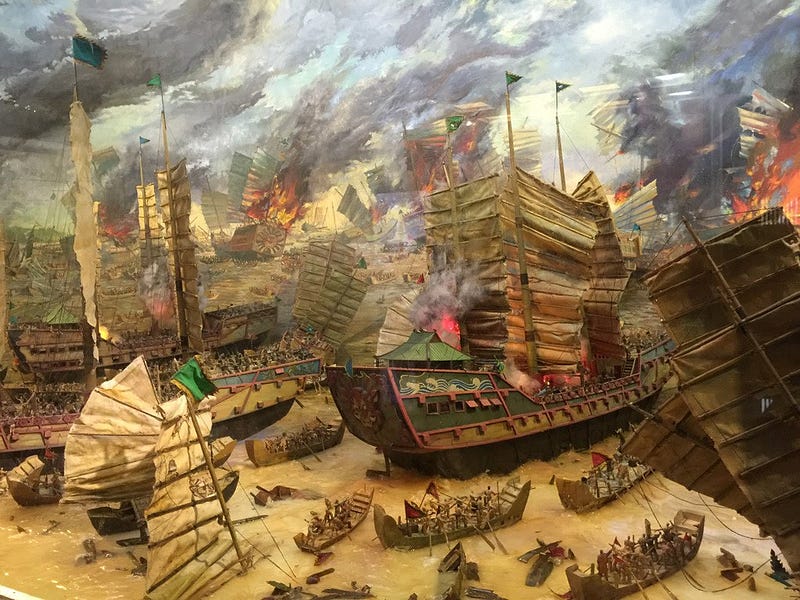
Kublai Khan wanted complete control over two Vietnam kingdoms: Đại Việt (northern Vietnam) and Champa (central Vietnam).
He launched three invasions into Vietnam. The first was in 1282–1284 with 30,000 men, the second in 1285 with 80,000 soldiers, and the third in 1287–88 with 170,000 soldiers. All three invasions resulted in the military defeat of the Mongols.
Vietnam was hilly, humid, hot, and covered with dense jungle. The Mongols couldn't use their biggest advantage — cavalry. In addition, diseases such as malaria took a heavy toll on the invaders.
The Vietnamese lost pitched battles against the Mongols, therefore they resorted to guerilla warfare and scorched earth policy.
Continuous ambushes, booby traps, lack of food, and unpleasant climate decimated the Mongol force and their morale. Mongol forces fled and were killed by the Vietnamese or stranded in the jungle.
At the end of the third Mongol invasion, the Vietnamese ambushed the Mongol fleet at the Bạch Đằng River in 1288. They placed metal-tipped wooden stakes in the riverbed and waited for the fleet to get impaled on them. The immobile ships became easy prey for the Vietnam army.
Conclusion
Series of defeats and civil wars in the second half of the 13th century represented the end of Mongol supremacy over the world.
The successors of Genghis Khan were formidable, but they lacked the genius of Genghis.
Nonetheless, Vietnamese, Japanese, Hungarians, Poles, and Indians went to the brink of their strength to stop the Mongols.


