
Who chooses where you travel?
It’s me, I’m my own boss! Well, it might be time to think twice about that.
Tourism defined
Even though tourism is hardly a term that causes confusion to the everyday listener, one would be surprised about the multiplicity of different definitions that exist in the scientific community. Neil Leiper, in his work focused precisely on this topic, examined the different ways social scientists have been looking at tourism and then used this to coin his own comprehensive understanding of the term. Combining years of academic thinking, Leiper proposes to look at tourism as a system involving the discretionary travel and temporary stay of persons away from their usual place of residence for one or more nights, excepting tours made for the primary purpose of remuneration from points en route.
He states that there are five elements to the systems that are the tourist, the generating regions, transit routes, destination regions and the tourist industry. These elements are arranged in spatial and functional connections that have the characteristics of an open system. As such, tourism operates within broader environments: physical, cultural, social, economic, political and technological.
Thus, tourism is something separate from remuneration, or any work travel — even though it could be argued that the two can overlap. Still, in its strictest definition, tourism happens for leisure purposes — and leisure itself is constructed from cultural experiences. In 1999, Dean MacCannell viewed leisure as a somewhat problematic element of a functioning society as he argued that because leisure and culture are concentrated in vacations, amusements, games, play, and religious observances, they continue to exist at a slight remove from the world of work and everyday life. Furthermore, this ritual removal from workday activities has contributed towards the central crisis in industrial society.
While such an understanding is somewhat outdated, given that the modern (Western) researchers are rather promoting shorter working hours and increased vacationing for harvesting a more efficient and motivated work-force; it is true that leisure (and as such, an element of tourism) removes a person from everyday life and could distort the tourist’s view of his/her surroundings. Here, it’s also important to note that the definition of tourism is not limited to cross-border travel, one could well be a tourist in his or her own hometown — what is more important, is the element of slight removal. A magazine could call this removal as looking at something with „fresh eyes“ but an academic might as well call the same phenomenon as just examining the surroundings while having at least slightly distanced oneself from it.
Tourism as a modern ritual
A way to understand tourism would be to point out its purpose — which by one view could be to see a certain place/monument/landmark — a tourist attraction. However, a tourist attraction is not limited to a physical landmark but it is also seen as an empirical relationship between a tourist, a sight and a marker (a piece of information about a sight such as a guidebook, informational tablet, slide show, travelogue, etc.). Furthermore, even public behavior and other similar visible parts of society can act as tourist attractions. This means that tourism does not need to happen solely for the purpose of seeing a specific physical object but also simply to „experience the culture“ and as such also applies to the activity of „people-watching“.
Whatever the specific activity of tourism, it could be argued that a lot of it happens due to an integral sense of „need“ or that something should be seen. Just look at all the „must-see places“ lists and recommendations available on the internet and is connected to the idea that modern (international) sightseeing possesses its own moral structure, a collective sense that certain sights must be seen.
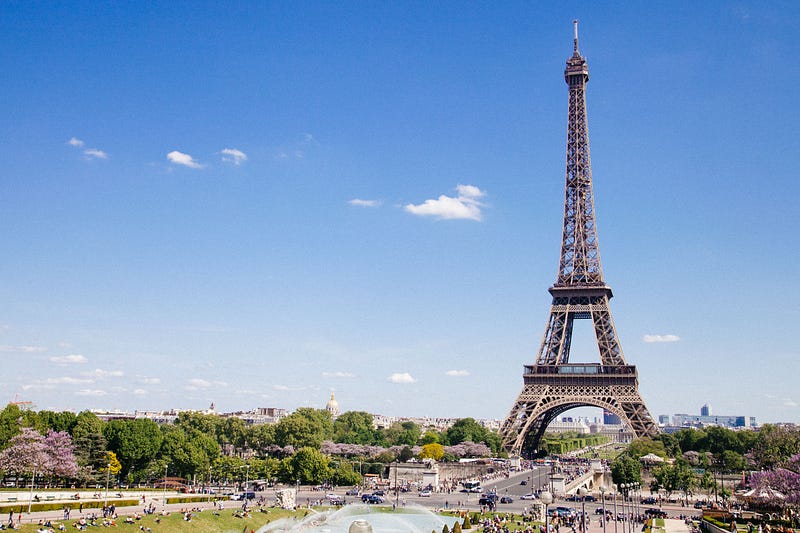
This is illustrated by the fact that there are certain agendas that seem to be almost obligatory for the visitors. For example, if one goes to Europe, a must see place would be London; and while there, one just needs to see Big Ben and of course, if that person’s name happens also to be Ben, they will need to take a photo in front of it and share it later. MacCannell brings out the same example with Paris, where one simply „must go“ in their lifetime and whilst there, Louvre is a „must see“ place even for those not particularly interested in art. No visit to the Louvre would be fulfilled without seeing the Venus de Milo or the Mona Lisa. It’s argued that there are herds of tourists who have spent their savings to make the „pilgrimage“ to these sights. As such, tourism can well be compared to a religious activity and it could be said that no one is exempt from the obligation to go sightseeing except for the local.
Such a ritual attitude of the tourist originates in the act of travel itself and culminates when he or she arrives in the presence of the sight. Thus, one should critically examine whether the act of tourism is really a conscious act performed by the tourist or whether the people involved in the act are rather mindlessly following a path already set out for them by clever marketing and group-belonging. Neither end of the spectrum could be applied to accurately explain the actions of the whole group — as is true with most generalizations — but is is indeed true that a lot of tourism happens in a way where the tourist has not critically assessed their own choices.
The lack of critical thinking can be quite dangerous as tourist attractions are not merely a collection of random material representations. When they appear in itineraries, they have a moral claim on the tourist, and at the same time, they tend toward universality, incorporating natural, social, historical and cultural domains in a single representation made possible by the trip. This morally enforced universality is the basis of a general system of classification of societal elements produced without conscious effort. Thus, by choosing to visit certain sights, a tourist is often seen as endorsing the sight — be it a physical landmark, an area, the practices of the people there. Even if the tourist is not pleased by the sight, by having visited, they have already contributed to the area economically as well as indirectly. When they talk about their experience or share their images of the place, they are by definition, contributing to the marketing of that specific place. Even if their views are negative, they are still drawing attention and as such, are participating in marketing that particular area. As such, a tourist has the power in choosing what gets attention and what does not. Whether this attention drawing happens consciously or not, is another question — and should be critically analyzed by anyone participating in the industry.
Tourism influences morality
Having established the linkage between tourism and moral issues, it’s also necessary to assess how this can influence the way people understand the world around them and how their own morality is developed. MacCannell argued that as public places contain the representation of good and evil that apply universally to modern man then when being faced with the social facts of these public spaces — such as poverty, race, class, work — this will naturally make the man being open to ongoing moral evaluation and interpretation. Without having a first-hand experience in a specific society, a person will not have as strong ideas about that place and the phenomenon experienced there as they will have after having visited it.
A touristic attitude of respectful admiration is called forth by the finer attractions, the monuments. A no less important attitude of disgust attaches itself to the uncontrolled garbage heaps, muggings, abandoned and tumbledown buildings, polluted rivers and the like. Disgust over these items is the negative pole of respect for the monuments. Together, the two provide a moral stability to the modern touristic consciousness that extends beyond immediate social relationships to the structure and organization of the society. This touristic form of moral involvements with diverse public representations of race, poverty, urban structures, social ills, and of course, the public „good“, the monuments, is a modern alternative to systems of in-group morality built out of binary oppositions: insider vs. outsider, us vs. them. Getting a first hand experience of the culture and issues going on in the destination country, they traveler will often have a changed opinion of what they’ve experienced as well. It’s not uncommon for someone having visited India to become more understanding of why the rural communities do not care as much for recycling as those in Sweden for example(they have other things to worry about) or to become a strong advocate for preserving local art after having had a chat with a restorer in Jordan.
Such opinions people develop are often only based on first-hand experience and not researched further — thus making this arguably a biased view of the matter at hand. However, it is undeniable that travel has a strong power to change our morals and that the tourist as well as tourism industry have a far larger influence than what is commonly thought.