
Who Are You? The Pursuit of Self-Knowledge
We’re all pretty clueless about ourselves sometimes. But can brain scans and self-reflection bring our “core” selves to the surface?
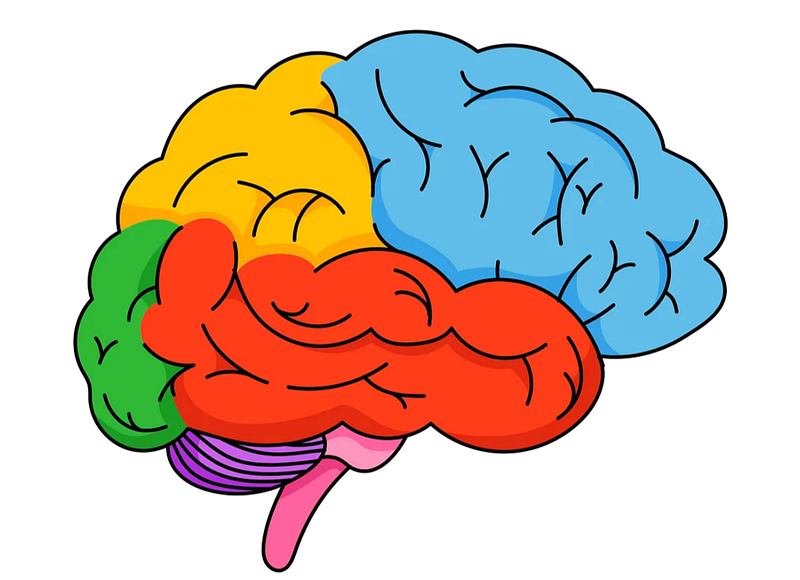
The pursuit of self-knowledge is held in high regard in our culture. We are encouraged to figure out who we really are — what makes us tick, and why — in order to live a fully-formed life: A career which suits our skills set, a relationship with a carefully selected partner which might actually stand the test of time, all of life’s important decisions made from a well-developed and fully-functioning sense of self-awareness.
It is, we are told, our path to the good life. “Know thyself” — the famous Socratic instruction — is the hard-won knowledge which unlocks the world, and our place in it.
But is it actually possible? The brain is the least well-understood organ in the human body. Many of its workings remain a baffling scientific mystery, which is one of the reasons why brain-related conditions (and injuries) are some of the hardest to treat.
Then there’s the fact that we are physically always in a state of flux. Our cells replace themselves every seven years or so. And we evolve: What we thought seven years ago isn’t necessarily what we think now. Our bodies change, and so do our minds.
There’s a third problem. So much of our identity — what we wear, what we think, what we eat, what we do — is bound up in the cultures of a specific time and place. If we had lived in a different era, or a different small town, or some big city, or an entirely different country, everything we think and do might be different.
Who, then, are we really? How do we ever get to know our true, core selves?
What brain scans reveal about our minds
One of the challenges of neurobiological research has been finding scientifically rigorous ways of quantifying self-awareness. What is the physical basis for our species’ capacity to be self-aware, and how do we formulate an assessment which doesn’t rely on subjective findings?
Steve Fleming, PhD, a professor of cognitive neuroscience at University College, London and author of Know Thyself: The Science of Self-Awareness (2021) uses brain scanning and computational frameworks to help answer those questions.
It’s a field of study known as “metacognition” — how we monitor our cognitive functions (self-reflection) and how we put that knowledge to use to regulate our own behavior. Will I be able to learn how to play tennis? Asking ourselves this question is an example of metacognitive functioning. Or when we say: I can’t remember the name of that thing, but I know it when I see it.
It turns out that quite a lot of what we do we do on autopilot. Showering in the morning, pouring ourselves a glass of water, making a minor steering correction in our car to avoid an obstacle ahead of us on the highway. But other parts of metacognition involve us consciously thinking something through. For example: Assessing how confident we are about a viewpoint before deciding whether to volunteer or withhold that information.
It’s all linked to brain structure and function in the prefrontal cortex, which makes it — scientifically speaking — exceptionally difficult territory. And it gives rise to all sorts of complications. Like the “fluency” trap, the phenomenon that we believe information which “feels right” even if it’s not. And our capacity for self-awareness fluctuates. Some people innately possess greater self-awareness than others.
We are not born self-aware. That aspect of human nature only starts to emerge when we’re three or four, which suggests it is a learned behavior, accumulated through experience and interactions. And there’s growing empirical data from social psychology experiments that demonstrate that people routinely mischaracterize the contents of their mind. For example: We place undue emphasis on our emotional response or the way something “feels” even though feelings pass or change. Emotions are not always a reliable guide when figuring out the best course of action.
Think of it as trial-and-error at a game you can’t win. Just another of the many frustrations of the human condition. We must live within minds we will never fully know.
Who is the real you?
What is known, however, is the social function of self-awareness. We develop this skill in order to grease the wheels of day-to-day life. That makes sense: We are socially conditioned creatures, highly adept at adapting to our surroundings.
It’s one of the reasons, paradoxically, why people venture off into the (literal or figurative) wilderness to “find themselves,” especially after a period of personal tumult. It’s a rite of passage firmly ingrained into our culture. We encourage school leavers to take a gap year to broaden their horizons (parenting code for taking down know-it-all eighteen-year-olds a peg or two). Many of us leave our home towns in order to try our luck in the biggest cities.
Whether we fully acknowledge the purpose, this striking out on our own is a version of dislocating ourselves from what we already know in order to “extract” the essence of what we actually think. And it’s a methodology which knows many expressions. The Bridgerton heartthrob Jonathan Bailey, for example, eschewed the opportunity to go to university and drama school because he wanted “to allow my own experiences to come through” in his acting. It is an iteration of a viewpoint you see quite often in artistry. Do you want to learn the methodology of someone else or do you want to remain “true” to your own innate self-expression?
Language compromises us
Even language betrays our capacity for self-knowledge, according to post-structuralist thinkers like Michel Foucault. It is estimated that we have 70,000 separate thoughts in the course of a day, and somehow from that maelstrom we have to figure out the best ones and then find the language to articulate them.
Language is a construction we learn as infants and literary theorists like Foucault thought that made it hopelessly compromised as a vessel for authentic communication. It can never be as “true” as a cry from the heart, or a growl from the gut. Language, he says, stands between who we actually are and the tools we have at our disposal to make that known to other people.
This is a difficult truth, because it offends concepts of personal autonomy upon which our culture allows us to construct some sort of dignity. And it’s a slightly dispiriting prospect for us writers if, as Foucault contends, we are not the source and origin of the text we create but only part of its structure (what he termed the “decentering” of the author).
But it’s also quite a consoling, and deeply human, vision of the world. We’re all part of the “discourse,” a product of all our entanglements with other people and all the issues of the day.
The limits of selfhood
Julian Barnes, at the end of his novel The History of the World in Ten and a Half Chapters (2009), satirizes a world that conceptualizes heaven as an ecstasy of shopping and champagne. His point is that it is such a limited way of thinking about all that life might be. The brain, when asked to conjure pure and endless pleasure, can only do so with reference to what it has been taught to associate with joy.
It is an interesting take on the limits of self-knowledge. How much of what we think is our “core” is just a recirculation of what we have been taught to believe has value?
And how can we ever know for sure? The philosopher David Hume said we couldn’t ever be sure because there is no such thing as a “substantial self.” All we are is merely a “bundle” of perceptions: “When my perceptions are removed for any time, as by sound sleep; so long am I insensible of myself, and may truly be said not to exist.” What even is “selfhood” is his implication, if all we are is bound up with our reflections and introspections? Do we even have a core or are we just functionaries, vessels of information and emotion?
Understanding the contents of our mind
Philosophical treatise is all well and good, but where does this take us, and how does it play out in the real world? What are the consequences of everyone running around not knowing themselves?
The quest to find out more about ourselves is a noble one. It makes us better people, to ourselves and to others.
So it’s not that self-knowledge is, of itself, an illusion, or a wasted endeavor. If we stand for nothing, we’ll fall for anything, especially the wrong-headed verdicts of others. It’s just that self-knowledge is a much more superficial and flimsy construction than we might otherwise care to admit.
Metacognitively speaking, there is so much about our minds that we do not yet know. We are our own ultimate blind spots. It’s cause for a little humility, but also awe. We are all the most enormously complicated beings.
Niall Stewart is the author of The Beautiful Anatomy of Despair (2022)