
Who are Kalasha People of Pakistan
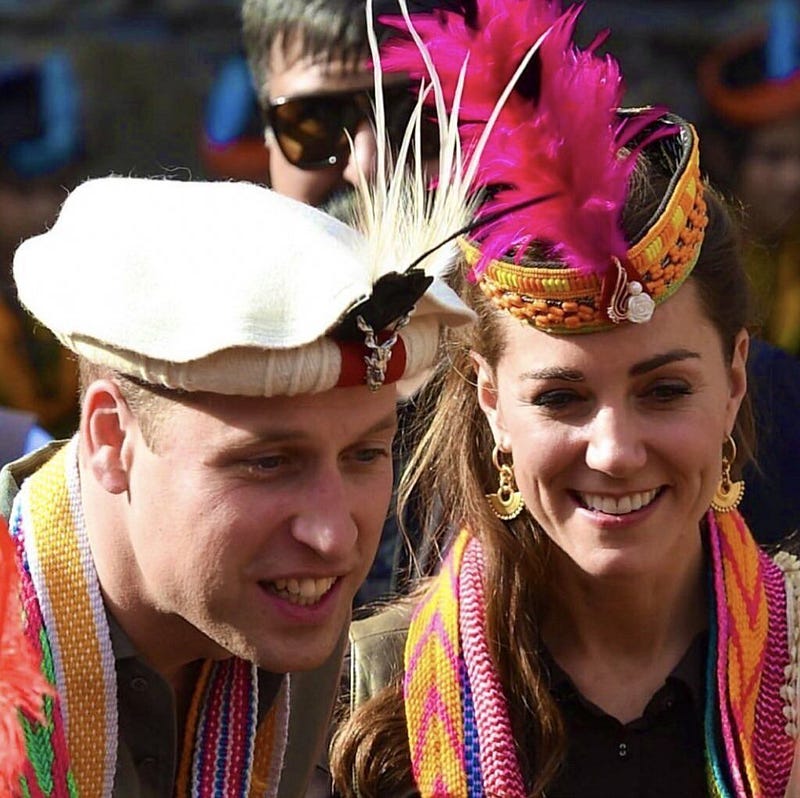
During their tour to Pakistan in October 2019, British royal couple, Prince William and his wife Duchess of Cambridge Cate Middleton visited an indigenous community of Pakistan, called the Kalasha. Their pictures caught many eyes and I found many of my foreign friends asking me about the Kalasha.
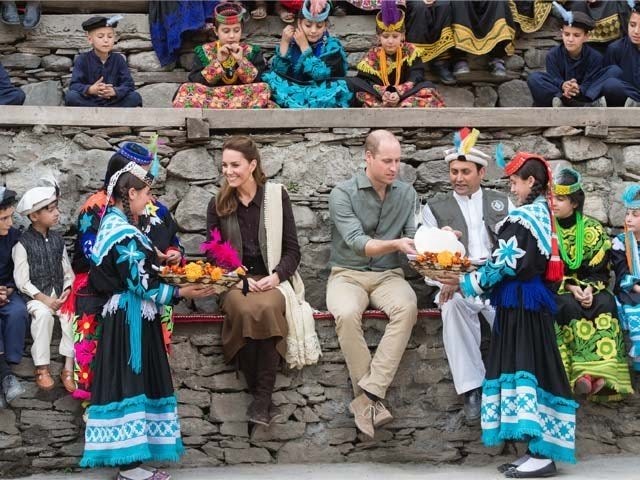
The piece of land called Pakistan is home to many ethnic minorities due to its geographical location. Long before being called Pakistan, people from different parts of the world came and settled here. Only a few could keep their culture and values unchanged by the hardcore rightest majority of current-day Pakistan. One of these peoples is the indigenous tribe called Kalasha who has a history of over 3000 years.
Kalasha tribe lives in the beautiful district of Chitral in Gilgit Baltistan, Pakistan. Their population is only around 3500 to 4000. This area has always been a major tourist attraction. Located on a very high altitude, this valley has a pleasant summer and extremely cold winter. Their religion is also very different from other religions of the region. According to researchers, they are Animists, they believe in so many gods and spirits.
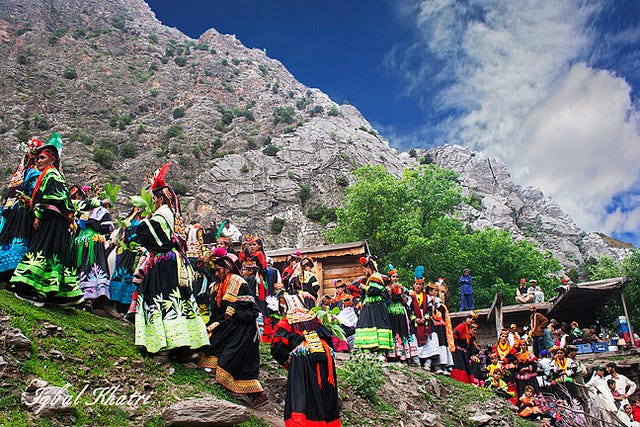
There are two theories about the origin of these people. One is that they are descendants of Alexander the Great who invaded India in 326 BC. The other theory says that they are Eurasians who migrated to this land during ancient times. There had been detailed researches about the original roots of Kalasha people, including DNA tests.
A genetic analysis conducted in 2001 by a Spanish biologist Dr. Lluis Quintana-Murci stated that “The western Eurasian presence in Kalasha people reaches a frequency of 100%.” The study concludes that no East or South Asian lineage was detected in the Kalasha. The fair complexion and colored eyes of Kalasha people also testify this fact.
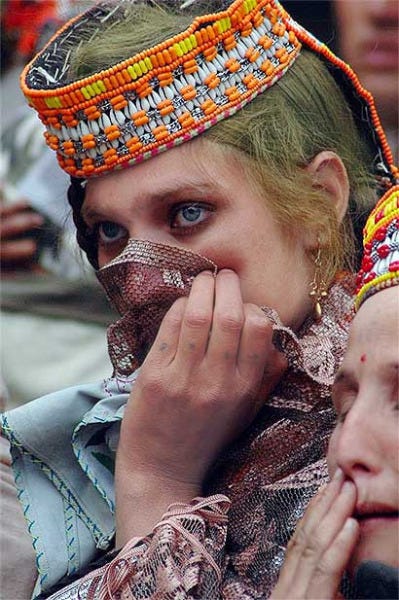
Kalasha culture is a colorful combination of religious festivals, rituals, language, and a unique style of dressing. Kalasha women wear long black robes adorned with Cowrie shells and with heavy bright colored embroidery. They keep their hair in many braids instead of using Dopattas to cover their head like the rest of Pakistan, they use caps. These caps are also very different and beautiful. Men wear regular Pakistani style Shalwar Qameez.
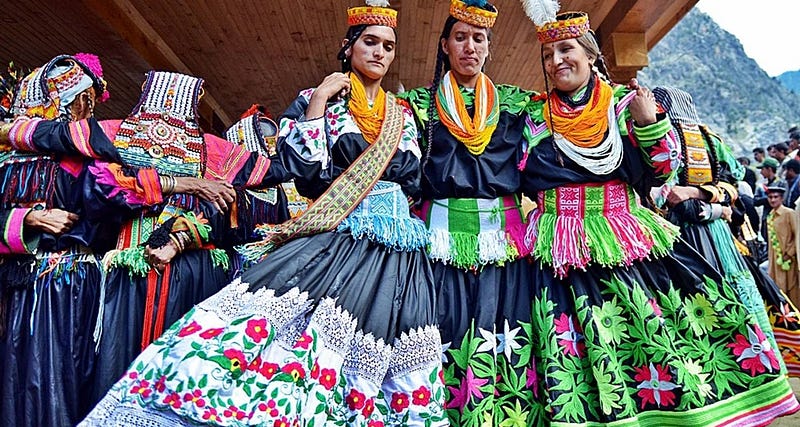
Kalasha people are very open-minded when it comes to relationships between men and women. A Kalasha woman has the right to choose her husband and she is free to leave him as well if she likes someone else. Very rarely do such matters invoke a fight. Most of the time the woman’s will is respected by her father, or husband if she is already married.
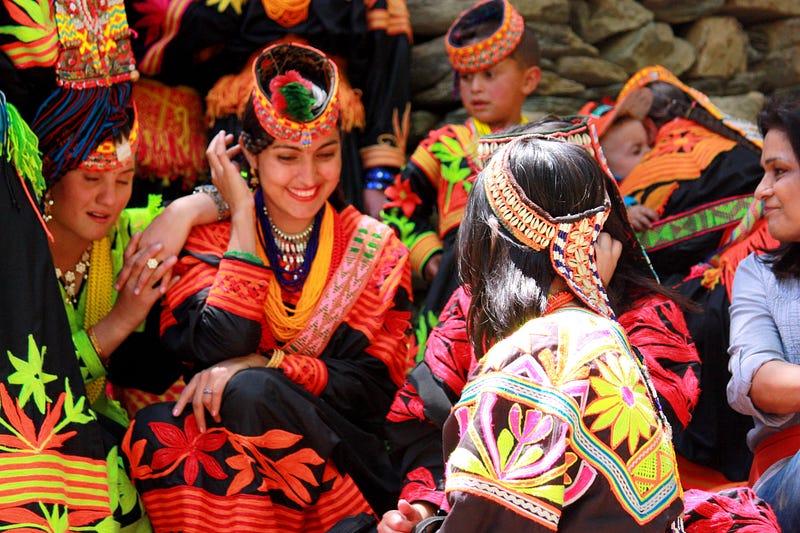
Kalasha celebrate many festivals during the year but the most famous are Chillam Joshi or the spring festival. The Uchau or the autumn festival. The Pul festival that is celebrated on the full moon of September, and Caumus which is celebrated in mid-winter. They celebrate these festivals to thank the different deities that look after their crops and cattle during the whole year.
The most important of all is the Caumus festival which is celebrated on 22nd December. Goats are sacrificed during this festival and Kalash sing and dance in the celebration. Outsiders are not allowed to attend this festival because they are considered impure. The purity has so much importance in Kalasha culture. The men and women who are not virgins are considered impure. There are special rituals performed by a shaman to purify these people near the climax of the festival.
The men are divided into two groups during the festival, the pure and the impure. The pure ones sing the pious songs while the impure men sing obscene songs. Doing this an exchange of dressing takes place between men and women. The impure men now dressed in female clothes keep dancing and singing while chasing the pure boys.
During this festival, seven pure boys are chosen to represent the gods and they are then worshiped and offered bread. The boys receive the blessings of the gods. These boys then hold on to each other and walk through the village to spread the blessings of gods among all the pure men and women. This is the festival when women are asked to choose their husbands. Married and unmarried women give letters to the men of their liking. These letters contain the price of dowry to be paid to their father or husband. If the man also wants to marry the woman who chose him, then he will pay the dowry and marry the woman. It is a sacred custom and considered blessed by gods so no one considers it as infidelity or immorality.
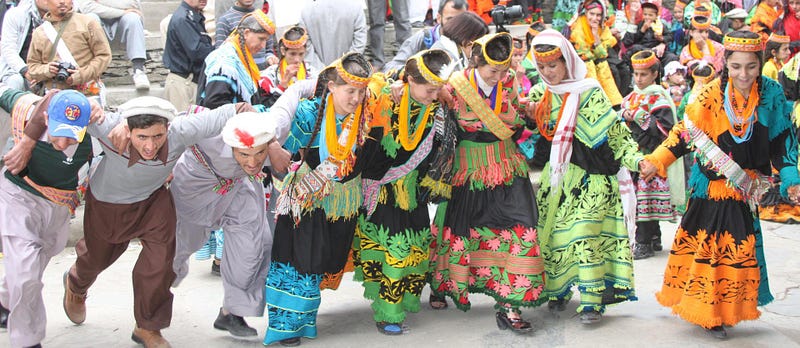
Another ritual that used to be the center of this festival has been abandoned by the Kalasha due to negative publicity in the outside world. For that ritual, a young virgin boy would be sent to the mountains with 15 goats, for a fortnight to not be seen by anyone and live only on goat milk. The shaman would blow a conch towards the hill and the boy would appear among the men and women of the tribe. This boy was considered to be an avatar of the gods Indra and Balimain. He then would be offered a 24 hours window to have sex with any woman of his choice, young or old, married or unmarried. The children born as a result of that sacred union were considered very special and blessed by both the gods.
The shaman would then wave juniper brands over the impure men and they will become pure again. The festival ends with another exchange of clothes that makes them men again.
The social issues Kalasha people are facing in the Islamic republic are very alarming. Due to the respect for their women’s decision, there had been many cases of Kalasha women marrying Muslim men and leaving the Kalasha tribe. The terrorist attacks on Kalash were also high a few years ago because Jihadists cannot imagine a heathen tribe living among them. These peace-loving people are now facing a much worse problem, tourism.
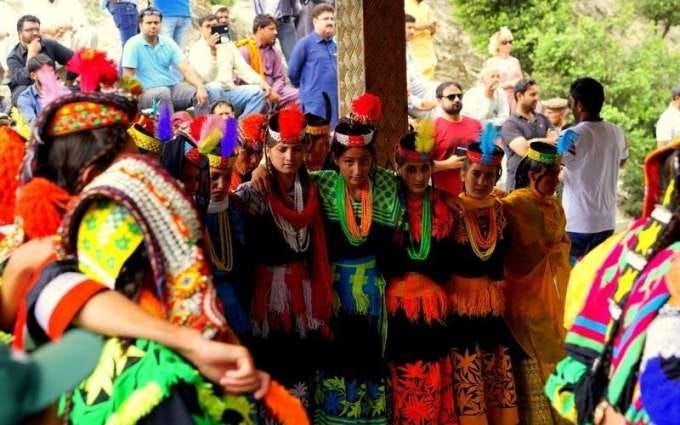
With the boom of the internet, tourism in Pakistan also boomed and now more local and foreign tourists are visiting Kalash every year than ever in history. Most of the time these tourists do not respect the culture of Kalasha. There had been cases of harassment of Kalasha women. People got arrested and sentenced too but harassment is not the only issue. Talking to a local newspaper Dawn a vocal Kalasha man, Bugi Ansaari said, “What is left for us? Our land is taken by strangers, our trees are used as pledges for a cap, and we live like animals in a zoo, where the spectators stare at us. We are forced to dance for strangers and our women are troubled. All we want is to be left alone.”
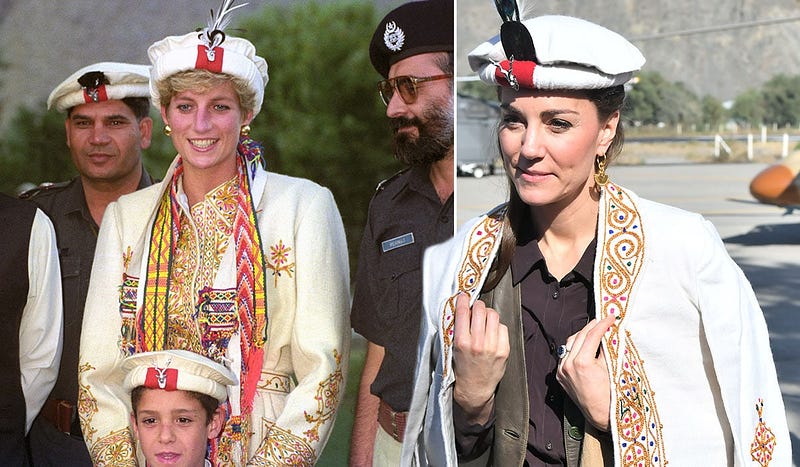
The government of Pakistan did not miss the opportunity of a royal visit and introduced this exotic tribe to them, but on a local level, Kalasha are living a rather poor life. They are facing many problems threatening their very identity. The Kalasha people are demanding to be declared UNESCO world heritage, as they are among one of the world’s most intriguing tribes.
I recommend this detailed documentary on the lives and culture of Kalash.