
Who Am I and Other Existential Questions We Ask Others to Answer for Us
And so it goes until it stops
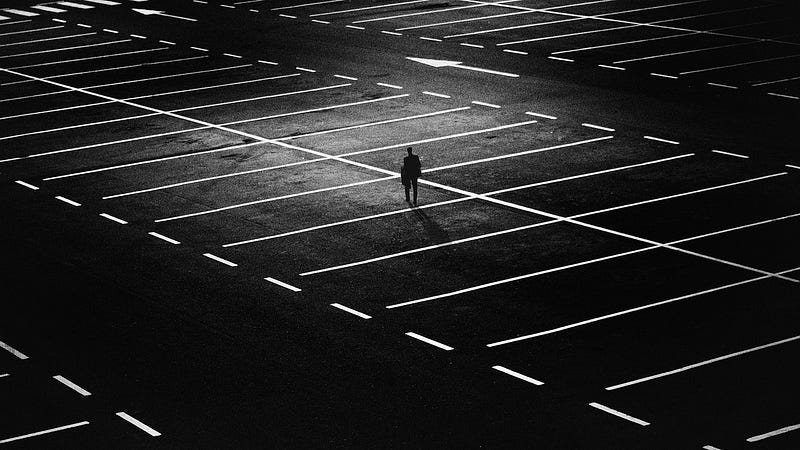
I see the world. Filter it through everything I’ve lived through. Then turn it sideways so I see it my way.
I write about it. Tender my resignation for that part of me that’s most like everyone else. I am tired of pretending. I am weird. Always have been. See things upside down, and inside out, and it never changes.
Never straight away. People thinking on Tuesdays and Thursdays only. Mayo on my burgers — I am truly sorry.
Tried to be one of the gang. They kicked me out. Changed the locks. Barred the doors. Wrote a nasty review on Yelp.
That’s just the way it is.
I see the world. Filter it through everything I caught hell for being different, so I salute myself. Wave my own flag. Sing my own anthem.
It’s lonely being nowhere, I admit but nowhere am I more alone then when not being myself.
Who am I?
No, I am not asking you the reader to respond, though that would be nice if you did. I am simply pointing out that this is a question we ask ourselves time and time again.
In one form or another, we are searching for an answer that goes beyond the small things that we already know about ourselves.
The food we like, what type of women. Jazz or rock? Football or Lacrosse? We have a rudimentary understanding of all these things and a lot more because all of these things interact with a slew of other things and after a few years the list gets quite long.
But do we really know how it all gets put together?
If we did, then why all the self-help books, motivational videos, and gurus telling us what we need to do?
Why are we drawn to others for advice and ask them questions about the books we read, the music we listen to, and what they all mean to us when we’re alone at night?
I think it safe to say that most of us and perhaps all of us, have questions.
Who am I being one of them. What am I doing with my life, being another.
So, we listen. We watch endless YouTube videos and take long walks and ask ourselves all sorts of additional questions along the way.
Finding striking similarities between the gnarled trunk of a tree we’re walking past and the path we’ve chosen in our lives.
We become despondent or elated depending on what we heard, what it triggered in our cluttered minds, and where it leads us.
And perhaps most importantly, who’s leading us?
Are we the sherpas of our own lives, taking us where we want to go?
Or are we passengers on a journey put in motion years before while being a child in a home with parents who had an answer for everything or just assumed we did and let us get on with it?
Growing older seems to have a built-in guarantee that experience will happen and wisdom will follow but often these are packaged up and sold in books and courses and we are influenced into believing that who we are is an amalgamation of everything we’ve heard and read and dreamed of over in the last 30 years.
So, can we be faulted for pulling up short one day, hands on either side of our heads, wondering how we arrived at a place that seems so unfamiliar to us?
I don’t think so.
Somewhere along the way, we heard of ancient Greek philosophers like Plato and Socrates. Read quotes from the Stoics. Essays from Nietzsche and Lao Tzu and thought deep thoughts about life and purpose and how these things tied together, not unlike a raft of logs, and carried us such a long way from where it all began.
Here’s another question: Are we the same as everyone else?
Obviously, this cannot be true because we all look different, sound different, and speak different languages and dialects, with some of us liking mayo on our burgers and not ketchup.
And yet with millions of books and tapes out there on self-help, philosophy, and religion, all telling us how to pursue the life we want — isn’t it possible that millions and millions of us are all becoming the same person as a result?
That our genetically wired instincts to develop into the person we were meant to be is being rewired by all the external influences coming at us, and that over time we are becoming someone different.
Someone who we don’t fully recognize and this is what is causing us to become confused, bemused, and outright irritated that after 30, 40, or 50 years we’re still asking: Who am I?
Perhaps the Greeks developed their brand of philosophy because the people around them were having the same issues we are having today, but with a little less stress perhaps, fewer demands at work, they had the time to think about such things.
And their ideas, carried forward into the present have been added to by thousands of others along the way until there are countless paths to follow to become the person, we think we should be.
But are we certain this image of the ideal us is actually who we really are?
I have struggled with me-ness all my life. Born with a certain perspective, a certain, some might say, quirky way of looking at life that has not always served me well.
Meaning when you’re different, when the words coming out of your mouth sound like other similar words but really aren’t, you get pigeonholed.
You’re slid into a category that allows for such quirkiness. You’re eccentric. Odd. Strange. Brooding, moody, overly thoughtful, and flat-out think too much.
You’re out there, looking in, trying to conform so that you are noticed, and yet when doing so, and becoming part of the gang, you often feel uncomfortable, awkward, and not yourself.
Sigh. So, we resume our search. Reframe the questions. Dust off the dirt and debris acquired from stumbling and falling down various rabbit holes and try again.
Or we don’t.
We consolidate.
We take inventory of who we are, make notes, file it all under Personal, and do our best to hang on to what is already there with the knowledge that perhaps in our case, hell maybe in every case, the “factory direct” settings we came with were actually the ones best suited for us.
And that the endless searching and questioning and listening to experts on who we should become, may be taking us off the path that we all started out on that would eventually lead us back to the person we already are.
Help is an interesting process, a rather unique one, all things considered.
It is something that is often offered but not accepted. Accepted and not appreciated. Listened to and ignored at the same time.
We seek it and resist it because we like the concept of self-help, the kind we give to ourselves. But we’re not always in a position to do so.
So, should we be helped?
Whenever possible.
And what’s the best kind of help?
The kind that allows us to eventually help ourselves and entails the least amount of enforced change.
Becoming a better, more organized, more motivated, more focused, and more resilient person, waking up at 4 am to a cold shower, heavy breathing, and auto-suggesting all forms of new behaviors is not necessarily what we need.
If we turn down the volume, reduce the din raging all around us and listen for the words that make the most sense to us, we’ll often find them to be our own.
We just need to hear them.


