
Mature Flâneur
White Lotus
Plus pink, yellow, purple, red and mauve ones too.
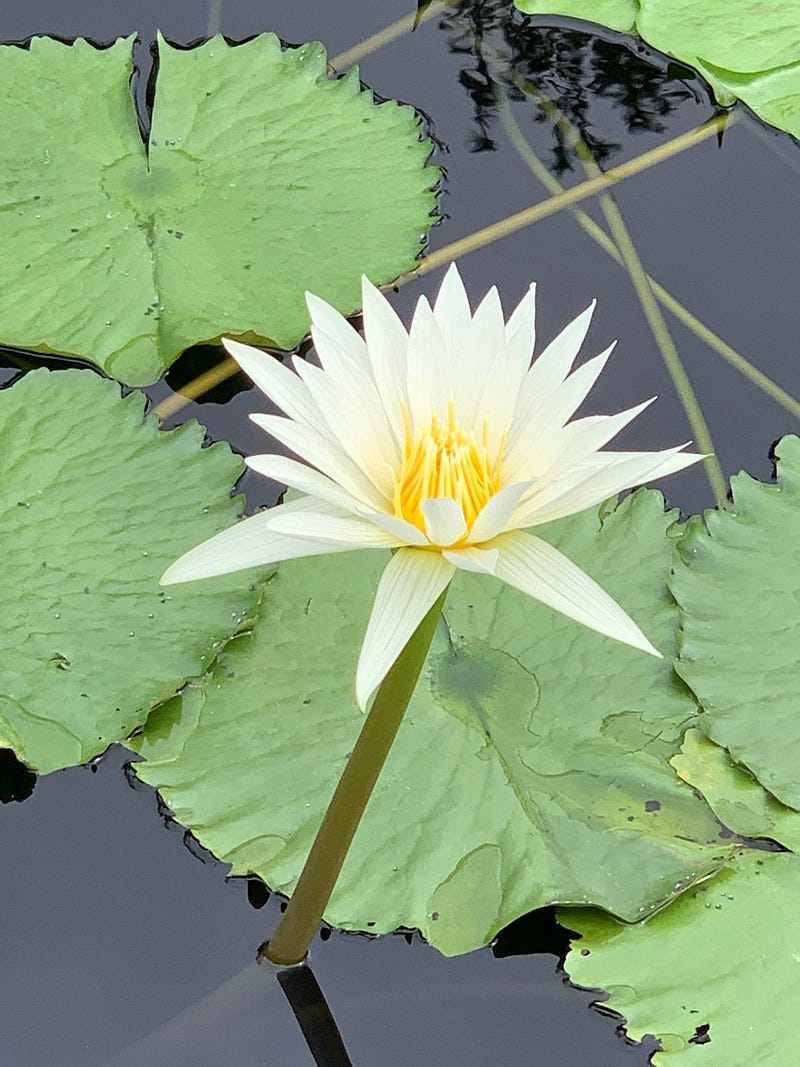
To see a World in a Grain of Sand. And a Heaven in a Wild Flower. Hold Infinity in the palm of your hand. And Eternity in an hour.
— William Blake
I am not the kind of a chappie who waxes eloquent about flowers. Oh, I can amuse myself on a brisk perambulation through an English country garden, or saunter amiably enough between the thornbushes of a French rosarium. I can even tolerably enjoy a hothouse full of orchids. But for nature’s beauty, instead of gardens give me grandeur: majestic mountains, vast expanses of tundra, herd of wildebeests thundering across the veldt. That sort of thing.
And yet, despite my predilections, I had one encounter with lotus flowers that utterly transfixed me, left me truly speechless — if you can believe it. And no, this did not take place in a Thai jungle monastery nor a Maharajah’s pleasure palace. It was in the exurbs of Philadelphia, at Longwood Gardens (an estate formerly owned by Pierre du Pont — yes, also the owner of the Dupont chemical company).
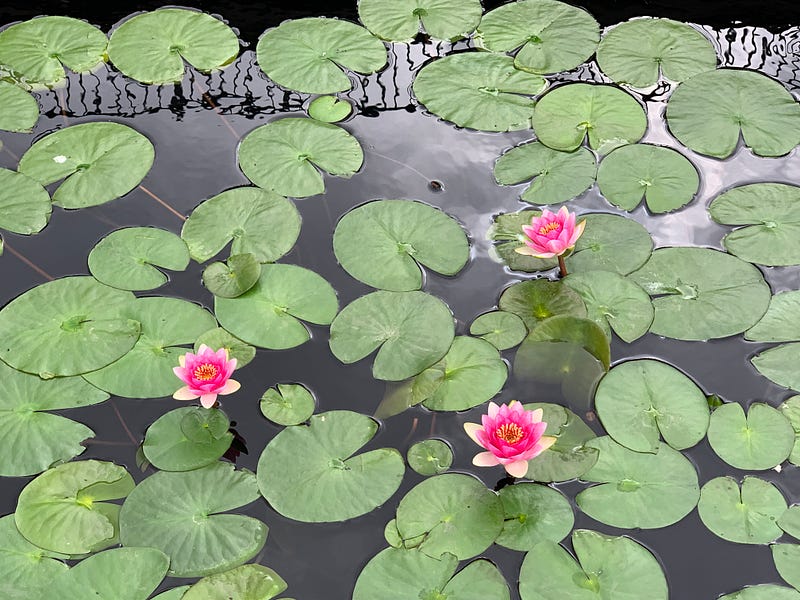
The whole park is 926 acres of rolling meadows, forests, elaborately designed gardens and fountains that produce an astonishing display of synchronized water spouts. There’s also a large hothouse of exotic plants. Tucked right behind this hothouse are four rectangular ponds like the one below which is where to find the lotuses.
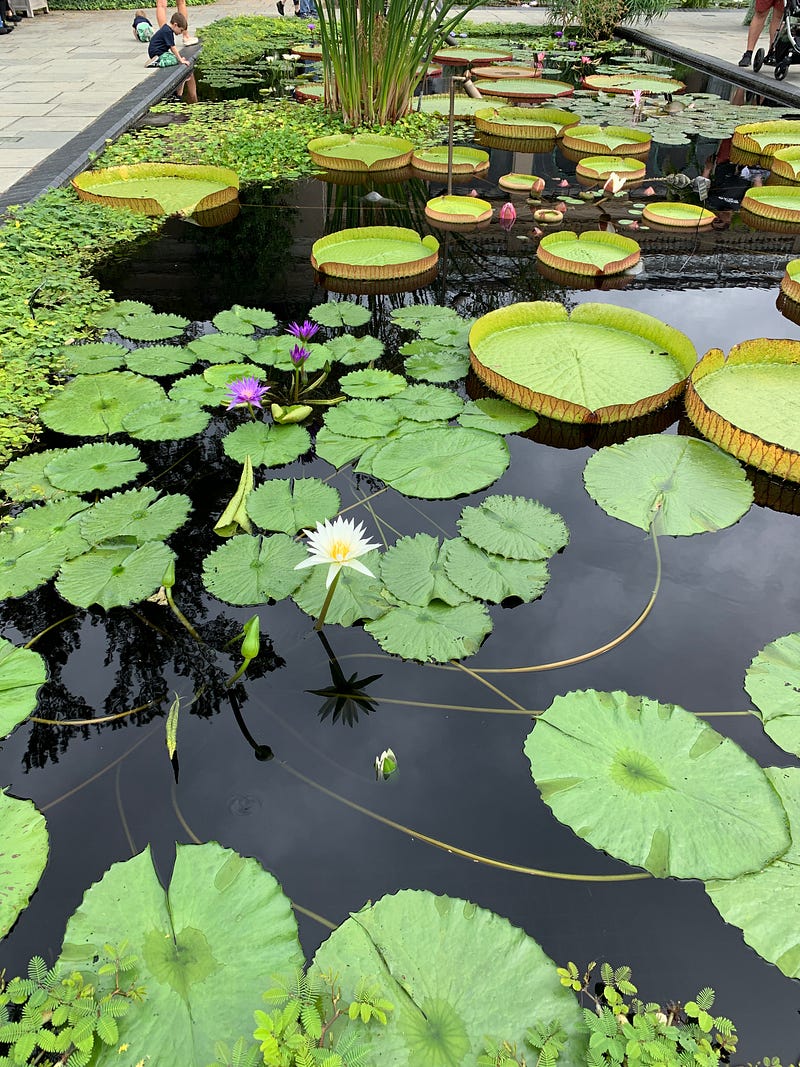
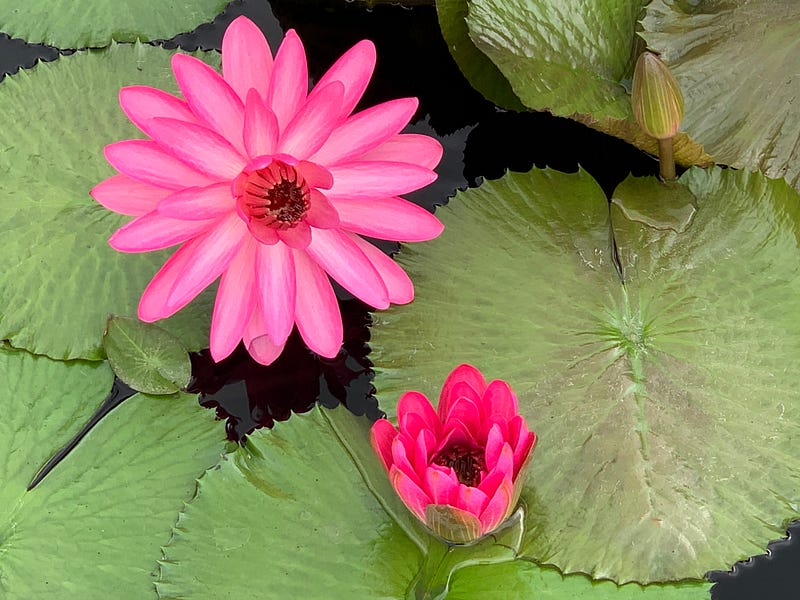
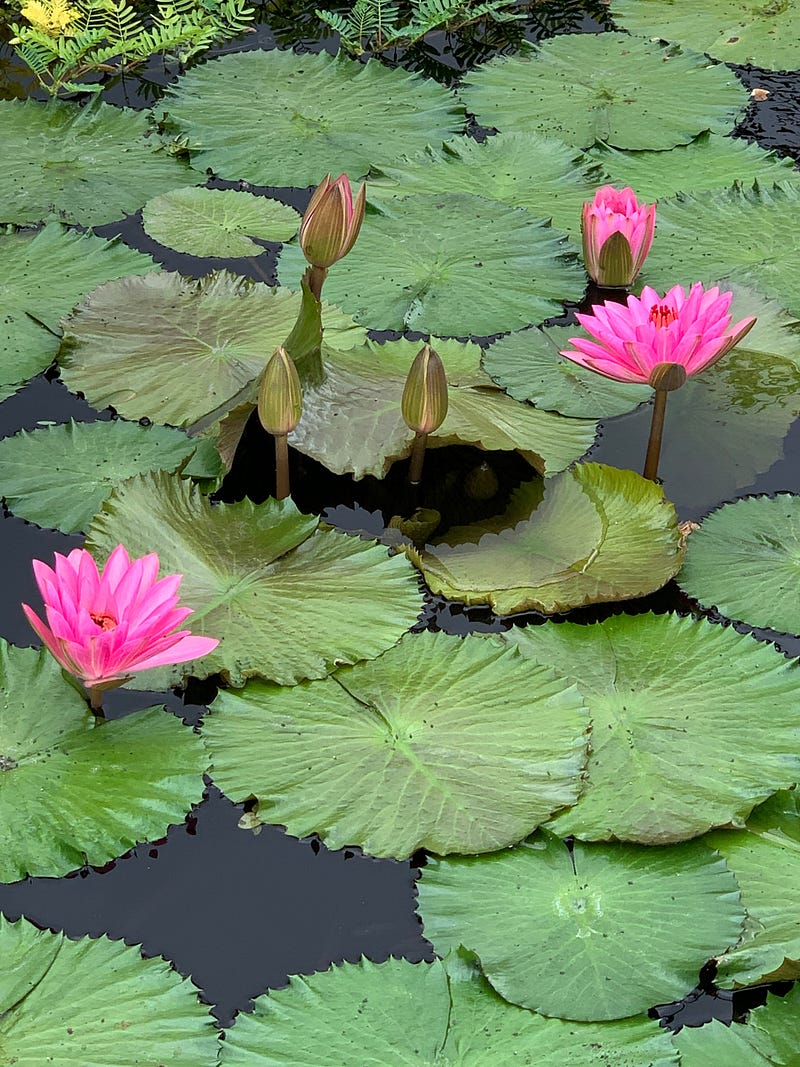
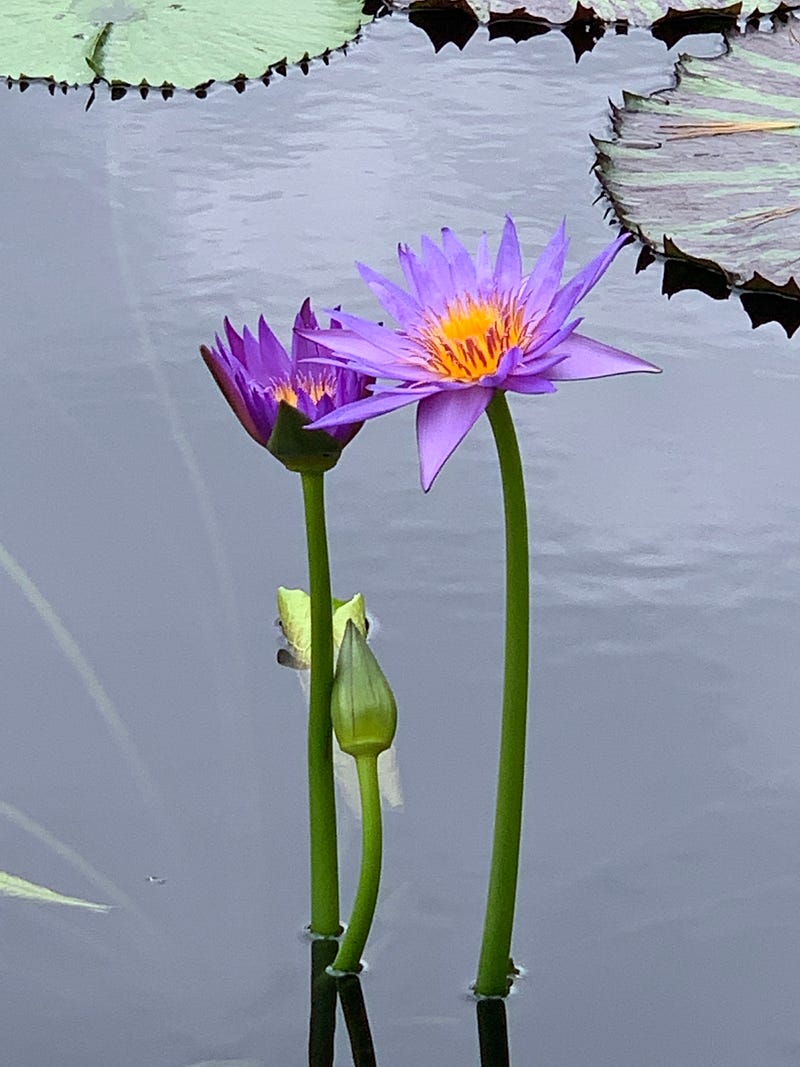
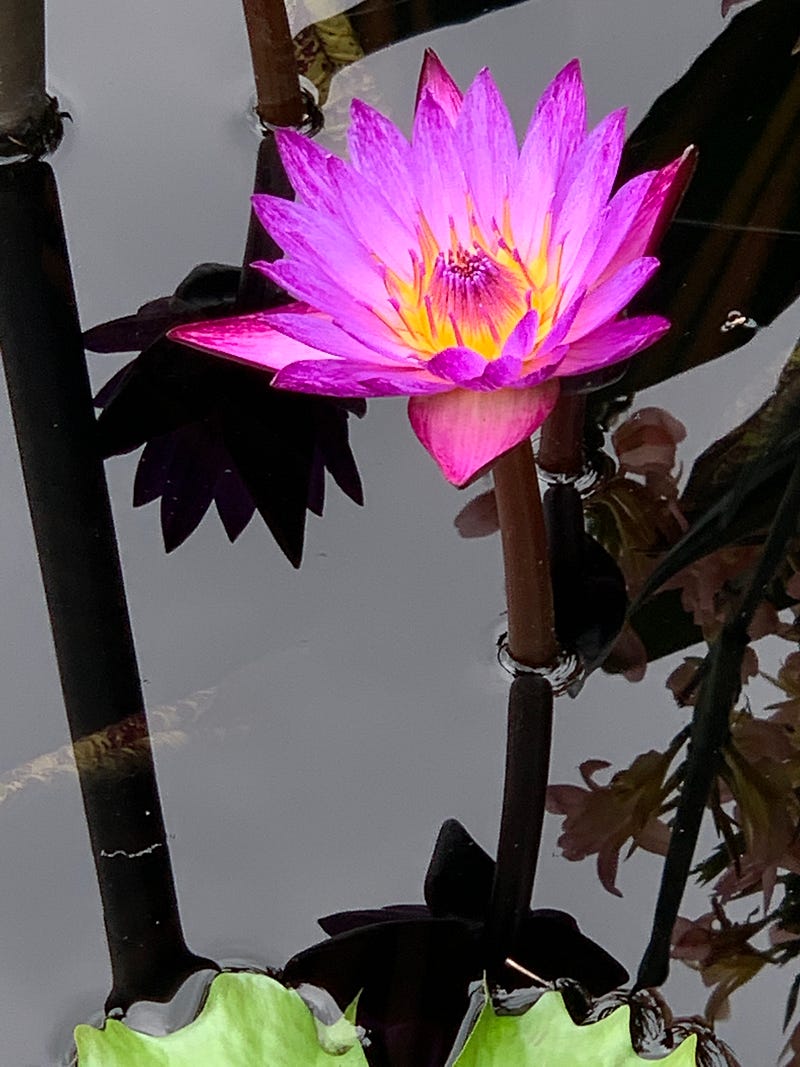
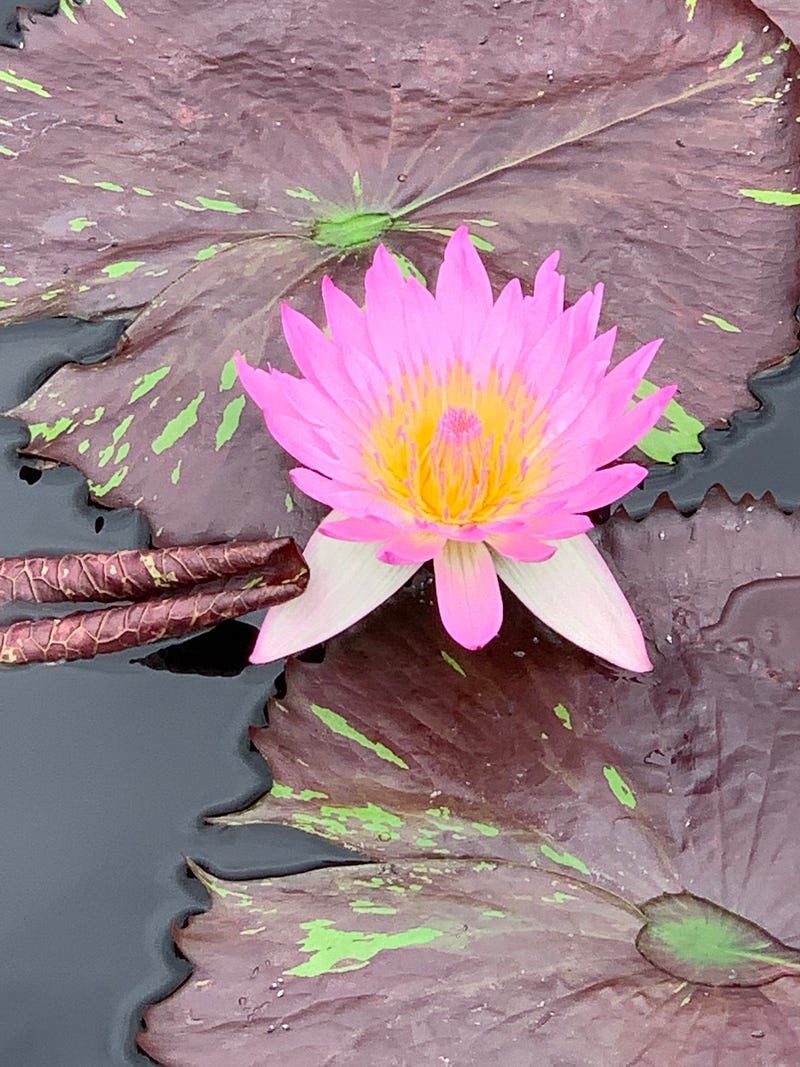
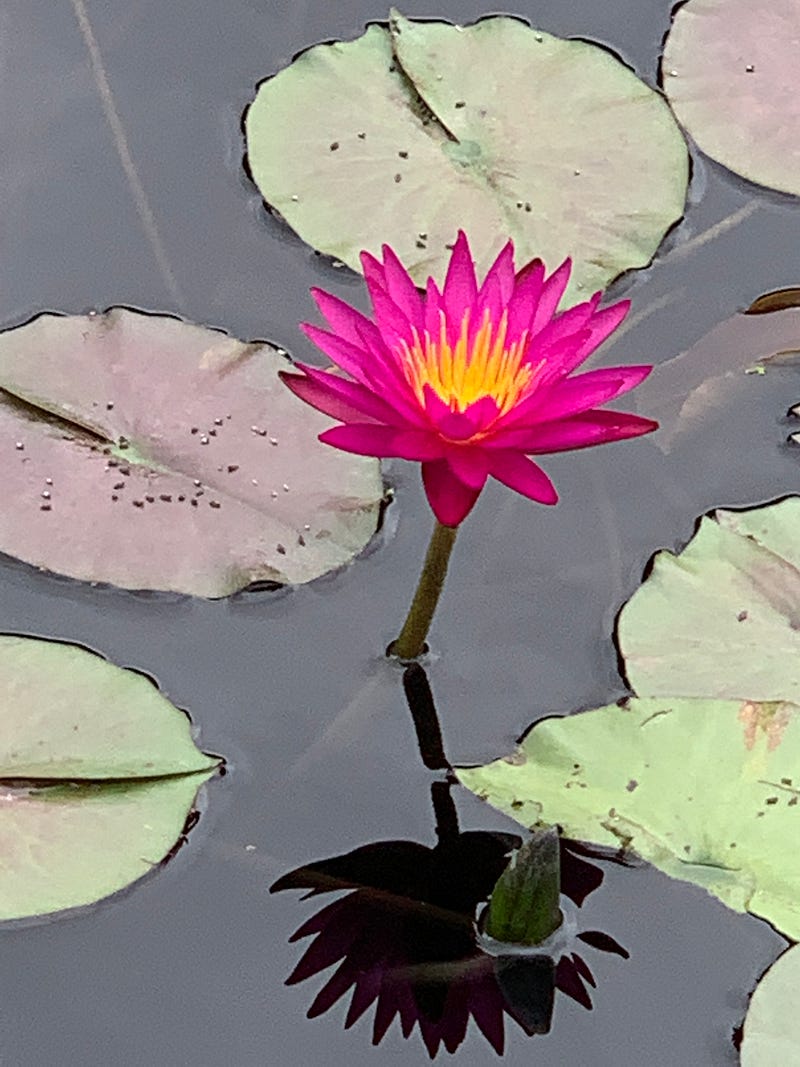
I think I don’t resonate much with gardens because they feel so managed and manicured. So one would think lotuses in a concrete pond would not affect me much. But the colors were so vibrant, so alive, I felt magnetized, hypnotized. I had the feeling of falling into each blossom, one by one, as if I were on magic mushrooms.
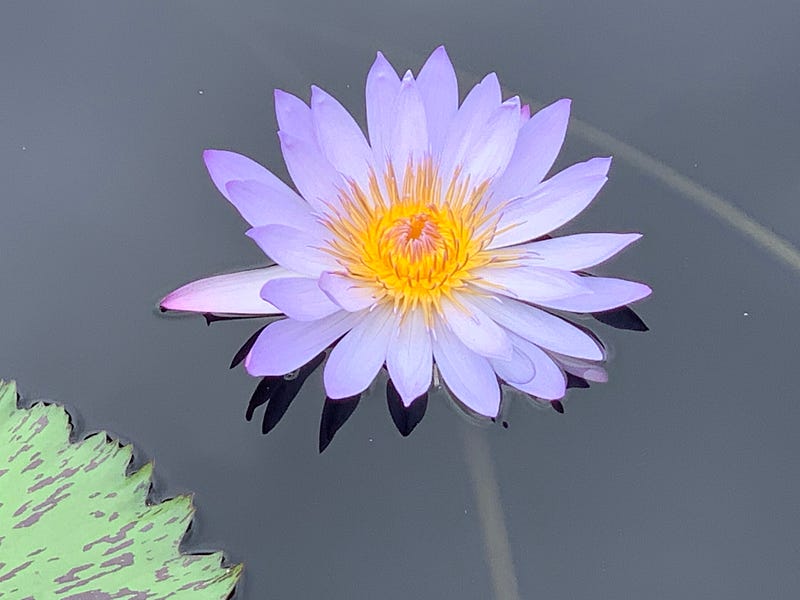
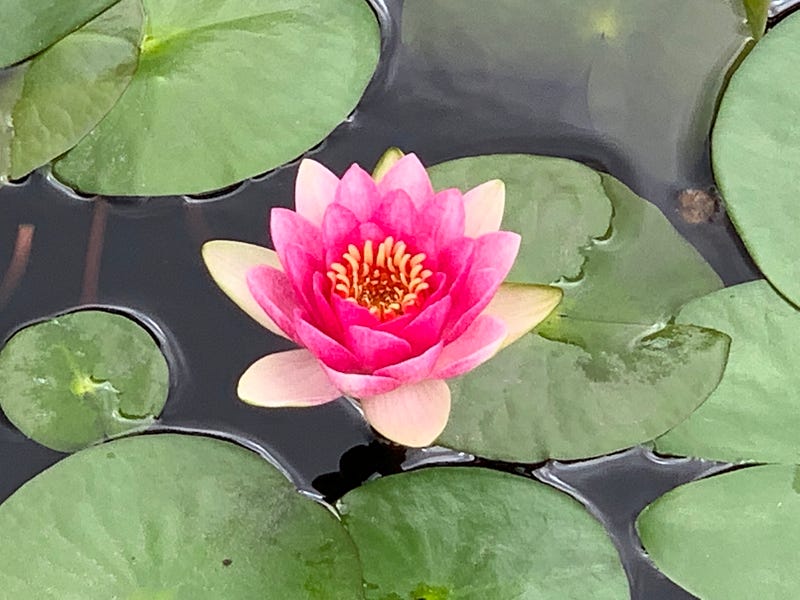
They ranged across the whole spectrum. (Please note, none of these photos are edited or enhanced in any way with filters):
Fuchsia:
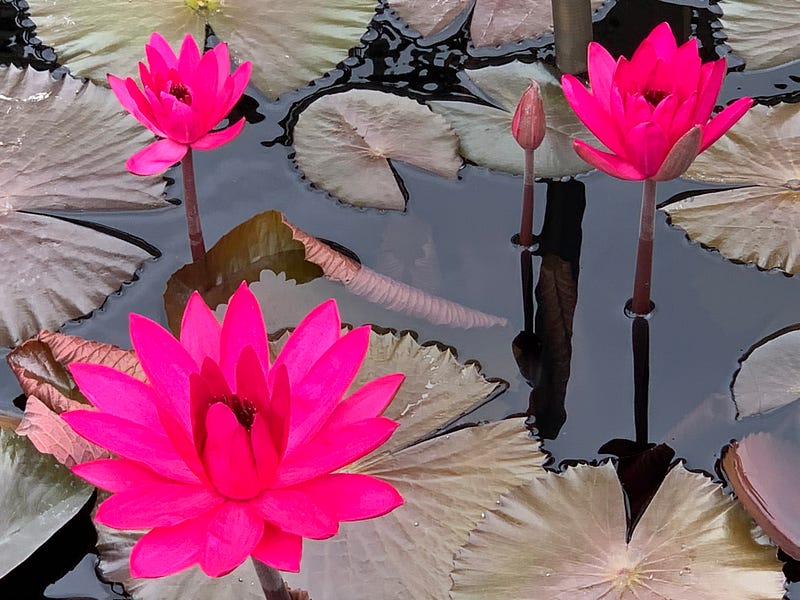
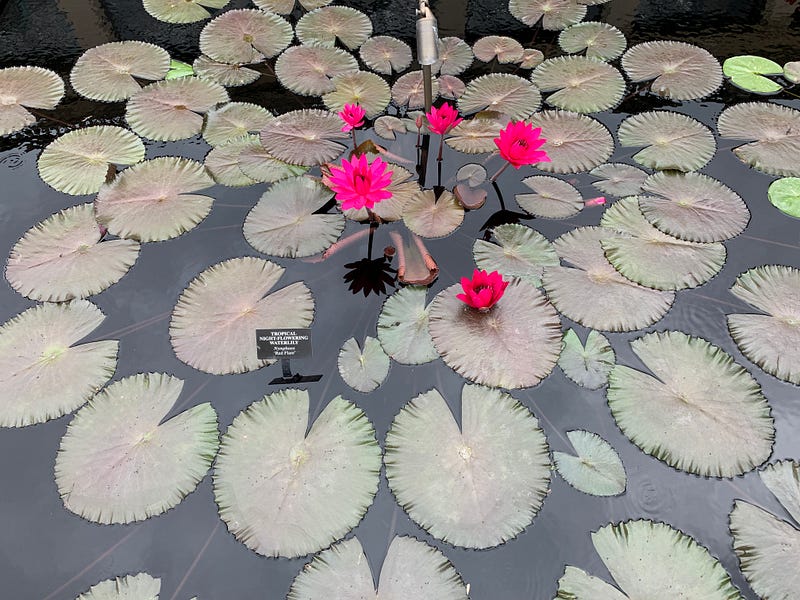
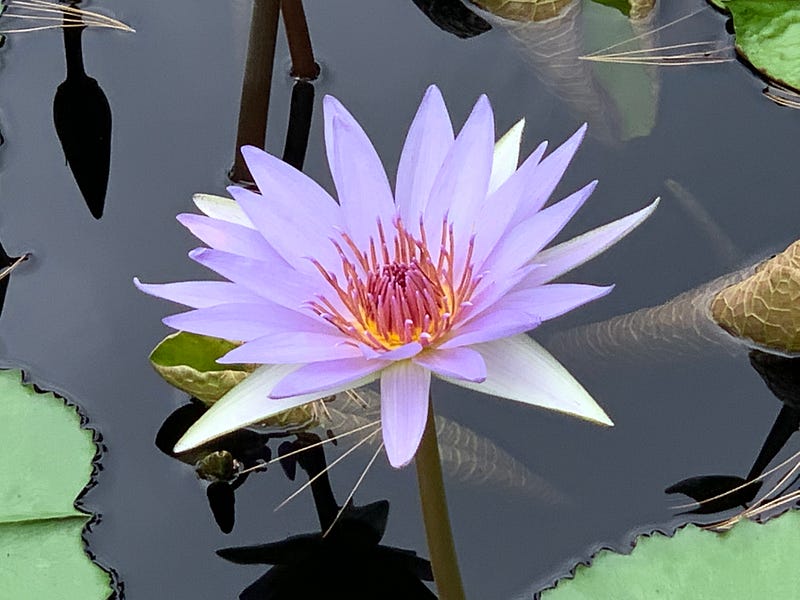
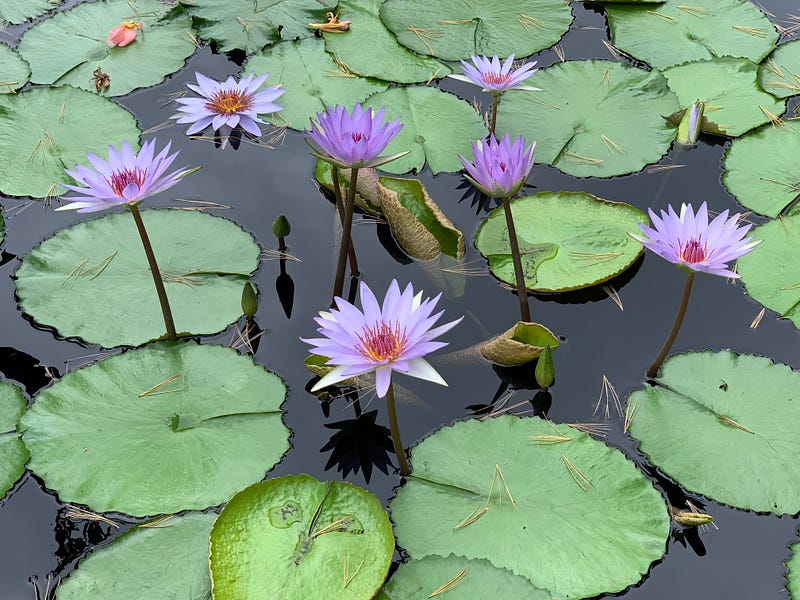
Mauve:
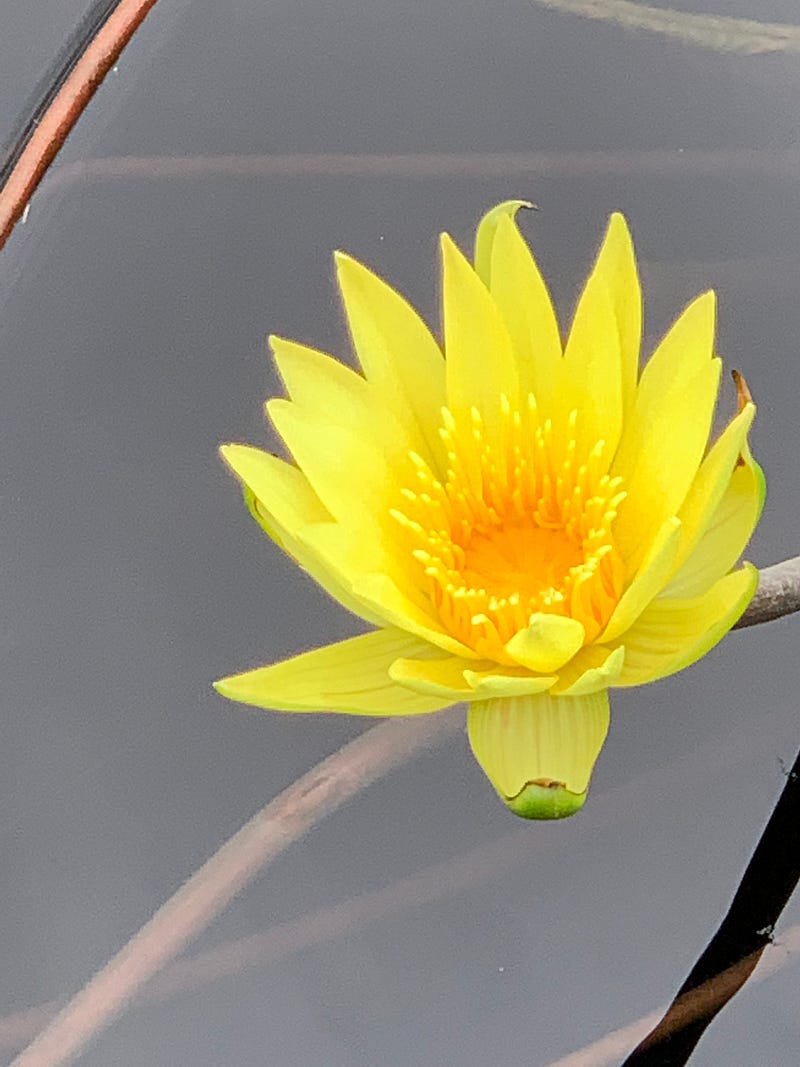
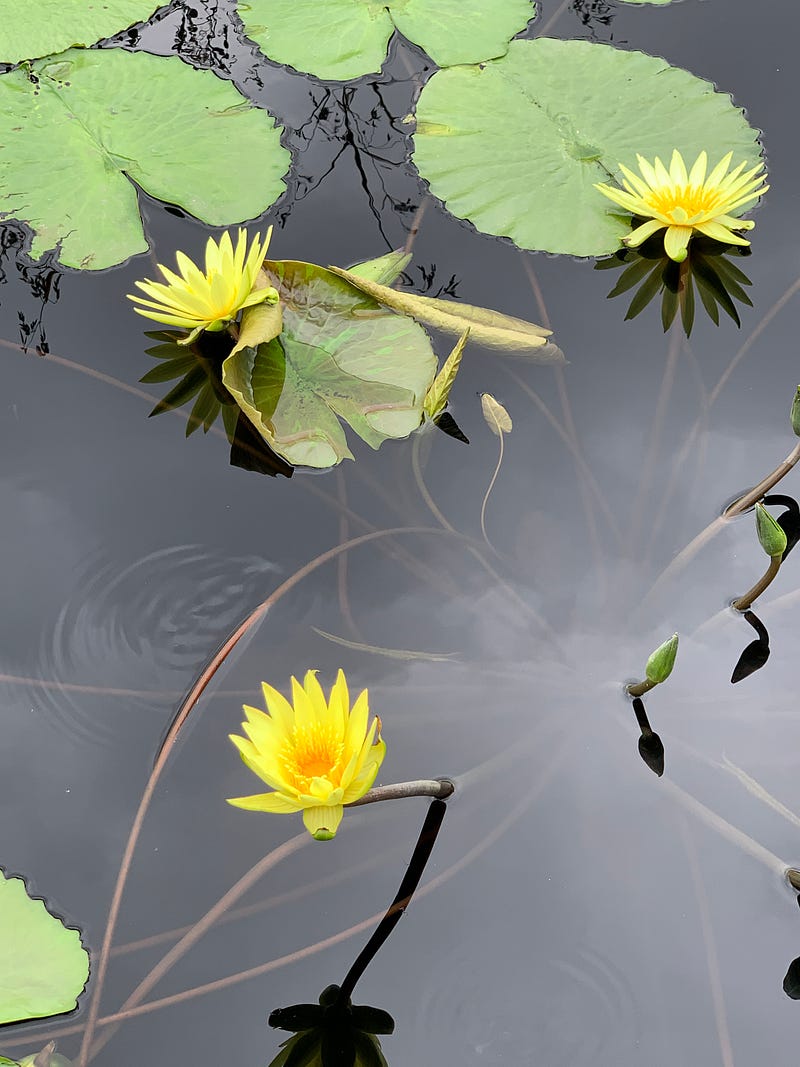
Yellow:
Pink:
There were also bicolored lotuses, with luminous yellow centers that glowed like a sunburst:
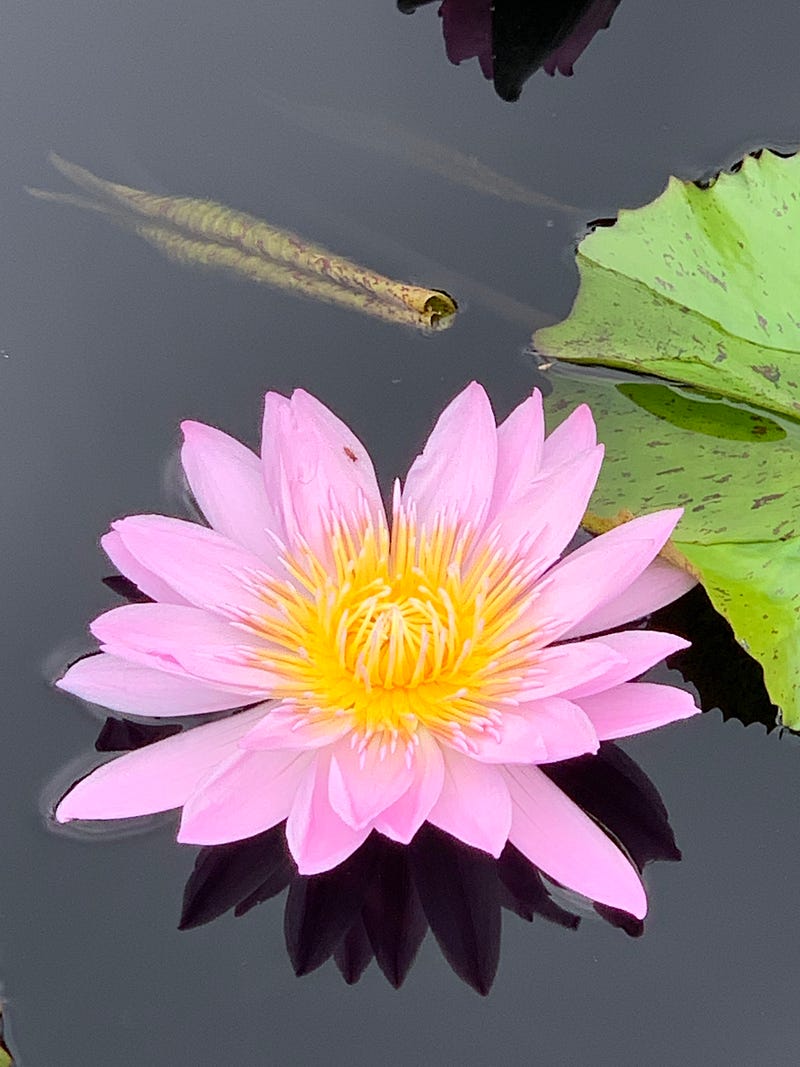
And even delicate tricoloured lotuses. White, pink and yellow:
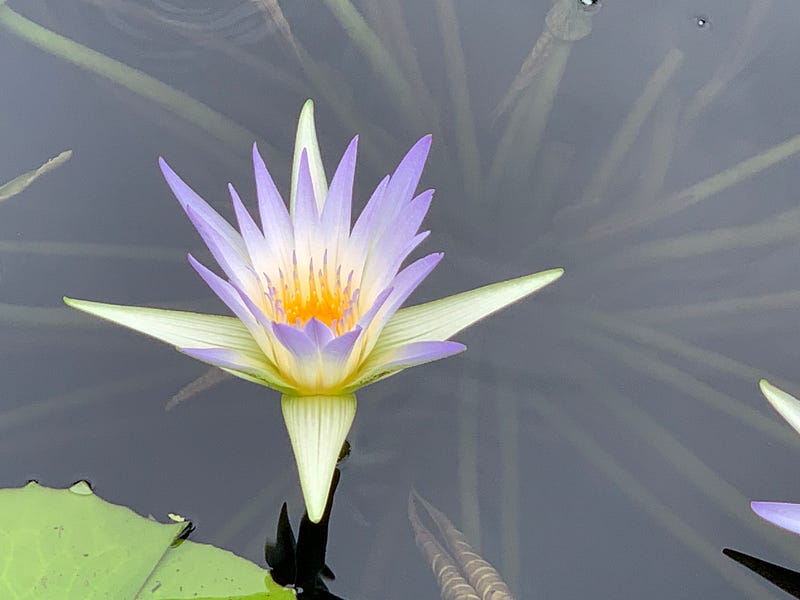
White, purple and yellow:
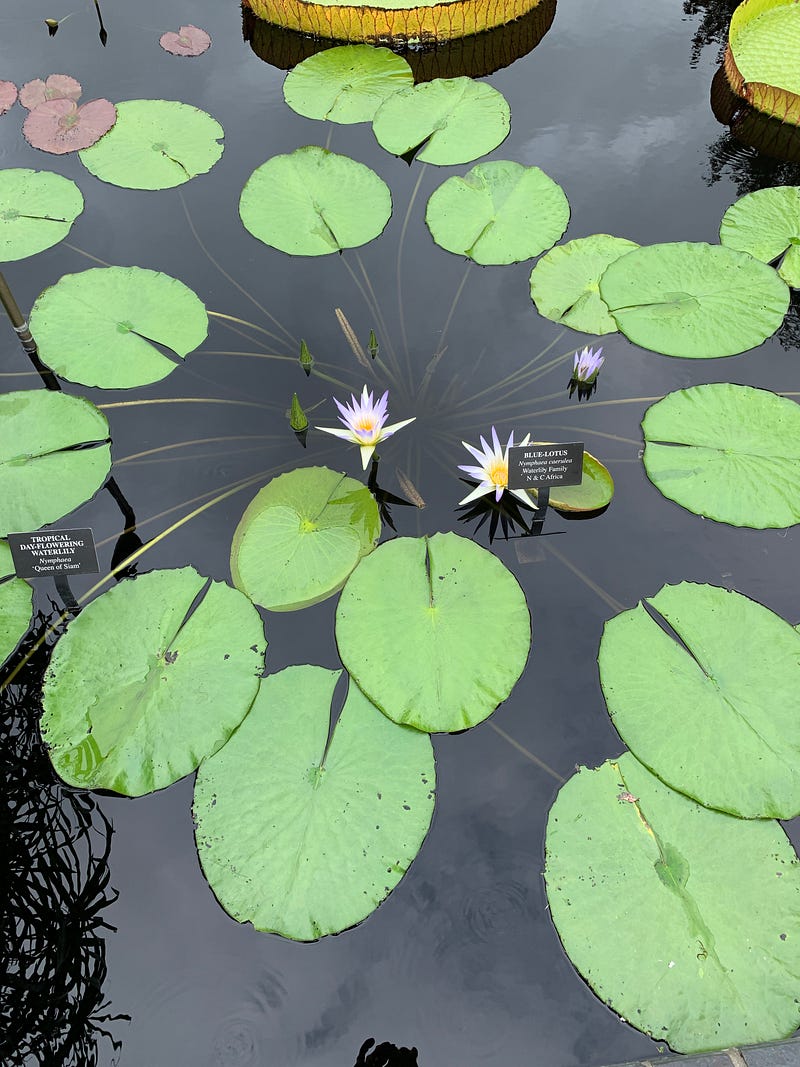
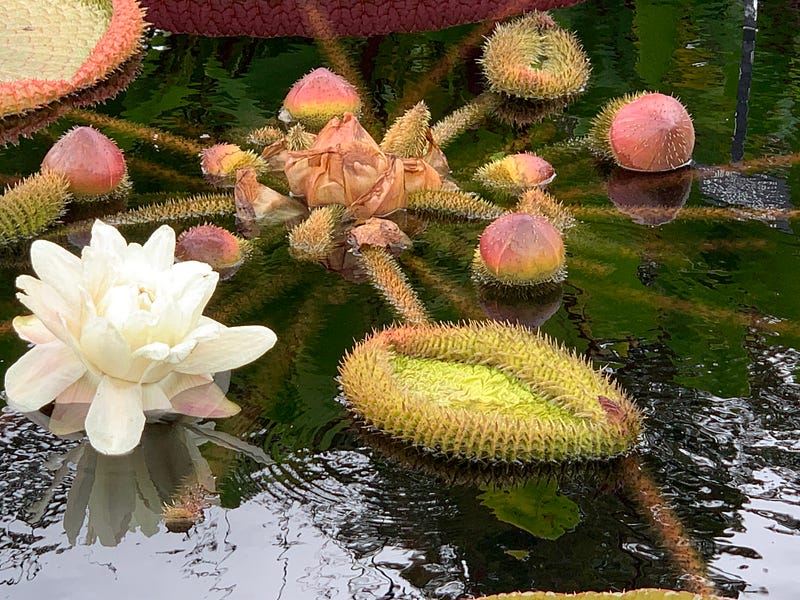
The ponds revealed one strange feature of the lotus plant I had never noticed before, namely how some of them have disturbingly spiny, gnarly underparts. These gradually unfurled in the water into the big green leaf pads we all associate with lotuses. The unfurled spiny bits cover the bottom of the pads, preventing them from being nibbled at by fish, I suppose.
Spine-covered green hoses also stretch out from the core of the plant. Each of these end in an apple-sized red bulb, covered in whiskers. If these bulbs were fruit, only the most adventurous would take a bite. They look like alien pods from a horror movie. Yet, amazingly, when these bulbs break open, instead of spawn from another planet, magnificent lotus blossoms appear.
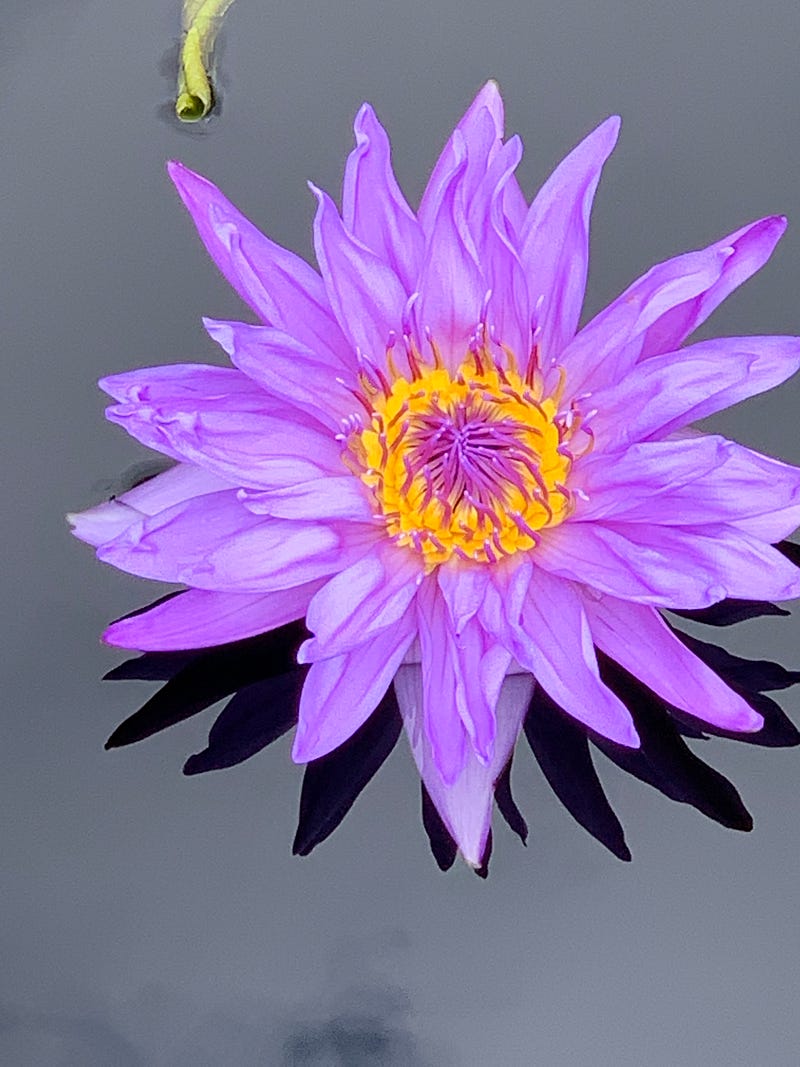
I have been saving for last the lotus that stays with me the most. I can see it in my mind’s eye like an inner sun. The petals are not quite finished unfolding, so they curve sideways a bit at the tips, like waves of violet, as if the whole blossom is radiating light. I remember sitting on the concrete floor, gazing into that shimmering purple-and-gold radiance, wishing I could stay forever. When the poet William Blake writes about seeing heaven in a flower, or when the Buddha likens the entire universe to a single lotus — for me, this was that moment.
Thanks to JoAnn Ryan for inspiring me to write this story; her passion taking for flower photos comes through beautifully in her Trinidad and Tobago piece:
And to Vincent Van Patten for his evocative post on Hanami — the Japanese cherry blossom festival:
Happy Easter everyone!


