
Through the Years, Animals Have Brought Life Into the White House
Pets were absent through the Trump years, but now they’re back.
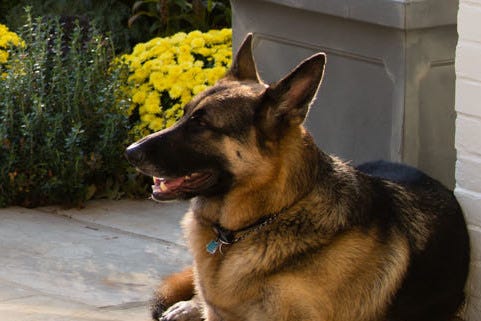
Otherwise known as #DOTUS and #COTUS, President Biden’s dogs, Major and Champ, along with his granddaughter Naomi’s cat, Winston, are the first pets back in the White House since Donald Trump’s pet-free four years.
The Bidens do plan on getting a cat, but until they do, Winston Biden will take the title of #COTUS.
You can keep up with them on Twitter at The Oval Pawffice, if you’re the type that likes cheesy dog puns. (I am.)
Pets in the White House
More than just a soft news story and a source of joy to their owners, pets in the White House resonate with the American public. Historian, Andrew Hager, told CNN the following in 2017:
“It allows a connection between the average citizen and the person in power…It’s a window into the person’s soul in a way you don’t get at a press briefing or a campaign ad.”
Research has shown that people with a dog instantly appear as more trustworthy to others. It makes a person seem more approachable.
American presidents can seem larger than life. But when you see an image of the president running across the White House lawn with a dog at his side or sitting at his desk with a sleeping cat curled up nearby, he becomes instantly relatable.
It’s a long history
There is a long tradition of presidential pets in the White House. These animals didn’t have Twitter accounts, but they still caught the public eye.
Here are some notable furry friends that have lived at the White House.
Laddie Boy
He wasn’t the first presidential pet, but President Warren G. Harding’s dog, Laddie Boy, was the first pet to take on celebrity status with the American public.
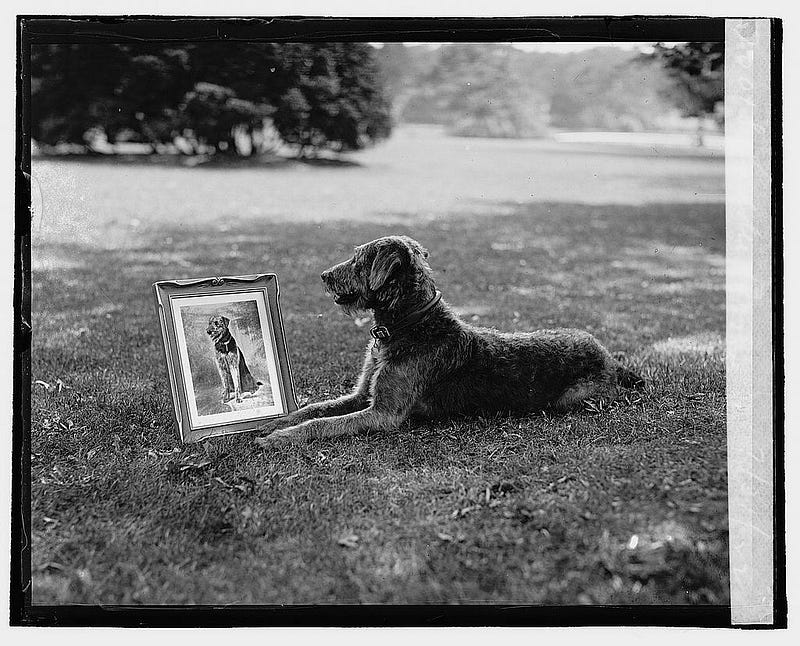
The Airedale terrier had his very own chair in the Roosevelt Room, where he attended cabinet meetings. Harding’s campaign slogan was “Return to Normalcy” following the horror of World War I and the Spanish flu pandemic, and Laddie Boy was the symbol for a safe, simple, and normal life.
Millie and her puppies
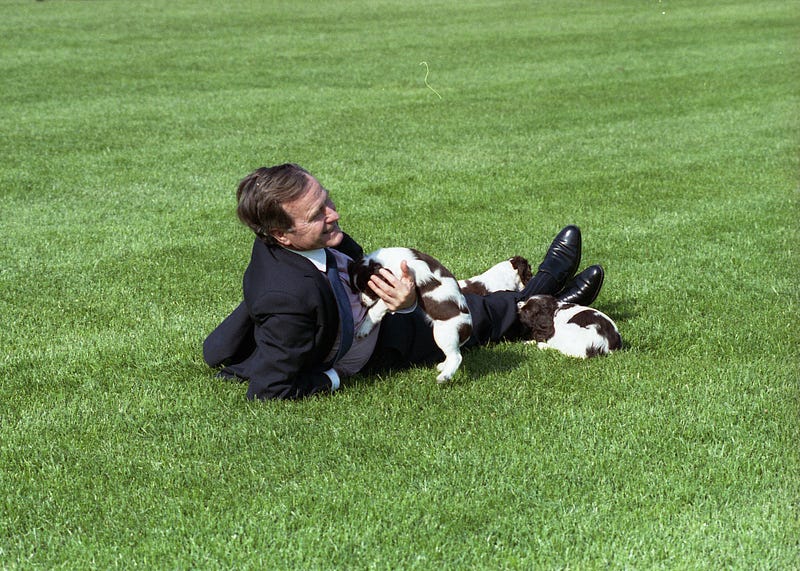
Another well-known and beloved first dog was the springer spaniel, Millie. President George H.W. Bush and First Lady Barbara Bush’s dog jettisoned to fame after she gave birth to puppies in the White House.
Millie found herself and her puppies, along with the First Lady, on the cover of Life magazine. Millie even had her own book, written by Barbara Bush. Millie’s Book gave the reader a tour of the White House from a dog’s perspective.
Bo and Sunny Obama
President Barack Obama promised his daughters, Sasha and Malia, that they would get a puppy after the 2008 election. During his victory speech in Chicago, he told them:
“I love you both more than you can imagine. You have earned the puppy that is coming with us!”
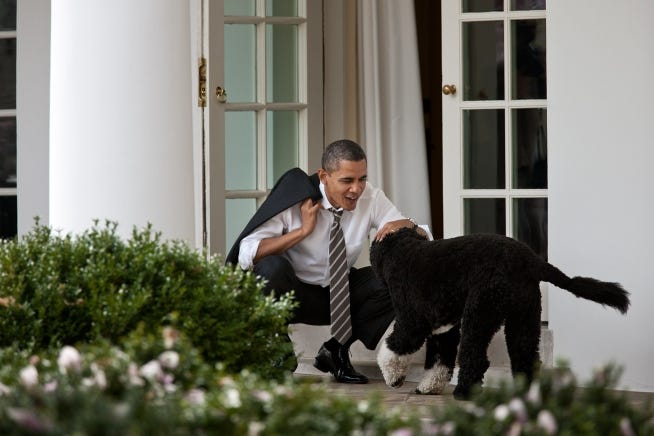
True to his word, Bo, the Portuguese water dog, came to live with the Obamas in 2009, and Sunny followed in 2013.
Socks the cat
The White House isn’t only for the dogs. There has been a fair share of presidential cats as well. President Bill Clinton and First Lady Hillary Clinton owned Socks the cat.
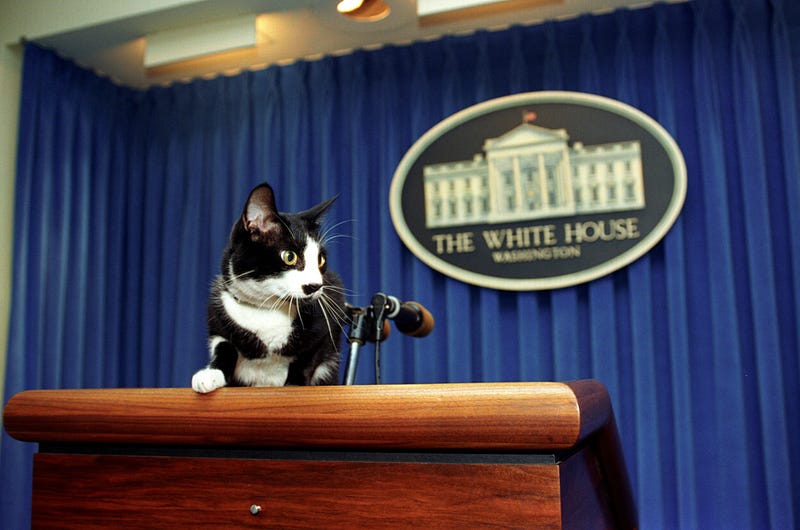
Socks was adopted by their daughter Chelsea and later was joined by Buddy the dog. Socks was unhappy about the canine newcomer. According to Hillary Clinton, the cat “despised Buddy from first sight, instantly and forever.”
There wasn’t just conflict between Socks and Buddy. Don’t think politicians argued any less back then.
House Republicans actually went after Socks Clinton (no, I’m not making this up.) Indiana GOP representative Dan Burton expressed his concern that the popular cat was receiving fan mail from children. His worry: the money spent on postage used for return letters.
As a member of the new Committee on Government Reform and Oversight, I would like to inquire what the standard practice is for the White House to respond to mail directed to ‘Socks,’ your cat. How many of these inquiries were responded to over the past two years? Who pays for the postage? If it comes out of the White House mail budget, why are the taxpayers being made to pay for your feline’s fan club?
A quick note about Burton’s character, he stopped using the House gym after a fellow representative came out as gay in 1987. And that’s all we need to say about that.
A raccoon, some sheep, and many others
Beyond cats and dogs, other animals have lived in the White House. The Kennedy family owned a menagerie of pets: ponies, horses, hamsters, birds, dogs, a rabbit, and a cat.
President Theodore Roosevelt owned many pets as well. Including a pony that made it into the White House one day and up the elevator to pay a visit to cheer up Roosevelt’s son when he was sick.
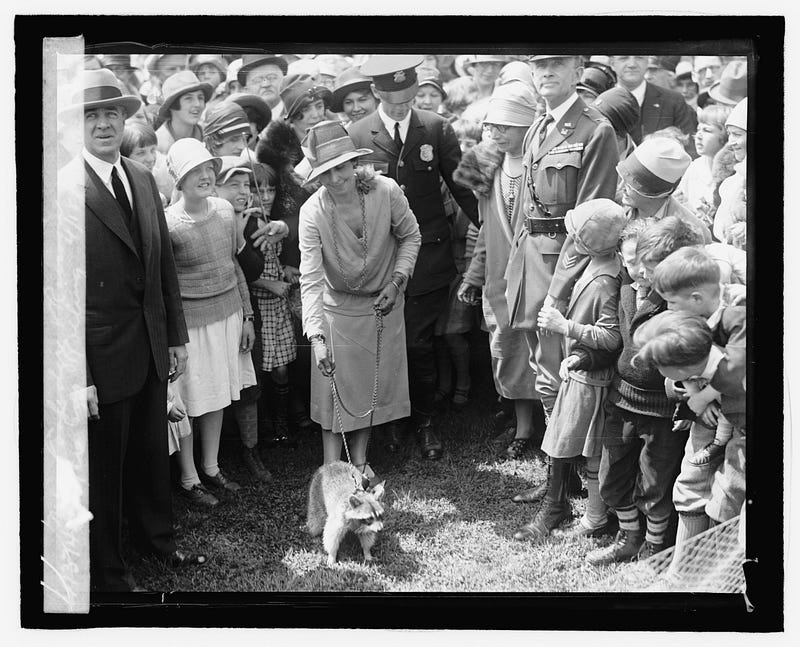
Then there was Rebecca the raccoon. She was a gift to President Calvin Coolidge and his family. Rebecca attended the Easter White House Egg roll and was friendly enough she allowed children to pet her.
She did however need to be kept on a short leash as she tended to climb trees where she eluded capture from staffers.
You may have seen images of sheep grazing on the White House lawn about 100 years ago. President Woodrow Wilson owned a flock of sheep that he kept on the south lawn of the White House.
It was during World War I, and Americans had been asked to make many sacrifices for wartime efforts. President Wilson wanted to do his part to help the country and set an example, so he brought a flock of 48 sheep to the White House.
The sheep saved the manpower from the need to cut the lawn as they kept the grass short. And their wool brought in $52,823, which was donated to the Red Cross.
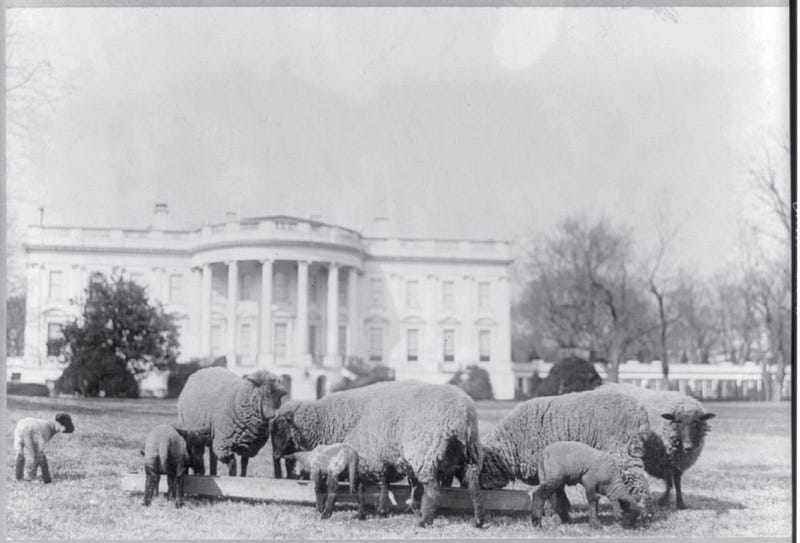
Unfortunately, as you can imagine, keeping a flock of sheep at the White House didn’t go as smoothly as the president may have hoped. The Washington Post reported in 1918, “President Wilson is having no end of trouble with the flock of sheep he purchased recently to graze on the White House lawn.”
Apparently, the sheep were frightened of the increasing car traffic that had recently begun around the White House.
The troubles continued. Two years later, most of the grass on the south lawn was gone. The flock was moved to the north side where fencing was frantically erected in an attempt to save the delicate trees and flower beds on the north lawn.
After two years of grazing, the president was done with the sheep. The Washington Post announced in 1920, “President Wilson has decided to retire from the sheep business.”
No dogs for Trump
There was speculation when Trump first won the election in 2016 whether or not he would bring a pet to the White House. He never did, and he explained why with the following statement during one of his rallies:
“How would I look walking a dog on the White House lawn? Would that be right? I don’t know. Feels a little phony, phony to me. A lot of people say, ‘Oh, you should get a dog,’ ‘Why?’ ‘It’s good politically.’ I said, ‘Look, that’s not the relationship I have with my people.’”
His ex-wife, Ivana Trump, has said that Trump despised her toy poodle, Chappy. Whom she said, “had an equal dislike of Donald.”
For once, I agree with Trump. Getting a dog for political reasons is the wrong thing to do. It wouldn’t work anyway. We can see the interaction with the presidents and their animals. We can see it’s not fake. Whether it boosts them politically or not, the love there is real.
Champ and Major’s Twitter account is an inside window not just into the lives of the dogs, but into the lives of the Bidens themselves. Whether it’s sheep or a dog or some other creature, animals have been a part of White House life for many years. They bring humanity to a person that wields a great deal of power over the world. More than that, they bring a heart.


,_Easter_egg_rolling,_4-18-27_LCCN2016842994.jpg)