
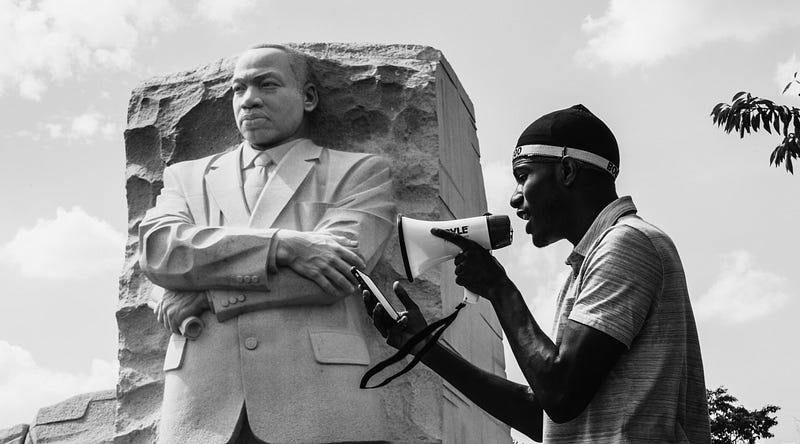
Martin Luther King
White People Sloganeering MLK Makes My Black Ass Think of Assassinations
White People cannot navigate MLK without the fact they wanted him dead. They want you dead too, if you’re an Anti-racism activist.
Martin Luther King Day
Martin Luther King’s holiday in America is a beaten and battered concept. First, there was a struggle to recognize this man in the first place; his holiday was signed into law in 1983 but wasn’t recognized in all 50 states until the year 2000. Deeply white supremacist states like Idaho and Montana were arrogantly difficult to honor this Black man, boasting Black populations less than one percent. Today there is a white-centrist movement to pirate Martin Luther King’s day into a white privilege gun-flaunting day.
Historical revisionism, sloganeering, and erasure are the key-identification features of a memory policing operation.
One of the tactics of white supremacy concerning unimpeachable Black activist persons in American history is to twist and distort their words, their ideas, their essence. In other words, historical revisionism.
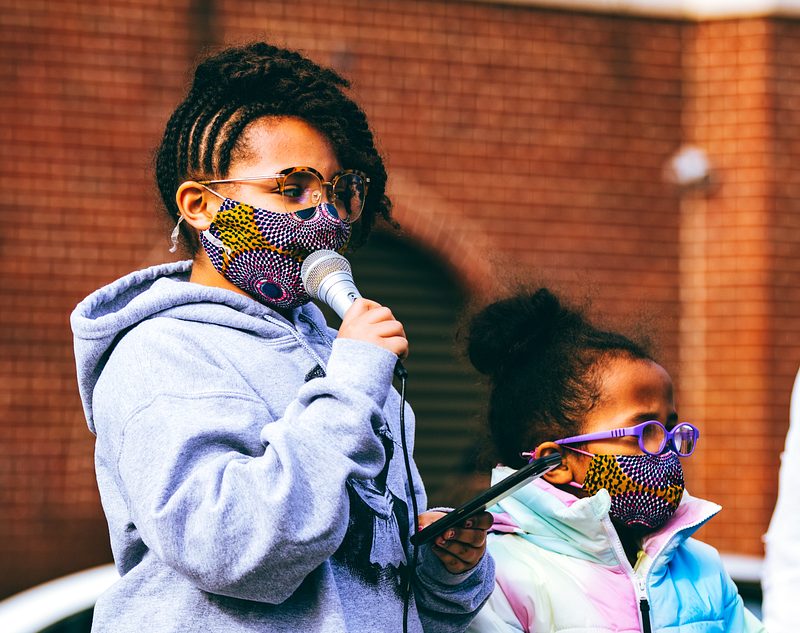
Vapid sloganeering is what occurs in order to facilitate historical revisionism. Instead of understanding Martin Luther King as a whole complex man, only parts, chips, and phrases from a few speeches remain. The greater scope of his intellectual labor is ignored.
Remove specific books exploring Black personhood, and erasure is facilitated. Memory policing occurs and is in full effect until the majority of the population (or at least the majority of the people targeted for memory policing) rebel, create, and maintain an intellectual revolution to build that bridge between the forgotten and remembered. This is why the 1619 Project is so important as an objective to maintain for progressives, and for white supremacists, an objective to destroy.
Memory policing Black people is the second best thing to keeping Black people illiterate.
Historical revisionism, sloganeering, and erasure are the key-identification features of a memory policing operation.
Memory policing Black people is the second best thing to keeping Black people illiterate.
Slogans
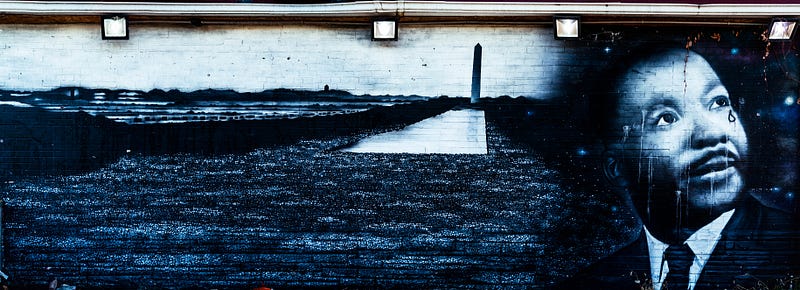
“I have a dream that my four little children will one day live in a Nation where they will not be judged by the color of their skin, but by the conduct of their character.” ~ Martin Luther King
White people of America love this one. Usually, this will be partially cited as a defense of a white supremacist argument or talking point. Something like: “Hey, you can’t note the fact that I’m white, because you’re not judging me by the content of my character!” The hilarious part is that each time, it IS the content of their character that is called out. Observing you supporting/defending white supremacy and then acting accordingly is a character judgment; not a skin-tone one. Numerous Black people supporting white supremacist talking points are also given the same character assessment, so you being white is irrelevant.
This is just one example of sloganeering Martin Luther King. Transforming a complex civil rights activist man into neat phrases, often engineered to silence Black people. Believe me when I tell you there’s more. And it seems to never stop. And we are tired of it.
But… Y’all Killed Him Though
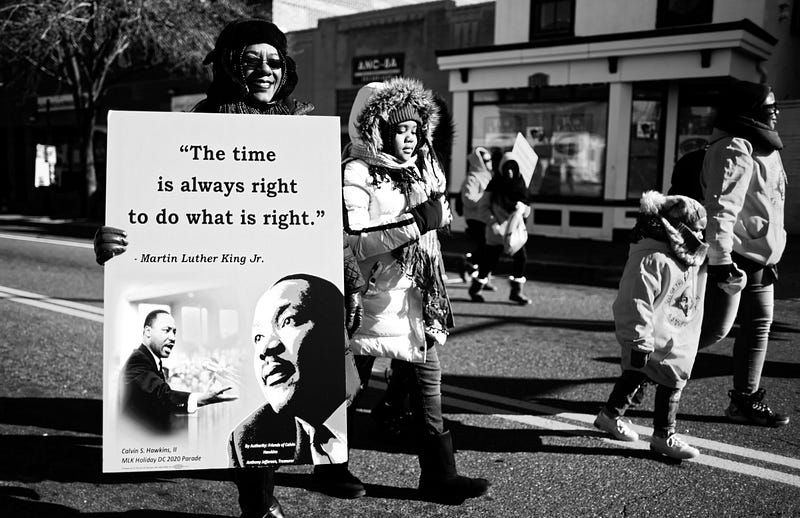
As a well-read Black man who is also a civil rights activist, I can’t help but think about his murder and why it happened.
Each time a white person says we should be more like MLK, I see them telling us we should be more like those they enjoy killing. Politically assassinating.
Each time a white person tries to quote MLK, I think of the fact that it was the sentiment of White people in America that murdered him. The white zeitgeist — or Whitegeist — wanted him dead.
And got it. Martin Luther King was assassinated by white feelings.
White anger, fury, wrath — kills Black people, and Martin Luther King is a prime example.
Martin Luther King was assassinated by the same White Wrath that attacked democracy in the name of a white supremacist real estate hustler.
Martin Luther King was assassinated by the same White Wrath that marched in the streets of Washington D.C., marauding for violence upon Black and anti-facism activists, yelling “fuck antifa” with “6MWE” (six million {Jews killed} were not enough) on their black and yellow shirts.
Martin Luther King was assassinated by the same White Wrath that seeks to silence Black people every day, ignoring Black folk’s pain every week, destroying Black people’s voting capabilities every year.
White anger, fury, wrath, rage — kills Black people, and Martin Luther King is a prime example.
White people often intentionally misappropriate Martin Luther King — a historical Black activist — to silence modern-day Black activists. Each time white people do this, I think of the fact that white feelings called for and assassinated this man.
Martin Luther King is the most famous Black man killed by white feelings, and white people think the irony is lost in their policy of historical revisionism and erasure.
I Think of the Assassinations
I often think of death when it comes to Martin Luther King. I think of the fact that he was killed because white people wanted to silence a whole Black movement. I think of the fact that he was murdered.
I think about the fact that he wasn’t the only one murdered as well.
I remember seeing the callous news clips of Martin Luther King’s assassination. I ponder the attitudes of white people the moment their white feelings murdered him. I figure they look like how Trump supporters looked when they walked to the voting booths, when they locked eyes with me, having a “you will get yours” look on their faces. Martin Luther King reminds me of the cold white supremacist eyes I’ve seen.
I Think of the Blood
Honoring Martin Luther King makes me realize that white people of America require the blood of Black people in order to allow any progress concerning race relations in America. White people require the murder of Black people to go, “damn, maybe we took it too far,” and then conduct marginal amounts of political reform. White people need to be internationally embarrassed in order to draft and sign meaningful civil rights legislation into law.
And that international embarrassment is challenging to arrive because we all know they don’t have “white guilt.”
When I think about King, I question: How much more blood from Black people is necessary? How many more of us do they have to kill for them to accept change?
I Think of Who’s Next
Good luck to the modern civil rights activist, for we too, are slated to die.
We too, are targeted for silencing.
We too, are targeted for violence.
White Wrath has not ceased. White Rage towards Black identity has not vacated their premises. White Wrath and white racial terror is still a political position in American politics.
I often wonder if and when they’ll kill me. The moment I decided to dedicate my skill and talent to eradicating white supremacy, I figured I had already, in a way, decided how I’m going to die. Anyone who effectively challenges white supremacy dies. Therefore, we all are targets. They can target our jobs, careers and professions, families or lives. If a decidedly Black nonviolent Baptist preacher can be murdered in plain view, then what about anyone else?
The situation has not changed.
The murder of King wasn’t just an assassination, but a message.
The assassination of Martin Luther King, the act itself, cannot be ignored. The murder of King wasn’t just an assassination, but a message. The assassination of King was a message to Black people of America in the same manner all racial violence upon Black people is a message. Burning institutions like Black churches was a message. Dylan Roof’s killing spree upon Black churchgoers was a message. The lynchings were a message. White violence inflicted upon Black people and the legal loopholes that often allow it to occur unpunished is always the message.
In addition to that, white silence is also a message. Think of it as a cellphone; whether silenced or ringing, the message is still transmitted and received.
Conclusion
Remembering Martin Luther King makes me wonder whose life they will end next. Will Colin Kaepernick be assassinated? LeBron James? What Black person of note will they execute for not defending white supremacy? Who’s Next? You? Me? When? What year?
White people don’t want peace; they want easy targets of racial terrorism. It’s like white people want us to be more killable when they highlight Dr. King’s strategy of nonviolence. It’s the perfect plan because they’d just pretend racial terrorism didn’t happen and lock it all away in a box called “critical race theory,” and throw away the key.
These are the things I think about when remembering Martin Luther King. Perhaps you shall think about his assassination, and why it occurred, too.
Don’t just remember his message; remember theirs. It’s okay to have your eye on the sparrow, but keep on eye on the hawk. One cannot continue to highlight Dr. King’s strategy of nonviolence without highlighting the strategy of violence white America selects to inflict upon him and all other Black people across time.
Assassinations are always messages.
Never forget that part.
Photography of Black Personhood
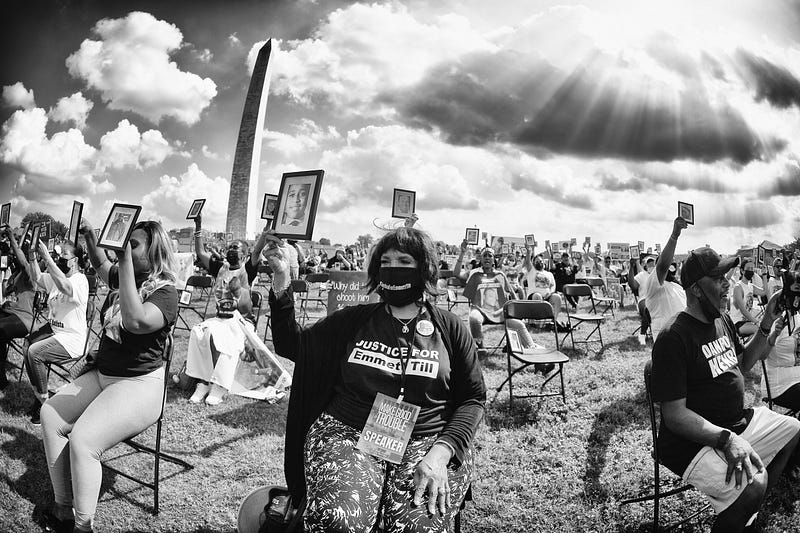
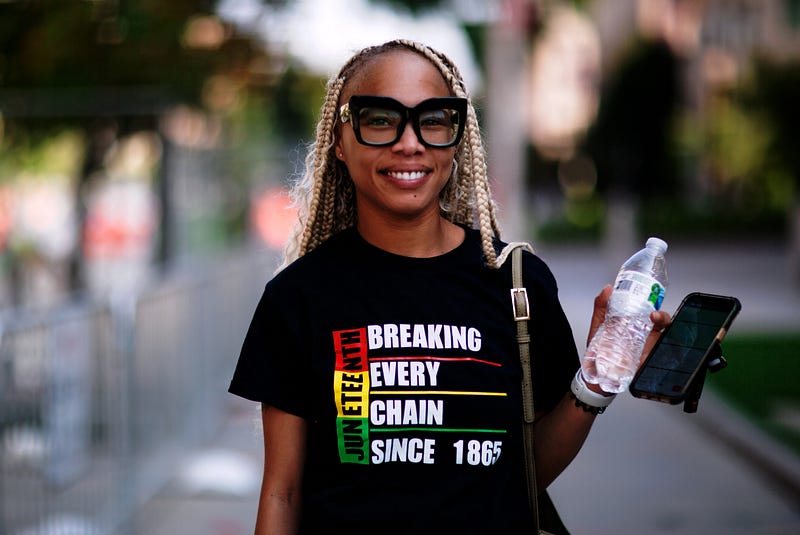
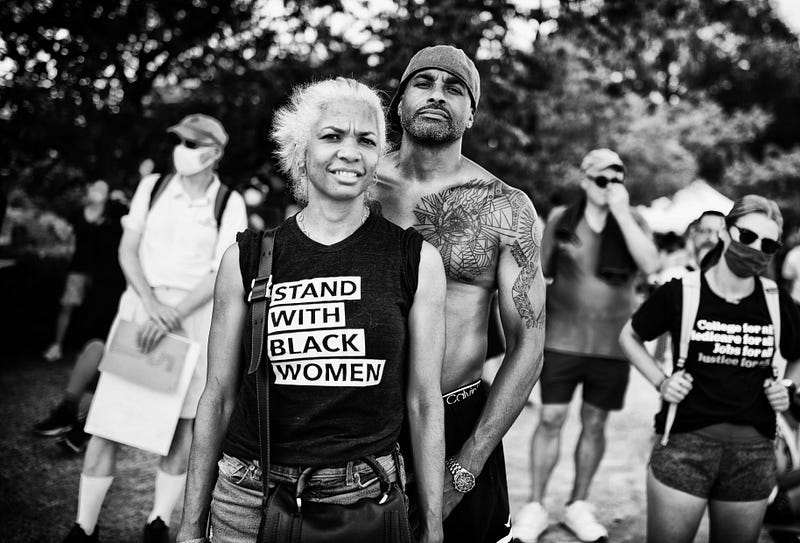
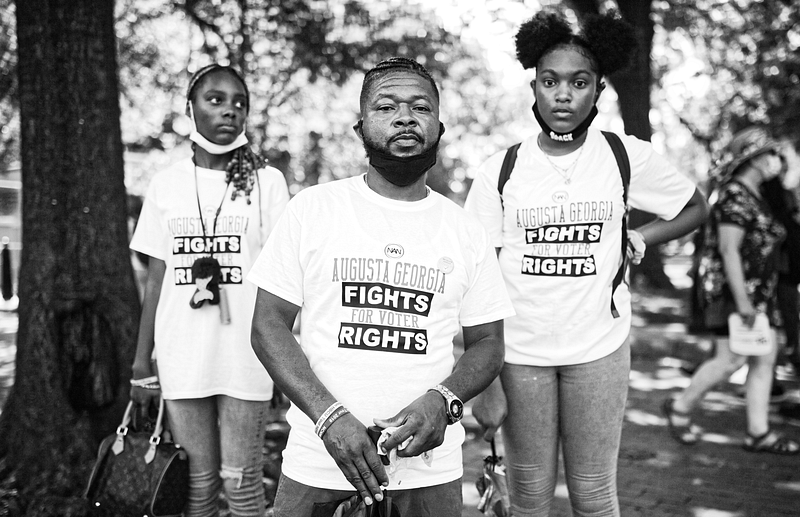
Johnny Silvercloud is a U.S. Army vet turned civil rights/conflict photographer and anti-racism/sexism writer. Not a fan of intentional stupidity or passive-aggressive racism supporters, which tends to overlap. You can subscribe to Johnny here, and get his street photography, here. Twitter, here. Instagram, here. Facebook fan page, here. His publication of like-minded educational activists, here.