
Whistling Past Midnight: How a Quirky Case Exposed the Nature of Legal Sources
The dual forces of primary and secondary law sources.
The absolute necessities of legal research, analysis, and subsequent writing include an appreciation and evaluation of the various types of legal resources as well as the strategic use of those resources in your legal argument. The distinction between the roles of primary and secondary sources of law, the difference between binding and persuasive authority always affects the analysis and presentation of legal reasoning. This differentiation helps lawyers and scholars approach legal issues and craft the best arguments in their writings.
Primary legal sources, such as statutes, regulations, and case law, are the materials that establish the rules and define the legal landscape. Secondary legal sources, including treatises, commentaries, and legal encyclopedias, interpret, analyze, and critique authoritative sources to provide practitioners with a deeper understanding of the law and its practical application.
The ideas of mandatory and persuasive authority will further enrich our discussion by showing how the importance of each source of law in influencing court decisions is determined by its jurisdictional relevance and its position in the legal hierarchy. Let’s explain all this in a simpler way.

Primary Sources: The Law in Black and White
Imagine Oswald, a down-to-earth attorney, facing a unique challenge: his client is accused of breaking an old law of Tickleburg County for whistling a tune downtown after midnight — a law rarely enforced and almost forgotten. This strange case becomes the perfect backdrop for Oswald to jump into legal research and explore the role of each available source within the legal system.
For Oswald, as for any legal professional, primary sources are the backbone of legal argument (we discussed them in details in one of our previous stories — the link is below). These sources include:
- Constitutions: The supreme law of the land, providing fundamental principles and rights.
- Statutes: Acts enacted by legislative bodies that outline the do’s and don’ts.
- Judicial Opinions: Court decisions that interpret laws and set precedents for future cases.
- Administrative Regulations: Rules created by government agencies that detail how laws are implemented.
These documents are the law. They carry an authority that’s undeniable and binding within their jurisdiction. For Oswald’s particular case, finding the right statutes and court decisions is critical to crafting a defense strategy that’s both sound and compelling.
Mandatory vs. Persuasive Authority
However, not all sources have equal power. Oswald understands this distinction well:
- Mandatory authority. These are the laws and decisions that courts within a particular state (jurisdiction) must follow. For example, a law passed by a state legislature is mandatory authority for all courts and people within that state. It’s the unchallengeable rule of legal games.
- Persuasive authority. These sources, while not binding, can influence a court’s decision. They can include laws or cases from other states (jurisdictions) or opinions from lower courts that provide persuasive authority. Oswald could use such sources to argue that the anti-whistling law is outdated and to suggest a more modern interpretation. Oswald’s task is to move forward to break this acquisition, using mandatory authority to anchor his defense while weaving in persuasive authority to update the court’s thinking.
The Art of Legal Strategy
The key to Oswald’s approach lies in his ability to select and apply these sources wisely. By focusing on the primary sources relevant to his case, he can pinpoint the exact laws at play and the precedents that support his argument. His strategy is simple but effective: use the law itself to demonstrate the absurdity of enforcing an antiquated ordinance against his client.

Secondary Sources: Lighting the Way
Secondary sources are basically the interpreters of the law. They don’t have the legal authority of statutes or court decisions, but they are invaluable for explaining complex legal principles. Think of them as the legal equivalent of a knowledgeable friend explaining Leo Tolstoy’s dense novel in simple terms. For Oswald, these resources are like a map, taking him through the minefield to find the only relevant primary sources, the meanings behind them, and to bolster his defense strategy based on them.
In preparing his defense, Oswald turns to legal encyclopedias, commentaries, restatements of the law, and law review articles. These materials don’t dictate the law, but they offer insights, interpretations, and critiques that deepen his understanding of the legal landscape surrounding public ordinances and individual liberties. For example, a law review article might analyze precedents from similar cases in other states (jurisdictions), providing Oswald with ammunition to argue that the ordinance in question is not only outdated, but may also violate more universally recognized rights.
Here’s a list of common Secondary Sources and relevant tools:
1. Legal Encyclopedias — Comprehensive summaries of state and federal law, e.g., American Jurisprudence (AmJur) and Corpus Juris Secundum (CJS).
2. Law Reviews and Journals — Scholarly articles written by legal experts, including professors, judges, and practicing lawyers, offering in-depth analysis on various legal topics.
3. Treatises — Detailed works on specific areas of law, written by experts, that provide extensive coverage and analysis of the legal issues within that field.
4. Restatements of the Law — Collections organized by the American Law Institute that clarify, organize, and simplify the law. Restatements cover areas such as Contracts, Torts, and Agency, among others.
5. Legal Dictionaries — Provide definitions of legal terms and phrases, e.g., Black’s Law Dictionary.
6. Legal Annotations and Citators — Tools like Shepard’s Citations or KeyCite that help researchers trace the history of a legal case or statute and its subsequent treatment.
7. Practice Manuals and Form Books — Guides that offer practical advice to lawyers on procedural matters, including drafting legal documents and court forms.
8. Case Digests — Organized summaries of court opinions, which help in locating decisions by topic.
9. Continuing Legal Education (CLE) Materials — Publications and presentations from CLE programs that keep legal professionals updated on recent developments, trends, and practices in the law.
10. Legal Research Databases — Online platforms like Westlaw, LexisNexis, and Bloomberg Law that provide access to a wide range of legal materials, including both primary and secondary sources.
Strategic Citation for Persuasive Value
While secondary sources aren’t used to directly support legal arguments the way primary sources are, Oswald knows that their persuasive power can’t be underestimated. They can place his argument in a broader context, drawing on the opinions of respected legal scholars to suggest that Tickleburg’s ordinance is an outlier in modern legal thought. He is not trying to replace a primary law, but only to enrich his argument and make it more relatable and understandable to judges by showing how it fits into a broader legal and social dialogue. In doing so, Oswald can not only use his secondary materials to cast aspersions on the ordinance, but to teach the court about broader legal principles that underpin his client’s right to, seemingly innocuously, whistle on an ordinary Thursday after dark (especially since the melody seemed pretty good 😉).
The Winning Argument
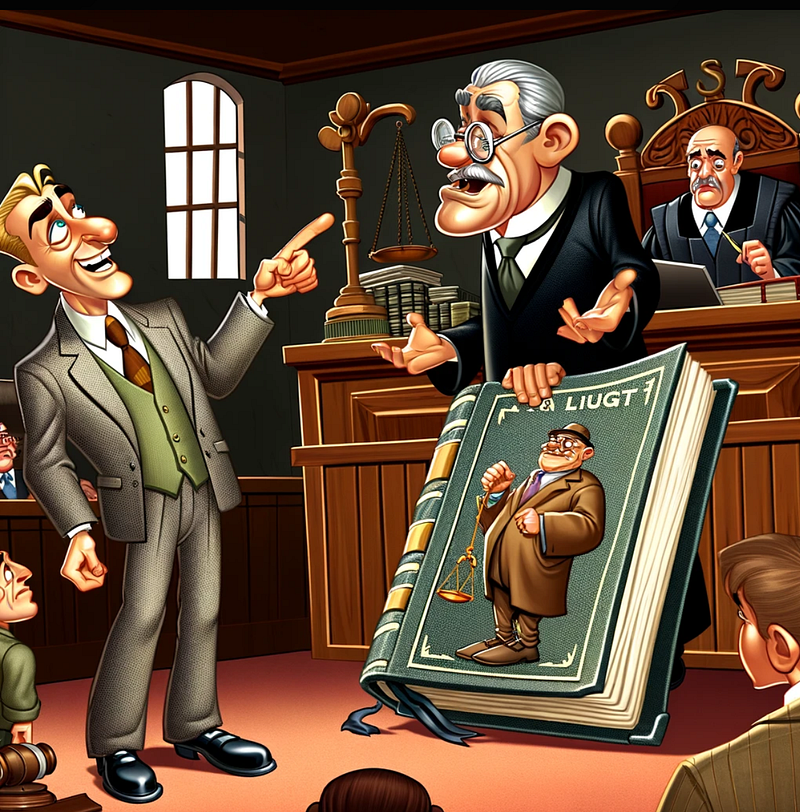
Faced with his client’s strange predicament in Tickleburg County, Oswald knew he had to get creative. The law, antiquated and rarely enforced, seemed almost comical in the modern age. For his client, however, the charge was no laughing matter.
Oswald began with primary sources, digging into state and county statutes and past court decisions. None specifically mentioned whistling after sundown as a punishable offense, but there it was, buried in the Article MCCCLXXXII 😅 of “Odd Public Disturbances”, an 1892 law. This was his firm ground, his binding authority. Now he needed more to effectively challenge the use of such an outdated law.
Next, Oswald turned to secondary sources. He found a treasure trove of legal analysis, historical context, and commentary criticizing the enforcement of outdated laws. One particularly insightful law review article discussed the evolution of public nuisance laws, suggesting that their interpretation must evolve with societal norms. This was persuasive, not authoritative, but it bolstered his argument beautifully.
In addition, Oswald discovered a surprising archival document, a memoir of Tickleburg’s oldest resident, which mentioned that the 1892 law was enacted to curb noise during the town’s founding, when livestock were easily spooked. He presented this not as a legal argument, but as a telling narrative, pointing out the absurdity of applying such a rationale in the present day.
Armed with a mix of primary authority and compelling secondary sources, Oswald crafted a defense that was both legally sound and humanly relatable. He argued that the law, while technically on the books, was inconsistent with contemporary social norms and values. It was an appeal to both the letter and the spirit of the law, emphasizing the importance of the law evolving with society.
The Verdict
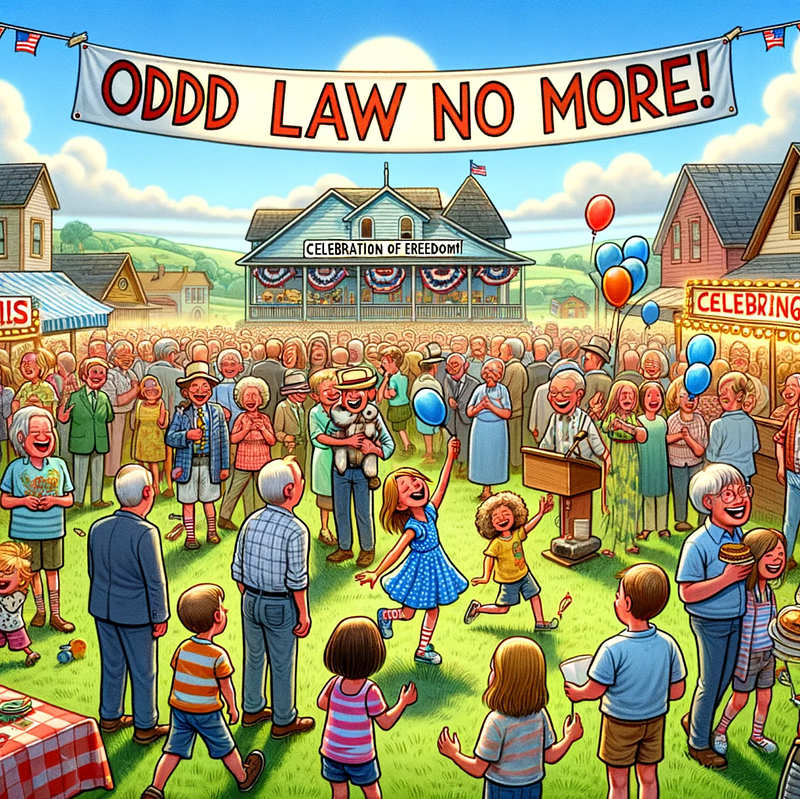
The court was impressed with Oswald’s innovative approach. The judge, recognizing the antiquated nature of the law and Oswald’s persuasive use of primary and secondary sources, dismissed the charges against his client. Oswald showed the invaluable ability to blend binding authority with a compelling narrative and historical context to show the power and excitement of thorough legal research. He was a great attorney.
Lessons Learned
This case was a great victory for Oswald and his client. It was also a testament to the importance of understanding and using both primary and secondary legal sources. Oswald demonstrated that while primary sources are the foundation of legal arguments, secondary sources can provide the context and persuasiveness to bring those arguments to life.
Disclaimer
The information provided in this article is for informational and educational purposes only and is not intended to serve as legal advice or as a substitute for legal counsel. While efforts have been made to ensure the accuracy and completeness of the content herein, it is important to note that legal principles and regulations can vary significantly based on jurisdiction and specific circumstances. Therefore, this article should not be used as a definitive legal resource or as a basis for making legal decisions. Readers are strongly advised to consult with a qualified attorney for advice on legal issues or matters, as each individual case may require detailed and personalized legal analysis.
Reliance solely on the information provided in this article without seeking professional advice from an attorney may lead to unintended legal consequences or misinterpretation. The author or publisher of this article do not accept responsibility for any potential errors or omissions, nor will they be responsible for any losses, injuries, or damages arising from its display or use. The information provided here does not create an attorney-client relationship between the reader and the author or publisher.