
Whirlpool
Count All This — Chapter 16: so many sinking ships
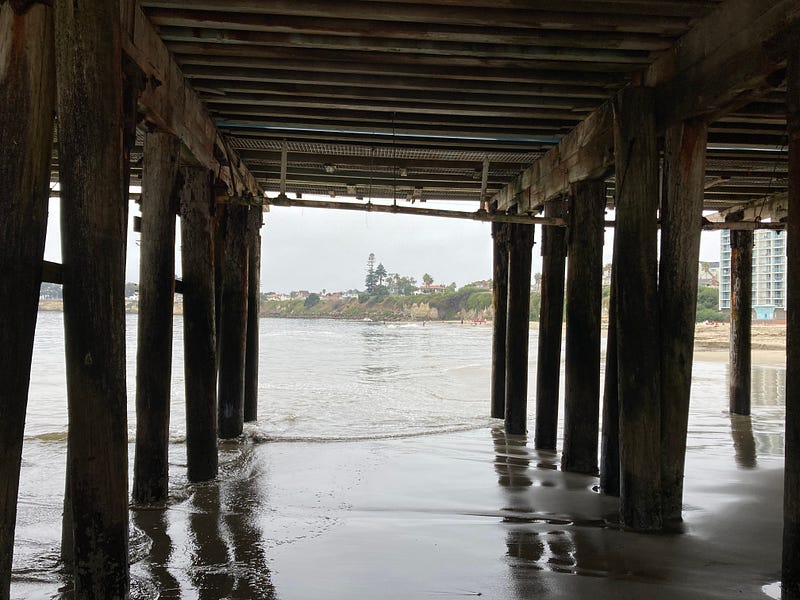
Just when Jo Kasten’s son encounters schizophrenia, she discovers she has breast cancer. Meanwhile, her marriage faces a test. Count All This is a story about love and loyalty, addiction and madness. This is the sixteenth chapter. Find the first chapter here.
After being released from the psych ward and moving back into his apartment, Eddy made it through the last week of school at College of San Mateo, being transported to school and his counseling appointments by his father, who reported to me that our son seemed to be on the mend. When school was over, he brought his things back home.
“Are you going to stay here for the summer?” I asked, too brightly.
“No. I’m moving to Berkeley for awhile. I’m going to check out various places to live so I can get set up for the fall semester.”
I was glad to hear he had made a plan.
“Where are you going to stay?”
“At a co-op.”
“Cool! Are you going to the one Rose is living in — Lothlorien?
“No. To John Muir. But that’s the one she’s thinking of moving to. It’s the one she got assigned to for next semester. Can you give me a ride there tomorrow? I’ve got kind of a lot of stuff to bring.”
“Sure.”
I was pleased he had asked me instead of his dad, and glad to get a chance to check out where he’d be staying and get the address. I knew he’d bridle if I asked too many questions. This way, I could get answers without having to ask.
In the morning, it took forever for him to get ready to go. He brought an unreasonable amount of stuff, filling a storage trunk with food, clothes, cooking appliances including a juicer and pressure cooker, an old stereo system, and record albums he’d culled from Larry’s and my collections. He also brought the expensive bike he’d purchased after selling his car, and several bottles of wine he had recently help bottle at a local winery.
I didn’t comment on the wine, although he wasn’t legally old enough to drink, and there was too much of it. I didn’t comment on any of the things he was bringing or doing. I tried to keep the peace.
The drive up the Peninsula, through San Francisco, and over the Bay Bridge was quiet. When we did speak, it was on a need to know basis.
“Do you have my check for $994.83?” Eddy asked.
“It’s in my purse.”
“Good.”
Eddy had closed his bank account in our home town, and before opening a new one in Berkeley, had his money transferred into mine. The bank had told him that would be the safest and quickest way to accomplish his goal.
“How’d the last week of school go?” I tried as Eddy dug through my purse to retrieve the check, then folded it and and zipped it into the top pocket of his backpack.
“Good. I passed all my classes.”
“That’s great, Eddy. So I guess this means your transfer to UC Berkeley is secured?” He was transferring as a junior, even though he was only 18. He’d dropped out of high school, taken his GED, finished two years of community college, and with an inter-college agreement, was now guaranteed acceptance at the prestige school.
“Right. I think so. Although there’s an admissions officer who is giving me trouble. That’s another thing I have to clear up while I’m here.”
“How’d you find this living situation at John Muir?”
“On Craigslist.”
“I’m surprised there was an opening.”
“There are a lot of openings in the summertime, because people move out and go back home. I’m rooming with the manager of the place.”
“That’s cool. Then, if you like it, can you get a room there for the fall semester?”
“No. I don’t think so. That’s a more official process. You have to go through the central office and everything. Right now, I’m just ‘fishing,’ which is what they call sleeping in somebody’s room and paying them directly. I think John Muir is full for the fall semester. But I’ll find something, Mom. Don’t worry.”
“Okay,” I promised, but of course it was a lie.
When we got to the address, we found a three-story stucco house on the quieter, north side of campus, far away from the boisterous scene on Telegraph Avenue. We parked in front, and both got out for the unloading.
Eddy managed to get in the front door without a key by talking to some people lingering in the messy lobby. We propped it open, and began carrying in his stuff. Eddy picked up and balanced the heavy steamer trunk on his head, which seemed dangerously unstable.
“Are you all right with that? Can I help you?”
“No. I got it.”
“Are you sure you won’t drop it? It doesn’t look very secure. Let me help you.”
“No, Mom. Go ahead.”
I grabbed a few miscellaneous bags and closed the trunk on his disassembled bike before we walked up the short steps into the foyer, where Eddy asked how to find room 201. It was up more steps and down a cluttered hallway. When we got there, we found the room was locked and no one answered our knock or call.
“That’s okay,” Eddy said. “We just have to find a place to stash this stuff.” He looked around, and decided on the end of the hallway, under a window. He parked his trunk there, after performing some acrobatics to get it down safely from on top of his head, stashed his backpack and bottles of wine behind it, went back to the car to retrieve and reassemble his bike, and laid out a sleeping bag and pillow on the floor.
“Why isn’t your roommate here? Didn’t he know you were coming?”
“Well, not exactly. I mean, he knows I’m coming, just not specifically when. Don’t worry about it, Mom. I’ve got it covered.”
“Okay…”
Eddy walked me down to the door after fretting for a moment over leaving his bike unattended upstairs. On the way out, we stopped to talk to two students who gave us a short tour. We saw a cluttered kitchen where two women were working, a room for storage that was stuffed to the ceiling with miscellaneous boxes and junk, a front room with several couches where three people were sharing a ceramic pipe of pot. They looked up at me briefly, but must have decided I was harmless, since they made no effort to conceal the contraband — pot was illegal then.
Every room in the co-op was a mess. I didn’t feel particularly worried about the pot smoking or the disorganization — that’s how I remembered my own college life — but felt uncomfortable by the conversation Eddy began with two tenants.
“How long have you known Mike?” a tall young man asked.
“I don’t know. How long does it take to know someone?”
The young man paused and smiled tightly.
“Where did you meet him?” he tried.
“We haven’t actually met.”
Eddy’s unhelpful answers reminded me of the night he’d come home after deciding to become homeless a month before, but it seemed to be amusing the students — at least for now. I guessed he was flirting or showing off, since he’d been speaking more normally in the car. I wondered if he would be able to make friends here. I was eager to leave.
Eddy walked me out to the car, and gave me a long hug and big kiss. “Good luck here, Eddy,” I said. “Remember, we’ve got the beach house early this year. So I’ll see you in Santa Cruz next weekend? Karen is coming down to play Settlers with us. It’s going to be pretty quiet, so you could invite a friend, if you want. Maybe someone you meet here?”
“Okay. I’ll remember…I think. But just in case, call me on my cell phone to remind me.”
“I will.”
The week passed without anything alarming happening. I didn’t call Eddy, and he didn’t call me. Rose reported that she’d seen him around campus, and he seemed to be having a good time, but was sometimes acting like a pain in the neck. “He needs to stop talking about his mental breakdown. He’s obsessed.”
I tried not to worry. When I did, Larry admonished me for smothering our son, saying my over-involved parenting style was preventing him from growing up. If nothing else, though, worrying about Eddy helped to keep my mind off myself. Surgery was looming, and work wasn’t helping in the distraction department. As soon as my boss Mandy heard about the upcoming mastectomy, she told me to take time off.
A week later, I went down to open the Santa Cruz house alone. Larry couldn’t take time off from his new job. Not that he wanted to come with me, anyway. He didn’t like the beach. Too sandy, he said. No Internet. When I arrived, the house was quiet and empty, and though I had imagined I might read, or write, or otherwise enjoy the solitude, I immediately called Karen to ask her to come join me.
I was used to the house being noisy, since it had been the scene of yearly tumultuous family reunions since I was 20 years old. We used it only in the summer, renting it out to UC Santa Cruz students during the school year. After my parents died, owning the house in common with my sisters had helped to keep us together as a family. Others might have parceled out the summer weeks to individual family groups, making the small space more livable, but instead, we made a special effort to congregate at the same time, coming together for two weeks of overly intimate pandemonium every August. But this year’s big reunion was more than a month off. So when I arrived in June, the empty house seemed eerie. And when Karen came two hours later, the two of us looked around for something to do.
“Call Eddy,” she said. “We need at least three to play Settlers.”
I called.
“Hello,” he said languorously.
“Hi, Eddy! It’s June first, and Karen and I are here at the Santa Cruz house, waiting for you to come so we can play Settlers. When are you arriving?”
“Oh, yeah. I’m trying to arrange a ride right now. I’m thinking of bringing a friend with me.”
“That’s great! When will you get here?”
“Well, that’s the problem. No one’s available to come today. But I’m trying to put something together for tomorrow.”
“Oh. That’s disappointing. It’s really quiet here. But we can make it through one day without you, I guess. What time will you come tomorrow? In the morning?”
“That’s hard to say, Mom. I don’t know exactly, because I’m depending on someone else for a ride.”
“Well, you can always take the train/bus down. You don’t have to depend on someone else. Just take BART to Millbrae and then hop on CalTrain. It’s easy. That brings you to San Jose, and if you arrive around noon, the bus is coordinated so you don’t have to wait long before you catch it to come to downtown Santa Cruz.”
“Okay. I’ll consider that a backup plan.”
“Good. Hurry up and get here. We’re desperate for Settlers!”
“Okay. See you soon.”
I was relieved that Eddy sounded sane, and that I’d be seeing him the next day. But that didn’t solve the problem of what we would do until then.
“Call Jason,” Karen said, which started my heart pounding.
“I’m not sure he’ll come if I call him. Why don’t you?”
Jason was another avid Settlers player, a game we played incessantly at camp. I held my breath when Karen called, and when she hung up, released it. “He’s coming,” she told me.
“With his new girlfriend?”
“I don’t think so. He didn’t mention her.”
Karen and I occupied ourselves before Jason’s arrival by setting up the house. First we moved boxes and giant black plastic bags down from the attic. Everything — bedding, towels, cooking utensils, food, paper goods, plates, cups, glasses, silverware, spices, pictures for the wall, toilet paper and kitschy seaside decorations — had to be unpacked. And everything that needed unpacking was stored in the attic. That kept us busy for a while.
While we worked, Karen tried to ask about my upcoming surgery, but I steered the subject to Eddy.
I’d first met Karen at camp, where Eddy was always creating some kind of chaos. She was a special education teacher who worked with emotionally disturbed children, and one day she told me she thought I had done an excellent job raising my son. I was stunned.
“How can you say that when he’s always in so much trouble?”
“I hope you won’t feel insulted, but every kid in my classroom is just like Eddy,” she laughed, “except that they have different parents. They have parents who are trying to force them to fit in, to conform, who won’t accept their individuality — and the result is they are being turned into emotionally disturbed children.
“Eddy, on the other hand, is relatively normal. Sure, he can sometimes be a pain in the ass. But nothing really scary is going on with him. I could see a child with his personality becoming much worse. I’ve seen children like him who are much worse, in my classroom.
“He’s as good as he is because of what you’ve given him, because of the way you’ve behaved.”
Her confirmation was one of the nicest things anyone had ever said to me — and Karen soon became one of my closest friends. After unpacking the boxes, we set up the Settlers board on the table. And just as we were positioning the last hexagon, Jason walked through the door.
We played three games in a row, drinking wine and laughing. It felt almost like old times — when Jason was coming over to our house every week, slathering me with a lot of delicious attention. Jason won all three games, but I didn’t mind, really. I was glad to have him in the house, sitting close. But after the third game, I felt restless. I proposed a walk on the beach.
“You two go,” Karen said. “I’ll throw something together for dinner.”
I looked to Jason, who hesitated, but agreed. As he stood and walked to the door with me trailing after, I was struck again by his resemblance to Larry — tall and slender, with a halo of unruly hair. He was Larry as a young man, when he still had some enthusiasm. He was Larry before he got old and sour.
It was still light outside, and pleasantly warm. We walked together silently for a block, smelling the salt air and the profuse flower gardens in front of nearly every beach cottage we passed.
“It’s good to see you,” I offered when we reached the corner.
“It’s good to see you, too,” he answered, but his voice was clipped, head down.
“What’s going on with you?” I ventured, after we’d crossed the street.
“What do you mean?”
“Nothing,” I lied, losing courage. “Just…what are you doing these days?”
“Oh you know, the usual: playing my guitar, ultimate Frisbee, Settlers, Susie.”
The sound of his new girlfriend’s name coming out of his mouth put a bitter taste on my tongue. We were standing on the cliff top now, at the top of the stairs that led down to the beach, and the wind off the ocean stung my eyes. It was an unusually clear day. We could the two towers of Moss Landing, and beyond that, all the way to Monterey.
“Do you want to go down to the water?”
“Sure.”
I held onto the railing going down the stairs, unsure of my footing. But once the bottoms of my feet hit the hot sand, I felt secure. We walked in silence to the edge of the ocean, where we both sat in the sand. A few awkward seconds passed, filled with sounds of gulls and surf.
“Why don’t you come over any more?” I pulled up my hurt feelings and laid them out on the table.
“I don’t know. Just busy I guess. Susie takes a lot of my time. And now that Eddy doesn’t live there…”
Children ran back and forth at the edge of the water, playing tag with the waves. The sounds of people screaming on the rides at the Boardwalk surged and fell in the distance. Three young girls ambled by in bikinis. Two young men in board shorts ran past, throwing a football. An older couple walked together purposefully, exercising.
“I’ve missed you.”
“Really?” he turned an impassive face to me.
I wanted to shake him. “Did you know I have cancer?”
I felt suddenly aware of my two beautiful breasts, and the cleavage they made when nestled together, just visible beneath the tank top I was wearing.
“Yeah. I heard something about that.” He looked at his feet.
“They’re going to cut off my breast in two weeks.”
“Oh!” His face turned red.
“Jason,” I put my hand over his on the sand. “Why won’t you help me?”
“But, how can I help?” he turned to look, didn’t withdraw his hand.
“It just felt like…I thought you…” I threw his hand away in disgust, face burning. His mouth opened and he froze, unsure what to say next. Jason the genius, the musical prodigy, the winner of every board game, the practically professional raconteur, was at a loss. It was a new experience for him. I felt an iota of pity.
“Never mind,” I huffed, leaving out you fucking asshole.
Jason stood. “I have to go.”
I sat on the sand and let a few tears escape, adding their water and salt to the wet, salty air.
What did I expect? Did I think he was going to kiss me? I’m an old woman, about to be mutilated, with a crazy son and a depressed husband and enough baggage to sink a far sturdier ship. Just because he had flirted with me didn’t mean that he loved me. Stupid bitch.
When I got back to the cottage, Jason had already left. “What got into him?” Karen asked me mischievously. “He ran out of here like a bat out of hell.”
“Beats me,” I shrugged. We laughed together wickedly. Then we sat on the couch and watched a movie — some thriller about an unfaithful wife killing her cold, distant husband, then paying a terrible price.
That was the sixteenth chapter of my novel, Count All This. To continue, follow the free chapter links below or buy a digital copy of the whole book on Amazon, where leaving a rating or review will help others find my story.
>>>NEXT CHAPTER
<<
NEW CHAPTER ALERT! Here’s a head’s up to people who’ve clapped or commented on my fiction in the past that a new novel’s running and the next chapter’s been published. ❤ Alan Tabor, Alberto García 🚀🚀🚀, Brendabrown, Catherine Caruso, Catherine Durkin Robinson, Chidi Michaels, Christiana White, Deb Clark, Dennis Abrahamson, Esther Spurrill-Jones, Evelyn Jean Pine, Filiz Özer, Frank Delaurier, Gregory Bell, Hidayatullah, HJ Free4Life, Howard Beye, Jackie Sacco, James Finn, Jen Maidenberg, Kenny D, KimRae Ketcham, L. A. Jackson, Lilit A. Sargsyan, Maddy Wylie, Matthew John, Mike Behlen, Nicole Higginbotham-Hogue, Leslie Napoli, Marian Čaikovski, Nini Mappo, Paul Morriss, Rebecca Ruth Gould, Ripley J. Cloud, R.L. Raymundo, Rolli, Ronald Hall, Sandra Salamander, Shannon Mary Sims, Skippy von Alte Welt, Suma Narayan, Taressa Watson, The Old Grey Wolf, Wendy Allen, Yvonne Vávra
My writing is free to readers who follow my links from Twitter, Facebook, and LinkedIn, but if you’d like to browse more, click here to join Medium for $5 a month and they’ll give me some of that money. (Yes!) For an email when I publish a new story, click here. Find more of my fiction, including another novel, on this List. And for more of the good stuff, follow Fourth Wave, where we’re changing the world for the better, one story at a time. Got one of your own? Submit to the Wave!
Copyright © 2021 by Patsy Fergusson. All rights reserved.


