
Where’s My Harriet Tubman $20 Bill?
Racist misogyny is so last century
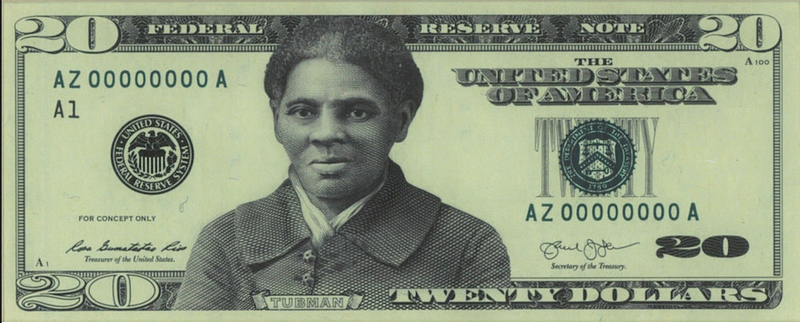
I didn’t know much about Harriet Tubman until I listened to an audio version of The Water Dancer, a fantastic book by Ta-Nehisi Coates which I reviewed here. In that story she’s portrayed as a supernatural figure who has magical abilities to bring people out of slavery in the South, aka The Coffin, to freedom in the North.
In fact, she was such a good conductor on the Underground Railroad that she was called Moses. She made 13 extremely dangerous rescue missions on her own and guided 70 people out, never losing a passenger. She also acted as a scout and a spy for the Union Army during the Civil War, and led the raid at Combahee Ferry, which liberated more than 700 slaves. She was the first (and only?) woman to lead an armed raid in that war. When the Fugitive Slave Act was passed in 1850, allowing capture and kidnap of former slaves in free territory, she led groups farther north to safety in Canada.
I want this heroic woman on my money.
Born a slave, Harriet was whipped and beaten as a child, separated from her mother and father for long periods when she was “hired out” to work on other plantations, saw several siblings disappear when they were sold, and suffered a serious head injury as a teenager when a slave owner threw a heavy metal object at another slave, but missed. She married John Tubman in 1944, when she was 22 or 24 (birth records weren’t carefully kept for slaves), but ultimately devoted her life to serving god and the cause of abolition.
I want this resilient woman on my money.
Tubman escaped from slavery in 1849, when she was around 27–29. Her husband, who was free, didn’t condone the escape because it was dangerous, and didn’t flee Maryland with her. But her owner had died, what family she had left was being sold off by the his children, she was likely to be next, and Tubman had had enough. "Here was one of two things I had a right to: liberty or death; if I could not have one, I would have the other,” she said.
“Here was one of two things I had a right to: liberty or death; if I could not have one, I would have the other”
She traveled by night, guided by the stars, in order to avoid the gangs of slave hunters who patrolled the woods in hopes of capturing runaways and getting blood money. When she crossed the border to Pennsylvania, she had one of the many religious experiences in her life. “When I found I had crossed that line, I looked at my hands to see if I was the same person. There was such a glory over everything; the sun came like gold through the trees, and over the fields, and I felt like I was in Heaven,” she said.
“When I found I had crossed that line, I looked at my hands to see if I was the same person. There was such a glory over everything; the sun came like gold through the trees, and over the fields, and I felt like I was in Heaven.”
But she didn’t bask in safety, once she had won her freedom. She put herself in danger again and again, for the rest of her life, helping others to achieve the same. She was admired and publicly lauded by John Brown and Frederick Douglass. She spent her lifetime in service. And as an older woman, she worked alongside Susan B. Anthony for women’s right to vote.
I want this astonishing woman on my money.
In 2016, it was announced that a portrait of Tubman would be put on the front of the $20 bill, and President Andrew Jackson, a slave owner who is currently on the front, would be portrayed on the back. The new bill was expected to be in circulation in 2020. I wasn’t that excited. I hadn’t read The Water Dancer yet, and was ignorant about who Tubman was. “Whatever,” I thought.
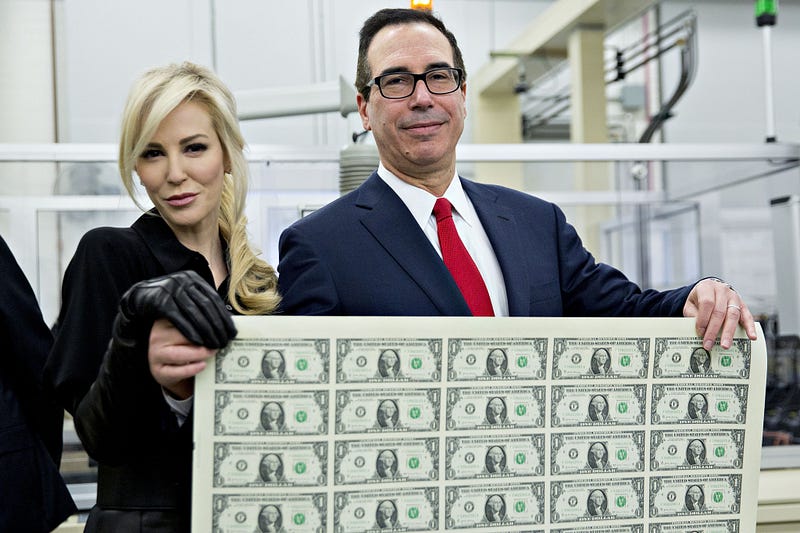
But then in 2017, Donald Trump’s cabinet pick for Treasury Secretary Steve Mneuchin said he was cancelling those plans, because “People have been on the bills for a long period of time. This is something we’ll consider; right now we have a lot more important issues to focus on.”
People have been on the bills for a long period of time?
You call that a reason?!?
Clearly, that’s not the reason. The delay is just another blatant display of racism and misogyny from our current administration. There’s literally no reason to put the project on hold other than that.
So now, I’m angry. I’m tired of the disrespect. And I’m disgusted.
You might say, as I did just a few years ago, Whatever. You might think, Who cares? What does it matter who’s on the 20 dollar bill?
But the truth is, it DOES influence thinking when the only people honored on America’s money are white men.
Let’s take a quick look at who is honored in this way.
$1 — George Washington, white man, 1st president and slave owner
$5 — Abraham Lincoln, white man, 16th president who backed a war to abolish slavery (Yay!)
$10 — Alexander Hamilton, white man, 1st U.S. Secretary of the Treasury and founding father. Of course I have to affirm Hamilton, too, because of the musical. :p He was a bastard and an immigrant, yet rose to a position of great power, personifying the American Dream. So, Yay!
$20 — Andrew Jackson, white man, 7th president, slave owner and racist instrumental in the forced relocation of Native Americans
$50 — Ulysses S. Grant, white man, 18th president and Commanding General of the Union Army during the Civil War (Yay?)
$100 — Benjamin Franklin, white man and kind of a dork. Okay. I like this guy. Yay.
Because I’m not obscenely rich, I’ve never seen a bill larger than $100. (Are there any?) And it’s true; I like a lot of the guys featured on our bills! So I’m not suggesting we throw out the baby with the bath water.
But it’s time to expand the pantheon to women and to people of color. It’s time to put our money where our mouth is. It’s past time to show that the United States is a place where ALL people have an equal opportunity to be honored and admired, not just the 31% of us who are white men.
I want Harriet Tubman on my money.
So let’s cut the BS, Mneuchin. Please white men in power, let’s do it, now.
For more by this author, try:
For more by writers working towards a better world, follow Fourth Wave.


