
Where, When and How We Eat Can Raise (or Reduce) Depression Risk
Make mealtimes mood-beneficial without following a strict diet
This article is part of a Wise & Well Special Report: The United States of Depression.
It’s Tuesday night and you’re getting home late from work. You grab the relatively nutritious meal you prepared over the weekend and throw it in the microwave. After changing into sweatpants, you take your dinner to the living room and flip on the TV.
A few minutes later, you realize your meal is gone.
Reflexively, you get up and bring some low-cal popcorn to the couch. Before you know it, the bag’s almost empty. You finish it off — what’s the point of leaving so little? — and start getting ready for bed.
If this scenario seems familiar, you could be unconsciously sabotaging your mental health.
It’s been well-documented that what we eat affects how we feel. Dietary recommendations for thwarting symptoms of depression abound, and the food that’s advised isn’t available to many people, in the U.S. or abroad. Even those who can easily access the best foods aren’t necessarily setting themselves up for optimal well-being.
The way we eat — when, where, how often, with whom — can be just as impactful on mental health as what we eat.
Link between diet and depression
In the scientific world, it’s generally agreed upon that a person’s diet impacts the likelihood of becoming or remaining depressed.
“Following a healthy diet, particularly one that incorporates vegetables and fruits, and avoiding a pro-inflammatory diet such as junk food, fast food, and a high intake of meat may lower the risk of developing depressive symptoms or clinical depression,” a 2022 literature review published in The Cureus Journal of Medical Science found.
There’s a lot of neurobiological stuff happening in our bodies that explains these findings. Essentially, what we eat affects important regulatory mechanisms such as the inflammatory response and gut microbiome, researchers say. The way these processes get altered influences the probability of developing depression.
Many experts promote the benefits of adhering to the Mediterranean diet, rich in omega-3 fatty acids crucial for brain development and functioning. An omega-3 fatty acid deficiency increases a person’s risk for psychological disorders, including depression.
Additional elements, including Vitamins D, B12 and B6, folic acid, magnesium, selenium, zinc, copper, and probiotics, are critical for good mental health, a 2023 mini-review published in the journal Experimental Gerontology found.
While this is certainly useful information, diets are complex. The interactions between different foods we consume make it difficult to nail down which specific ones are responsible for contributing to or helping prevent depressive symptoms. Further, diet is just one of many risk factors for depression, and illness prevention isn’t as simple as eating your fruits and veggies.
“It may be that dietary supplementation only works if there are deficiencies due to a poor diet,” Suzanne Dickson, PhD, a professor of neuroendocrinology at the University of Gothenburg in Sweden, said in a statement. “We also need to consider genetics: Subtle differences in metabolism may mean that some people respond better to changes in diet than others.”
Social, psychological, and physiological factors also come into play when considering a link between a person’s diet and mental health. The bottom line is that dietary recommendations aren’t one-size-fits-all. And, due to each individual’s unique situation, eating a mental health-promoting diet can be out of reach.
Barriers to access
Challenges to finding the right foods for a healthy diet include:
- Financial cost. Perhaps one of the biggest obstacles to healthy eating is the price tag. Fruits, vegetables, eggs, nuts, and milk are more expensive than starchy staples, sugar, oils and highly processed foods known to have low nutritional value. In low-income areas, lack of affordability drives down demand for healthy food. Subsequently, supply is kept low, and prices are kept high, contributing to a cycle of poor nutrition in poverty-stricken areas around the world.
- Geographic location. The foods we have available to us are largely dependent on where we live. People living in food deserts and low-income areas are restricted to accessing nutritious foods, such as fresh fruits and vegetables. Not only are options scarce, but residents also commonly lack transportation and nutrition education.
- Time and energy costs. Preparing healthy meals takes time, thought, and planning. Life gets busy, making highly processed convenience foods — often high in sugar, oils, and starches — a go-to option.
- Medical restrictions. Those with food allergies, gastrointestinal disorders such as Crohn’s disease, and certain other chronic conditions, need to adhere to diet guidelines that limit our ability to follow a depression-prevention diet.
- Reliance on others. Elderly folks, people with disabilities, and children frequently depend on others to prepare meals for them, restricting control over their diet.
It’s worth mentioning that eating “unhealthy” foods can be a joyful experience, and who’s to say which of these — the food or the resulting emotions — plays a bigger role in our mental health?
Also, following a specific diet is hard. “Even in the general population, adherence to diet advice is typically very poor,” a 2019 peer-reviewed study found.
Lack of access to nutritious food is a systemic problem without a quick fix. Fortunately, when it comes to food and mental health, there’s a lot more at play than simply what we eat. Our behaviors and attitudes surrounding food can impact our risk for depression just as much as the ingredients themselves.
Making your diet work for your mental health
Here’s a list of recommendations for reducing your risk of depression despite the contents of your diet:
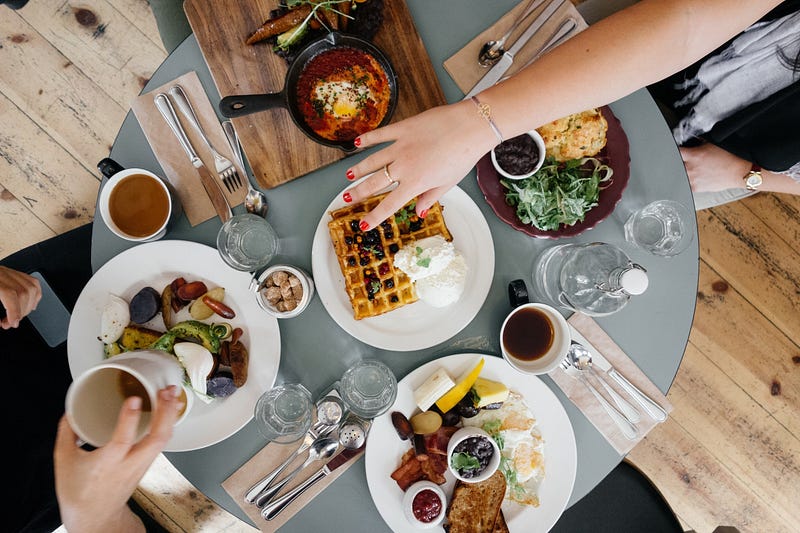
Choose social eating over eating alone.
“A meal is not only about eating; it positively affects the creation of intimacy and pleasant feelings through relationships with others,” researchers wrote in a 2021 study published in The Korean Journal of Family Medicine. “Not only for older adults but also for young adults, eating alone was associated with depressive mood and suicidal ideation.”
Similar conclusions were made by researchers in the 2023 article published in Experimental Gerontology. It’s widely agreed upon in the mental health world that consistently eating meals with friends and family members reduces a person’s risk for depression.
Practice mindful eating over distracted eating.
Mindful eating refers to tuning into all of your senses during mealtimes without judging yourself or the food on your plate.
Doing so “promotes conscious choice of food, developing awareness of the differences between physical hunger and ‘emotional’ hunger, noticing the satiety signs, and eating healthily as a response to all those signals,” researchers concluded in a 2022 randomized controlled trial published in the journal European Eating Disorders Review.
Challenge yourself to turn off the television and leave your phone in another room during mealtimes. You might be surprised by how enjoyable it can be.
Balance eating out with cooking at home.
Eating out provides opportunities for social interaction and relationship development, while cooking meals at home grants more space for practicing mindfulness. Striking a good balance between the two might look different for you than for others, based on whether you tend to re-energize while socializing or having alone time.
Pay attention to how you feel after meals in both situations and use this information to determine a good balance for yourself.
Avoid eating close to bedtime.
You may have heard this advice before; it’s commonly given in response to concerns about weight loss, interrupted sleep patterns, and physical health. It holds value for mental health too.
“Our findings provide evidence for the timing of food intake as a novel strategy to potentially minimize mood vulnerability in individuals experiencing circadian misalignment, such as people engaged in shift work, experiencing jet lag, or suffering from circadian rhythm disorders,” Frank A. J. L. Scheer, PhD, said in a statement regarding a 2022 study examining the effects of daytime versus nighttime eating on levels of depression.
Scheer acknowledges the need for continued research in this area. “Until then,” he said, “our study brings a new ‘player’ to the table: The timing of food intake matters for our mood.”
Skipping your midnight snack could spare your state of mind.
Refrain from labeling foods as “good” or “bad.”
Foods don’t have morals, and they don’t have the power to turn you into a good or bad person. Assigning such terms to the food you eat can lead to “profound feelings of shame and guilt,” eating disorder experts at Within Health wrote in a 2022 article. “And once you shame yourself into believing that you’re a bad person because of your food choices, this can lead to psychological distress, anxiety, and depression.”
If you struggle with this one, set a goal to pay attention to your beliefs about food, reframing any judgmental thoughts. Teach your brain that food is not an enemy; it’s nourishment. Practice gratitude for the food you have available to you.
The next time you get home late on a Tuesday night, try implementing some of these tactics before switching on the TV and switching off your thoughts. It could become a habit that saves you from a lot of emotional pain in the long run.
This article is part of a Wise & Well Special Report: The United States of Depression. If you or a loved one is depressed, it’s vital to talk about it. Because depression increases the risk of suicide, consider calling the confidential National Suicide Prevention Lifeline at 1–800–273-TALK (8255) for English, 1–888–628–9454 for Spanish, or call or text 988. Global support in 44 languages is available from Befrienders Worldwide.


