avatarJanice Harayda

Summary

The content introduces the work of Annie Ernaux, a Nobel laureate known for her poignant writing on personal subjects, including her mother's Alzheimer's disease and her own extramarital affair, emphasizing the impact of class and gender roles.

Abstract

The text highlights the literary contributions of French author Annie Ernaux, who was awarded the Nobel Prize in literature at the age of 82. Ernaux's writing is characterized by its deeply personal nature, as seen in her works "Getting Lost," which recounts an affair with a younger man, and two autobiographical novels, "A Woman's Story" and "A Man's Place." The former delves into the emotional turmoil caused by her mother's struggle with Alzheimer's disease, while the latter reflects on the life and sudden death of her shopkeeper father. These novels are celebrated as masterpieces that explore the themes of class and gender roles in the context of rural Normandy. The content also contrasts the timing of Ernaux's Nobel Prize with that of Rudyard Kipling, who received his at a much younger age, questioning the Swedish Academy's recent cautiousness in awarding the literature prize.

Opinions

  • Ernaux's "Getting Lost" is noted for its vivid and haunting portrayal of an affair.
  • "A Woman’s Story" and "A Man's Place" are considered more highly praised works and excellent introductions to Ernaux's oeuvre.
  • Ernaux's Nobel Prize is deemed well-deserved, despite its belated arrival.
  • The article suggests that the Swedish Academy may have become more conservative or hesitant in its selection of Nobel laureates in literature, as evidenced by the contrast between Ernaux's and Kipling's ages when they received the prize.

POP CULTURE SHORTS

Where To Start With Annie Ernaux

A new Nobel laureate writes poignantly about her mother’s ‘maladie d’Alzheimer’ and other subjects
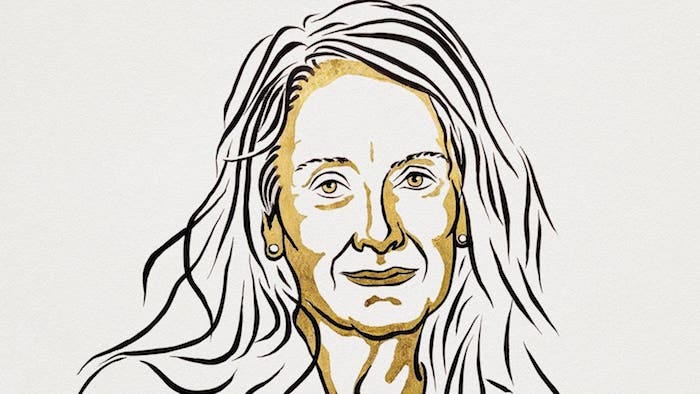
Annie Ernaux / Niklas Elmehed for nobelprize.org

“I realized that I’d lost a contact lens,” the French Nobel laureate Annie Ernaux once wrote. “I found it on his penis.”

Those haunting lines come from Getting Lost, a of diary Ernaux’s affair with a much younger man and possible KBG agent shortly before she turned 50.

But that book has won less praise than two slender autobiographical novels that might make a better introduction to her work. Both recall her parents and how social class and sex roles shaped their lives in their Normandy village.

A Woman’s Story deals with the terror and confusion Ernaux’s mother felt after developing the disease the French call la maladie d’Alzheimer, A Man’s Place with the sudden death of her shopkeeper father. Each is small masterpiece. Ernaux won her Nobel at the age of 82, and she’s no less worthy for its belated arrival.

Nobel Prize
Literature
Books
Reading
Feminism
Recommended from ReadMedium