
Where Tears of the Kingdom Missed the Mark
This is Lincoln Logs for adults
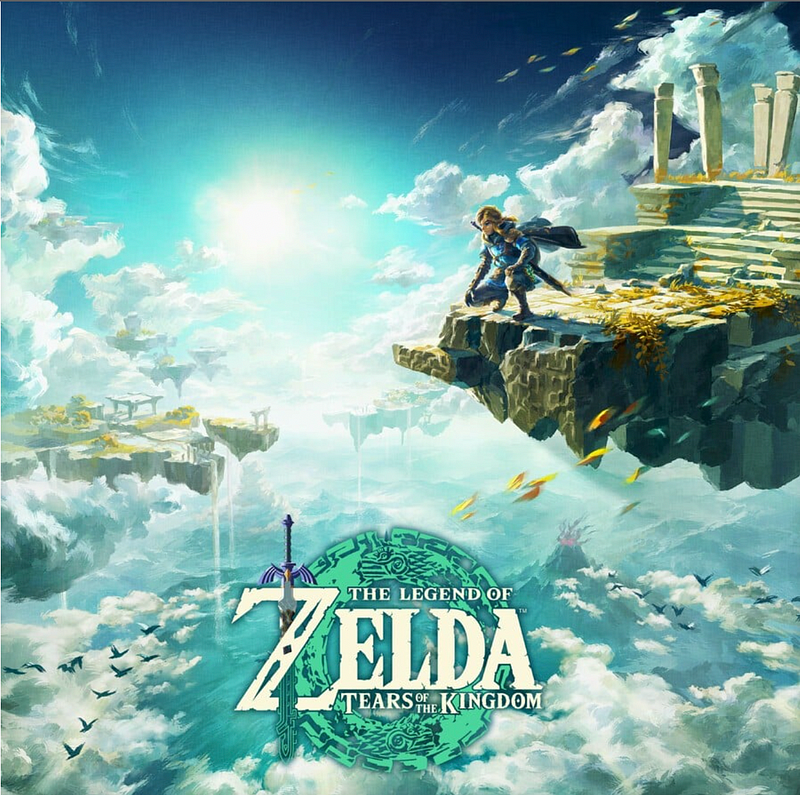
This article will not spoil any story elements of Tears of the Kingdom. This is a review and discussion of the tutorial part of the game. I’ll mainly be discussing gameplay mechanics.
Nintendo released Tears of the Kingdom (TOTK) on May 12th, 2023. It’s received high praise from the gaming community, touting it as an empowering follow-up to its predecessor, Breath of the Wild (BOTW).
This is not a full review since I have not completed the game’s main quest. Instead, this is a review and discussion of the game’s tutorial. I’m about 25 hours into the game and well past this stage.
In this article, I’ll discuss the following about the tutorial stage and my initial thoughts:
- Comparison to BOTW and Skyward Sword
- The Controls
- Spatial Awareness
- Game Mechanics
Comparison to Breath of the Wild and Skyward Sword
As a loyal Zelda fan and lover of the game’s predecessor, I felt left behind during the first few hours of TOTK.
BOTW has something for almost everyone. The game itself is not that hard, but players can make it as challenging as they want. If players like exploration, they can relax and enjoy the ambiance while foraging for mushrooms in the forest.
Puzzles and shrines still pepper the map, but the difficulty levels and types vary.
The TOTK tutorial feels like a game for ‘gamers.’ The security blanket of familiarity is gone.
TOTK expands on BOTW flying mechanics by adding diving controls and mini sky islands.
So far, these additions make TOTK feel like Nintendo’s second attempt at “Skyward Sword.” That game was… well, it wasn’t good.
TOTK feels like what Skyward Sword wanted to be.
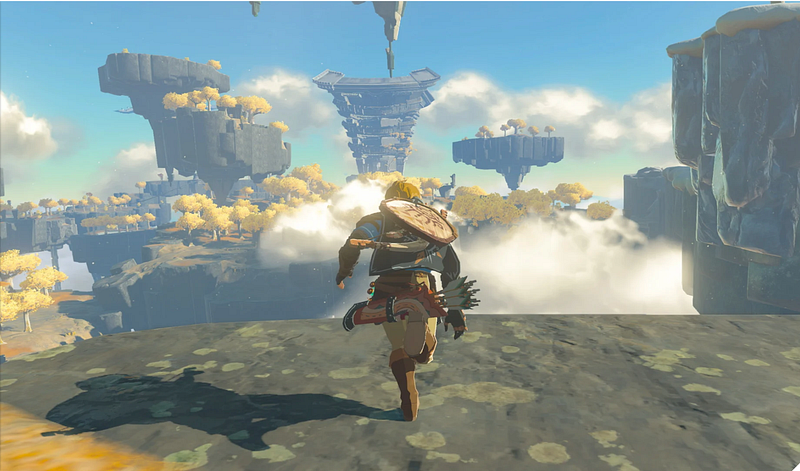
The flying controls feel good and there’s a vast world to explore in the sky. The wealth of playable content answers players’ unmet needs of “Skyward Sword.” I imagine the developers saying, “Look, we can do a cool sky thing! See? We did it! I told you we could do it.”
The Controls
The mechanics of the game are overwhelming at first. This game asks a lot of the player right away. It’s tough to remember all of Link’s capabilities and execute them in real-time.
Link can do almost anything in this game. If you can think of an action, there’s likely a corresponding button or series of buttons to get there. Executing these controls efficiently can be challenging in combat or high-stress situations.
When building, things do snap together sometimes. Adjusting the pieces to fit together just right is annoying. The rotating is irritating because it lacks a yaw function. It makes the player waste time moving their item back and forth until it’s finally lined up.
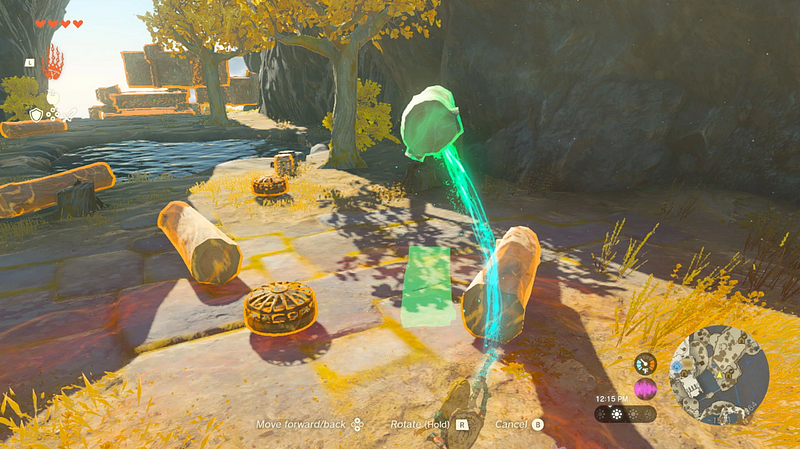
The tutorial tries to gently nudge and guide the player through its controls. But even at 20+ hours in, I’m still confusing the buttons. I need to look down at my hands and take a moment to think about how I can achieve what I want to do. It interrupts the immersive experience and creates disjointed gameplay.
The extensive controls require a few hours of frustration before the player can explore freely. And if players have BOTW muscle memory, there will be an extra step of unlearning those controls before swapping to these new ones. Players may continue to confuse the buttons long after the tutorial is complete.
Game Mechanics
The unlearning goes a step further with the mechanics themselves. In BOTW, Link’s world interaction was limited by stasis and magnesis. TOTK throws those limitations away and says yes — to everything. And that’s not always a good thing.
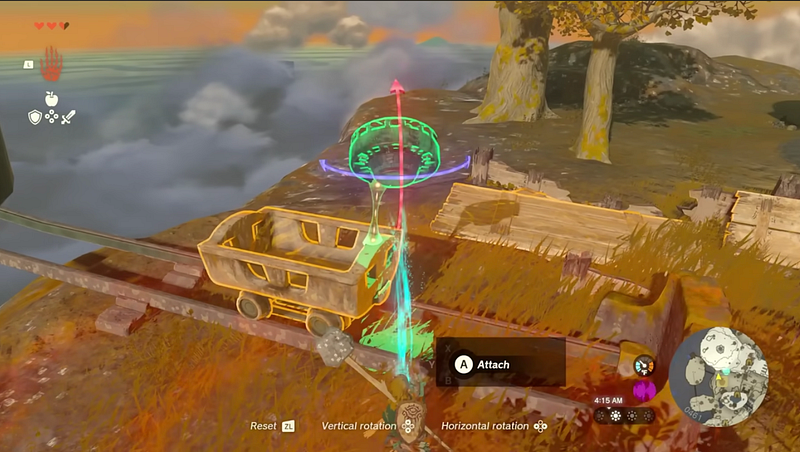
See that crate? You can pick it up. Stuck in a cave? There’s a mechanic to ascend up and out. You can even rewind certain moving objects and craft weapons.
Well — you have to craft weapons if you want to defeat any enemies. And you have to defeat enemies to advance in the game. So, it’s not an option at that point — it’s a requirement. Also, every weapon sucks unless you remember to attach it to a rock.
The tutorial gives you the world in the palm of your hand. Then it pats you on the head and drop-kicks you into an overgrown map where everything is out to get you.
I also forget about some abilities until I’ve spent far too long attempting other solutions. Endless possibilities can create paralysis by analysis. The hand-brain connection and world mechanics of BOTW is ingrained in many players. So, it’s strange to see the same world but experience completely different parameters.
Instead of encouraging players to engage with the mechanics because it’s fun, the game forces you to grapple with confusing controls. This can create a frustrating experience devoid of fun.
If players liked BOTW for its cozy, relaxing elements, buckle up. It takes a while for TOTK to settle into this space.
Spatial Awareness
If a player, like me, has Autism and/or lacks spatial awareness, they will have a hard time with this.
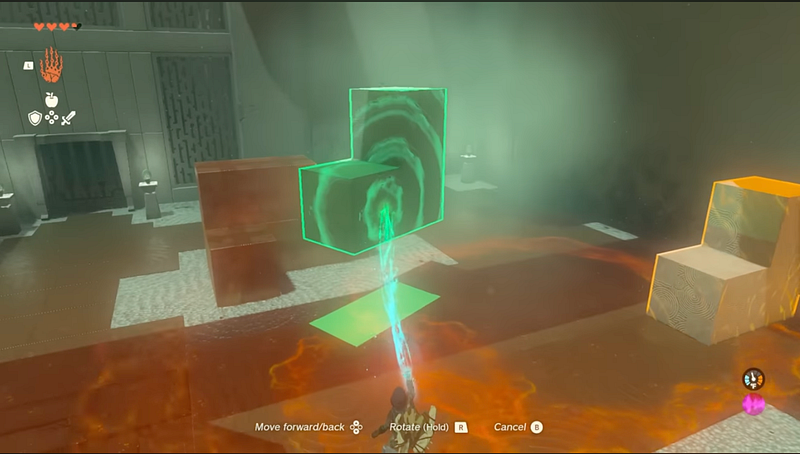
Many puzzles in this game hinge on the player’s spatial awareness abilities. If players struggle with this or don’t have it, it will make them feel like they’re back in elementary school. And that’s not a fun feeling. It requires them to build complex vehicles and solve advanced spatial puzzles.
It’s like a grown-up version of Lincoln Logs and Legos — except more difficult. Oh, and there are murderous sentient trees now. So there’s that.
In Conclusion
TOTK leaves casual gamers and some neurodivergent people in the dust because it places such high demands on its players. At times, it seems harder than BOTW for no good reason.
But if players are excited about a new adventure, it’s still a great game. They just need to commit to a somewhat grueling tutorial. After that, there are a wealth of side adventures and quests for players who enjoy non-combat-based play. And there are still plenty of open spaces to wander.
If players want a cozy, relaxing game, they must first endure a five-hour-long slog. There might be a learning curve if they are attached to previous Zelda games’ easy, predictable combat.
TOTK takes some getting used to. BOTW was a leap in a much-needed direction for the Zelda franchise, and TOTK takes this even further. I’m glad the creators stepped away from the outdated, linear game format and moved to an open-world experience. They’ve created an immersive experience that players can endlessly explore.
Though I have my gripes with the first few hours of TOTK, this game is worth playing. It throws expectations out the window and allows players to interact with the world in ways never thought possible.
This game is expansive, groundbreaking, and captivating. Yes, it asks a lot of the player. But it does feel great when you finally solve each puzzle.
TOTK is a refreshing reminder of what The Legend of Zelda series can offer. This is a game that is definitely worth buying.