
Where Prosperity Lies: Why The Golden Age is Not in The Past
“I used to think that the brain was the most wonderful organ in my body. Then I realized who was telling me this.” — Emo Phillips
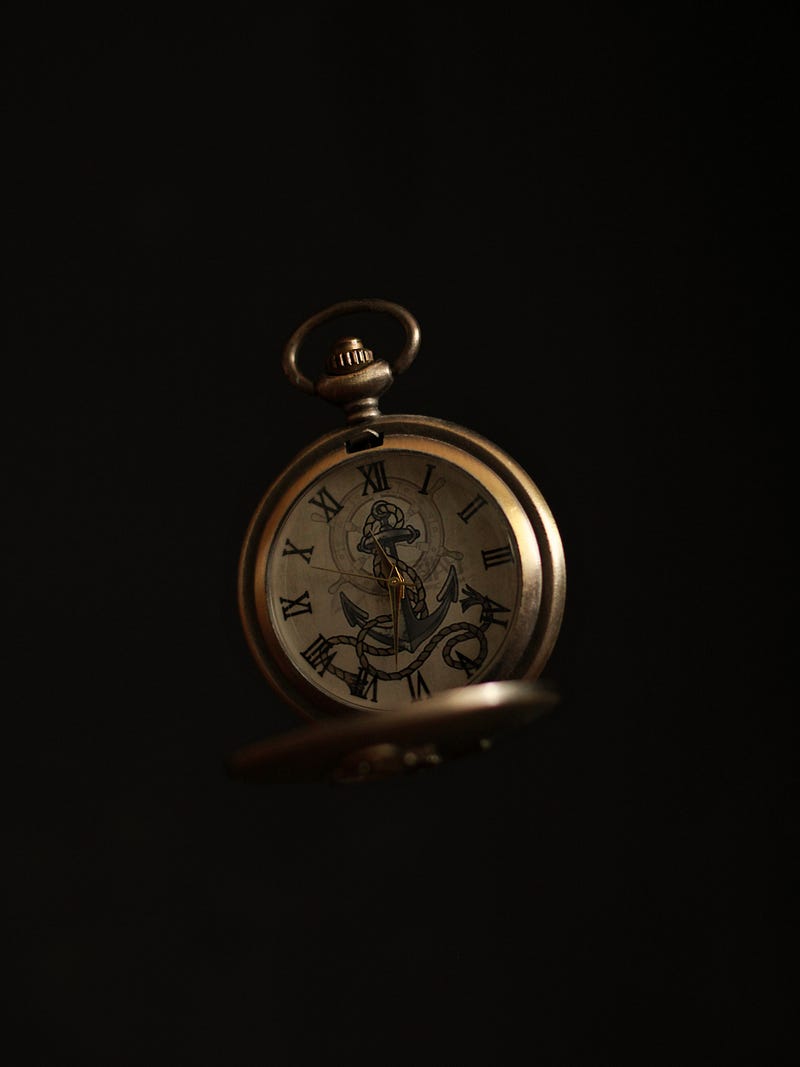
The Golden Age is often described as a bygone era where great feats and achievements were accomplished and are often lauded for being the best and most transformative time to be alive.
Whether it’s the Golden Age of movies, literature, music, art, sports, technological innovation, or a time in our lives that we still deeply cherish to this day, the Golden Age is the measuring stick for all of the other eras, but is it always as golden as we make it out to be?
Drawing from movies, literature, psychology, and life, here’s my take on the idea of the Golden Age.
Living in the Past
I very often bring up childhood and adolescent memories with my childhood friends, and they’re always amazed at how much memory I retain, no matter how detailed or uselessly small.
I used to joke with them it was because they drink more than me as being the reason, but maybe it’s more because I tend to visit my past quite a lot.
But why?
Am I escaping and getting caught up in the romance of my own bygone era because I prefer it over facing my current reality ?
We’re all guilty of doing it, even more so since the global pandemic hit, many of us have turned to nostalgia to comfort our loneliness, during these uncertain times.
According to trauma specialist, Dr. Florence Saint-Jean creating these safe places of visiting happier times in our lives can offset the effects of the traumatic experience we’re going through.
Dr. Saint-Jean suggests preparing a list of happy memories beforehand, in order to combat these negative experiences when they arise.
However, as powerful and valuable as this exercise is, even Dr. Saint-Jean admits that there can be negative consequences in looking too much to our past with rose-tinted glasses.
“While people are going to a past place for coping, it may not necessarily be a healthy place…For some people, their mind is going to an ex, for example. And they may be calling that ex when normally they probably wouldn’t because the relationship was toxic. But their mind isn’t going to the days of the abuse – their mind is going to the times when that person made them happy.”
-Dr Saint-Jean
By becoming frequent visitors of supposed better times, are we then ‘changing the script’ of what actually happened, so that we can feel better about it?
Midnight in Paris (Spoilers Ahead!)

Woody Allen’s Midnight in Paris (2011) is a film that pays homage to the wonders and pitfalls of nostalgia.
Set in Paris, the romantic comedy follows the life of aspiring novelist Gil Pender (Owen Wilson), who while on vacation with his fiancee (Rachel McAdams) is uncharmed by the current modern-day version of Paris and longs for the Paris of the 1920s, The Lost Generation, where artists and great literary figures presided.
At the stroke of midnight, while on a walk through the streets of Paris, Pender is visited by a time-traveling car that takes him back through time to the Paris of 1920s that he has long romanticized, eventually meeting his idols such as Ernest Hemmingway, F. Scott Fitzgerald, Salvador Dali, and Pablo Picasso.
Unhappy with his relationship with his fiancee, Pender returns every night to the same spot, returning to the 1920s, and eventually pursues a romantic relationship with one of Picasso’s mistresses, Adriana (Marion Cotillard).
Adriana however, a person of the 1920s fails to see the grandeur and amazement that Pender has for the 1920s, and herself longs to be in La Belle Epoque (the 1890s), the age of Paris that she considers being the true Golden Age.
Through a time-traveling horse and carriage, Pender and Adriana go back in time again to the 1890s only to find that the great figures of that age such as Paul Gaugin and Edgar Degas, despise their own time, arguing the Renaissance period to be the true Golden Age.
Pender eventually has an epiphany and realizes that no matter what Golden Age a person wants to be in, it is only a matter of time before it ceases to be, and sooner or later they will yearn to be in another Golden Age.
But that’s what the present is, it’s a little unsatisfying because life’s a little unsatisfying!
-Gill Pender, A Midnight in Paris
The problem with any Golden Age is that we become so in love with its grandiosity, that we fail to see its flaws.
For Pender, he is so enamored by breathing the same air as Hemingway, Fitzgerald, and Picasso, he fails to see that despite their own genius, they too have their own individual flaws:
- Ernest Hemingway had a long history of mental health issues and committed suicide in 1961.
- F. Scott Fitzgerald had a destructive relationship with alcohol.
- Picasso according to his granddaughter brought despair to those who came near him.
Whether it’s the person or the time, it’s only when we take off the rose-tinted glasses that we see it for what it is.
Although it was certainly a period where great tasks were accomplished, the Golden Age of the post-war era was founded by flawed people.
The Willy Loman Effect
The character of Willy Loman from Arthur Miller’s Death of a Salesman embodies the underside of failing to achieve the American Dream.
Loman is a self-deluded traveling salesman who is a firm believer that the American Dream is a get-rich-quick scheme just waiting to happen, yet he never achieves it.
In the play, Loman bounces between the regrets of his past for passing on a golden opportunity to make money with his brother Ben, and the potential prospect his future life holds if only a few things went his way.
He is so deluded and caught up in both past and future, that he fails to see his present reality come crashing down around him.
Ultimately it is his blind faith in his depiction of the American Dream and unacceptance of his reality, that leads to his psychological downfall and eventual suicide.
Ironically, and tragically it is only in addressing his present, that Loman is finally able to make a difference by killing himself so that his family can claim his life insurance.
The Power of Now
Although considered a spiritual book, Eckhart Tolle’s The Power of Now doesn’t need to be read from a spiritual outlook to appreciate and understand the profound benefits that living life more consciously in the now can provide.
According to Tolle, by breaking away from our more analytical mind and the false ego we’ve created for ourselves and then surrendering to our present reality, true joy, and wellbeing can be accessed.
More often than not, it’s not necessarily the situations or the people at fault but rather the thoughts and emotions we have that get in the way of our ability to access our own peace and happiness.
I first read Eckhart Tolle’s The Power of Now in December 2009, and I found it to be a book that I needed to read again and again. Not because I struggled with it initially, but each time I read it, there was a deeper and more profound understanding that came with each reading.
Although we’re not being hunted down by saber tooth tigers these days, the fight or flight response is still there, but many of us tend to escape to our present through nostalgia or substances to find relief when in reality the fastest way we can address the unwanted experience is by confronting it, not in hiding away from it.
The further we try to hide away from the problems, the larger our anxiety becomes.
Hiraeth
Being Welsh, we have a word in our culture called hiraeth, a feeling of homesickness or longing for a home that we cannot return to.
Despite my parents physically selling our family home two years ago, it had long stopped being my home before that, and my feelings of hiraeth grew.
It’s not that the building I called ‘home’ didn’t exist, the feeling of it, the romance of it had gone, yet I still yearned for it.
Maybe it’s because year after years I’ve rented apartments and never really stayed long enough anywhere I’ve been to really establish a feeling of home, but it’s certainly a feeling I still feel to this day.
Maybe it’s less about finding a home, and really more about achieving a real sense of belonging more than anything.
So is There a Golden Age?
Having been a participant of being more in the now (still not perfected yet, but still working on it), to me, the only Golden Age that exists is where most of our positive and happiest feelings reside, no matter if it’s the past, present or future.
It’s hard to hold a candle to the past, when each and every time we think about it, we can make it beautiful as want it to be, trimming the fat of everything that was wrong with it back then.
While in the future, it’s unbounded potential with unlimited possibilities. It may not come to fruition, but the fantasy of it is just as sweet as the past we love.
Many of us in our 20’s and beyond are likely reminiscent over our adolescence or University years as being the prime years of our life, perhaps cherishing how great it was without the same level of focus and clarity that we may give to our troubles today.
One reason so few of us achieve what we truly want is that we never direct our focus; we never concentrate our power. Most people dabble their way through life, never deciding to master anything in particular.
If we focus too much on a time that is not now, Golden Age or not, are we then sacrificing the quality or the potential quality for an improved life to happen if we are too consumed by a bygone time?
What’s more, the Golden Age is only really celebrated after its time for its ingenuity, rarely during, therefore we need the latter in order for the former to have its meaning, but even then, it’s the Golden Age, we can paint it however we want to be!
We may not like it, but realistically, the present is the most tangible thing we’ve got.
Even with all of its ambiguity, everything that ever existed, ever happened, or ever hopes to happen, happened in the present.
The present may not necessarily be what we want it to be right now, but it’s only ever in the present that we can change the course of our lives, become who we want to be and maybe when it’s all said and done, create our own Golden Age.
Other articles by Sion:


