
TRAVEL, PHOTOGRAPHY, ARCHITECTURE
Where History Meets Art- Hangseswari Temple and Ananta Basudeba Temple
Famous Bengal Terracota Work
Architecture should speak of its time and place, but yearn for timelessness- Frank Gehry
Architecture always intrigues me. And if I talk about Indian architecture, the greatest artistic glory has a long rich history, dating back thousands of years.
The Indian subcontinent boasts of a treasure trove of several temple architectural styles. No wonder it has been and will continue to be a fascinating subject of research to delve upon for years to come.
A Hindu temple combines all elements of the space — presenting the good, the evil and the human, as well as the elements of the Hindu sense of cyclic time and the essence of life—symbolically representing dharma, karma, artha, kama, and moksha.
There are basically three main styles of Indian temple architecture and they are the Nagara or the Northern style, the Dravida or the Southern style, and the Vesara or Mixed style. However, there are parallelly some regional temple styles of Bengal, Kerala, and the Himalayan areas, which are equally famous and significant as well.
Bengal encompasses large parts of the fertile alluvial plain of the River Ganges/Hooghly and River Brahmaputra as well as a number of tributaries. As far as the Bengal temple style is concerned, it is predominated by mud-plastered branches, or air-dried clay bricks and the roofs of straw or reeds.
You would notice the ancient temple buildings are built of bricks in abundance. The figurative and decorative relief terracota plates are used liberally in temple structures and dwelling places.
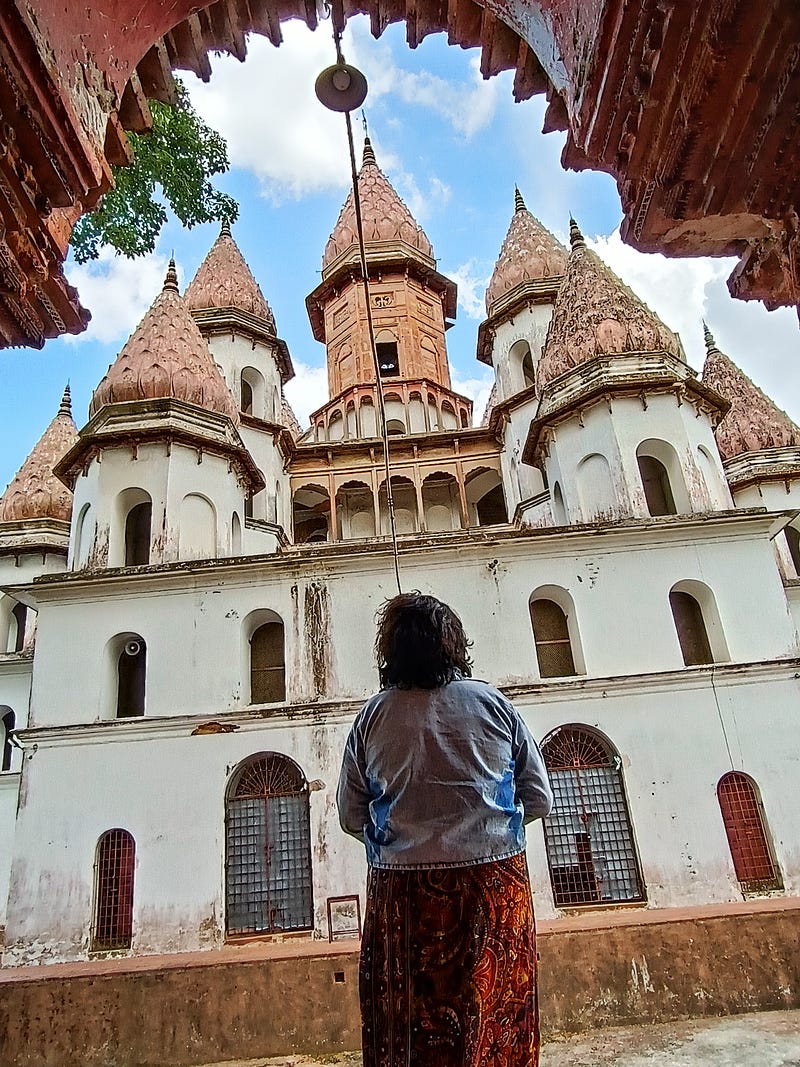
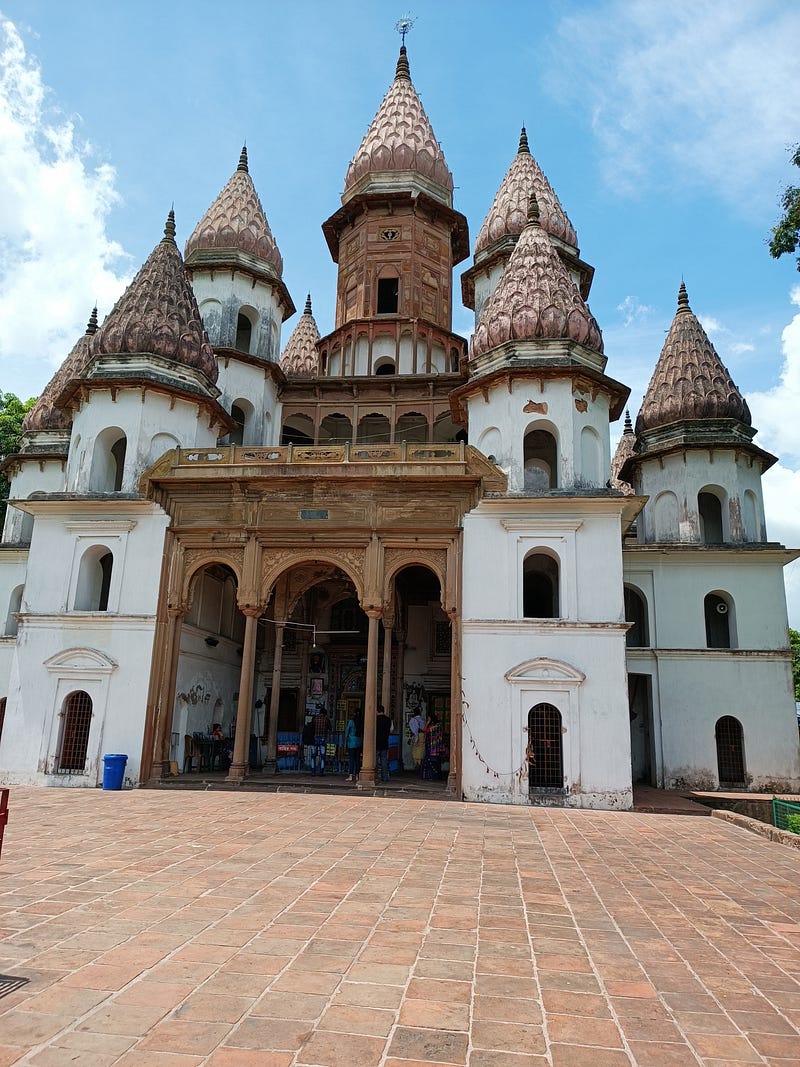
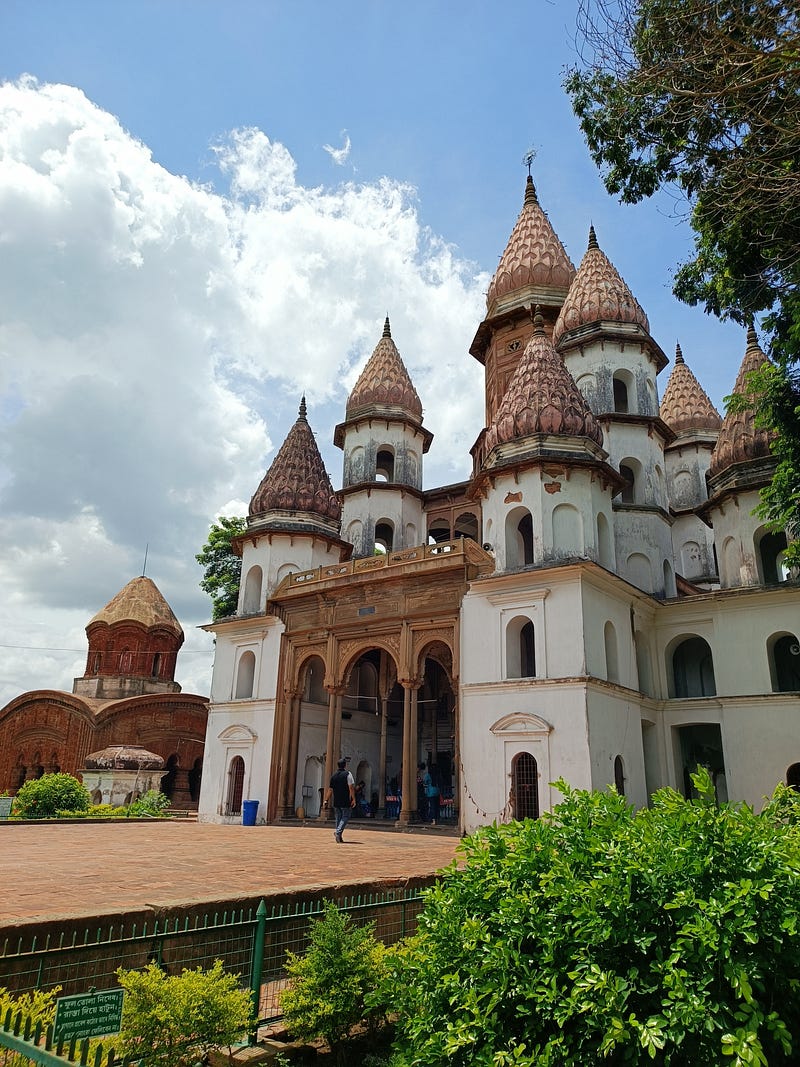
The 21-metre high Hanseswari temple is located at Bansberia, Hooghly, around 50 km from Kolkata. Adorned with 13 minars (towers) or Ratnas, the peak of each minar/tower/Ratna is shaped as a blooming lotus bud.
The temple has a unique architecture different from the usual pattern visible in the area. I catch the first glimpse and end up thinking about it as somewhat a replica of the famous St. Basil’s Cathedral of Moscow!
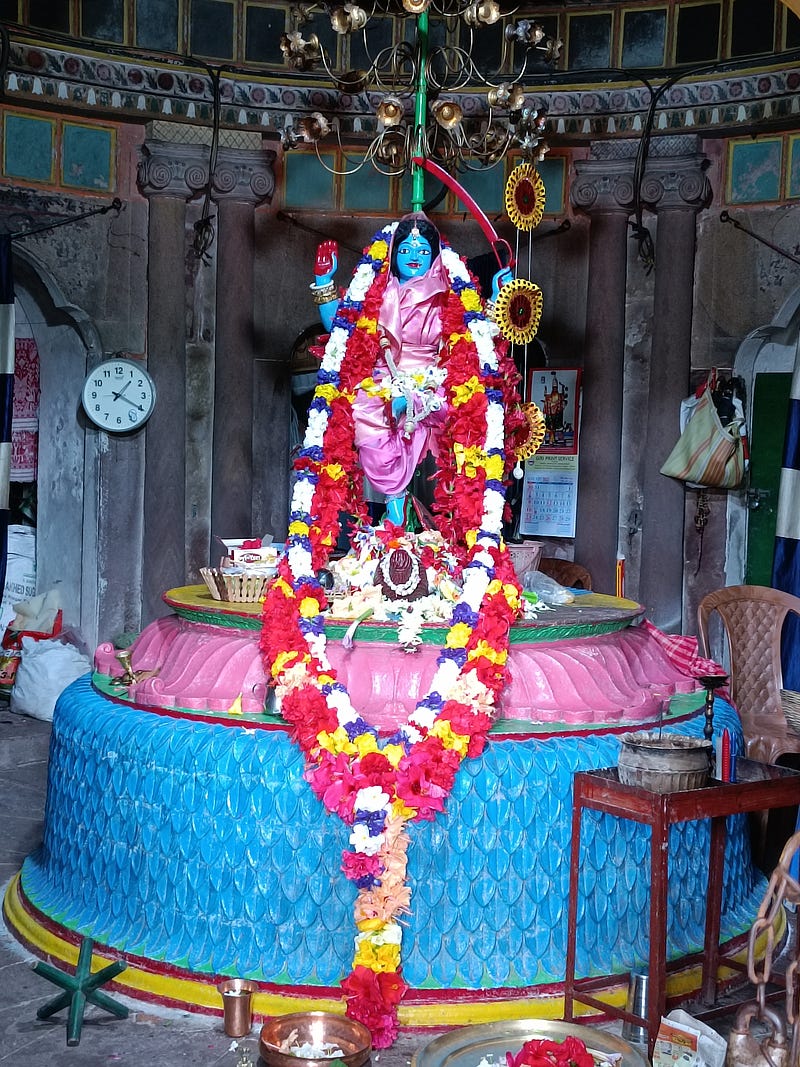
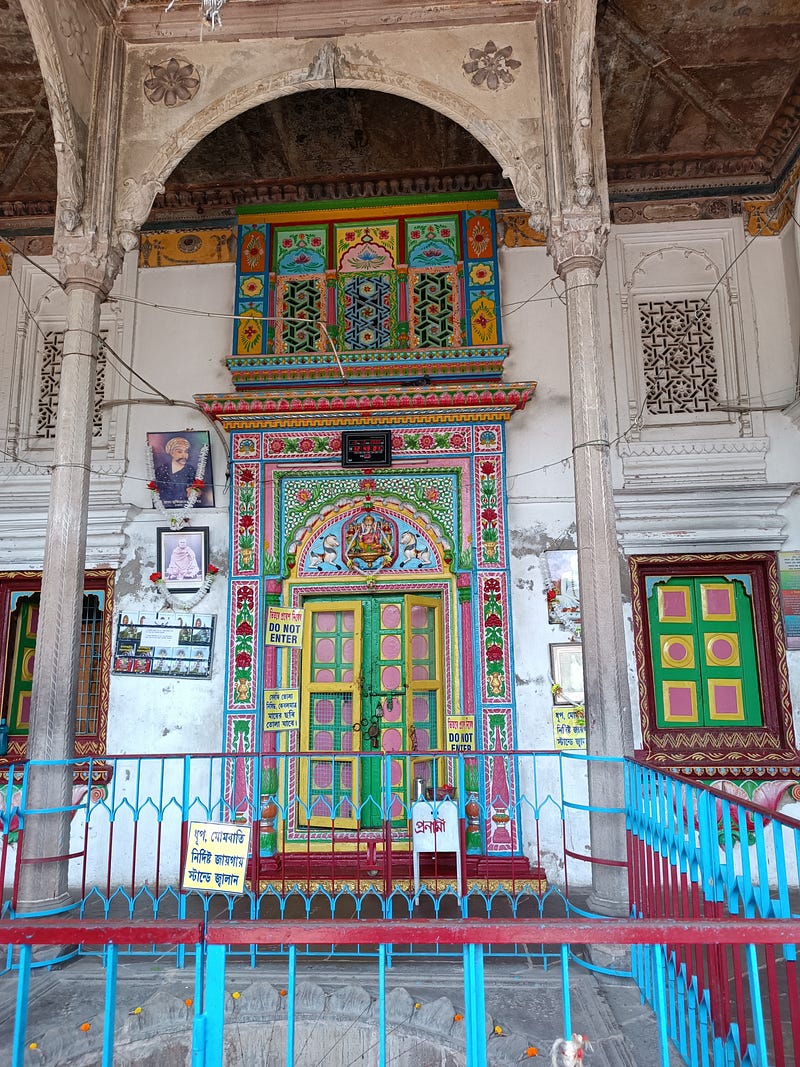
The blue neem-wood idol of the temple is a four-armed goddess, Hangseswari, a manifestation of Goddess Kali.
Initiated by Raja Nrisingha Deb Roy, the temple was later completed by his widow wife Rani Sankari in 1814.
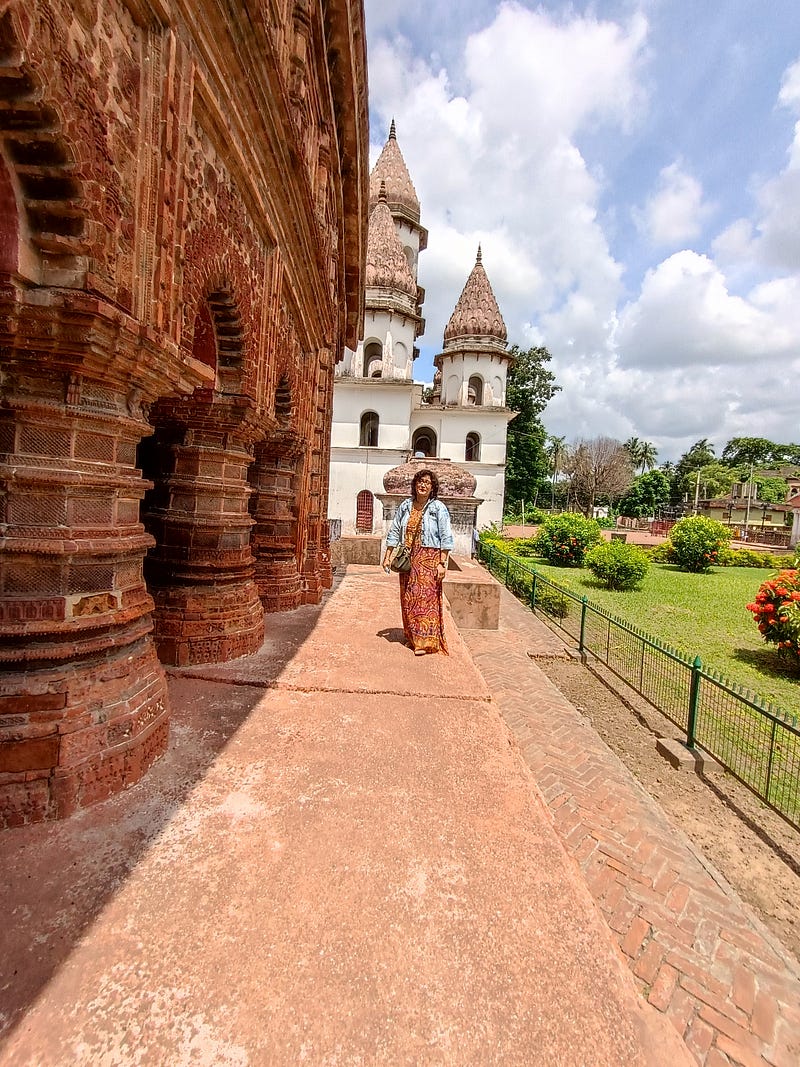
‘Hong’ manifests ‘Shiva’ and ‘Saa’ represents ‘Mother Shakti’. Raja Nrisingha Deb Roy, a staunch follower of Tantric cult, spent his last seven years in Varanasi practising its cult.
It is believed that the central deity placed on a lotus, Goddess Hanseswari, once appeared in Raja Nrisingha Deb Roy’s dream and hence he took up the task to build the temple.
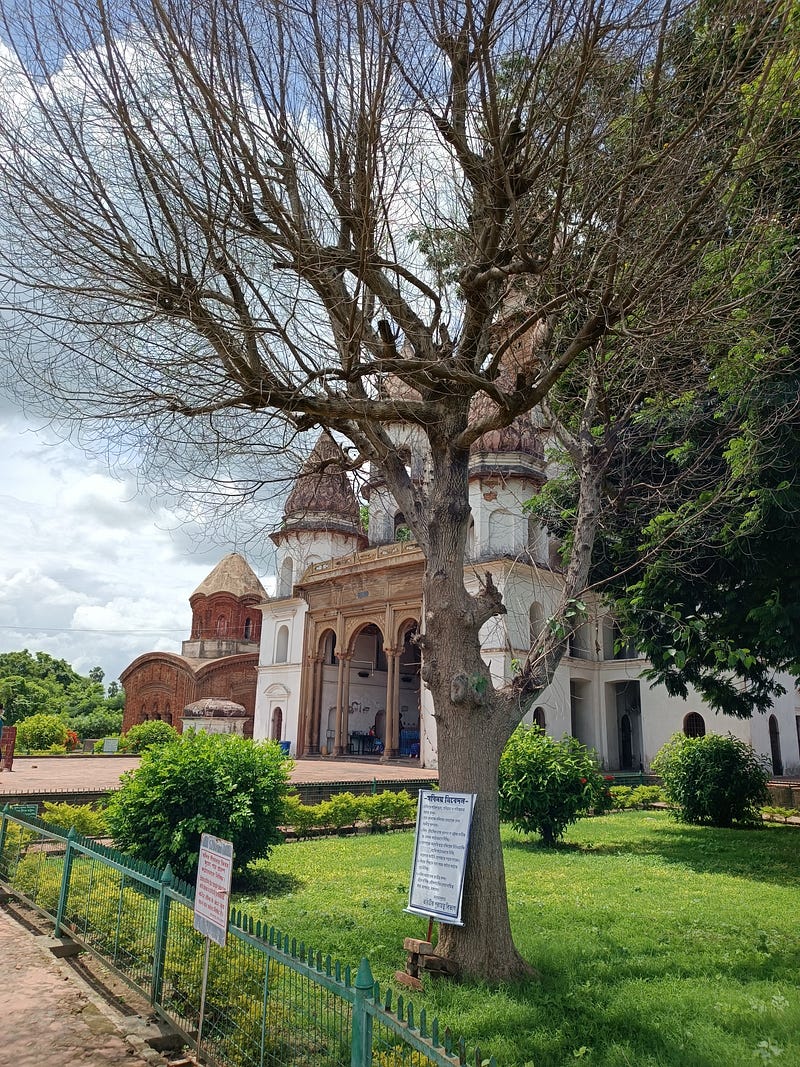
Built according to Tantric principles, this five-storey shrine follows the structure of human anatomy–Ira, Pingala, Bajraksha, Sushumna, and Chitrini.
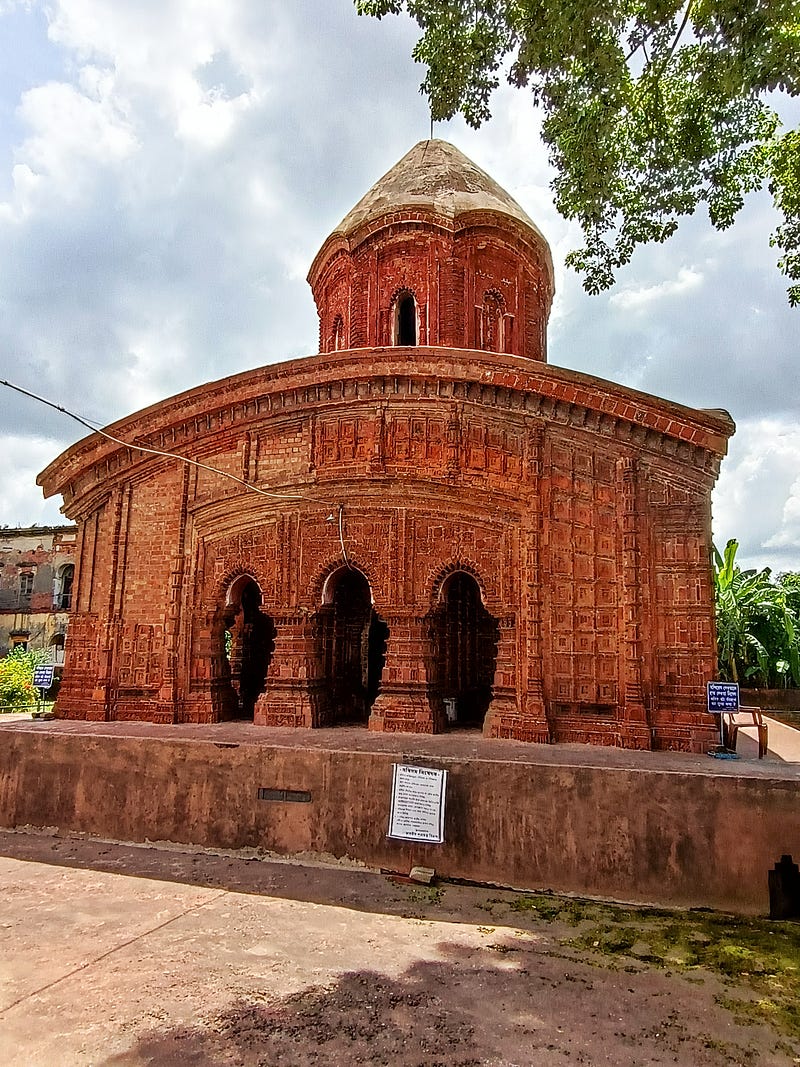
The Hangswswari temple complex has another temple just adjacent to it named Ananta Basudeba temple. The deity of this temple is Lord Krishna.
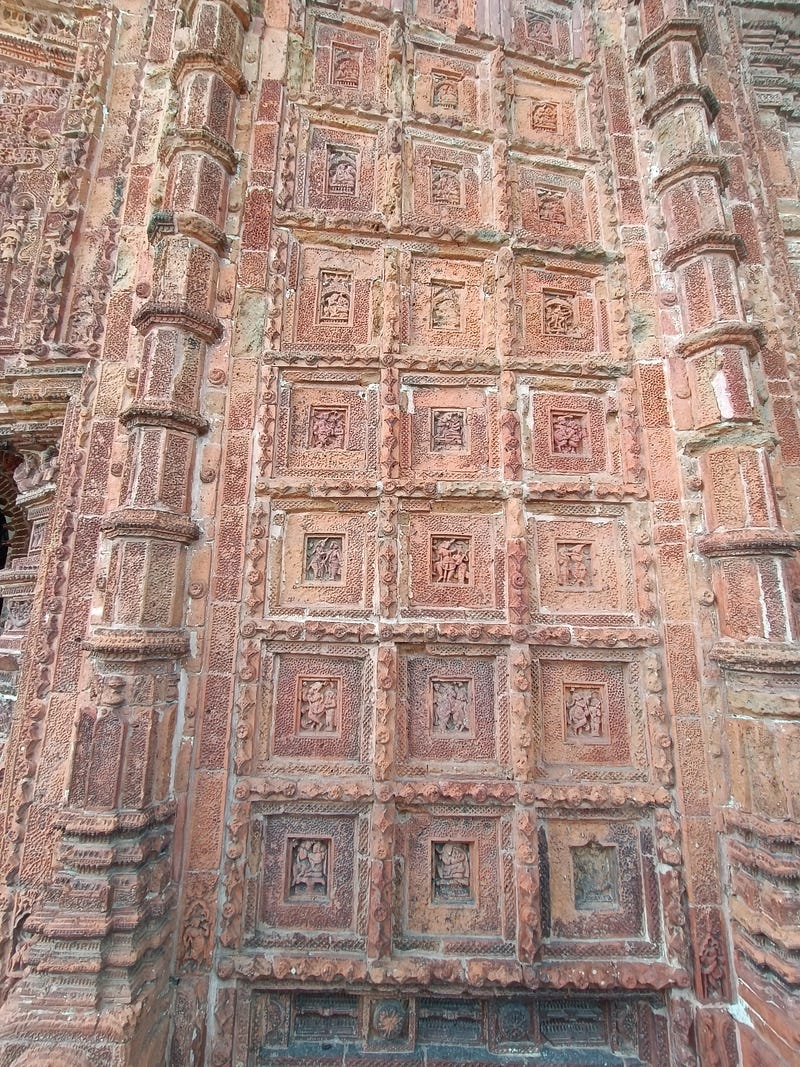
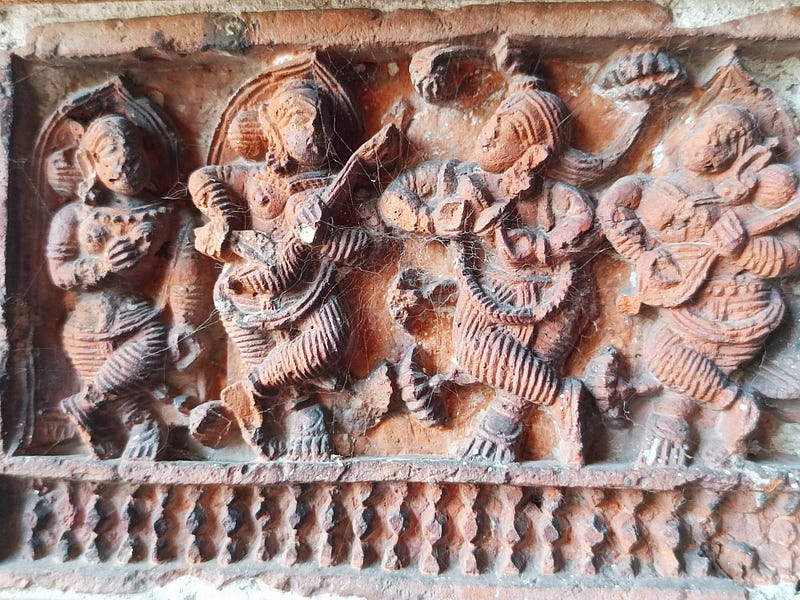
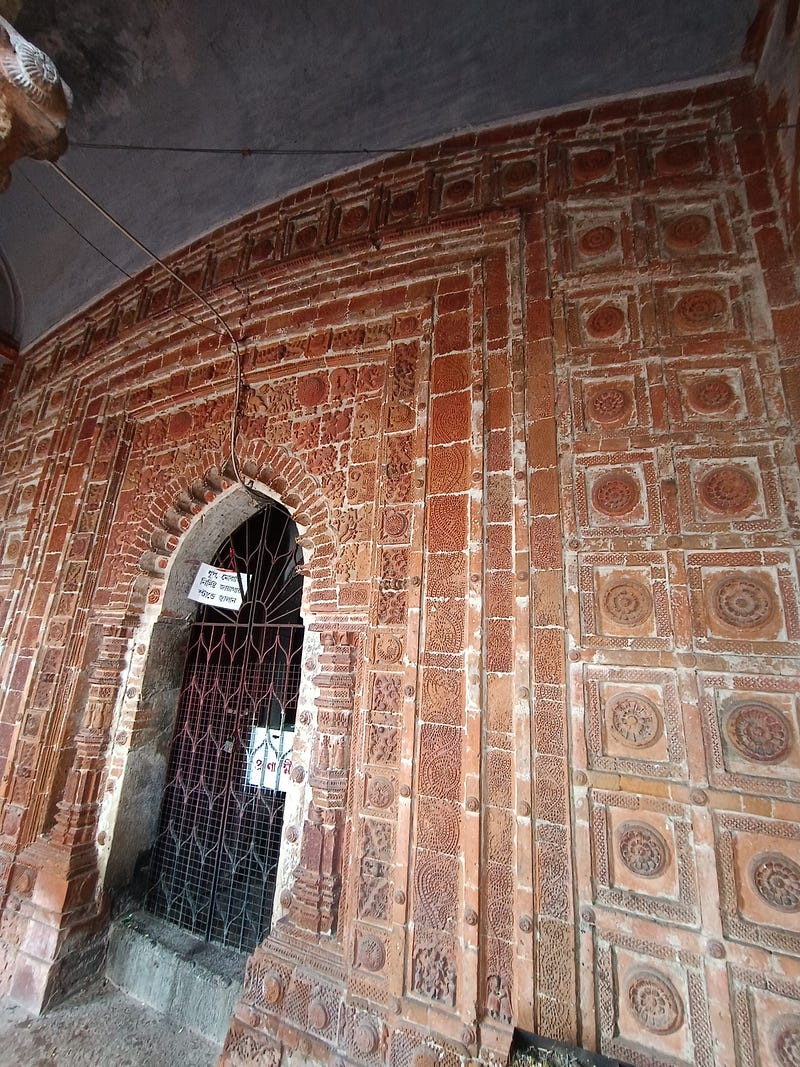
With octagonal tower top, this architectural marvel too holds a very special mention in the list of terracotta temples of Bengal with exquisite terracotta works on its walls depicting stories from the epics, Ramayana, Mahabharata to name a few.
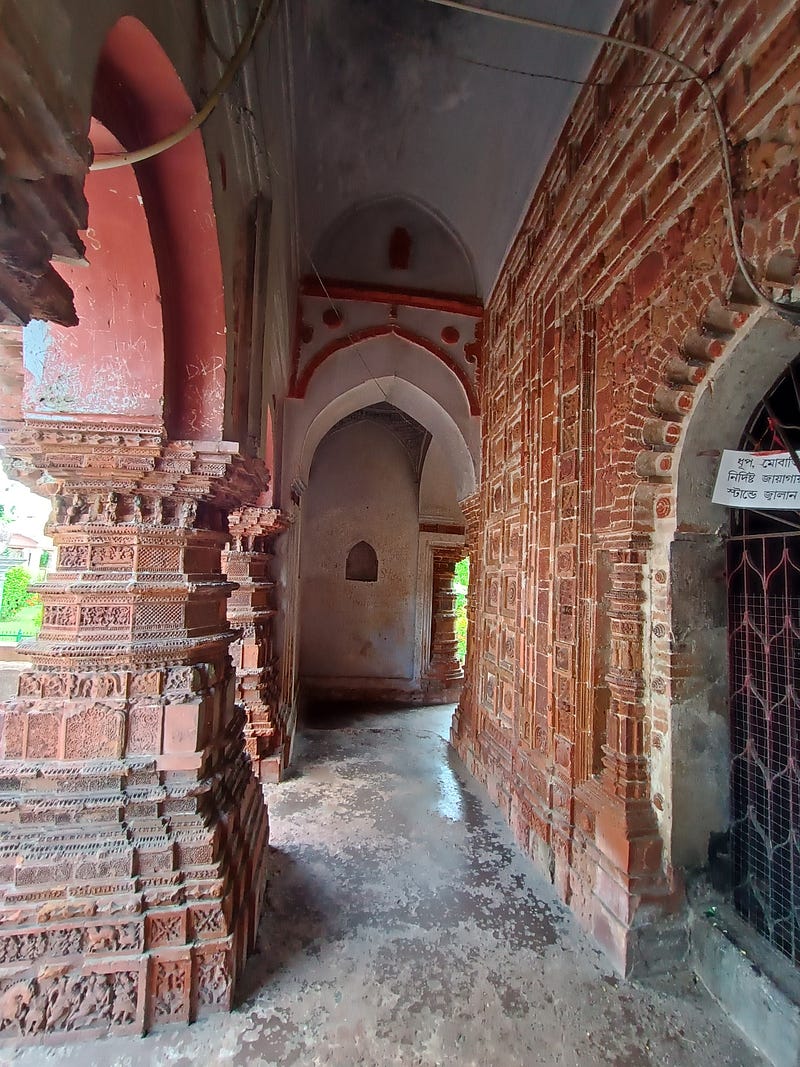
It is built by Raja Rameshwar Dutta in 1679 in the traditional eka-ratna (one tower) style, with curved cornices.
Surrounded by lush greenery in a quaint tiny town of Bansberia, this is a must visit for those who are keen in travelling to destinations, seeing the unseen, knowing the unknown, and capturing the timeless memory to be cherished forever.
Here are some amazing storytellers:
Jason Edmunds| James Beaufait| Jillian Amatt - Artistic Voyages| JoAnn Ryan| Anne Bonfert| Ellie Jacobson| Vidya Sury, Collecting Smiles| Barb Dalton 🇺🇦| Sandi Parsons| Mary Chang Story Writer| Adrienne Beaumont| Adrienne Parkhurst| Dennett| Linda Ng| The Sturg| Nancy Blackman| Mukundarajan V N| JM Heatherly| Remi Roy| Rhonda Carrier| Marilyn Glover| Julie Gaeta
Thanks much for dropping by. Love and luck to all.


