
Where Does Memory Come From?
Memory ensures that we are not lost. It is the link that maintains each of our lives, connecting our past and present
We understand that one of the earliest analogies of memory comes from ancient Greece. Plato used the analogy of memory as an engraving on wax plates, and his favorite student Aristotle continued to quote this analogy in his writings
Aristotle explained that childhood forgetting is because the wax is too soft, while old age forgetting is because it is too hard.
He believes that memory is not located in the brain, but all over the body. He believes that the brain exists only to cool our hot heart-where our soul is.
For a long time, people have tended to focus on the heart rather than the brain-partly because the church forbids dissecting the human brain.
In fact, it was not until the 17th century that people realized that the brain had the ability to think.
At the end of the 19th century, German psychologist Hermann Ebbinghaus first used scientific methods to study memory. He is not concerned with where the memory is in the brain, but with how it works.
In his most famous experiment, Ebbinghaus invented a vocabulary of more than 2,000 “nonsense words”. By observing the state of the recall of these words over time, He found that our forgetting process is an “exponential curve” that is, we forget the fastest at the end of learning, thereafter over time as time goes by, the rate of forgetting will slow down.
Meanwhile, Ebbinghaus is also divided into three types of memories.
Sensory memory
Short-term memory
Long-term memory
This division method is still in use today.
Sensory memory is the first type of memory that enters the brain: it is a momentary event, for example, the touch of clothes on the skin, or the smell of a campfire in the nose.
If we do not notice these memories, they will disappear without a trace. However, if you think about it, they will enter short-term memory.
Short-term memory: In daily life, people often use short-term memory without knowing it. For example, you can understand the meaning of the sentence at the end of the sentence because you remember what was said at the beginning of the sentence.
Long-term memory: The researchers believe that our short-term memory capacity of seven items, long about 15–30 seconds when memory retention. Rehearsal of short-term memory can turn it into long-term memory, a place where the space is almost infinite for long-term storage.
Theory of mind
The subsequent decades of research broadened our understanding of memory. One of the most influential people in the British psychologist Frederic Bartlett.
He conducted a series of experiments in 1914, He asked students to read a story and then retell them.
By analyzing how these stories changed in days, months, and years, He proposed that memory is an imperfect reconstruction of events. He believes that we only remember a small part of the original observations, and use cultural references and personal knowledge to fill in the gaps.
Although our understanding of human memory is getting deeper and deeper, there are still many questions waiting to be resolved.
Where are the memories stored? What is memory?
These are the American psychologist Karl Lashley the exhaustion of his life trying to answer questions.
His most famous experiment was to find traces of memory in a specific area of the rat’s cerebral cortex, the gully, and tortuous cerebral cortex play an important role in cognition, perception, decision-making, and other key functions.
Beginning in 1935
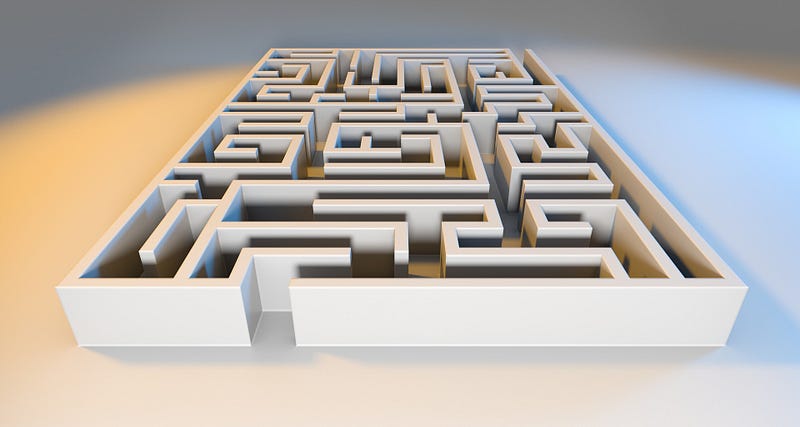
He systematically destroyed specific brain areas before and after maze training in rats. But no matter which part of the brain is destroyed, the trained rats still escape the maze faster than the untrained rats.
Karl Lashley concluded that our learning and memory abilities must be related to many different brain areas, not determined by a specific brain area.
A patient named Henry Molaison became the key to this theory
Molaison experienced many severe seizures, and he himself agreed to a stimulating experimental treatment. In 1953, a surgeon drilled a hole in his head and sucked out the epileptic part-the hippocampus-shaped area on both sides of the brain called the “hippocampus”.
This operation was very successful and solved his epilepsy to a large extent, but Molaison suffered from severe amnesia and was unable to store new memories for a long time.
However, Molaison can remember most of the things from the years before the operation. He can also form procedural memory, which is a kind of memory about “how to do something” in long-term memory, such as how to ride a bicycle.
Molaison’s memory problems indicate that the hippocampus is the key to generating new memories, but the memories themselves are stored elsewhere in the brain.
Key terms
Hippocampus
Key areas in the brain that form different memories. It looks like a seahorse.
Neuron
A special cell that transmits information in the brain in the form of electrical activity. There are approximately 86 billion such cells in our brain.
Neurotransmitter
A chemical messenger. The electrical signal impulses prompt the neurotransmitter to be released from the end of the neuron. Neurotransmitters diffuse in the synaptic cleft, enhancing or inhibiting the electrical impulses of nearby neurons.
Semantic memory
Long-term memories of thoughts or facts that do not come from personal experiences, such as the memory of names or colors.
Synapse
The space between two neurons can transmit the activity of one neuron to the next. These changes in synaptic structure are indispensable for memory and learning.
For the next 46 years
Neuroscientists, including Professor Suzanne Corkin, conducted regular tests on Molaison, Although for Molaison, the same conversation every time was like it was the first time it happened. “It’s very interesting to say,” Molaison said to Corkin, “People are learning while living. I am living a normal life, and you are learning new things because of my life.”
Although Molaison’s case stated that memory is not responsible for a specific area of the brain, it still does not answer how memory is formed.
The neurons fired together are connected
In 1906, Camillo Golgi and Santiago Ramón y Cajal show the result of technological advances in cell staining neurons anatomy, collectively awarded the Nobel Prize.
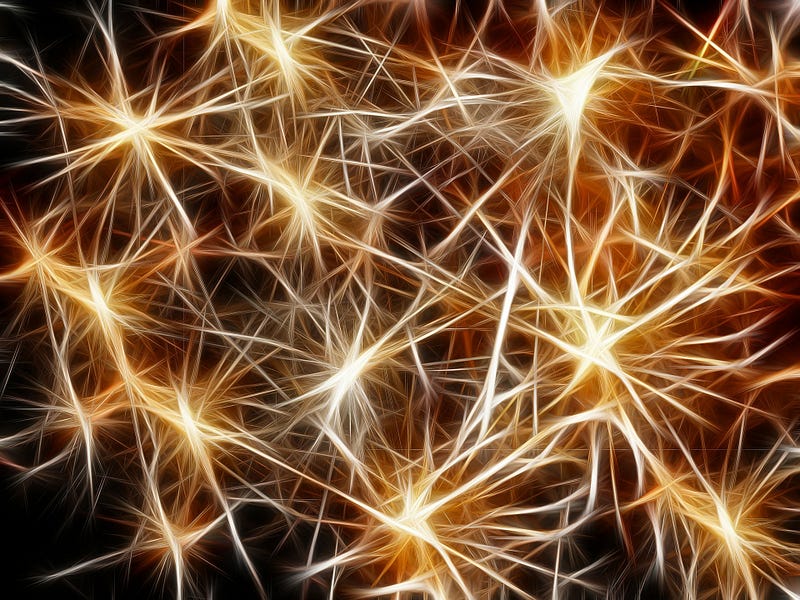
Thanks to their work, scientists learned that there are tens of billions of neurons in the brain that transmit information in the form of electrical impulses.
When a pulse reaches the end of a neuron, this electrical signal promotes the release of neurotransmitters. These neurotransmitters travel across the synaptic cleft and act on neighboring neurons, thereby enhancing or inhibiting the second neuron to produce electrical impulses. However, how these neurons form long-term memories is still a mystery.
This situation continued until 1949 until Donald O. Hebb published one of the most influential theories of neuroscience in the last century. He wrote that two brain cells that are always active at the same time are likely to be “connected.”
Their anatomy and physiology will change, leading to the formation of new connections or the enhancement of old connections. Hebb said that the activity of one neuron will promote subsequent neuronal activity.
You will often hear this summary, Neurons that fire together, wire together
For example, the concept, rose fragrance and two associated names can be repeated several times simultaneously stimulating neuronal brain corresponding to these stimuli such neuron corresponding to the shape change, increased during the coupling strength.
Therefore, the neurons associated with the smell of roses are more likely to stimulate the neurons corresponding to the name of the rose.
Hebb said that this is the basis of long-term memory storage. These memories can continue to be preserved because they become a unique part of the neural structure.
The higher the frequency of people’s recall, the stronger and longer the memory.
Almost at the same time, the Canadian surgeon Wilder Penfield shows part of the cortex stimulation can wake up the memory.
Penfield operated on conscious patients with epilepsy. When operating on a female patient, He stimulated the area of the cerebral cortex that covered the hippocampus.
His patient said: I think I heard a mother calling his little son somewhere. This seems to be something that happened near my residence many years ago.
Penfield stimulated this position again, and the mother’s voice appeared in the patient’s mind again.
Penfield moved the stimulation point slightly to the left, and suddenly the female patient heard more sounds. She said that it was late at night and they had just returned from the carnival. “There are a lot of large trucks for loading sports objects.”
Penfield’s operation seemed to return long-dust memories to the patient’s mind, like a random photo taken from a dusty album.
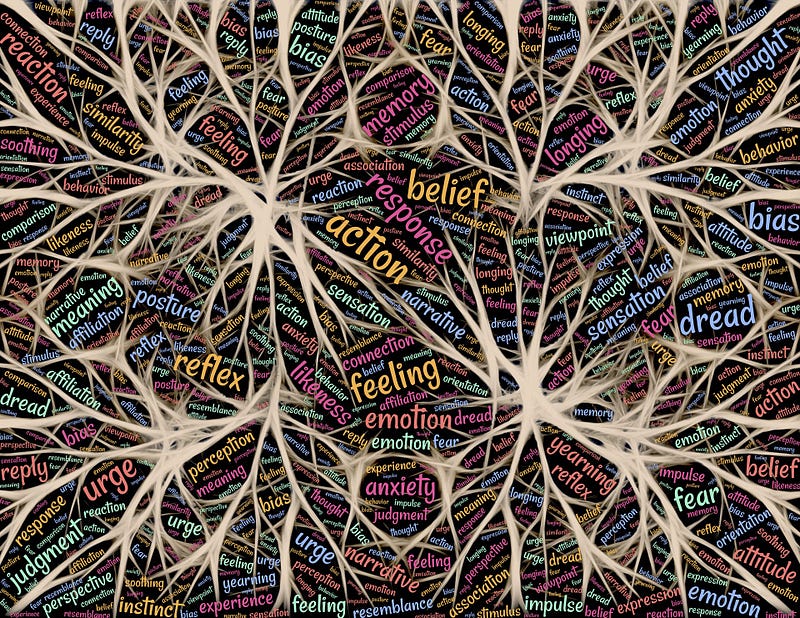
Memories are still a mysterious process that is still not fully understood. Research by Professor Elizabeth Loftus from the University of Washington has made us discover that our memories are not always accurate.
False memories
In the 1990s, She planted false memories in people’s minds. She convinced people to believe in false choking incidents and near-death drowning incidents. She even convinced people that they were possessed by demons. She pointed out that fatigue, drug use, and mental retardation may all lead to the risk of false memories.
Her research revealed something very unusual: that is, even memories that have already formed are not static. Whenever we remember, we strengthen the neural pathways that already exist, which makes these memories strengthen and become our longer-term memories.
But in a short period of recollection, our memory is malleable-we can reshape or even tamper with it.
Hippocampus: where memories are formed
With the advancement of imaging technology, researchers have once again focused on the precise location of memory storage in the brain. Now we know that the role of the hippocampus is to integrate different aspects of a certain memory.
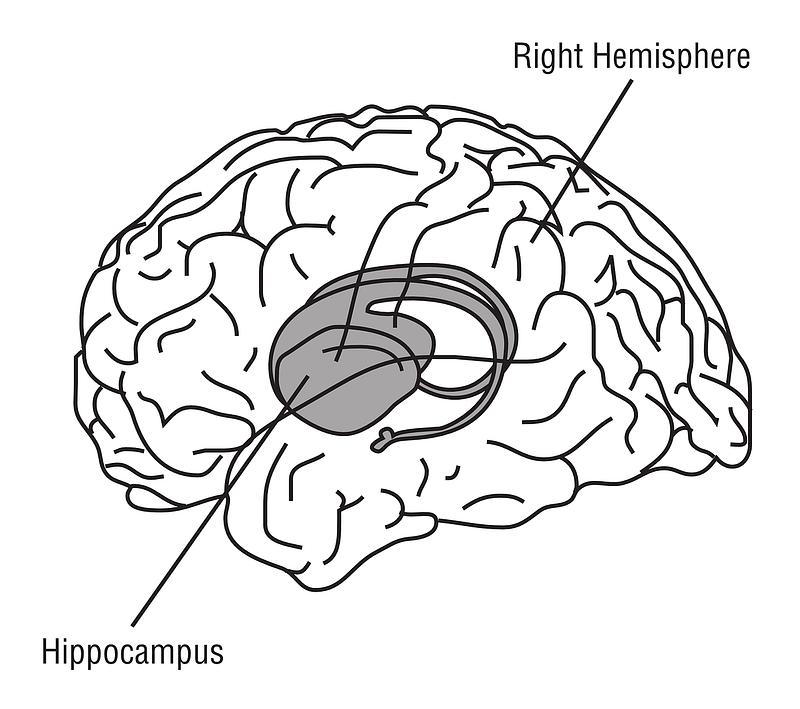
The location of the hippocampus in the human brain
When people try to learn some new connections and recall them later, whoever has the most activity in the hippocampus will have the best recall performance.
It seems that the hippocampus integrated these connections better from the very beginning.
At this time, by putting all the clues together, the researchers thought they had a good memory theory: They speculated that all incoming information was simply processed in the cerebral cortex before converging in the hippocampus.
The hippocampus classifies the new information and determines how important the information is (that is, whether the information is worth remembering), and then encodes the necessary information into the brain by forming new synapses.
Advanced methods of recording and manipulating brain activity have recently subverted this theory
In 2017, an MIT research team led by Takashi Kitamura found that short-term memory and long-term memory actually occur at the same time.
New technology Kitamura team uses include light Genetics (optogenetics), this technology uses light to activate and inhibit cell. They also used the labeling technology of individual memory cells.
The research team gave experimental mice a weak electric shock when they entered the room, which made the mice fear the room.
Once the training is over, the researchers can see the shock memories formed in the hippocampus and prefrontal cortex (a region behind the forehead).
The memory cells in the prefrontal cortex are in a resting state. The traces of memory do exist, when the researchers artificially stimulated these cells, these mice were stunned as if they were once again immersed in the scene and felt fear.
The memory has not gradually transferred from the hippocampus to the cerebral cortex, it seems to be already in the cortex.
Two weeks later, the shape and activity of the memory cells in the cerebral cortex changed. When the mouse came to this small room, the memory cells in the cerebral cortex became active by themselves. At this time, the hippocampal memory cells were in a resting state.
This sophisticated method of analyzing the human brain will continue to help us understand healthy memory and what happens when it is destroyed by the disease.
However, there are some ways to improve your memory. Research by Professor Eleanor Maguire of University College London has shown that the brains of the world’s best memorizers are no different from others in anatomy: memory champions just use an ancient technology, called “the method of loci”.
Want to remember a lot of things, you can put them around a “thinking palace”. This can be any place you are familiar with. To recall these things, you only need to recall the route you placed these memories and extract them.
This technique can make it easier for you to remember what you need in the future. Try it anyone can become a super memorizer.


