
Where Do Vegans Get Their Protein?
If you’re vegan, I’m sure you’ve heard this one before
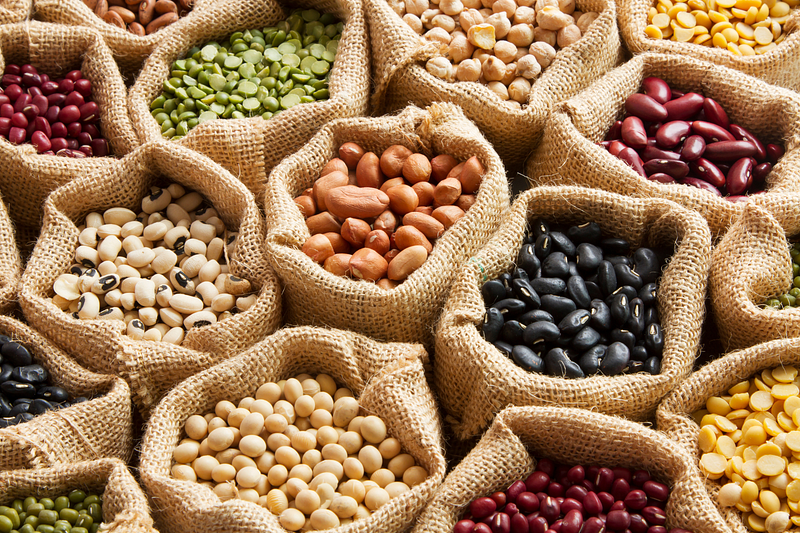
Admit it, you’ve asked yourself, “Where do vegans get their protein?” (Even if you’re vegan!)
It’s a fair question; after all, protein is vital for human health; we hear about it all the time, and where the hell do vegans get their protein if they don’t eat protein?
What is protein?
Protein is essential for human health. In fact, it’s essential for any living organism. I promise I won’t make it super boring or textbook-like, but knowing why protein is so important is crucial to understanding why we talk about it so much. Your body uses protein for many things, from building bones (muscles, cartilage, and skin, too) to repairing cells and tissues, aiding in your immune response, regulating your hormones, facilitating digestion, and other key functions.
The human body has thousands of different proteins, but they are all built using the same building blocks: amino acids. There are over five hundred amino acids in nature, but only about twenty of those are used for making proteins and are required for human health. Our bodies can produce eleven of them, but we can’t produce the other nine, which we call essential amino acids — we need to get them from food. That’s why eating protein is so vital; without it, we waste away.
So, it’s not a surprise you hear about protein constantly. It’s super important, and your body can’t produce all it needs without getting some protein from dietary sources.
That’s protein, though, not meat. Wait, isn’t protein and meat the same thing?
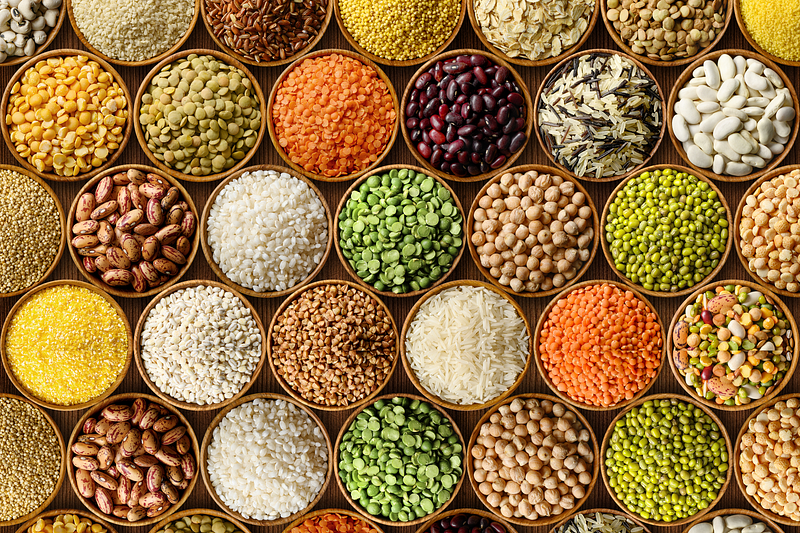
Meat = protein?
You wouldn’t be the first person to equate protein to meat. I’ve been there, I’ve done that. I used to think a meal needed to have either meat, egg, or some sort of cheese to be a complete meal, nutritionally speaking.
I don’t blame myself either. A quick search of the term “food pyramid” will render a vast array of different graphics, all of them including dairy, eggs, and meat in the second highest level. Some have nothing else; some will have a token bean or nut in there, but much smaller than the meat options. The visual is strong and sends a clear message: protein comes from animal-derived food, especially meat. You’ll often hear protein as a synonym for meat, too. It’s no surprise people are confused!
“We know today that it is virtually impossible to design a calorie-sufficient diet, whether it is based on meat, fish, eggs, various vegetarian diets or even unprocessed whole natural plant foods, which is lacking in protein and any of the amino acids.” — Gunnar Johansson in “Protein Deficiency — A Rare Nutrient Deficiency”.
It’s not a lie — meat, eggs, fish, and dairy are all good sources of proteins. But they’re not the only ones. Legumes, seeds, grains, and even vegetables are sources of protein, too. In fact, you get protein from almost everywhere, although in different concentrations. You get much more protein from a steak (even a tofu steak) than from a plate of roasted peppers. But mind you, the roasted peppers still give you some protein.
If you eat a varied diet and consume enough calories, it’s unlikely that you’ll have a protein deficiency. Severe protein deficiency is a thing, but it rarely occurs on its own. It’s usually associated with other dietary deficiencies, including starvation diets and low-calorie intake, a real problem in parts of the world where famine and hunger are a daily struggle.
“In general, protein deficient diets are also deficient to varying degrees in a range of other nutrients.” — Health Promotion and Disease Prevention Knowledge Gateway
In most high-income countries, people eat enough protein, frequently twice the recommended amount. That doesn’t mean protein deficiency is a myth; the condition exists in higher concentrations in hospitals and nursing homes, affecting patients with eating disorders, low-calorie intake, and other conditions. The older population is especially at risk if they do not consume enough calories. For most people, though, protein deficiency isn’t a threat.
So, animal-derived products are a source of protein, but they’re not the only source. It’s still important to ask if all these proteins are the same. Can you get enough protein, and the right kind, just from plants?
The complete protein myth
Another thing you probably heard is that meat is the only complete protein. It isn’t wrong to say that meat is a complete protein, but it isn’t the only one.
Before going any further, what even is a complete protein? The classification of a complete protein was defined with humans in mind — it’s a dietary source that contains all nine essential amino acids, the ones our body can’t produce on its own. Most animal-derived products are sources of complete protein, including fish, beef, poultry, pork, lamb, dairy, and eggs. When it comes to plant-based foods, you won’t find such a plentiful list of complete proteins. The best examples are soya products (such as tofu, tempeh, and edamame beans), quinoa, and buckwheat.
So, you ask, how is the complete protein a myth? Indeed, complete protein foods are often and almost exclusively from animal origin. The thing is, though, you don’t need to consume complete proteins. You do need the nine essential amino acids, but they don’t need to come from the same source or be consumed on the same day or every day. You can mix up a variety of foods in your diet to get all the essential nutrients you need, including protein. For instance, the Mexican staple of rice and beans (which, by the way, is also what Brazilians eat on a daily basis) is combined a complete protein. And this is not the only combination — mixing whole grains with legumes is often a great way to get a complete protein.
I know, the idea of having to learn such combinations sounds like a lot. But the good news is that you don’t need to know the combinations or even aim for them, as long as you eat a varied diet. And the varied diet in this sentence means eating different things — which you probably do. Plant protein is just as good as animal protein and will provide you with all the amino acids you need. If you’ve ever heard of the 30 plants a week to strengthen your gut health, that will also ensure you get all essential amino acids into your diet without knowing specific combinations. Adding whole grains, legumes, and nuts to your plate is a great idea to eat healthier and get all the protein you need, and it’ll also serve you with other essential nutrients, important carbohydrates, and even fibre.
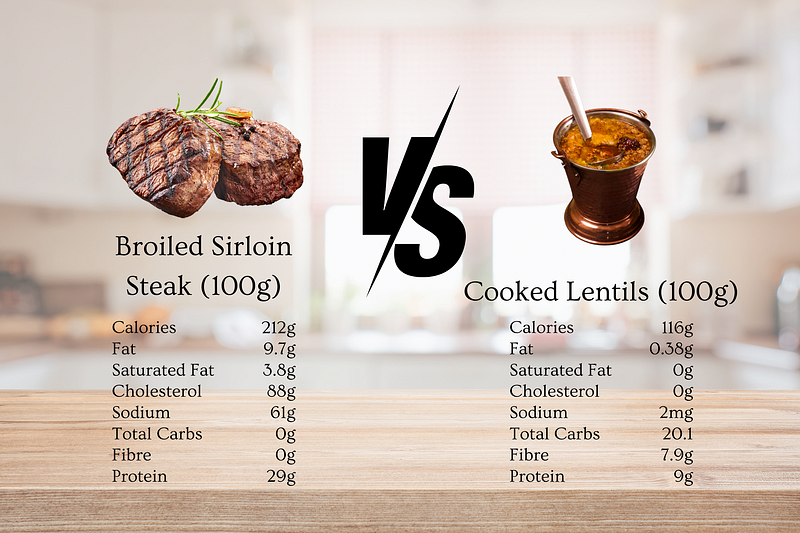
When you consume protein, you’re also eating whatever comes with it. For example, steak and lentils can be considered healthier sources of protein. But while the steak is a good source of protein, it also delivers a considerable amount of saturated fat and, depending on how you cook it, a lot of salt. Lentils, on the other hand, will provide the protein without any fat but with extra carbohydrates and fibre (and you still have to be careful with the salt while cooking, especially if you eat extra lentils to consume the same amount of calories as you get from a steak).
A study with over 100,000 participants found that a high intake of plant proteins is associated with lower mortality, whereas high consumption of animal protein, especially from processed meats, is associated with higher cardiovascular mortality. Where your protein comes from matters, but not in the way commonly perceived. Prioritising the consumption of plants can help you live longer.
Where DO vegans get their proteins?
Everywhere!
Vegans get their proteins from everywhere, including whole grains, legumes, and nuts, but also from everything else they eat, albeit in smaller quantities.
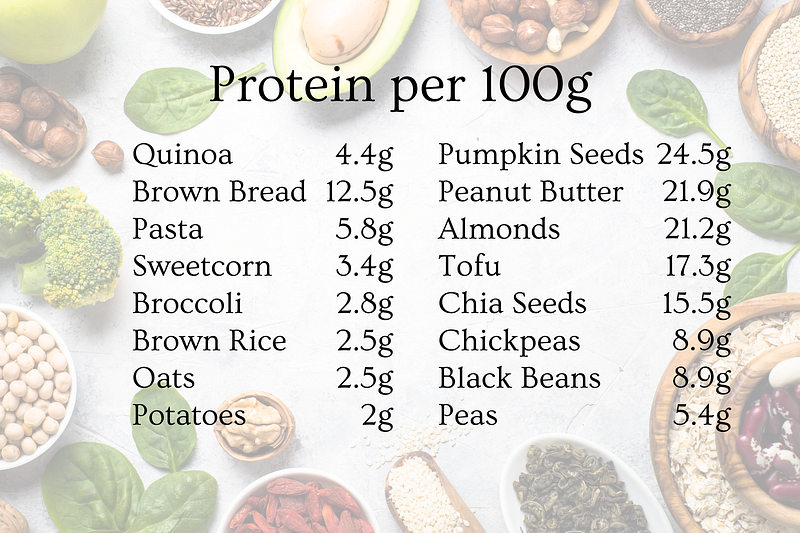
Here are some excellent options for getting extra protein in your diet from plant sources (per 100g): pumpkin seeds (24.5g), peanut butter (21.9g), tofu (17.3g), chia seeds (16.5g), chickpeas (8.9g), black beans (8.9g), peas (5.4g), quinoa (4.4g), wholemeal bread (12.5g), pasta (5.8g), sweetcorn (3.4g), broccoli (2.8g), brown rice (2.5g), oats (2.5g), potatoes (2g), and even sweet peppers (1g).
This list is for your amusement. Although the numbers are factual, you’re very unlikely to eat 100g of pumpkin seeds (and be warned that they also deliver high levels of saturated fat like a steak), but you’re likely to eat much more than 100g of tofu. The point is there’s protein in many things we eat, not just meat. And although vegans have to be on the lookout for some nutrients, protein isn’t our main hurdle. A study with over 70,000 subjects showed that vegans don’t consume much less protein than omnivores, averaging over 70g of protein daily, much higher than the recommended dietary reference intake.
For those interested in eating more plant-based foods, you won’t need to worry about your protein intake too much. Think of legumes (that’s a fancy name for the beans), seeds, and nuts as your primary source of protein, and you’ll even get more from your whole grains and veggies.
If you’re concerned about your protein intake, whatever the diet you follow, I highly recommend looking for a dietitian who can help you figure out your personal needs. If, for any reason, you need extra protein (perhaps you’re training to be the next Mr Universe), there are plenty of protein powders from plant sources (similar to the more commonly found whey powder from dairy) that you can use to get the extra oomph.
Eating plants won’t make you protein-deficient. You can eat your veggies without worries!


