
Where Do Memories and Memoirs Connect?
How much do you remember of the past?

We live with an edited version of the past, far less reliable than I expected when I began to write a memoir. I somehow half-believed I could rewind some ancient VHS tape or, in my case, an 8mm home movie, and have it vividly replay the past.
It doesn’t work that way at all.
I should have known better. Already I have noticed how my five grown children rarely agree on any shared memory of the past. And if they do agree, I remember that event, not at all.
One day, as we hung out on my son’s deck, one son said to another, Do you remember how upset Mom got when one of the other parents busted us smoking at the park across the street from the 4-H park when we were ten or so?
What? I don’t remember that at all. Are you sure that even happened?
All four of my grown kids responded, We remember you were really mad!
Okay. If all four of you agree, it must have happened.
Not a significant event, but it might as well never have happened. And they all recall it clearly. Strange indeed.
“Memoir is the intersection of narration and reflection, of storytelling and essay writing,” says Patricia Hampl in her excellent essay on the subject. I think you will find her essay Memory and Imagination as enlightening and fascinating as I did.
Neuroscientists now tell us that the simple act of recalling a memory changes it. Each time we access that memory, it has to go through a process termed consolidation in which it is stored. The process alters the memory and could explain why stories change over time. Scientists now report that only about 50% of anyone’s recollections are accurate, even those we insist we remember perfectly.
In this short episode of My Mind’s Eye, Liz Phelps, psychology and neural science professor at New York University, explains how this disconnect occurs.
Processing and storing memories is complicated.
As memoir writers, we are often interested in memories stored in the long-term storage area of our brain, aptly referred to as “autobiographical” memory. But, unfortunately, neuroscientists understand less about how these memories are stored and accessed than they know about short-term memories stored in the hippocampus.
And it gets more complicated when we talk about emotional memories. Traumatic events trigger different responses, ongoing research shows.
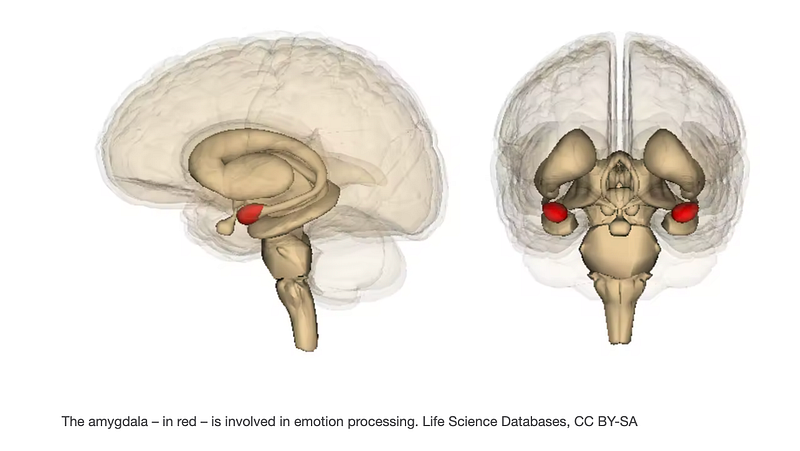
Blame it on the amygdala. These structures are located deep in the medial temporal lobe, one on the right and one on the left side of the brain.
It processes threats and sends information to other areas such as the hypothalamus, which triggers the release of stress hormones. These hormones allow us to react to danger quickly and help ensure we remember the potential threat in the future.
Interestingly, these memories may be intrinsic meaning, unconscious, or extrinsic, able to be actively recalled. Read this article titled Consolidating Memories to understand why we often remember traumatic events with terrifying detail.
Of course, not everyone has experienced traumatic events.
Unfortunately, far too many of us have. Many of us find that these events create a desire to write to make sense of a problematic past.
James Pennebaker, the social psychologist, and professor was a pioneer of writing therapy. He has been recognized as one of the top researchers on trauma, disclosure, and health, including the benefits of specific writing exercises.
Pennebaker is quick to point out that the act of confessing or expressing trauma has been part of healing for virtually all cultures, ranging from Native American indigenous cultures to those based on both Western and Eastern religious beliefs.—Writing to Heal
I urge you to read Opening Up by Writing It Down: How Expressive Writing Improves Health and Eases Emotional Pain by James W. Pennebaker and Joshua M. Smyth. The process of writing is therapeutic—there’s no requirement to publish your work.
More help for those who’ve survived difficult circumstances
Over the last twenty years, the influence of Adverse Childhood Experiences (ACE) is becoming recognized.
Adverse Childhood Experiences (ACEs) are negative childhood circumstances (occurring before the age of 18) that include household dysfunction or psychological, physical, or sexual abuse. Examples of household dysfunction include substance abuse, mental illness or suicidal attempts by caregivers or domestic violence of caregivers.
These events affect mental health, but they also cause health problems, resulting in lower lifetime earnings and even early death.
Additionally, trauma-informed care is now being implemented in more and more hospitals and clinics nationwide. This approach recognizes what chronic stress does to people and works to avoid re-traumatizing already injured people.
Trauma-informed care recognizes and responds to the signs, symptoms, and risks of trauma to better support the health needs of patients who have experienced Adverse Childhood Experiences (ACEs) and toxic stress.—acesaware.org
Why am I bringing all this up?
Whether you are writing about complex events from the perspective of a survivor, witness, or victim, you need to be mindful. The process can be both life-changing and re-traumatizing.
We are all familiar with the terms PTSD, trigger warnings, and more. So even if you take a journalistic approach to interviewing a survivor, be informed.
I recently found this resource, The Dart Center Style Guide for Trauma-Informed Journalism.
This style guide is designed as a quick, authoritative reference for reporters, editors, and producers working on tight deadlines. It includes brief evidence-informed guidance on news choices, language usage, and ethics in reporting on the impact of trauma on individuals, families, and communities; recommendations for appropriate use of relevant psychological and scientific terminology; and special considerations when reporting on consequential trauma-laden issues such as racism and sexual violence.
If this is something you write about, I urge you to read this guide.
Be sensitive to your state of mind when recalling memories.
I’ve heard people say that writing a memoir will cause you to go to therapy only half-jokingly. But, if you haven’t already, you will need to find a therapist while writing.
Writing can certainly be therapeutic, but if you find yourself feeling overwhelmed or depressed, stop. There are some excellent guidelines here: Expressive Journaling: How to Write About Trauma. Not surprisingly, I’ve met numerous memoir writing coaches that are therapists. There are a lot of similarities.
Writing my memoir has been challenging but immensely rewarding.
I’ve been working through this process for two and a half years so far. It’s caused me to reexamine beliefs about my parents, myself, and long-ago events. As a result, compassion and empathy have been awakened, and I am a kinder and more humble person.
If you choose the journey of writing your memories, whether for personal reflection or hope of eventual publication—you are in for an adventure, one I do not regret.
I hope you find peace as you wind through memory’s labyrinth.
When you read a memoir, do you want to see photos of the people in the book? Sign up for Cindy’s newsletter and get a free photo book with vintage photographs of the people in her stories.


