avatarDark Energy Articles

Free AI web copilot to create summaries, insights and extended knowledge, download it at here

2277

Abstract

nd Neanderthals. In both groups, they discovered certain similarities in genetic variants linked precisely to the circadian rhythm. Individuals exhibiting this trait tend to be more inclined towards early rising.</p><figure id="c44b"><img src="https://cdn-images-1.readmedium.com/v2/resize:fit:800/1*VG_VocMJrnqX7OWE1tijiA.jpeg"><figcaption>[Photo: Neanderthal-Museum, Mettmann, <a href="https://creativecommons.org/licenses/by-sa/4.0">CC BY-SA 4.0</a>, via <a href="https://commons.wikimedia.org/wiki/File:Homo_sapiens_neanderthalensis-Mr._N.jpg">Wikimedia Commons</a>]</figcaption></figure><h1 id="f35a">Changes in the circadian rhythm</h1><p id="0369">For Neanderthals, the early rising gene might have helped them adapt to the annual changes in daylight intensity. This correlation makes sense in the context of human history. When early humans moved from Africa to the north, they experienced varying hours of daylight for the first time — shorter days in winter and longer ones in summer. The circadian genes of Neanderthals likely aided the offspring of early humans in adapting to this new environment.</p><p id="3e09">Earlier, in tropical Africa, the average length of the day was around 12 hours. However, the farther north, the shorter the days became in winter. This meant that hunter-gatherers had less time to gather food.</p><figure id="fc08"><img src="https://cdn-images-1.readmedium.com/v2/resize:fit:800/1*qL0m77kKn76wt0NITLSKYQ.jpeg"><figcaption>[Photo: Jakub Hałun, <a href="https://creativecommons.org/licenses/by-sa/4.0">CC BY-SA 4.0</a>, via <a href="https://commons.wikimedia.org/wiki/File:Homo_neanderthalensis,_The_Natural_History_Museum_Vienna,_20210730_1225_1278.jpg">Wikimedia Commons</a>]</figcaption></figure><h1 id="5698">What do we have in us from Neanderthal DNA?</h1><p id="babc">Although the discovery can be seen as groundbreaking, scientists emphasize that their conclusions shouldn’t be interpreted in black and white. Primarily, Neanderthal genes aren’t solely responsible for the sleep habits of all early risers. Our circadian rhythm is influenced by many factors, including social and environmental ones. The time we go to bed and wake up depends, for instance, on our occupation, whether we have children, and the geographic latitude

Options

where we live.</p><p id="8c2c">It’s also worth noting that the study used DNA from inhabitants of Great Britain. In the future, researchers plan to analyze other genetic databases. Only then can we determine whether the same correlation applies to individuals of different lineages.</p><p id="4d86">This isn’t the first time scientists have drawn attention to Neanderthal DNA in modern humans. This pool of genes can also affect our hair color, skin tone, mental health, and even predisposition to smoking cigarettes. One thing is certain: in the future, Neanderthal genes will continue to be analyzed by scientists, and more surprises can be expected.</p><div id="d5bf" class="link-block"> <a href="https://readmedium.com/casa-do-penedo-is-one-of-the-most-unique-houses-in-the-world-eea6f29a3080"> <div> <div> <h2>“Casa do Penedo” is one of the most unique houses in the world.</h2> <div><h3>Casa do Penedo is often regarded as one of the most peculiar houses in the world. This unique structure draws the…</h3></div> <div><p>medium.com</p></div> </div> <div> <div style="background-image: url(https://miro.readmedium.com/v2/resize:fit:320/1*jvbyFGUP0wHGXPk94QgYzw.jpeg)"></div> </div> </div> </a> </div><h1 id="d8b8">Attention all readers!</h1><p id="bb38"><b><i>As content creators on Medium.com, we face minimal compensation for our hard work. If you find value in my articles, please consider supporting me on my “<a href="https://www.buymeacoffee.com/oconnel">Buy Me a Coffee</a>” page. Your small contributions can make a big difference in fueling my passion for creating quality content. Thank you for your support!</i></b></p><figure id="1057"><img src="https://cdn-images-1.readmedium.com/v2/resize:fit:800/0*Pm9TOr-5svmNuuXB.png"><figcaption><a href="https://www.buymeacoffee.com/oconnel">https://www.buymeacoffee.com/oconnel</a></figcaption></figure><figure id="71ef"><img src="https://cdn-images-1.readmedium.com/v2/resize:fit:800/0*KJc52P2X8j4VSRWK.png"><figcaption><a href="https://www.buymeacoffee.com/oconnel">https://www.buymeacoffee.com/oconnel</a></figcaption></figure></article></body>

Where do early birds come from? It’s thanks to Neanderthal DNA.

The DNA of Neanderthals is present in modern humans due to the interbreeding of our ancestors and their relatives hundreds of thousands of years ago. What do we owe them? It might be surprising.
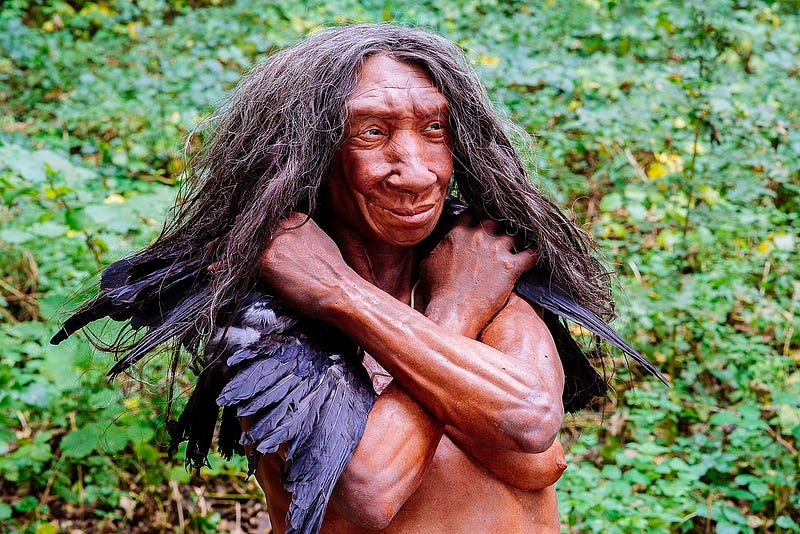
Homo sapiens neanderthalensis — [Photo: Neanderthal-Museum, Mettmann, CC BY-SA 4.0, via Wikimedia Commons]

We differ from each other. Who we are is determined by DNA, but not solely. Further research shows that how we deal with emotions or other aspects of adult life is significantly influenced by our early years, including our close relationship with our parents. This field is broadly addressed by epigenetics, but that’s a topic for another article or even a series.

Neanderthal DNA and early rising

Let’s return to the differences among people. Often, we make certain simplifications. For instance, some prefer dogs while others prefer cats — some link these preferences to certain personality traits. But what about the division between so-called night owls and early birds? Here, again, our DNA, specifically the gene linked to Neanderthals, might be crucial. This is suggested by the latest study published in the scientific journal “Genome Biology and Evolution.

Almost every one of us carries something from Homo neanderthalensis. Scientists speak of 1 to 4 percent of Neanderthal DNA in individuals of non-African descent. How is this possible? Well, humans and Neanderthals interbred over 250,000 years ago. Inter-species sexual encounters turned out to have far-reaching consequences.

Part of the Neanderthal DNA is associated with sleep, or more precisely, the internal biological clock. The authors of the mentioned study compared the genes of modern humans and Neanderthals. In both groups, they discovered certain similarities in genetic variants linked precisely to the circadian rhythm. Individuals exhibiting this trait tend to be more inclined towards early rising.
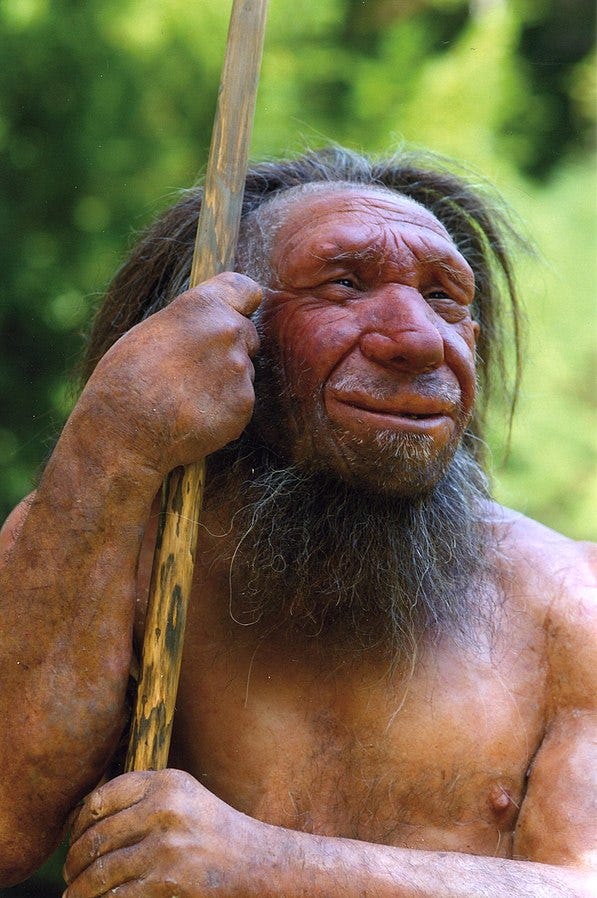
[Photo: Neanderthal-Museum, Mettmann, CC BY-SA 4.0, via Wikimedia Commons]

Changes in the circadian rhythm

For Neanderthals, the early rising gene might have helped them adapt to the annual changes in daylight intensity. This correlation makes sense in the context of human history. When early humans moved from Africa to the north, they experienced varying hours of daylight for the first time — shorter days in winter and longer ones in summer. The circadian genes of Neanderthals likely aided the offspring of early humans in adapting to this new environment.

Earlier, in tropical Africa, the average length of the day was around 12 hours. However, the farther north, the shorter the days became in winter. This meant that hunter-gatherers had less time to gather food.
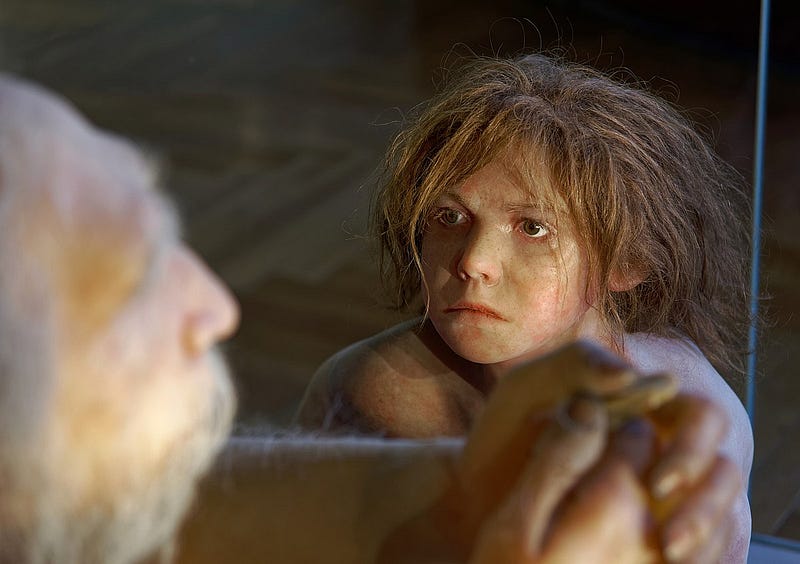
[Photo: Jakub Hałun, CC BY-SA 4.0, via Wikimedia Commons]

What do we have in us from Neanderthal DNA?

Although the discovery can be seen as groundbreaking, scientists emphasize that their conclusions shouldn’t be interpreted in black and white. Primarily, Neanderthal genes aren’t solely responsible for the sleep habits of all early risers. Our circadian rhythm is influenced by many factors, including social and environmental ones. The time we go to bed and wake up depends, for instance, on our occupation, whether we have children, and the geographic latitude where we live.

It’s also worth noting that the study used DNA from inhabitants of Great Britain. In the future, researchers plan to analyze other genetic databases. Only then can we determine whether the same correlation applies to individuals of different lineages.

This isn’t the first time scientists have drawn attention to Neanderthal DNA in modern humans. This pool of genes can also affect our hair color, skin tone, mental health, and even predisposition to smoking cigarettes. One thing is certain: in the future, Neanderthal genes will continue to be analyzed by scientists, and more surprises can be expected.

Attention all readers!

As content creators on Medium.com, we face minimal compensation for our hard work. If you find value in my articles, please consider supporting me on my “Buy Me a Coffee” page. Your small contributions can make a big difference in fueling my passion for creating quality content. Thank you for your support!

https://www.buymeacoffee.com/oconnel
History
Life
Science
Health
Research
Recommended from ReadMedium