
Where did the treasure of the last shogun disappear to? The puzzle remains unsolved.
With the popular series “Shogun,” interest in ancient Japan has returned. Meanwhile, real shoguns and their fortunes have fascinated the imagination of the Western world for centuries. In 1867, the treasure of the last shogun, Yoshinobu Tokugawa, was supposed to be taken from Edo Castle and hidden in a mountain hideout. The gold, worth tens of millions of dollars, still tempts treasure hunters today.
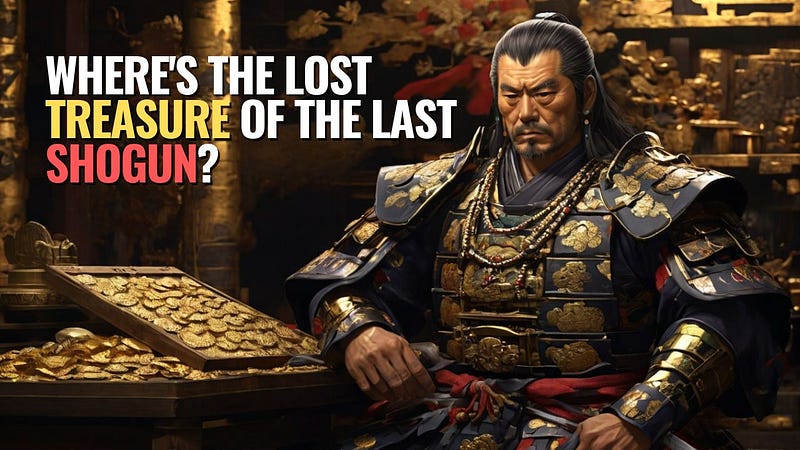
For centuries, Japan was torn apart by bloody civil wars. Feudal lords constantly fought among themselves for control of neighboring provinces. Fortunately for the Japanese, there were occasional periods of peace and the country was unified under the rule of a military leader — the shogun.
Closed Japan to the World
The last such period began in the 17th century and lasted for over 250 years. Although successive generations of emperors sat on the throne in Kyoto, real power was held by the Tokugawa shogunate. The price of peace was a feudal military administration system (bakufu), guarded by the privileged social class — the samurai.
To increase control over the country, the shogunate decided to isolate Japan and become independent of foreign influences. The presence of foreign merchants and trade were limited. As this led to depletion of the state treasury, the shogun ordered financial reforms.
Japan introduced its own monetary system — until then, the country had been dependent on Chinese coins. Precious metals were mined, and the currency was minted. Control over the state treasury was in the hands of the most trusted officials of the shogunate. Thus, huge wealth was accumulated in the Tokugawa family’s residence in Edo (today’s Tokyo) on the largest island of Japan, Honshu.
End of Japanese Isolation
While the Western world was transformed by the industrial revolution of the 18th and 19th centuries, the Japanese economy still relied on agriculture and craftsmanship. Although representatives of numerous professions achieved unprecedented levels in these fields, their country was not ready to face the might of Western powers. For decades, the Netherlands, Great Britain, and the USA tried to force Japan to open its ports and engage in trade. Ultimately, the threat of the use of force was employed to persuade the shogunate to negotiate with foreigners.
In 1853, American Commodore Matthew Perry anchored his fleet in Yedo Bay (now Tokyo Bay) and demanded an end to Japan’s isolation. The shogunate received an ultimatum — it had a year to prepare for the signing of a treaty regulating bilateral contacts. As the Japanese army couldn’t match the military power of the Americans, in 1854, Iesada Tokugawa agreed to the agreement. The Treaty of Kanagawa was the first step towards ending Japan’s isolation, and thus, it decided the downfall of the shogunate.
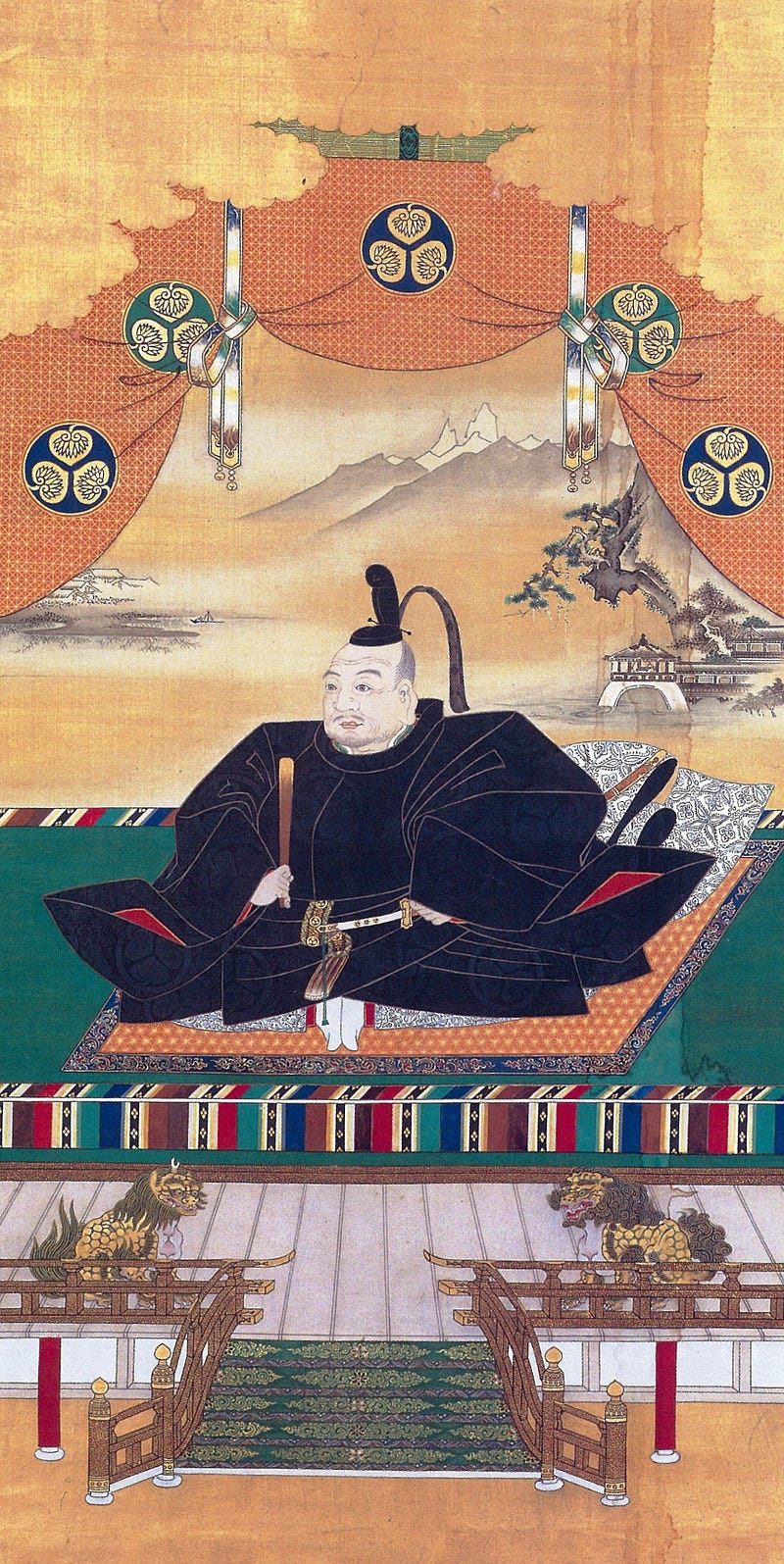

Shogunate Establishes Relations with the West
Iesada Tokugawa and his successors (Iemochi Tokugawa and Yoshinobu Tokugawa) were aware that the treaty would bring changes that could disrupt the existing order. However, they had no intention of relinquishing power. 250 years of peace convinced them that only the shogunate could guarantee stability in Japan. However, fearing a rebellion, the government decided to modernize the army. France and the USA were suppliers of modern weaponry. The shogunate also commissioned the French to train soldiers. However, these actions were not enough to compete with the external world. It was necessary to transfer the technological achievements of industrially developed countries to Japanese soil.
To this end, in 1860, the shogunate sent its representatives to the USA and the Netherlands. One of them was an educated official from a wealthy samurai family — Tadamasa Oguri (Kozukenosuke Oguri).
Japan on the Path to Modernization
Upon returning to Japan, Oguri encouraged the government to build a telegraph network and shipyards. When he was put in charge of the country’s finances, he could start implementing his ambitious plans. Under the supervision of Dutch and French specialists, the foundations were laid for a new shipyard, where the Japanese navy was to be built. This was made possible by the knowledge acquired by another talented official — Takeaki Enomoto — who had been sent to the Netherlands earlier.
However, the modernization of the country was disrupted by the intensifying rebellion of the rulers of several provinces (especially Satsuma, Chōshū, and Tosa). They decided to overthrow the shogunate and transfer power to the emperor, who was ready to open Japan more widely to foreigners. Shogun Yoshinobu Tokugawa was even willing to abdicate, but many of his supporters opposed such a decision. Enomoto and Oguri also opposed it: they feared that handing over the government to the teenage emperor Mutsuhito would halt the implementation of reforms and lead to a prolonged civil war.
They were not going to passively watch events unfold. They had position and capabilities — one was in charge of the state’s finances, the other commanded the fleet. And although Tokugawa abdicated, they intended, with the help of the gold taken from his treasury, to restore the shogunate. At least that’s what the legend says…
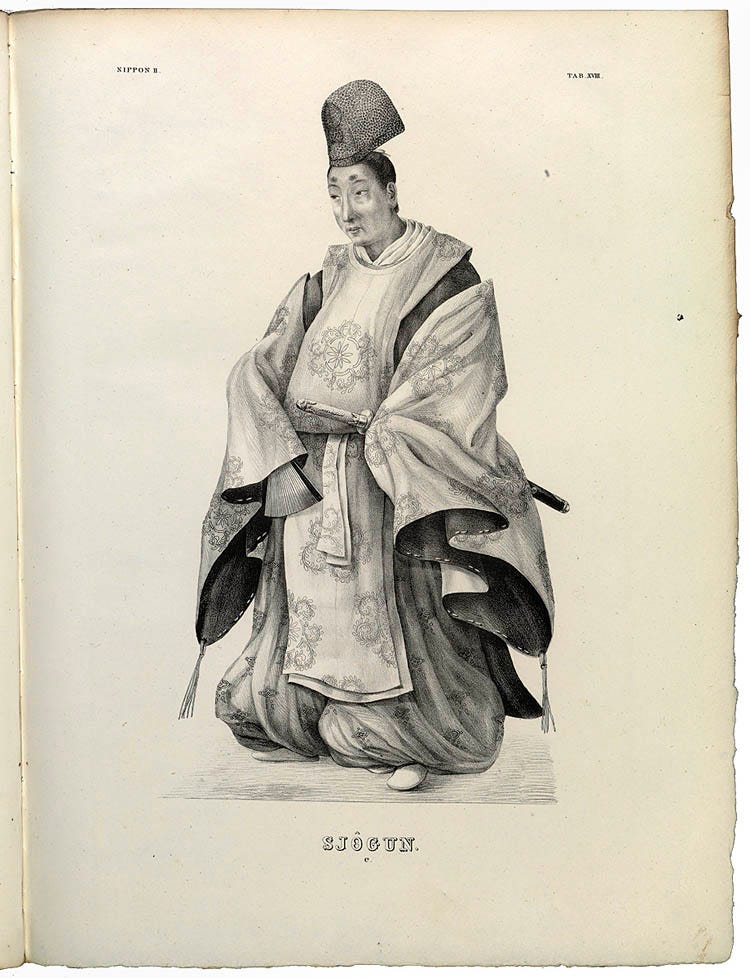

Treasure of the Last Shogun
By abdicating in early November 1867, Yoshinobu Tokugawa handed over military and civilian power to the imperial court. Many officials resigned from their positions and left Edo Castle. Oguri went to his hometown of Gonda in Gunma Prefecture — just over a hundred kilometers from the capital. He stayed in one of the temples built at the foot of Mount Akagi and waited for further actions of the shogunate’s supporters.
A few months later, he was arrested and charged with preparing a rebellion against the emperor. Attempts were made to obtain information from him about the state’s finances and the fate of the gold amassed by the shogunate, but Oguri remained silent. Although he resigned from his position, he felt responsible for the secrets of the Tokugawa family. His resistance convinced many people that he had some secret mission.
According to one version of events, it was Oguri who smuggled the treasure of the last shogun to the province. It was believed that the chests filled with gold were hidden in the vicinity of Mount Akagi, where they were to await further decisions of trusted officials loyal to the Tokugawa family. Since the situation did not favor the shogun’s supporters, Oguri kept the hiding place of the treasure secret. For his loyalty to Tokugawa, he was executed.
Seeker or Swindler?
Several years later in Tokyo, a man appeared who claimed to know the secret of the shogun’s treasure. His name was Kurando Nakajima, a low-ranking official, but he claimed to be a trusted subordinate of Oguri. He insisted that his superior indeed smuggled chests of gold from Edo and hid them in the area of Mount Akagi. The certainty with which he spoke about the Tokugawa family’s treasure attracted sponsors willing to invest money in the search for gold. With the support obtained, Nakajima bought a plot of land in Gunma Prefecture and began digging up the area.
There were high expectations for finding the gold chests very quickly. However, after several months of fruitless work, the stakeholders accused Nakajima of fraud. He was sentenced to 2 years in prison. After his release, he returned to his mission. Initially, he stayed with the Mizuno family, whose members also served the shogunate until its downfall. After some time, however, he gave up their hospitality and… disappeared for many years.
It later turned out that he continued his search in secret. However, despite his many years of effort, he did not succeed. Near death, Nakajima wrote a letter to the Mizuno family. He asked Tomoyoshi Mizuno — the son of a shogunate official — to take over the search for the gold.
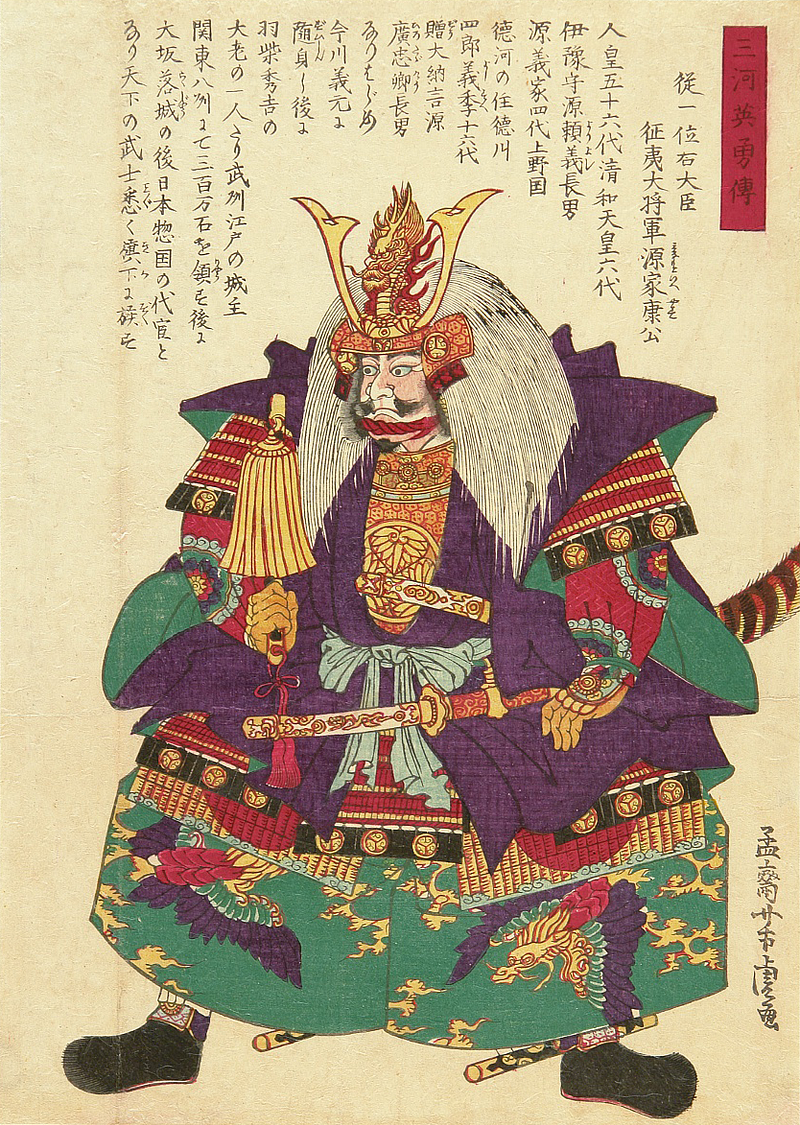

Investors’ Lost Money
Although he received only vague information and notes from many years of Nakajima’s work, Mizuno decided to take on the challenge. He, too, devoted many years to the search. However, all his hard work only resulted in minor finds such as ceramics and coins. They certainly did not constitute part of the Tokugawa family treasure. After Tomoyoshi’s death in 1926, his son Isaburo took over the family mission.
Meanwhile, in the 1930s, another seeker unexpectedly appeared — Hidenori Kawahara. He claimed to be a descendant of Oguri (his mother was supposed to be the lover of the shogun’s treasurer). Most people did not believe his revelations. However, after some time, he managed to convince several investors to put money into the search. For unclear reasons, Kawahara decided to move the operations from the area around Mount Akagi to the mountainous areas east of Tokyo. With financial support, he carried out significant mining work — underground shafts leading into the depths of the surrounding hills. But he, too, was unsuccessful.
When he died in the 1960s, his son Giro continued his work. However, despite persuading another group of investors, he abandoned the search.
Mission or Curse
Successive generations of the Mizuno family tried to prove that the shogun’s last treasure was not just a legend. Finding it became a matter of honor. Therefore, after Isaburo Mizuno’s death, his son Tomoyuki took over the search. However, it was a task beyond one man’s ability. In the early 1990s, he received help from a television station. They offered financial support for the search in exchange for broadcasting rights. With this money, heavy equipment and qualified workers were brought to the area around Mount Akagi.
Even fortune tellers were consulted to pinpoint the treasure’s hiding place! But once again, it was to no avail. Tomoyuki Mizuno never lost faith in the success of the family mission, but his illness halted further work. He died in 2010. None of his children wanted to continue the venture.
The search for the shogun’s last treasure resurfaces periodically thanks to new researchers. Many people still want to believe that somewhere underground lie chests of gold worth tens of millions of dollars today. However, faith in the riches has not dispelled certain doubts. For example, many seekers have spoken about the treasure, but the representatives of the Tokugawa family themselves have remained silent on the matter.
The Shogun’s Silence
The last shogun — Yoshinobu — died many years after his abdication, only in 1913. Therefore, he certainly heard about the ongoing search for the gold. It seems unlikely that the departing ruler did not know the hiding place of the treasure and did not pass this information on to his descendants. It is also impossible that Oguri — a loyal samurai — without the shogun’s knowledge (or that of someone from his inner circle) independently decided to hide the chests. A samurai would never leave Edo Castle with the treasure without his lord’s consent. He would rather commit ritual harakiri than violate the code upheld by generations of ancestors.
Therefore, some researchers believe that Oguri only diverted the attention of the emperor’s supporters from the actual hiding place of the treasure. The chests of gold were smuggled out by the aforementioned Takeaki Enomoto. With a crew of 8 warships, he escaped to Hakodate on the island of Hokkaido, where he established the Republic of Ezo. With a powerful fleet and a treasure of gold coins, he awaited the arrival of his master.
However, Yoshinobu Tokugawa had no intention of leading the self-proclaimed (and weak) state. In May 1869, a battle broke out between the emperor’s troops and Enomoto’s soldiers. After the lost battle, the Republic of Ezo fell. The emperor spared the leader of the rebellion. Over time, important government roles were even entrusted to him. However, it does not seem that Enomoto revealed his knowledge about the gold to anyone. He died in 1908, taking his secrets to the grave.
Attention all readers!
As content creators on Medium.com, we face minimal compensation for our hard work. If you find value in my articles, please consider supporting me on my “Buy Me a Coffee” page. Your small contributions can make a big difference in fueling my passion for creating quality content. Thank you for your support!

