
BIRD WATCHING. PHOTO ESSAY.
Where Cranes Are Covering the Sky
And rest on their journey South
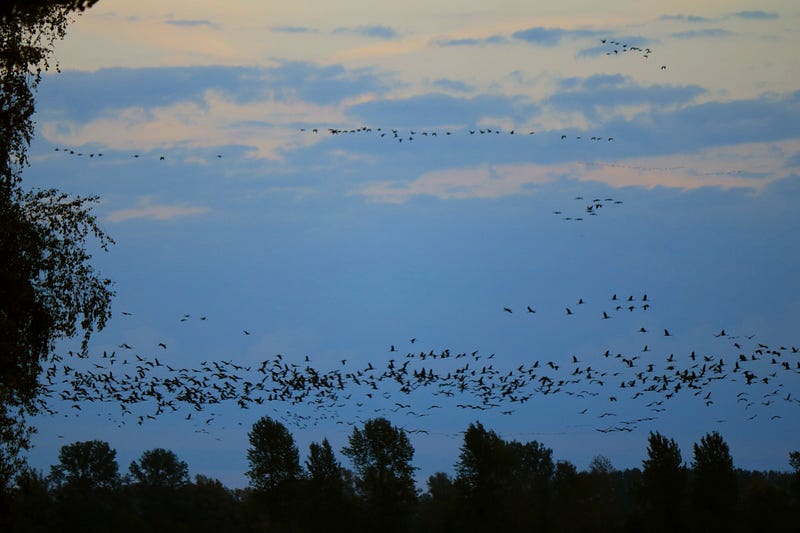
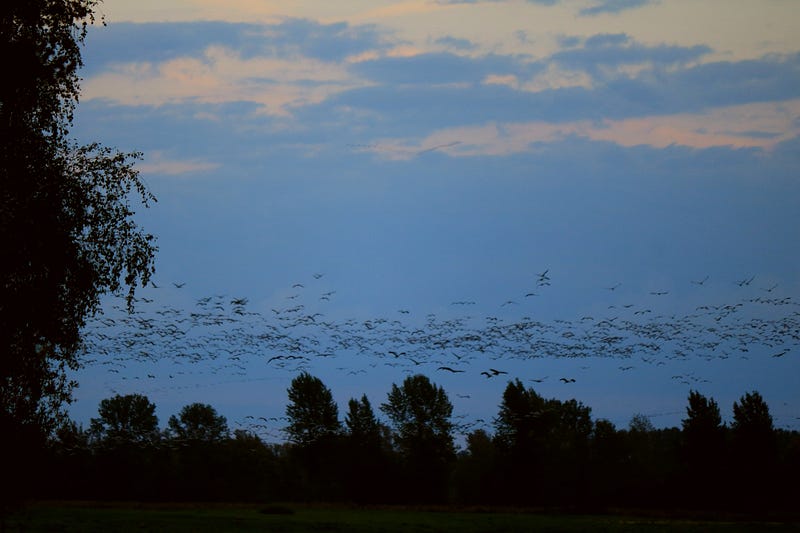
All of a sudden it got loud. Like really loud. All those groups of 20 to 30 birds were now meeting up creating a flock of hundreds if not thousands of cranes. And they were calling each other. Dominating the air above the lakes, the cranes were covering the sky.
It’s time to migrate. And while some birds only do short stopovers on their way South, the common crane will rest for several weeks at the lakes of Linum.
It was just a few days ago when I woke up to the sounds of their calls. At first, I thought geese were flying above our trailer park but later on, I learned they were cranes.
Through a short conversation with a colleague, I got motivated to head out this evening to the lakes of Linum. Apparently, during sunset hours, it’s where hundreds of these birds are in the air.
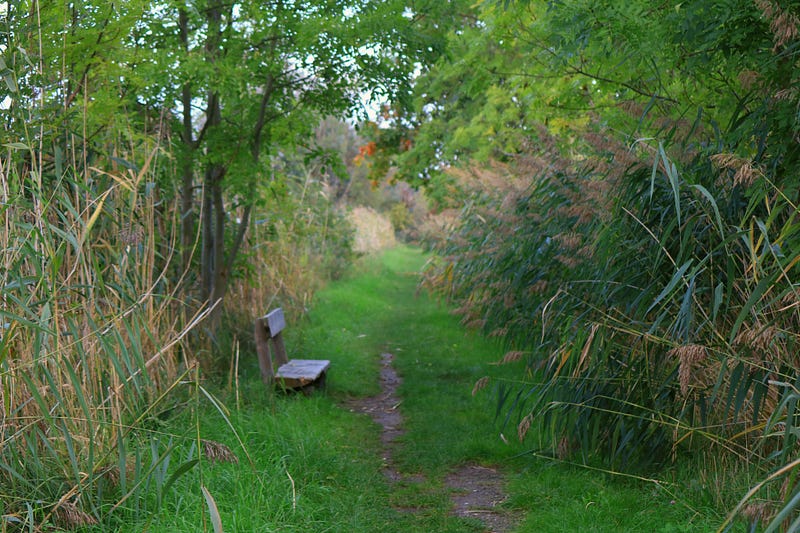
“Linumer Teiche” are a group of ponds in northern Germany just a few kilometers from where we live. These ponds emerged when the inhabitants of Berlin needed turf to keep themselves warm and dug the material out of the ground.
Later, when the turf wasn’t interesting anymore, the mining grounds got flooded and fish were grown in the pools. Today, the ponds are used as resting grounds for the cranes on their way South.
Since the surrounding fields do provide the birds with plenty of food, they just need the water surfaces for the night. It’s where they sleep. Therefore, they prefer knee-deep water and thanks to countless canals around the ponds, humans regulate the water levels to make them perfect for these birds.
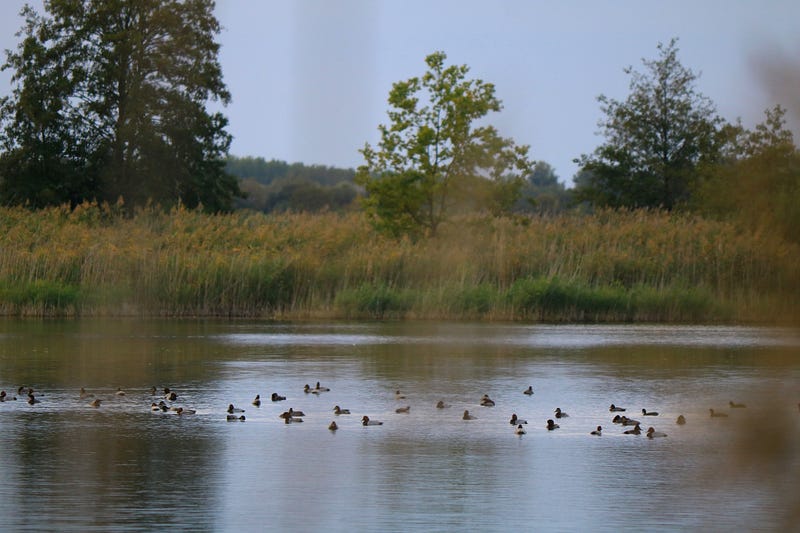
Of course, plenty of other birds also inhabit this piece of paradise but every year in fall the cranes take over.
The only crane species to be found in most parts of Europe is the common crane, also known as the Eurasian crane. He flies to southern France or Spain for the winter but needs to refuel on the long journey. And since these birds take longer to recharge their batteries, they stay for several weeks on the grounds of the ponds at Linum.
While the birds are feasting in the daytime on the surrounding fields, they return to the ponds in the evening. The harvested fields are covered with seeds which always drop during the harvest. Those corns are what the cranes are looking for.
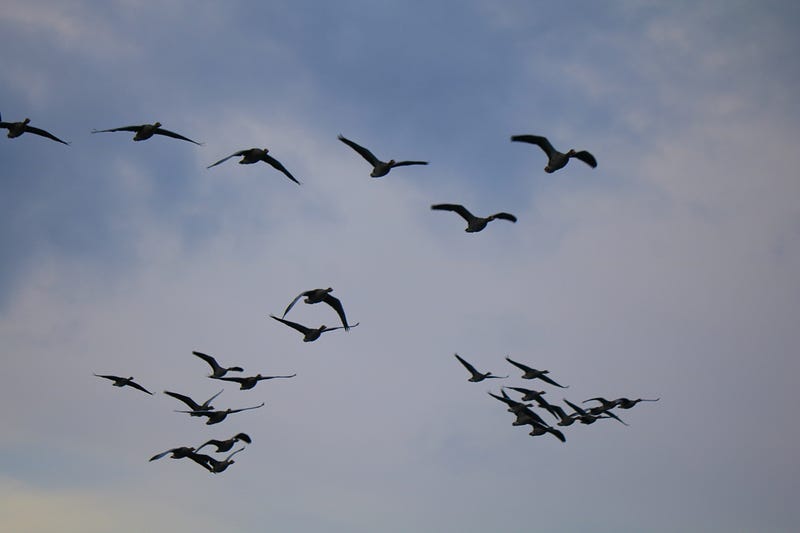
And while I didn’t know what to expect or where to walk, I had another challenge since the autofocus of my zoom lens broke a few months ago and I had to capture these flying objects with manual focus.
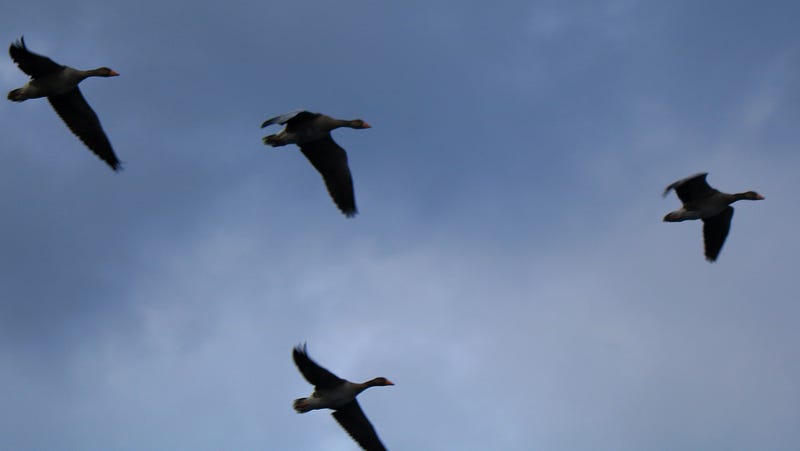
I didn’t get the exact and perfect pictures I was looking for but this should be motivation to go out there again and try it once more.
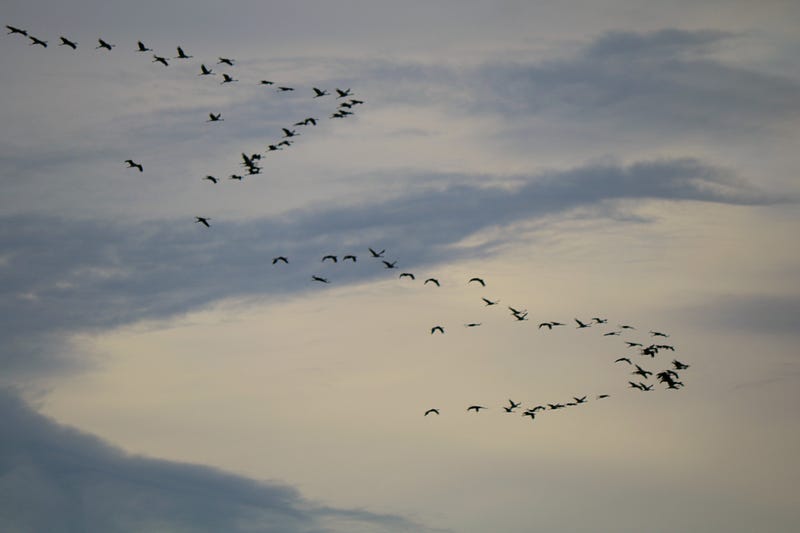
Because the spectacle I was witnessing this evening was worth all the effort of driving out here.
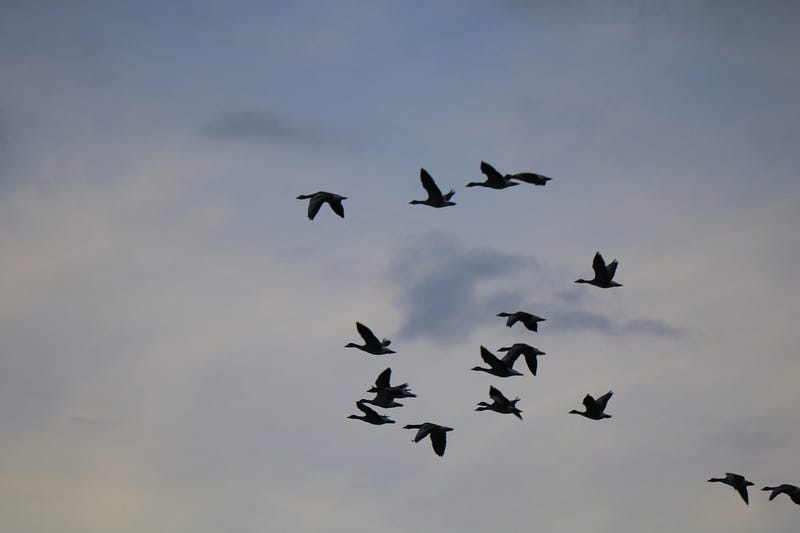
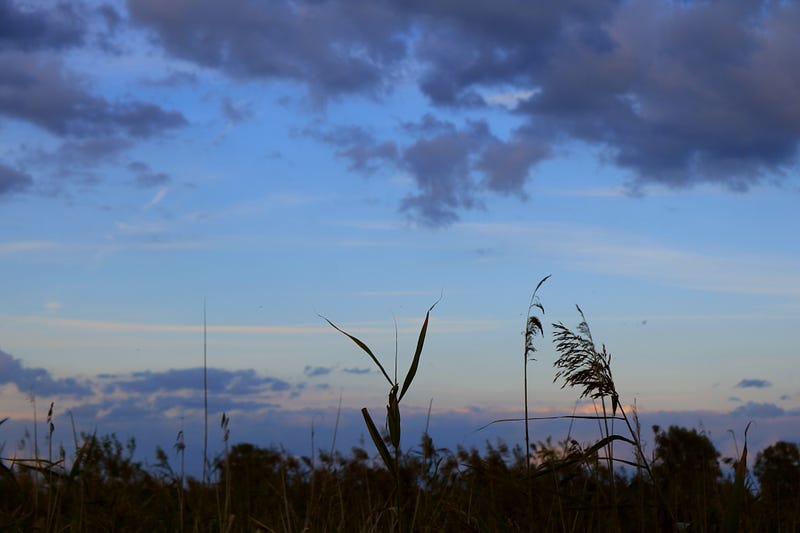
Clouds were moving in but some parts of the sky were still shining in the brightest blue while the other direction was rather gray. At one point, the sky also reached some yellow and orange colors but those disappeared quickly.
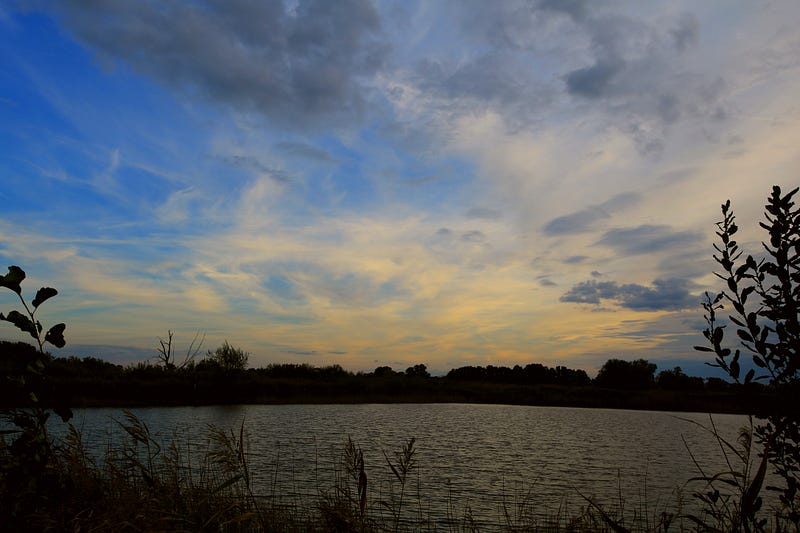
And throughout my walk, I kept on hearing the loud and unique calls of the cranes. The calls do last a couple of seconds and are often strung together. You can hear those calls from up to 2.5 miles away.
Now just imagine the noise I was hearing this evening.
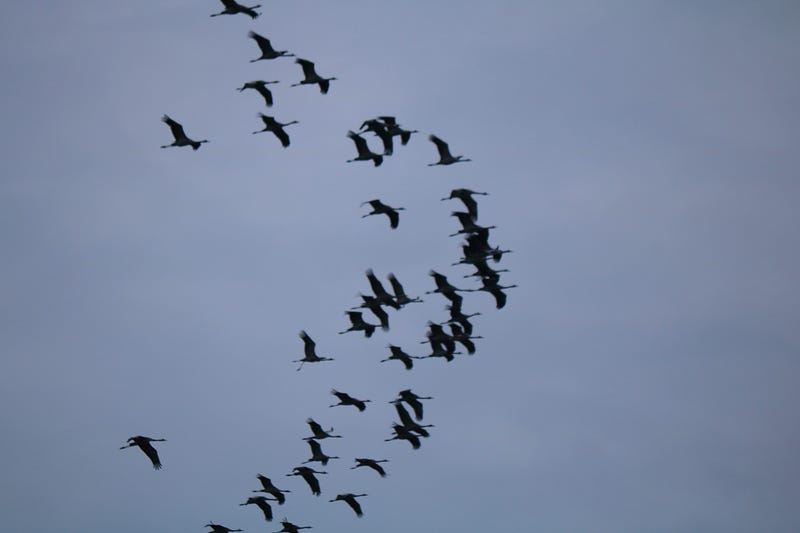
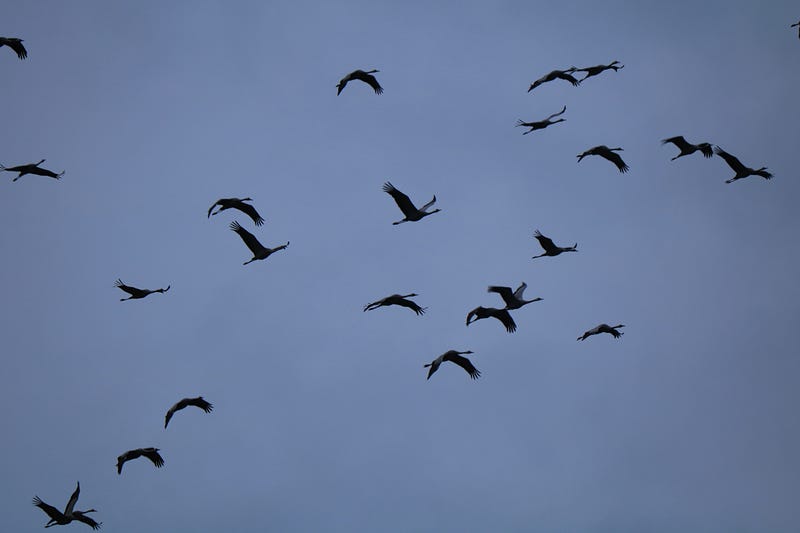
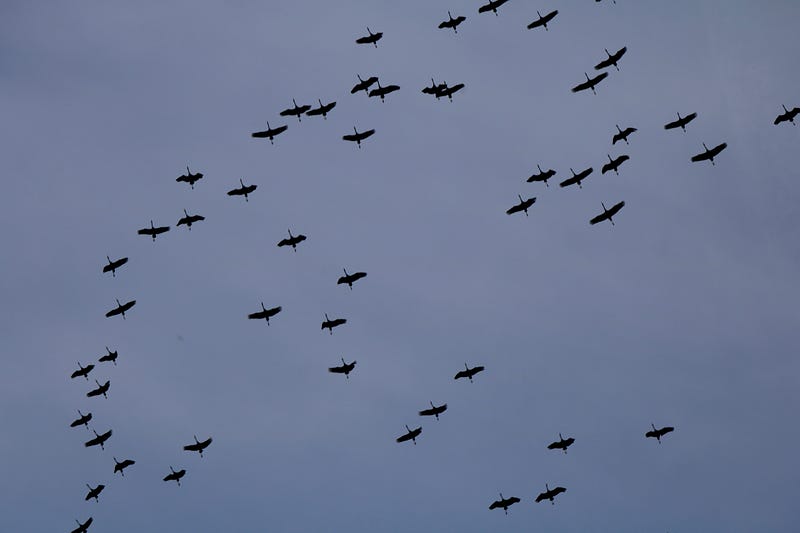
Locals and bird watchers do count the birds in Linum and the last numbers published were just a few days prior to my visit. On the 20th of September 2022, they recorded 10,0290 cranes in the area.
Don’t ask me how people count them. I failed already getting them into the frame.
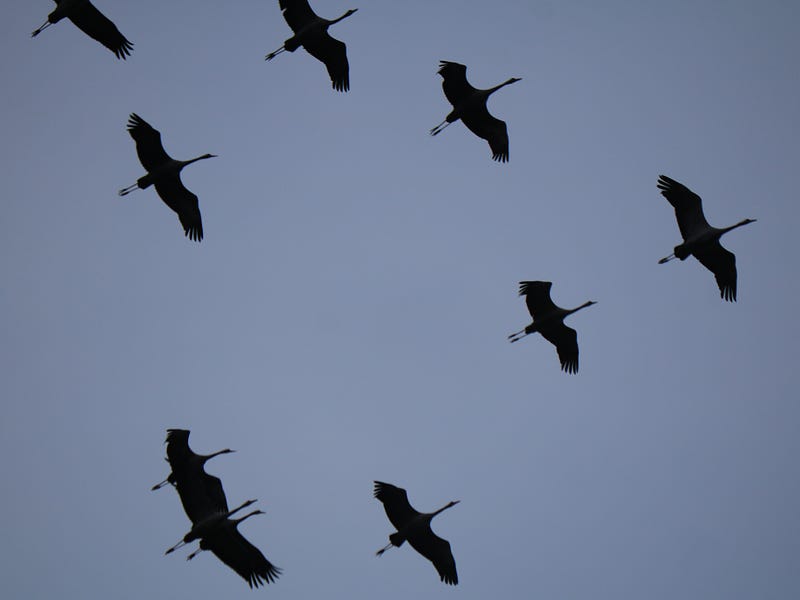
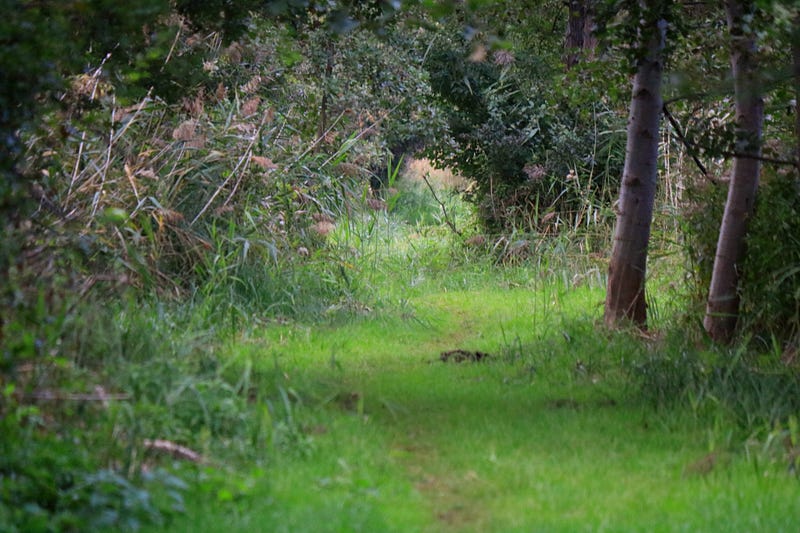
The walkways in between the ponds are well maintained but can get a little muddy. Pay attention to the ground while your head is mostly back in the neck looking up at the flock of birds coming by.
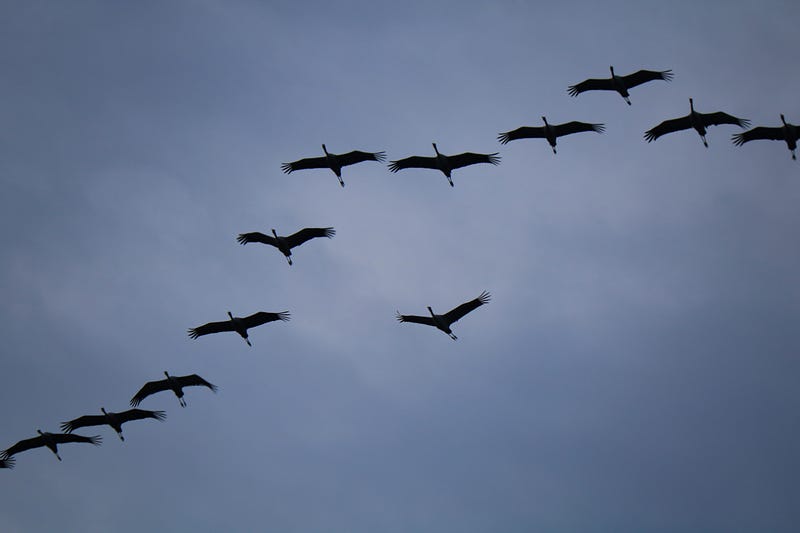
The cranes were swarming across the sky. When several smaller groups flocked together some chaos would appear until they reorganized the group.
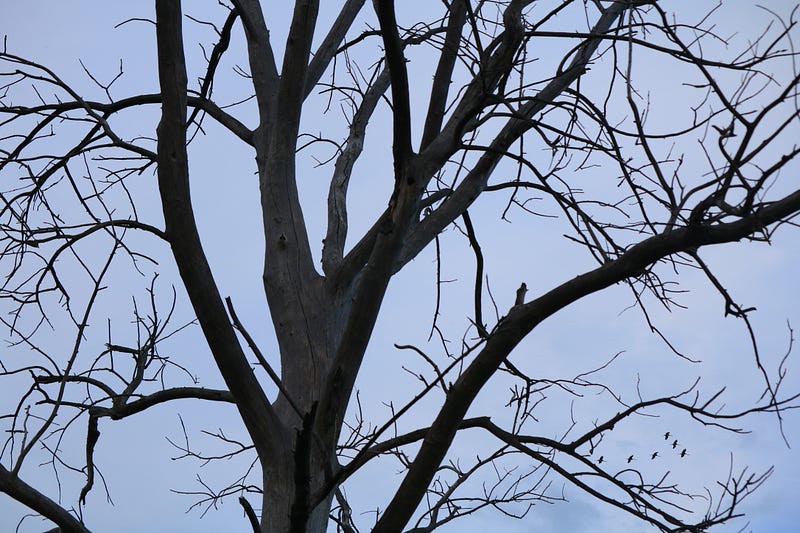
I also found the first trees that dropped already all their leaves. But don’t miss the cranes in the image below. They are everywhere.
Eventually, I zoomed out for a bit to include the brightness of the blue sky.
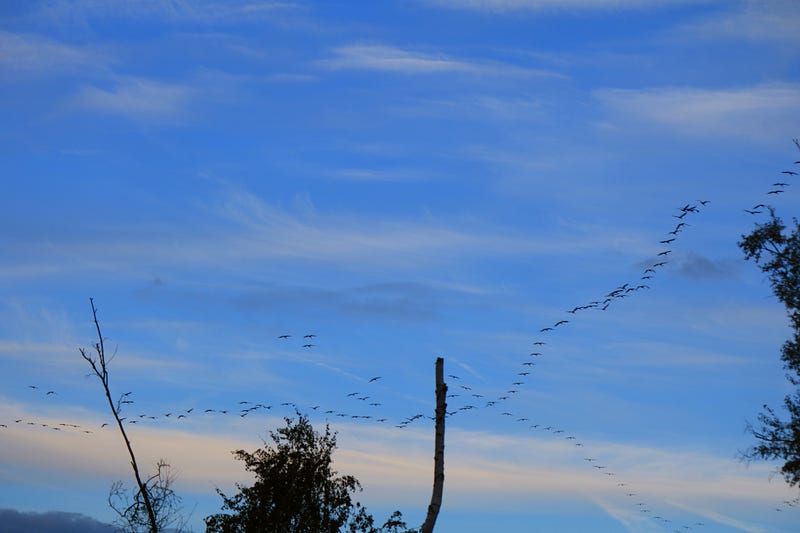
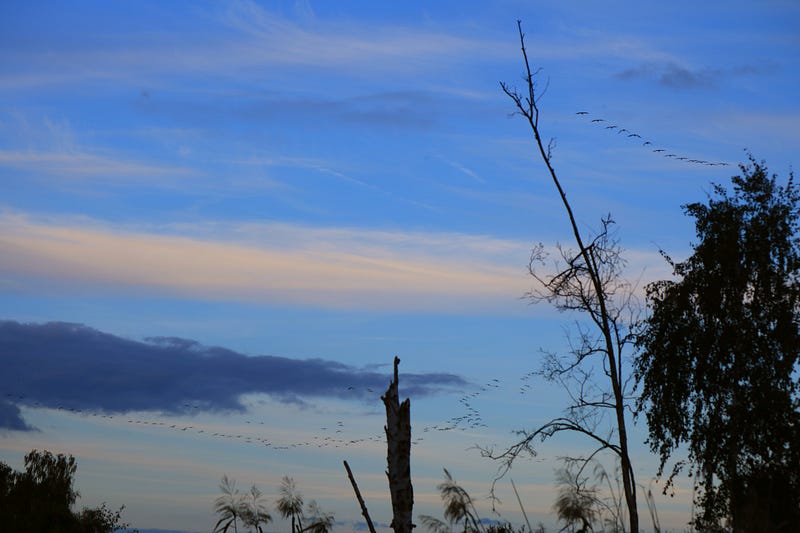
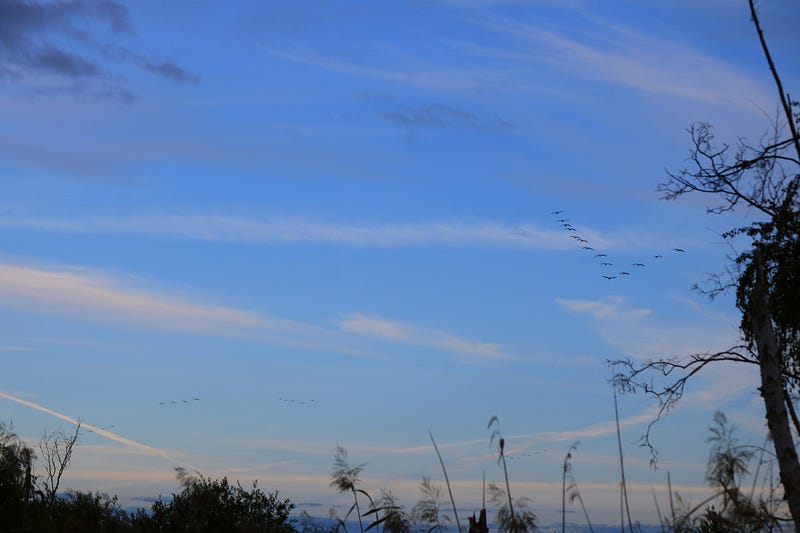
The countless flocks of cranes looked magnificent in the sunset sky.
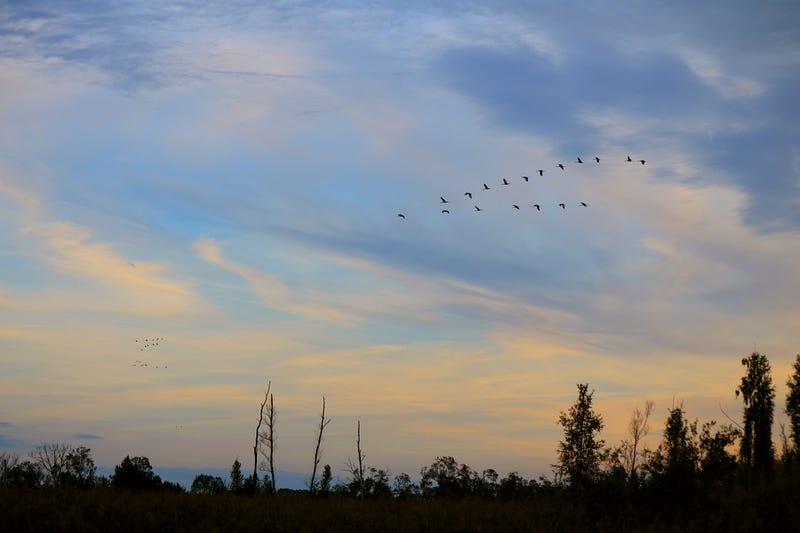
And then they all got together. They started to call each other with no stopping in sight. The big swarm was south of where I was walking but I could hear them more than clearly. It was a spectacular sight.
Now I know. It wasn’t hundreds of common cranes but thousands of them who took off in the air swarming above the ponds of Linum. Searching for their sleeping ground for the night they come very close to each other in the air.
And now, I do leave them resting.
Until next time.
“No bird soars too high, if it soars with his own wings.” — William Blake
More about bird watching:
Join my email list here if you would like to read more photo essays or sign up for the Medium membership to receive unlimited access to my and other writer’s stories out here (I will receive a commission fee in return).


