
Whence do YOU derive YOUR moral code?
And whence do I derive my moral code?
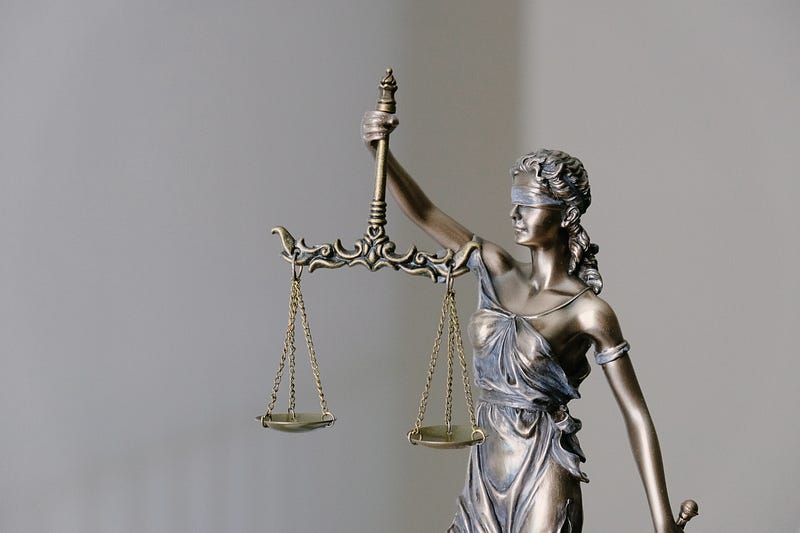
It is undeniable that each and one of us who is sane and conscious tries to live by a moral code derived from other than ourselves.
We try to abide by this moral code in our daily lives even when we have not written it done in stone or in the paper.
The human world has as many moral codes as there are humans — as each one of us is unique in our disposition and our situations.
I wonder whether moral codes led to the success of humans as a species or the success of humans as a species necessitated the existence of moral codes.
Even though our sense of morality is deeply ingrained within ourselves, shaping ourselves and our values, it does change with time, circumstances, the adaptation of new beliefs, and the rejection of previously held ones.
Sometimes we might even suspend it in times of intoxication, delirium, or mob mentality — in which case we behave more like animals than rational humans. But once we have regained our rational self, I’m sure our sense of morality comes back to it’s old slow-changing deeply ingrained state.
All of us do have an idea of what is wrong and what is right; we wouldn’t do what we think is wrong given a choice.
But when we are tested by the trials and tribulations of life, we might be inconsistent or even violate our moral code once in a while, and in that case, we feel guilty. We know we have done wrong; we do not need anyone else to tell us that.
Going deeper, what exactly does it mean to have a moral code? Why do we have it, and from where is it derived? Can we live without it? Are some moral codes better than others? Is there a golden moral code, an objective framework to guide our decision-making process, that is better than all other moral codes?
I define a moral code as not just guidelines you live your life by and govern your decisions by, but rules — with penalties in case you break them and reward in case you chose the right one over the wrong one.
I think if it weren’t for the penalties and the reward, we wouldn’t keep the moral codes for ourselves — humans are generally selfish creatures.
There is no action we take that is no carried out in our own best interest if you really get into the bottom of it. In this case, it is similar to the law societies introduce for themselves, reflecting the moral codes of the lawmakers. But laws differ to moral codes in that they are explicitly written down with penalties in case you break them and with officials who interpret the laws and apply the penalties.
Is morality derived from a higher authority? I cannot believe otherwise. It is always the case that we derive it from some higher authority who also tend to prescribe the punishment/penalties for breaking the code and the rewards for keeping it.
Some of us derived it from God and Revelation/religion scholars, others from Science/Reason, while most of us derived it from a variety of sources.
It is important to note that it is the threat of “punishment” and the offer of “reward” that actually builds the instruction into the moral code. For example, science may prove that smoking is bad for our health (prescribes punishment for smoking) and so we could adopt a rule in our moral code “thou shall not smoke”.
From this, it is clear that we adopt a moral code only when there is a selfish reason so as to do so. Self-love is a given. I do not believe in pure altruism. I decide to jump into the water to save a drowning soul not purely because of unselfish reasons. I have somehow given value to the act of saving life and punishment for the act of neglecting to do just that. If I don’t attempt saving the life, I would live the rest of my life regretting it.
Is there some objective framework we could live our lives by? Does there exist a moral code that we could derive through the application of reason and logic — one which is as objective and universal as the laws of maths and physics?
I believe the answer is yes, but I vehemently disagree that this golden moral code could be derived purely through our collective reason and use of logic.
But like everything else in this article. that is up for debate.
As a devout practicing Muslim, I believe that both the belief in God (the perfect divine existence that transcends all creation) and the belief in a moral code are both axiomatic in the pure pristine nature, the natural disposition, the fitrah of every human soul.
Although this is deeply ingrained in the our fitrah, just like we are influenced by our parents, our culture and our life experiences to disbelieve in God, our belief in this objective moral code (which I call the golden code) is also corrupted and even abandoned altogether.
I believe that our life purpose is to purify our internal beings and rediscover the yearning of our souls to the one true existence as well as rediscover that innate golden code.
I believe that the sacred law (which Muslims call Sharia) reflects this pure pristine innate but corruptible nature of the human soul. The human attempt to derive this sacred law rests in the interpretation of revelation — in the form of scripture (the Qur’an) and the teachings and example (the Sunnah) of the Prophets especially the final one.
Hence whenever Muslims have a moral issue to decide upon they consult these pure sources to guide them as to what is right and what is wrong.
I think it is really important for all of us to pause our lives, now and then, and question our moral code. More specifically how do we derive it? There is no moral code that is independent of a transcendent ethical structure.
I believe that most of our differences — political and otherwise — is rooted in irreconcilable differences in our moral codes. It affects all aspects of our life from compatibility in our relationships to how we raise our children.


