
When your Uber driver is a refugee from the country you took a mission trip to.
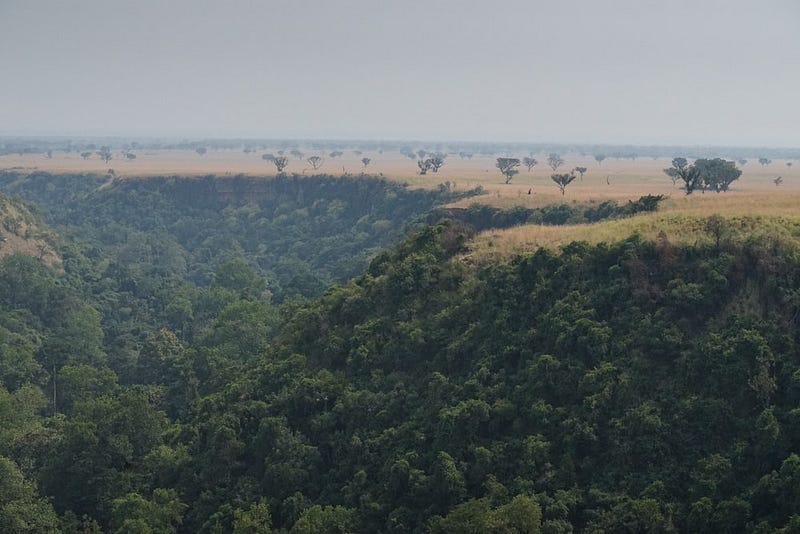
Four years ago, I left the U.S. for the first time. The church I was attending in my first year of college was planning their annual student mission trip to Uganda, and I was captivated by the idea of visiting Africa — a romantic, other-worldly dream — Uganda, a place so far away and so foreign to everything I’d ever known. So I began going to weekly prep meetings for the mission trip, where we went over the gist of what we’d be doing in our ten days there. Taking medical and general supplies to prisons. Staying with a Ugandan minister and his family, William, who lived in the capital of Kampala, its orange streets bustling with food stands, foot traffic, zooming old cars, and Boda Bodas recklessly winding in between the dense traffic and rocketing through the stoplight and stop sign-free intersections. Visiting a church-funded school in the tiny village of Rakai, 200 kilometers south of Kampala, along the coast of Lake Victoria (the world’s third-largest lake, f.y.i.), way up in the hills over dense green forests with a bird’s-eye view of the lake and the cottages built along its shore. Rakai, about the same size as Brazil, Indiana, where I grew up. Brazil, the home of meth. Rakai, where Uganda’s HIV epidemic began. We also learned that we’d need to give our ‘testimonial’ at the prisons we would visit. A testimonial as in our personal story of how we came to know Christ. To the prisoners, to parents of the children at the school. Everywhere we went, we’d be given time to share our stories in front of, possibly, hundreds of Ugandans. A crowd probably wondering why a 24-year old white boy was standing in front of them with the King James. Which was something that I’ve asked myself quite often. Very often. But that’s not the point of this rambling little essay.
That was four years ago. Last night, my roommates and I took an Uber to the affluent and sopping-with-nightlife (even in 2020) Broad Ripple neighborhood of Indianapolis from our house a few miles south for dinner. Our uber driver’s name was Wamara. After small talking him for a few minutes, he told me he was from Africa, a refugee from the Democratic Republic of the Congo. Then he asked me if I had ever been to Africa. Yes, I said, to Uganda. Come to find out, he’d lived in Uganda for seven years, in the same city I stayed in for ten days. And he asked me this, in his rich accent: “And what did you think of the Ugandan people?”
Hmm, I say, thinking about how to answer in a way that conveys any substance (I could go on and on about the selflessness, joy, and generosity the people I encountered there displayed — one family gifted us one of their only chickens). They were warm, welcoming. Everywhere was imbued with life. Singing and dancing wherever we went. We visited a school where it seemed like we had to walk through a mile of alleyways to get to it. When we turned the last corner, the students and teachers were dancing and singing in English to welcome us. In the open-air prisons that overlooked the city or presided over the bucolic boondocks that William’s son drove our rickety bus out to, the prisoners sang to us and with us and implored us to dance, waving their hands in a get-up motion, smiles so wide and bright. In every house I entered, the owners said, “You are welcome here.” He smiles, laughs, and nods yes. Yes, I smile. Ugandans are wonderful people, I say back.
I was never on a mission there. I was just there, intently observing and wholly taking part.
Thankfully, I met Wamara last night. He dropped us off at the Mousetrap, where there was a DJ playing under lights. We were celebrating my friend and fellow Stasis writer Mitchell’s birthday. I kept thinking about how coincidental it was that the trip to Uganda in 2016 had been so heavy on my mind in recent weeks (probably more than it had ever been in the last four years since going) and we happened to have Wamara as a driver. A genuinely nice, warm person. A refugee. A new father (his baby was born at the hospital where my aunt is an OBGYN).
I was glad that we were able to connect because of this place that had given so much to both of us. But it is an odd feeling, as you may imagine when your uber driver happens to be a citizen of a country where you went on a mission trip. Two words with so many different connotations, that mean something different to whoever you ask. Of course, I didn’t say I went there for a mission trip, but I’m sure Wamara knew that.
Now that provides an interesting dichotomy, to say the least. A 24-year old relatively privileged white guy who went on a mission trip to the country where you lived for seven years, which borders your home country (that you fled as a refugee from) is now sitting in your black Kia with his friends. in need of a ride to a bar called the Mousetrap. Life is funny in the sense that it provides a constant flow of irony.
I’m just glad that I didn’t bring up the fact that he was from Africa, as asking someone, “Where are you from?” can be pretty problematic. Instead, I asked his name — Wamara, he said. It’s an African name. Despite his mask, I could see his eyes smile. That’s a beautiful name, I said. What part of Africa does it come from?
“The Congo! I’m from the DRC of the Congo. Have you ever been to Africa, my friend?”
In ten minutes of driving, I tried to give him an overview of my time there.
I’ll never know what he thinks about me being there for a mission trip because I didn’t say and I didn’t ask. Maybe I should’ve. But that means being vulnerable and accepting that he’ll think of me a certain way, and even then, his response would probably be warm and polite in typical Ugandan fashion:
“Oh, my friend, you are most welcome there.”