
When You Stop Learning, You’re Dead
MasterClass co-founder David Rogier on the future of education
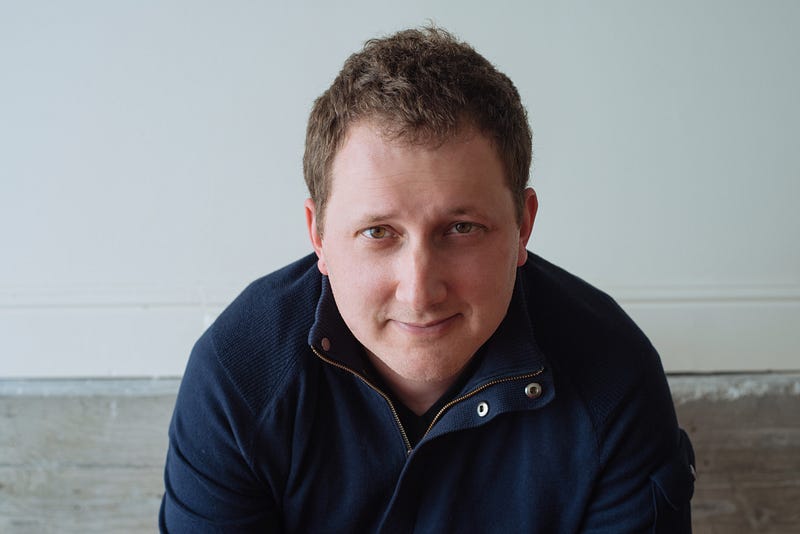
I am a big believer in the future of education looking wildly different to the school system we have now so it was a pleasure to explore this idea with MasterClass co-founder and CEO David Rogier.
David is a true entrepreneur (he sold his first business whilst in middle school)— someone with a vision and ability to get everything in place, at the right time, to get it done. In this interview, we discuss how his immigrant family shaped his life, how he overcame a debilitating stutter to remain curious and still asking questions, and how he grew MasterClass to the huge success it is today. He also offers some great advice for first-time founders.
Here’s his story…
Newnham: Tell me about your background — what were you like growing up and how did your childhood shape you?

Rogier: I think I was a delight, my family might disagree.
I grew up in a family of immigrants. Most had escaped the Holocaust. My grandparents met in Auschwitz (of all places to find love?)
I stutter. When I was a kid, it was bad. I was teased in school about it. My family refused to let me use it as an excuse. One day I decided to tell my grandfather that I stuttered and was being teased in school for it. He gave me a hug and said — “So? You going to let that stop you?” In his eyes, if you weren’t in Auschwitz… you’re OK.
My parents would not let me use my stutter as an excuse to temper my curiosity (to not ask questions). They always expected my brother and I, from a very early age, to participate in dinner conversations with their friends. They were incredibly loving and determined for my brother and I to achieve whatever we wanted.
Newnham: Successful people have the ability to turn their disadvantages into advantages — do you agree, and if so, what are yours and how have they been a part of your journey?
Rogier: As a stutterer, one of the most frustrating things is not being able to express myself. When you stutter as you say something, people focus on the stutter not on the idea you’re trying to express. I saw the way people reacted to my stutter. I got a speech therapist and began seriously working on my stuttering. I memorized speeches from Mario Cuomo’s DNC speech to Braveheart to Jesse Jackson’s presidential campaign speeches and recited them over and over again in front of my mirror.
Every time I take the stage for a panel or keynote, or even an interview, I practice. I’ll never not stutter. I have that for life. But I think it made me much more empathetic, especially to those who can’t express themselves. It made me really value storytelling and great communication. It also made me refuse to give up on expressing my idea (even though it sometimes takes me a lot of tries).
So despite my stutter, I was very precocious. I was the kid in class who always had lots of questions and opinions. I didn’t have any issue debating the teacher.
Newnham: Can you tell me about your grandmother and the impact she/your grandparents’ survivorship had on your family and values?
Rogier: She’s my hero. When I was in second grade, she told me that when she was 16 and living in Poland, she escaped the Holocaust. She fled to New York City and got a job on a factory floor. While working there, she longed to be a doctor. She applied to 25 medical schools and was denied by all. One administrator even said to her, “You have three strikes against you: you’re a woman, you’re an immigrant and you’re Jewish.” She didn’t care. She applied again. She got into one school and became a paediatrician.
“You have three strikes against you: you’re a woman, you’re an immigrant and you’re Jewish.”
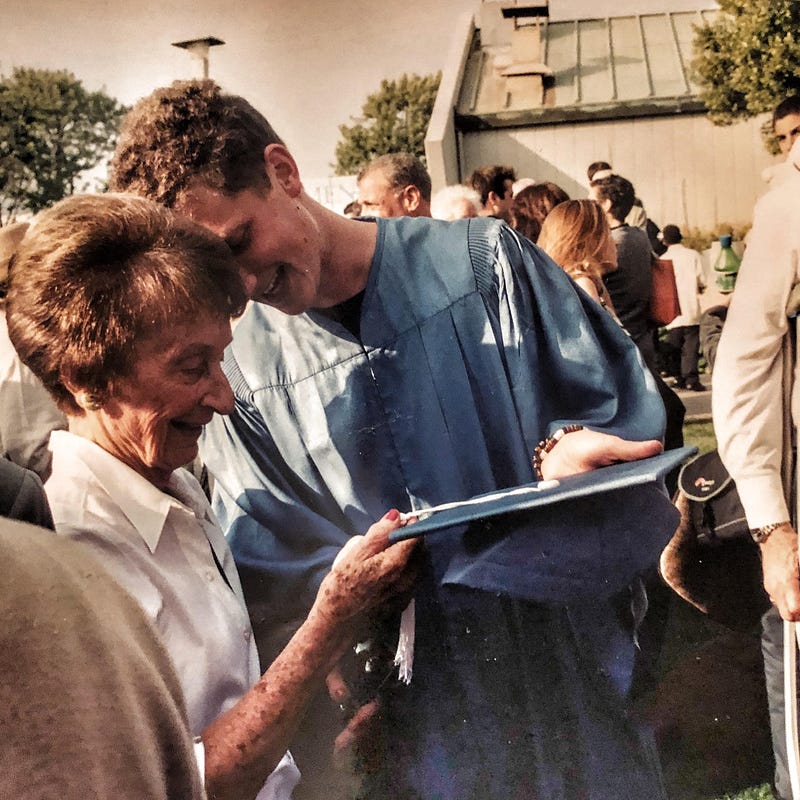
She taught me many things, but one I’ll never forget: “Education is the only thing someone can’t take from you.” It’s what propelled me to create MasterClass, and to try to democratize mastery.
“Education is the only thing someone can’t take from you.”
Newnham: When did your entrepreneurial flair first reveal itself?
Rogier: I am deathly allergic to peanuts, but when I was 11, my brother and I went door to door selling pine cone bird feeders covered in peanut butter. The deal was: he makes (and touches) them, I sell them. I sold my first (really small) company, an Internet search engine when I was a teenager.
While I was studying for my MBA at Stanford Graduate School of Business, I met tech investor Michael Dearing [founder of Harrison Metal], whom I ended up working for after graduating. It was amazing, but I ultimately decided I wanted to create something of my own. Michael invested $400,000 for me to test my ideas. It was incredibly generous. Over the next year or so after lots of experiments, brainstorms, user interviews, stress, and therapy sessions — I came up with the idea for MasterClass!
Newnham: Can you tell me more about how you came up with the idea?
Rogier: I think the difference between artists and designers is designers need constraints to be creative (artists find them limiting). I need constraints to be creative. On the journey to find the idea, someone gave me an amazing constraint. She said: “Pick something that even if it fails, you’ll be proud of it.” The idea of MasterClass came from a combination of what my grandmother taught me (“education is the only thing that someone can’t take away from you”), lots of user interviews and lots of reflection — we love to learn, why don’t we love to learn online yet?
I want to make the world a little bit better. MasterClass tries to create a place that makes it possible for anybody in the world to learn from the best. In combining the pursuit for knowledge with a mission of accessibility, MasterClass was created.
My hope was to build a platform that provided a new category of learning experiences that move beyond the traditional classroom — which, for the most part, focuses on transferring knowledge from teacher to student — to an exploratory channel that inspires our members to seek out new perspectives, skill sets, and approaches on their own terms.
My fear was trying to convince the world’s best to do something that didn’t yet exist! It was definitely an uphill battle at first — but we did it! Currently, MasterClass consists of more than 80 of the world’s greatest masters.
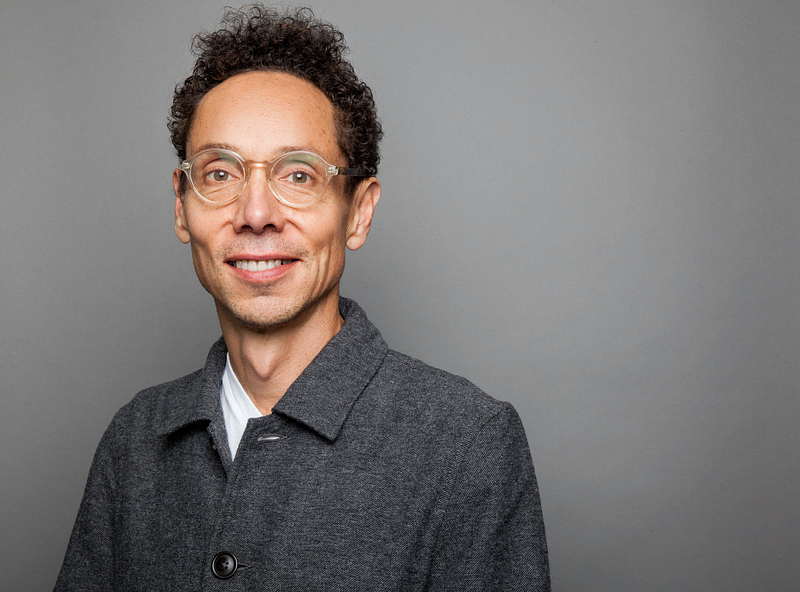
Newnham: You started MasterClass in 2014 but it was a year and a half before you launched — what did that year and a half look like for you? What were you focused on?
When I first started MasterClass, we were met with a lot of cynicism: “The best in the world will never teach, if they do they’ll be horrible at it, no one will want to watch it,” etc.
The first year or so was focussed on getting the first instructors and practicing how we’d make great classes. I was literally cold-calling, asking the best in the world to sign on to something that didn’t yet exist. If there’s anything this job has taught me, it’s how to draft a cold email and get responses. We filmed test classes (some with my parents)! It was terrifying, exciting, stressful and, when we got the first yes — so rewarding.
Startups are scary for lots of reasons. One of the reasons we don’t talk about it as much is that we are taught in life to strive for social acceptance — to do things that get us praise (e.g. things that make our parents proud, impress our teachers, or that our friends admire). Most of us get used to (and even good at) seeking that praise. I definitely did.
Creating a startup rejects those societal norms. It means believing in something that others think is impossible (e.g. electric cars can be faster than gasoline cars, people will buy clothes that make them look slimmer, masters will teach their craft). It’s believing that you and a small group of people can make something that seems impossible, happen.
“Creating a startup… means believing in something that others think is impossible.”
Newnham: Indeed! Tell me about launch day…
Rogier: Terrifying. Was everyone who said this idea wasn’t going to work — actually right? I believed we had something special when we started it, but to be honest I wasn’t sure it was going to work until day three or four. When I saw our sales and CAC (Customer Acquisition Cost)… we all knew we had hit on something special.
Newnham: You have some incredible teachers on board. How do you choose and develop courses with them? What does the process look like and how long does it take?
Rogier: Each class is designed by the instructor. Our job is to help them by being the voice of the student. Our internal teams work hard to identify what kinds of lessons our students would be interested in so we can go to the instructor and say, “Here is what the world wants to learn from you.” Then we allow the instructor to tell us, “Here are the things I wish I had learned or want people to know.” We try to merge the two and land on a curriculum, but it’s the instructor’s decision. Each class includes video lessons, a class workbook, interactive assignments, and community activities. The average timeframe in developing a class is four to six months and the filming portion is usually two to four days.
Newnham: What has surprised you most about building MasterClass?
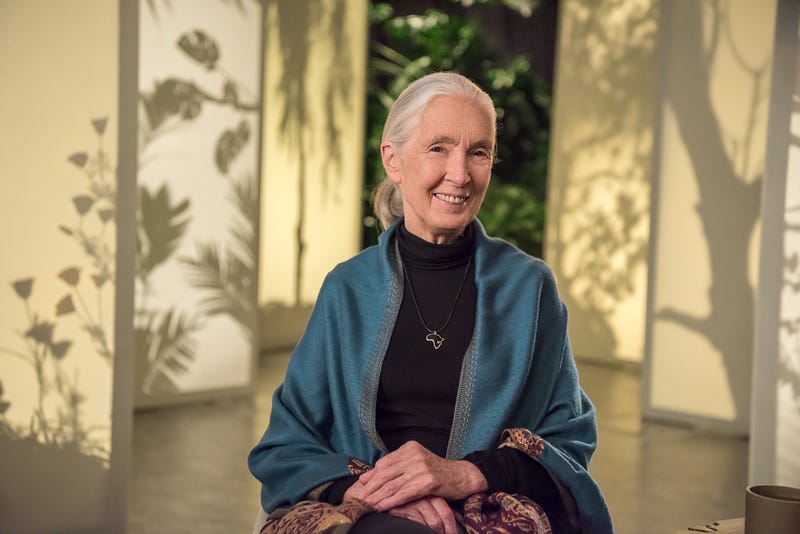
Rogier: The speed that we’ve grown. MasterClass has become one of the fastest growing and largest education platforms in the world. What started off as three instructors has grown to a catalogue. I could have never dreamed of that. Another aspect that has changed is how our students consume our content. When we first launched we were charging $90 dollars to access an individual class. Since then, we’ve introduced the $180 yearly subscription, which has become most of the business, and the most surprising part: people love to learn about lots of things. Just because you came in for Steph Curry’s class doesn’t mean you don’t end up falling in love with Jane Goodall’s class.

Newnham: What lessons from your early career were most useful to building MasterClass?
Rogier: I’ve learned a lot along the way, but a few that really stuck with me are:
- You have to work really hard
- Other people know more than me
- You don’t need to work with assholes
- Bonus: a great therapist is worth every penny.
Newnham: What have you learned about yourself since launch day?
Rogier: I’m still learning every day — a few that stand out:
- When I believe something others don’t — that’s opportunity
- How incredible it is to work with people who I learn from every day
- I can do things that I never thought were possible.
“When I believe something others don’t — that’s opportunity.”
Newnham: Why is now the best time for MasterClass to exist?
Rogier: The rate of change has increased so dramatically that we can no longer rely on school to teach us everything we need to know. We have to take learning into our own hands. There’s an unprecedented amount of information available to us — but finding the best content from the best teachers has never been more important. With MasterClass, I wanted to redefine what education could be.

Learning doesn’t have to be boring, and it doesn’t have to involve a classroom. When done right, education can be entertaining. There’s always something to learn. Who knew that taking a class from an FBI negotiator would help you to be a better parent? Or that taking a class in poetry would help you write better emails at work?
“Part of lifelong development is to stay inspired.”
Newnham: If you did a MasterClass on entrepreneurship, what lessons would you want to impart to entrepreneurs just starting out?
Rogier: I try to share these tips everywhere I can…
- Don’t do it. It’s the hardest thing I have ever done. You will for sure lose friends, cry, sleep less, gain weight, lose self confidence, earn less money, and probably fail.
- If you still really want to do it — it’ll change your life in the most amazing ways. You’ll see how much impact you can have in the world, spend time with people you would have never thought you’d ever meet, learn a tremendous amount about everything, feel emotions you never have, and be surprised every day.
- Don’t worry so much. You usually worry about the wrong things anyways and it doesn’t actually help. Get a therapist!
- Don’t build a lot without market feedback or validation. You can easily test your ideas like never before. Sara Blakely taught me this in her Masterclass!
- Your #1 job is to every day, not destroy the business (credit: Mark Williamson)
Newnham: From what you have learned at MasterClass, what advice would you offer students re: the art/importance of learning?
Rogier: When you stop learning, you’re dead.
Newnham: What lessons have you learned which you could pass on to other educators?
Rogier: Entertainment and education are not opposites. Education can (and should also) be entertaining.
“When you stop learning, you’re dead.”

Newnham: What does the future of education look like to you?
Rogier: I still think online education is in its infancy.
There are different phases:
Phase 1: Simply put information on the web (e.g. Wikipedia)
Phase 2: Put the classroom on the web (e.g. Khan Academy, edX).
Phase 3: Education designed for the internet (e.g. MasterClass Codecademy). We are still early in this phase — actually designing classes for the web. When Phase 1 made information easily accessible, the role of education became not the transfer of facts (which many classes still rely on) — but to inspire you to go learn, to go do, to geek out. To do this, you have to have engaging and exclusive content, world-class storytelling, and simply amazing classes.
Phase 4: “Online education” won’t exist. It’ll just be “education.” We’ll see almost seamless integration between physical and digital worlds. To quote Mark Twain: “I have never let my schooling interfere with my education.”
Phase 5: Matrix style. You’ll download Samuel L Jackson’s brain into yours.
Newnham: There are certain actions founders take which reveal their character. How important is it to your business that you have a good moral compass and that you act upon it?
Rogier: It’s everything. I’m here on this planet once, I don’t want to have regrets on my deathbed. I want to look back and believe I did everything I could do to make the world a little bit better. I believe that starts with making the right decisions when things are hard.
Newnham: Brian Francis Hume asked this great question on Twitter — if you could travel back in time to interview potential MasterClass instructors, which three historical figures would you choose?
Rogier: The Wright Brothers, Marie Curie, Kobe Bryant.
Thank you for sharing your story David.
“I’m here on this planet once, I don’t want to have regrets on my deathbed. I want to look back and believe I did everything I could do to make the world a little bit better. I believe that starts with making the right decisions when things are hard.”
All images courtesy of David Rogier and MasterClass.