
When You Pray, You Pray to Yourself (Even When You Think Otherwise)
Praying is a personal practice that is becoming popular again
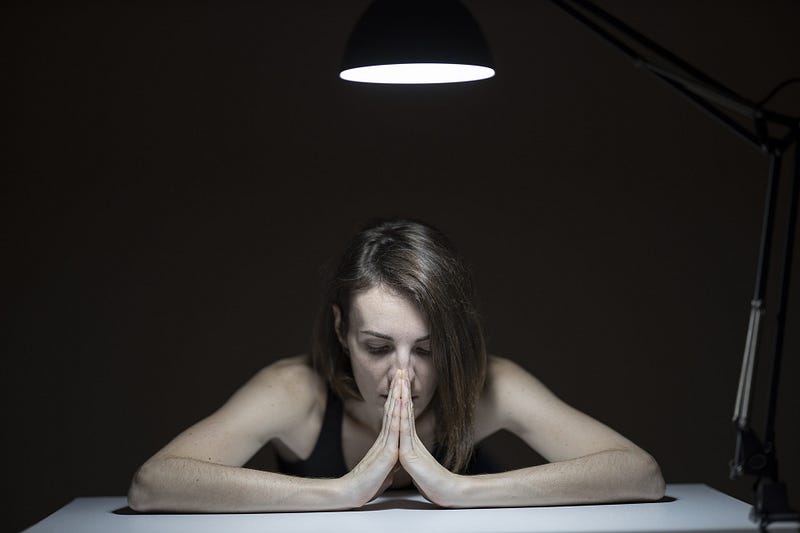
Since I am an imperfect atheist, it makes me an imperfect believer. Emile Durkheim, a French sociologist and a rabbi, who studied Jewish practices for years, said, “Religion is society worshiping itself.”
I like to read religious texts sometimes — it gives me insights into how people used to think. It also raises questions and doubts in my mind:
What is praying?
If you have ever wished anything good for yourself — or your loved ones — in hard times, you have used the power of praying.
Praying is wishing to change the probability of events that may happen to you. In simple words, your wish to make your life the way you want it is a form of praying.
Everybody is guilty of praying whether they admit it or not. Anything from keeping your fingers crossed to visualizing an outcome is a form of praying.
A prayer does not necessarily need words, images, or thoughts. You create it inside your heart as an urgent wish. It is a pointed feeling.
Should you pray?
You should pray because it’s going to connect you to your deeper self.
Praying is not magic. It can allow you to become more regular in your wishing habits.
You can pray to any god or goddess. Your prayer will probably make a difference to you. You can pray to a stone deity, a golden god, a mountain spirit, the forest ghosts, the sea god, the six-legged god, the goddess with ten breasts, the elephant god, the monkey god, or any other god.
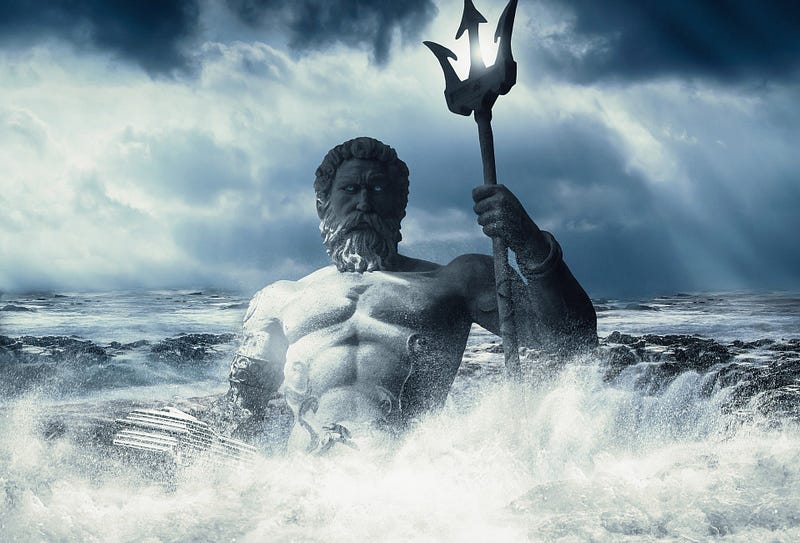
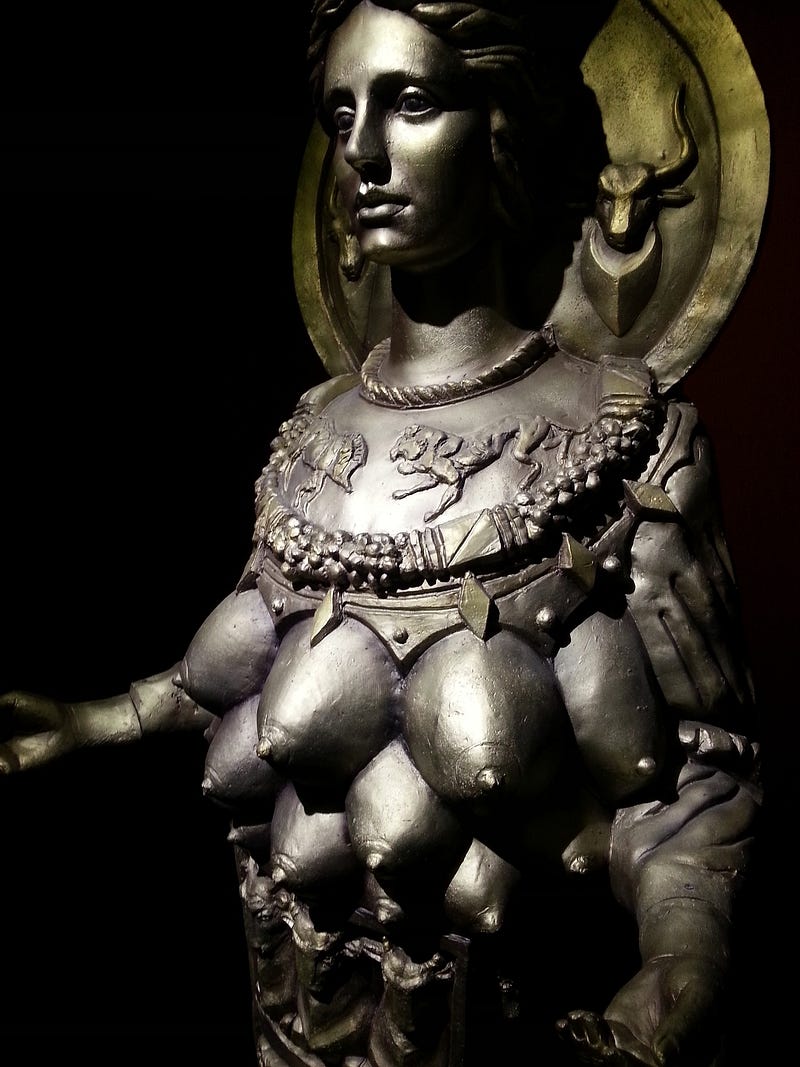
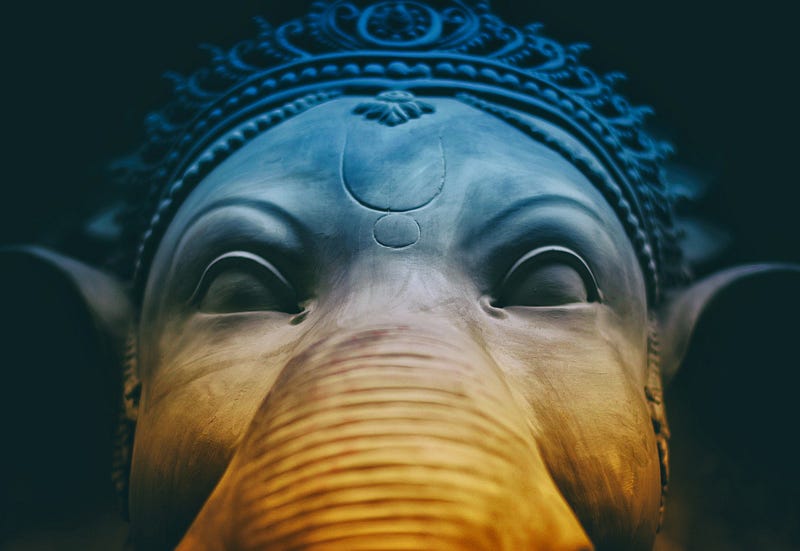
As long as you create a wish in your heart, and you can see it happening, there is a probability that it is going to work.
Your prayer never leaves your heart, mind, and body but it can have a positive effect. It triggers some kind of placebo effect in your body and mind.
Scientists and doctors don’t know everything about how our lives work. The Institute of Noetic Sciences published Spontaneous Remission: An Annotated Bibliography in 1993. Caryle Hirshberg and Brendan O’Regan defined spontaneous remission as “the disappearance, complete or incomplete, of a disease or cancer without medical treatment or treatment that is considered inadequate to produce the resulting disappearance of disease symptoms or tumor.”
The Remission Project cataloged the medical literature on seemingly miraculous remissions and the book is the most comprehensive database of medically reported cases of automatic healings. It had more than 3,500 references from more than 800 journals.
It is a record of what we wrongly call miracles — because the people healed due to scientific reasons. Since we do not know the exact scientific mechanism, we believe the healings were a miracle.
Similarly, we do not fully understand the scientific logic of how prayers can have any positive effects, and we may wrongly believe that praying is miraculous.
You should pray because it can have a probable positive effect in some cases by connecting you to your subconscious that may be connected elsewhere.
How should you pray?
One way to pray is to sit quietly like the Buddhists. Let your inner self speak to you about what it really needs and feel what your heart wants. When you are doing this, do not force thoughts or images.
But there is an even better way to pray — or I liked it more when I read it. Here is how I remember it:
In Rio, Paulo Coelho contacted a friend who could teach him a better way to pray. He drove to his office at around noon. He had to wait because his friend was busy with his work.
His friend took him for a drive. They drove in his vehicle for an hour or so. They were in the middle of nowhere when he stopped the car.
They got out of the car and walked for half an hour. They reached an open space where his friend started gathering stones to make a circle on the ground. When the circle of stones was complete, he took his shoes off and walked to its center. He looked up and smiled as if it was raining. His joy, the way he splashed the water with his feet in the imaginary puddles of water, the way he cleared the water from his face —it showed he was enjoying the rain. He invited Paulo Coelho to join him in the fun — and that is what he did.
Later that night, it rained — according to Paulo Coelho. I admit it seems magical, but it may be due to the butterfly effect — a scientific concept that resembles magic but is nothing more than a widely divergent final outcome resulting from slightly different initial conditions.
This anecdote is a way of saying how your actions — to change the probability of events happening around you — are a way of praying.
It is the best way to pray: act as if what you want is happening.
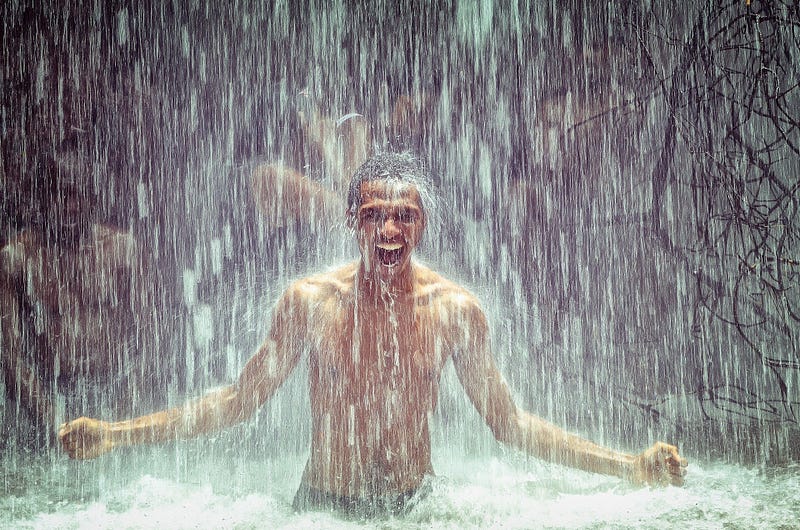
How do you connect with the Universe?
Do you think you can connect with the universe by holding somebody’s hand? Or do you think you need to get into a mystical trance?
Think about it. Do you believe a tree is a part of the universe? Do you think the moon or the sun is a part of the universe?
“A human being is a part of the whole called by us universe, a part limited in time and space. He experiences himself, his thoughts and feeling as something separated from the rest, a kind of optical delusion of his consciousness.” ~Albert Einstein
If you think that you are not a part of the universe, then you’ll have to do something to connect with it.
If you realize that you are a part of the universe — like a tree, the moon, or the sun — then understanding the connection with the universe is going to be easy.
When a thing is a part of something bigger, it naturally develops a connection with the rest of the system.
For example, a human cell can exist in a petri dish in a lab. But when it is inside our body, it communicates with the rest of the body using hormones, nutrients, gases, and other chemicals. Every human cell abstractly knows what its function is and how long it is going to live.
Just as a cell is a part of a human being, every dead or living thing — including you — is a part of the universe.
We have a connection with the rest of the universe that we do not fully understand yet. When we wish for something, the universe abstractly knows we want that thing.
Using the analogy of a human cell, when the cell needs something, it creates specific chemicals to let the body know what it needs. Every cell communicates in a similar way. So when a lot of cells respond in the same way — say all of the cells require more water — we start feeling thirsty. The thirst makes us drink water. Ultimately, the cells get what they want.
We are a part of the universe — and what we want and how we act — affects the rest of the universe.
For example, if you want to start a business, you work hard to create a product. You try to find investors. Next, you try to reach your potential clients. On every point, your intelligence, intuition, creativity, your friends and family, selective perception, focus, and some other aspects of reality — that we don’t understand fully — help you to achieve what you want. If you pray for your success, you will use your subconscious mind —to keep your spirits up by blocking some of the negative thoughts — and that can increase the chances of your success.
“If we examine the various ideologies that tend to divide humanity, such as racism, extreme nationalism, and the Marxist class struggle, one of the key factors of their origin is the tendency to perceive things as inherently divided and disconnected. From this misconception springs the belief that each of these divisions is essentially independent and self-existent.’’ ~ Physicist David Bohm
Another example: how does a tree pray? A tree starts its life journey from a seed. When the seed is in the soil, its DNA interacts with the nutrients, oxygen in the air, and water in the soil. From the tree’s point of view, it wished to have nutrients, oxygen, and water, and the universe listened. When the seedling comes out of the seed, and the nutrients stored in the seed run out, the small green leaves of the plant start producing energy through photosynthesis using the sunlight. Again, for the tree, nature gave it a ‘new ability to produce food and stay alive.’
In The Universe, Dalai Lama explores the concept of ‘the individual’ in a scientific way using a Systems Perspective. He says, “dependent arisings, empty of inherent existence.” What he is saying is that a lot of things existed before we came into existence — so we have to be “dependent” and not “independent” beings. Think about the air we breathe, how mammals evolved, and how your parent met each other. Are you not a part of the universe?
Dalai Lama’s logic says we are not independent but a part of something greater —we owe our existence to this greater system. We cannot exist without it.
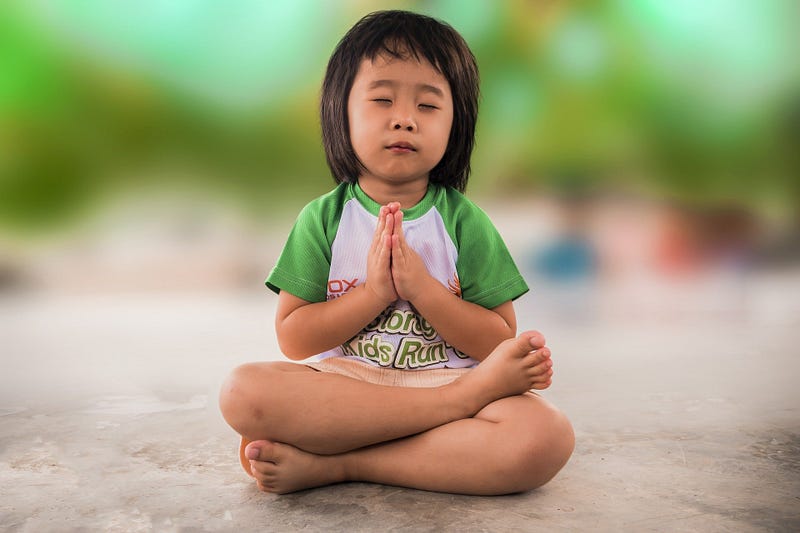
A non-believer doesn’t believe that she is a non-believer
A non-believer is simply a person with an open mind — someone who is willing to admit that she doesn’t know everything.
She doesn’t insist on believing or not believing anything. All a non-believer holds is that there is always a possibility of enjoying life despite what a few people said thousands of years ago.
A non-believer is essentially a human being trying to live in the present century.
Reali ty is not to be found in ancient texts anymore. For example, a famous quantum physicist Niels Bohr said, “Everything we call real is made of things that cannot be regarded as real.” Einstein complained about quantum mechanics, “No reasonable definition of reality could be expected to permit quantum mechanics.”
But quantum mechanics is very accurate in laboratory experiments and even Einstein wished reality to be more predictable.
If physicists don’t know the nature of reality, how can a simple non-believer say anything with full certainty? Nature reserves the right to change its mind and so do you.
Is it okay to pray if you are a non-believer?
A non-believer must pray — or wish strongly — because she knows that only her actions — which include ritualized visualization— are going to change her life.
Believers often live in fairy tales. They may believe that mere ritualistic chanting can change their lives.
A non-believer — or a believer — must realize that praying is a personal practice. Our prayers are our private expressions of what we want in our lives. Prayers go nowhere, but they can have a positive effect.
Prayer is a way of connecting to your subconscious mind. It can trigger selective perception and alter your behavior. It can change how you respond to life events. It can help you take action.
I don’t want to be an atheist because atheism is a religion as well. When you say something with dogmatic certainty, without proof, it becomes a religious doctrine. Firm faith in the uncertainty of the future is the only way to move forward in life. We are not sure, and it is okay not to be sure — it helps us to explore and know a bit more, and that is all that we can do.
Scientists are not against praying
A lot of people are praying these days, and scientists are saying that this personal practice may boost mental health. Amy Wachholtz, an associate professor at the University of Colorado Denver, says, ‘Praying lets you put down your burden mentally for a bit and rest.’
Gil Gaudia, Ph.D., Professor Emeritus, State University of New York at Fredonia, cautiously wrote in a paper, “Let me emphatically state that I do not criticize anyone for praying for themselves if they choose to. Nor do I deny that there may be benefits to some individuals that stem from prayer. These activities might stimulate subtle mechanisms of psychology and physiology which, when understood more fully, may add to the established benefits of medication and surgery, as they do in psychiatric illnesses. Along with placebo effects, the benefits of prayer may be the result of feelings of well-being, optimism, and confidence that result from praying and similar practices like meditation or relaxation. I agree, all of this may exist, and could, perhaps should, be a subject of legitimate scientific inquiry.”
Doubts are okay — A Prayer by Paulo Coelho
We often assume that prayer is not effective without firm faith in a god. But Paulo Coelho has a more creative and more mundane prayer for all of us:
“Lord protect our doubts because doubt is a way of praying.
It is what makes us grow because it forces us to look fearlessly at the many answers there are to a single question.
And to make this possible, protect our decisions, because making decisions is a way of praying.
Give us courage, after we doubt, to be able to choose between one way and another.
May our YES always be a YES, and our NO always be a NO.
Once we have chosen a path, never allow us to look back nor allow our soul to be eaten away by remorse.
And to make this possible, protect our actions, because action is a way of praying.
May we, through work and action, share a little of the love we receive.
And to make this possible, protect our dreams, because dreaming is a way of praying.
Make sure that, regardless of our age or our circumstances, we are able to keep alive in our hearts the flame of hope and perseverance.
And to make this possible, give us enthusiasm because enthusiasm is a way of praying.
It is what binds us to heaven and earth, men and children, and tells us that desire is essential, and deserving of our effort.
It is what tells us that anything is possible, as we are totally committed to what we do.
And to make this possible, protect us, because life is the only way we have of manifesting the miracle.
May the earth continue to transform seeds into wheat, for us to continue to turn it into bread.
This is only possible if we love — so do not leave us in solitude.
Always give us your company, and the company of men and women who have doubts, who act and dream and feel enthusiasm, and live each day as if it were totally dedicated to Your glory.
Amen.”
Takeaway
Praying is a personal practice that has been used by many great people who have lived happily in this world.
This personal practice is not miraculous, but it is the closest thing to a miracle that you can do daily. The visualization of favorable outcomes is a part of this process.
Let’s see how we can use this personal practice:
- You always pray to your own self even when you think you are praying to a god or goddess.
- Paulo Coelho encourages everyone to write their prayers — wishing your best for yourself and others.
- To pray, you don’t need to have firm faith and zero doubts. Doubting is a part of praying. Why would you need to pray if you were sure that nothing wrong was ever going to happen to you?
- Praying is a method of connecting to your deeper self.
- Praying rituals can make your wishing sessions more regular.
- Praying does not guarantee anything. It is only a way of changing the probabilities of events happening in your life.
- You can feel that you are connected to the universe if your prayers work occasionally.
- Knowingly praying to the part of the universe — that lives inside you — may calm your inner skeptic when all you can do through prayer is to change the probabilities of events ever so slightly.
- To be more relaxed, don’t forget to breathe deeply when you are praying.
Keep praying to yourself for all the good things that you want in your life, and keep doubting, to pray more.