
When you invite an African to your party
4 Approaches to the RSVP
You send a group text which reads: “Dear Friends and Family, please confirm your attendance for Adun’s birthday party so we can cater adequately. May 5th at the Marriot. Adults Only.”

A minute later, a member of the group responds: “Will attend with my husband and four children.” This text immediately got my goat, not because the writer clicked “reply all” when she should have only sent you her response, but that she ignored the “Adults Only” clause of the invitation and has decided to bring along her FOUR CHILDREN! She has also broadcast her disdain for party protocol thereby encouraging fellow brigands.
Arguably, Africans experience a clash of cultures when confronted with the ‘RSVP conundrum.’ There are several African protocols being broken when a celebrant requests that his/her guests respond to the invitation to indicate non/attendance. First, there is the mindset that attendance is confirmed upon receipt of the invitation. In other words, the celebrant should assume attendance unless the invitee is otherwise engaged. Or put in simpler terms — if you nvite me, expect me to show up; don’t waste my time with a request to RSVP.
Secondly, the African believes the invitation is open and therefore the invitee can extend it to whomever s/he chooses as is the case above. Or as was the case with Dr. Aderemi’s daughter’s wedding for which an invitee responded that he would bring along 16 others. This invitee then proceeded to inform their mutual association that Aderemi is giving his daughter in marriage and they should come support him; loads his guests into a 18-seater van; and drove all night to reach Atlanta in time for the ceremony. As the Yorubas say, Ka rin ka po, yiye l’on y’eni.

This open invitation phenomenon also covers the ‘party within the party’ phenomenon whereby a relative colonizes a table for his/her own guests at the party of another relative. S/he also selects their invitees aso ebi and caters for their needs separate from the celebrant’s provisions. A third element of the open invitation is timing. If you invite a person to your occasion, the timing should be open-ended enough to accommodate the invitee’s preferences not yours. In other words, if I cannot get to your birthday party until midnight, you should not write on your invitation that it ends at 11:00 pm prompt!
Thirdly, the request to RSVP invokes the fear of commitment. As soon as the card arrives, the invitee struggles with indecision. S/he thinks, “I may have to work that day.” “I am not sure I will be chanced to attend.” “What if something better comes up and I have already committed to this one?” Thus, s/he makes the decision — “Well, if I am alive, the sun is shining, I don’t have to work, I have childcare, my friend is available to go with me, and I have the aso ebi colors, I may attend. Thus, the invitee never responds one way or another.
Fourthly, there is late or never responders. They probably meant to respond but waited too late. So, they call the celebrant to say, “I’ll be there.” And the celebrant responds, “Sorry, the RSVP is closed.” And they say, “Don’t worry, we will be there.” Thus, the celebrant begins to worry how she will fit 400 people in a hall planned for 250.
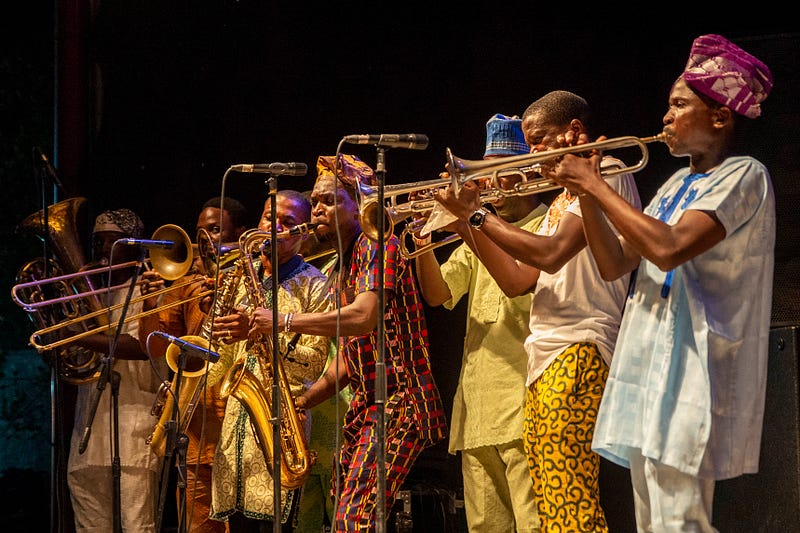
So, the celebrant gets slick and employs bouncers. And things are going well till the ‘Never Responders’ get to the table and don’t find their names. “There’s no Koleoso on the invite list,” the Bouncer notes. “Has my name been mispelt? You know, people often misspell our names in the West. Let me see.” After a quick perusal, “Here it is. I must have used my ex’s name because that’s how the celebrants know me.”
Africans set the rules attendance in accordance with what they consider proper for your kind of celebration. Children at a wedding? Yes. A packed hall to celebrate your 40th? Heck, yeah! Beefing factions occupying side by side tables at your father’s funeral? Of course. Even the dead will appreciate the drama.
Want to read more? Please subscribe.


