
When You Feel Like Life Is an Endless To-Do List
There are ways to press pause and take a more relaxed approach.

Bob was hiking in the mountains with his friends. He found he was suddenly alone. His friends had fallen behind again. Bob realized he’d been walking ahead by himself for some time.
His friends had been stopping now and again to pause, take some time, and appreciate the views on their way to the summit.
Bob’s sole focus was to achieve the goal without considering appreciation for the journey. His was an achievement-oriented mindset. This achievement-driven hiker is Robert Poynton, author of the book Do Pause.
This reminder to stop and pause got him thinking there was a life lesson to learn from this experience. I find myself in Bob’s shoes sometimes. I want to get from A to B without considering the space between them.
How much do we focus on our to-do lists, disregarding all the negative space between the busyness? Could the pause space between the tasks be the true sweet spot that brings flavor and joy to our lives?
Over the last several years, pausing has become linked with such negative associations as procrastination, reduced productivity, and underachievement. At what point did it become fashionable to be obsessed with non-stop achievement?
Could increasing technology be to blame? Is it this fixation we have to operate more machine-like? We’re not machines and aren’t designed to operate like one.
And if we’re in a place where we feel like we’re a machine, it’s time we slow down, even shut down, and possibly re-tool. In other words, take a healthy pause.
How to do it
I have an Apple watch. It has a feature enabled that reminds me to pause and breathe every so often. It even displays a bright spiral pattern that grows and shrinks to help regulate my inhales and exhales as I mimic the graphic prompt to match my breathing.
I used to find it annoying — a nuisance when it popped up randomly to tell me that even a minute of breathing could help me to focus better. I used to quickly hit the dismiss button and get on with whatever I was doing. I didn’t go as far as disabling the feature. Something told me I should use it someday.
I felt I was too busy for that nonsense. One day, I started a new habit by stopping and breathing when my watch prompted me — no matter what I was busy with. I do feel that even that short pause helps to reset me somehow. I’m sold. I now embrace that space to take a breather.
A pause can come in many forms. It can be time to read a short verse, ponder a question, play a puzzle game, or reconnect with an old friend for half an hour. Take a ten-minute mindful walk.
It’s just a pause in your current rhythm. It’s not about shutting off your thoughts but giving yourself space to pay attention to things you tend to overlook. This pause often allows your brain to problem-solve as your mind shifts, allowing new ideas to surface.
Improve your creativity by pausing
With almost any creative pursuit, pausing can make a difference and help enhance the process. There’s a substantial body of evidence supporting the vital influence that pausing has in the creative process.
There’s a book by creative director Jack Foster — How to Get Ideas, which provides firm and growing evidence on the impact of the pause as it relates to creativity. His data is based on interviews among various advertising disciplines, philosophy, and academic research.
The concept of taking time to disconnect is referred to in different ways, such as “incubating” and “mental digestion,” though it still boils down to a pause in the process. And it’s proven to be productive and fruitful in the end.
Practicing the pause
Pausing need not be lengthy to be beneficial. Short pauses throughout the day, even a few short minutes here and there, can make a difference. It may be challenging initially, especially for those conditioned to immediate-response pressure.
According to author Robert Poynton, this pressure is rooted deeply in an addiction plaguing modern society. In simple terms, it’s this notion that we need to keep always busy. Much like dealing with an overactive toddler, the treatment lies in distraction rather than expecting a slow down.
Pausing can be as simple as drawing a breath before responding to someone or some task. Unlike meditation, yoga, and other relaxation techniques, which require some instruction and time to advance, taking regular time to pause throughout the day can quickly become instinctive.
Pause right now…
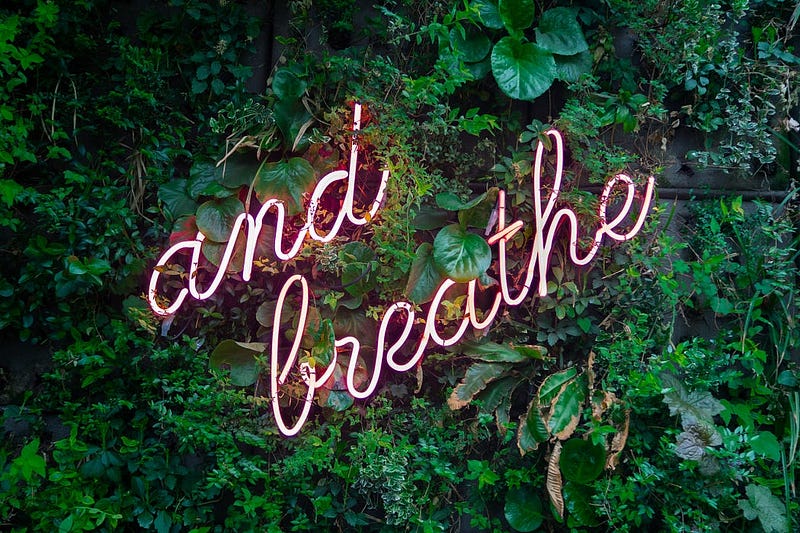
Begin today — taking a brief pause now and again requires nothing more than the conscious decision to stop, breathe, and distract your mind. Before long, with regular practice, you might discover a noticeable improvement in your creativity, focus, relationships, and gratitude. I certainly have.
Reference: Do Pause: You are not a To-Do List by Robert Poynton
If you find value, inspiration, or entertainment in my work, you can support me by clapping up to 50 times and signing up for email alerts whenever I publish. I promise not to be a pest.