
Travel / Guatemala
When You Climb a Volcano and See Everything You Missed
It wasn’t the landscape
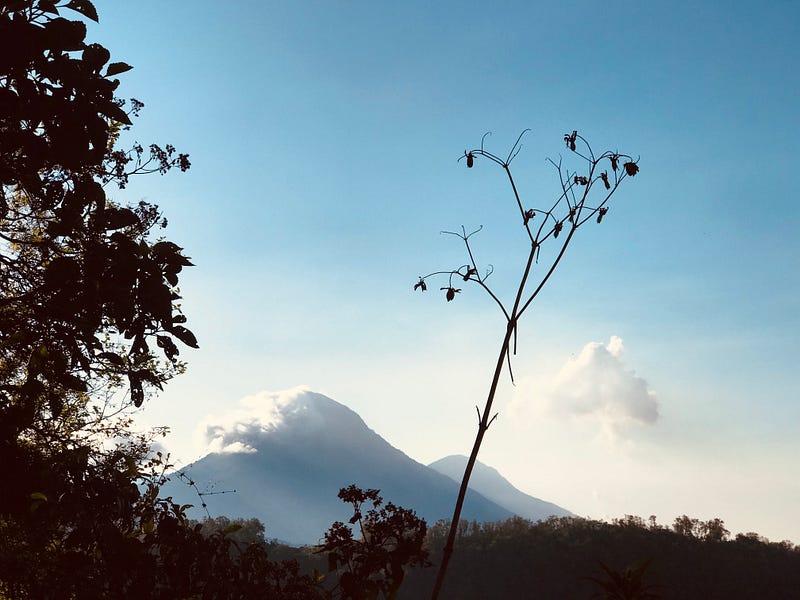
I climbed a volcano today. It wasn’t my first and it won’t be my last.
I’m no mountain climber, but I do like the outdoors and a challenge and I have managed to find my way up to a few volcanoes around the world.
I’ll tell you some of them so that you’ll be duly impressed: Cotopaxi in Ecuador, Batur in Bali, Garibaldi in British Columbia, Baker in Washington State, Meru in Tanzania, Nevado del Ruiz in Colombia, Haleakala in Maui (ok, I drove up that one) and most recently, Chikabal in Guatemala.
I don’t know what it is about volcanoes but something about the way they are different from just mountains and the way they are named and reverentially spoken about, adds to the allure of climbing, nay, conquering them.
And even though that’s the verb I chose to use here, they will still be there — towering as sentinels over all they survey, long after I am gone.
Maybe it’s because they could erupt at any time. We’ve all seen what happens when they do: a huge plume of smoke rises into the atmosphere, disrupting flights and people’s ability to breathe, half the mountain turns into a mudslide, taking homes and villages with it, or lava flowing out in an oozing, angry, orange river.
None of those things have happened on any of my ascents. What I remember about all of them is going up. And up. And up. And finally getting there and being rewarded with the most incredible view and feeling of accomplishment to go along with the struggles to breathe in the thin air at that elevation.
You have to be prepared. Walking up it is actually the easy part. You are rested and fresh. It’s coming down that is hard, when you are neither of those things anymore. Your knees probably won’t thank you.
Chikabal, near Quetzaltenango in the western part of Guatemala near the border with Mexico, is a sacred place for the Mayan Culture since well before the arrival of the Spanish in the early 1500s. Around the Laguna Seca, the lake that exists in the crater of Chikabal are thirteen Nahuales, a sort of Mayan altar, each representing a different element in their worldview.
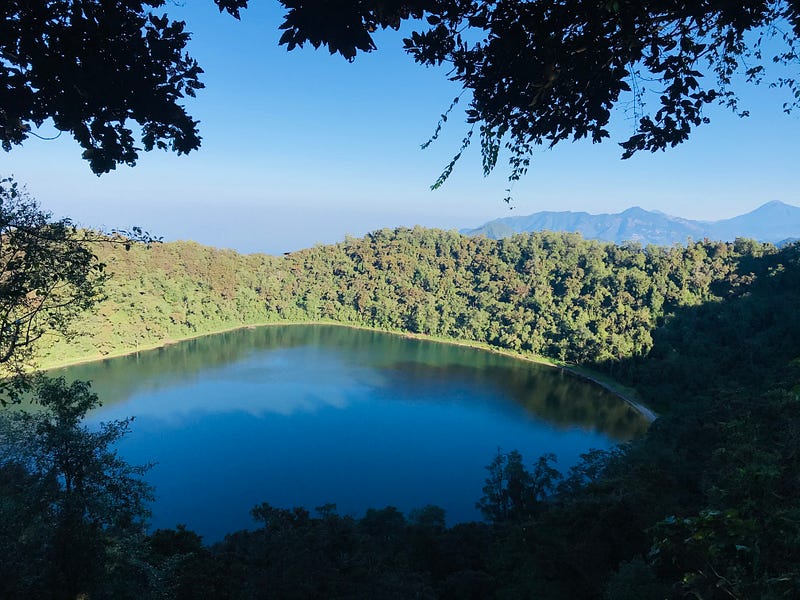
Our guide, Daniel, a member of the Ki’chi’ke culture explained this to us. While he was speaking about the Mayan calendar, the human body, and the importance of the maintenance of languages, a thought hit me like a brick. I had spent 3 weeks in the heartland of the Mayan civilization and had learned nothing about it.
Instead, I spent my time and energy in intensive study of yoga and the teaching of it — an ancient Indian philosophy and approach to life that had been imported into this part of the world for little more than financial reasons. The same can be said for all the sound healing, ecstatic dance afternoons and mushroom journeys that can be found around Lake Atitlán. The ayahuasca thing might be legitimate but I have my doubts that it comes from this part of the world, at least in the way it’s presented to customers nowadays.
Why have all these other belief systems been imported to Guatemala and the tourist trail, to the exclusion of Mayan culture? The local population is clearly interested in the maintenance of the culture and one sees it outwardly in the way they speak and dress, but the tourist / traveller / seeker crowd is clearly not. Would it be that difficult to monetize it in the same way that these imported belief systems have been?
And then you look at it on the other hand. Maybe this is a good thing for the Mayan Culture, not to have their beliefs and way of life commodified, commercialised, trampled and bastardised. Maybe it’s a good thing that it remains their own and that the masses have not been persuaded to take an interest.
For instance, the type of yoga that is practised in the western world has very little to do with its origins in India. It has to do with using breathing to calm the unstilled mind so that one can deal with the ego and get to a closer understanding of the True Self. It is far less about stretching, working out and twisting your body into impossible positions while getting the heart rate up and sweating as though it were a gym workout.
Similarly, to make the Mayan culture monetizable and palatable to westerners, it would probably have to undergo the same profound shift. As a result, it would become unrecognisable.
It would never happen that anyone would go to India to learn about Mayan history, culture and beliefs. Why did I go to Guatemala to learn about ancient Indian traditions?
I told Daniel this and he laughed, knowingly.
This is what climbing a volcano in Guatemala gave me today.