
When White Power is Threatened It Responds
Try not to be a part of its voice
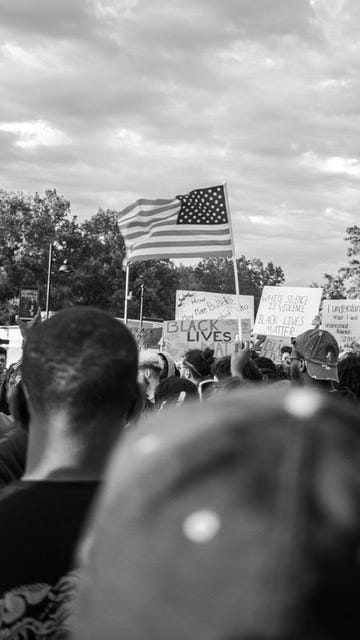
First, let me be clear that the subsequent references to #BlackLivesMatter do not refer to the Black Lives Matter organization whose policy stances may or may not be to everyone’s liking. It is too bad that I have to give that disclaimer, but there are those out there that will rush to denounce that organization and perpetuate theories about it to dismiss my points. I am not interested in debating that in this piece one way or another.
However, before 2013, when #BlackLivesMatter popped up on the hashtag scene, nobody was talking about lives mattering at all. It seems though that the volume of its voice had awakened the sleeping dog of the white power establishment. Suddenly, #AllLivesMatter and #BluesLivesMatter popped up in response everywhere. Many people believe they are countering #BlackLivesMatter with rational arguments. Still, their very need to dismiss this hashtag, and it’s intended meaning is demonstrating the very heart of privilege and white power, which persists subtly. Its existence is easy to deny rationally by the seemingly “good” people who perpetuate them.
What is also ironic about these counter statements is their very reactionary nature. In other words, they fall in line as a response within the dialogue. As is the case with any conversation, personal or social, the meaning of the initial statement should be fully understood before a response is generated to ensure that it speaks to the initiator’s underlying purpose. But I have to ask myself, in the case of our current situation, what purpose do these reactions actually serve?
Of course, rationally, they all stand alone, and no sensible person actually disagrees with them individually. However, as I have stated previously in different posts, the issue is not rational. It is relational, and the meaning of the statements are only truly understood in their relational context and where they fit in the theme of the conversation they are being placed in. From that perspective, these reactionary responses are nothing more than defensive reactions from a collection of people who are being threatened. Hmmm…but, what exactly is being threatened?
Before we go a little more in-depth on this issue, let’s consider one that is recently popping up across social media that looks like this:
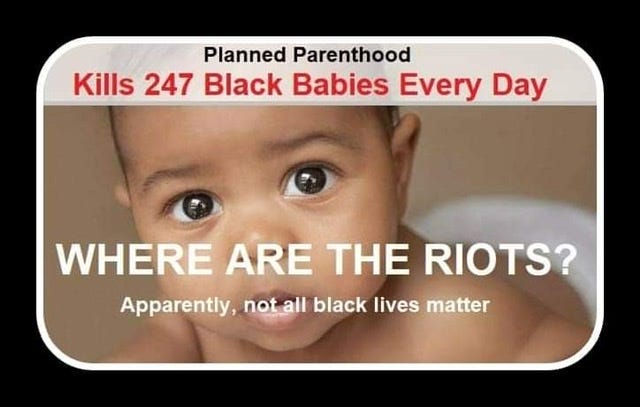
Why does someone need to take the opportunity to plug their pro-life beliefs into the conversation? Are you saying that the police are systematically aborting black babies, and we are missing that point? Is the criminal justice system in cahoots with Planned Parenthood to eliminate the Black Race? If so, please, tell me more. But again, it doesn’t make sense and is nothing short of an attempt to discredit the #BlackLivesMatter message, especially as it relates to the law enforcement and criminal justice systems.
The above example exemplifies how white privilege hides behind a rational argument in society and is easy to get caught up in. However, it is futile and a waste of time to argue with these ridiculous rebuttals because those that are sending them out are not intending to understand. What these people are doing for the rest of us who want dialogue is placing themselves in the society’s Petry dish and allowing us to see under the microscope exactly where the privilege and power exist so that we can expose it and find the immunization for this social virus.
The core issue that #BlackLivesMatter is calling attention to is one that stands alone. In the cultural narrative taking place on social media and in person, this is a crucial point to understand in order to have a quality dialogue. These other topics do not belong in the conversation. “Listen to understand, not listening to respond” is the rule right now.
When my wife comes home and complains to me about the mess I have left on the counter despite several conversations about that very issue, it is not going to help if I simply say, “Yeah, well, you leave your clothes in a pile on the bedroom floor.” As a matter of relational fact, this would be the wrong thing to say, for it would be dismissive of her concern and its meaning and is only done so as an attempt to kill her argument.
The Evolution of the Conversation
We have to wake up to the evolution of this conversation. From my lifetime, we had groups in the ’80s like NWA, who used music to expose their experience with the police in their communities. Does anyone remember the letter they received from the FBI? The establishment responded by setting out to censor them and other various groups that were labeled as vulgar or offensive.
Think about it, rather than pay attention to what they were saying, the establishment simply set out to censor art! How absurd and scary is that? You can be as offended as you want about the language and descriptors someone uses, but do not allow that to take away from the meaning of the message. One thing is for sure; they weren’t writing fiction.
Then we all saw Rodney King’s beating on video in ’91 followed by the officers involved getting acquitted. As outrageous as that was for many people, the average white person had a perplexing moment, then went back to their day-to-day living. With the dawn of the smartphone, we see daily for the past several years, our Facebook and Twitter feeds filled with singular incidents that we justify or rationalize away, like my mess on the counter. But still, we haven’t taken it seriously enough, and we remained desensitized to it. Perhaps if white people could relate to that kind of treatment, like virtually every black person alive can, we would have risen sooner. But yet again, complacency struggles to get re-established.
Continuing in our modern era and Colin Kaepernick starts to kneel to protest these same incidents and rather than take his action as an opportunity to engage in a conversation involving his obvious reasoning, the establishment once again, responds loudly in defense of the flag and makes it all about disrespecting the military sacrifice, while dismissing what it truly stands for which more importantly, are the rights won by the military sacrifice. Though that sacrifice is undoubtedly embedded in the flag’s meaning, the sacrifice itself is wasted if not for the freedom it bought. But the establishment, and its citizen cronies who claim ownership over what it means to be a patriot, decided that they owned the flag and the meaning behind it and have declared it a weapon. They have asserted their power to say to the rest of us what it means and that anyone who exercises their unalienable rights under the flag is less American and acts disrespectfully.
Perhaps maybe, these Facebook flag defenders, many who are the same people shouting “All lives matter,” are the people who are doing the most to dishonor the flag because they are the ones who have weaponized it and declared it theirs to define for the rest of us. They are the ones who have drawn a line in the sand and claimed that their value in the symbol’s meaning usurps another’s inalienable right for which it stands. The problem is not so much that they have strong beliefs about that meaning, but because they dare to tell another that their freedom under the flag isn’t valid because they are personally threatened or as they would put it, offended.
Ultimately the flag stands for freedom, and when a whole people group who are under it don’t experience America the way you do, then why do you get to decide what it stands for? Freedom itself opens up the door for differences and dialogues. Oppression shuts the door on anything that doesn’t fit its comfort zone. The responses like those given to Colin Kaepernick are the ultimate threat to freedom, but they are subtle threats because they are embedded in seemingly rational arguments. Arguments that leave out the meaning of the one with the original concern or the protest. It’s quite narcissistic when you think about it because those reacting to the various protests I have outlined are the white establishment; they get to decide what it means to be American and rule out anyone they are threatened by, which exemplifies power.
More Day to Day Subtlety
I was in a small Michigan town this weekend. We were at an ice cream shop, and in the back were six pick up trucks, each with full-sized American flags mounted on the back. As they sped off and dusted the gravel parking lot, I felt something sick. My son and I both noted the irony. Of course, I can not directly accuse and prove anyone who waves the American flag proudly that they are doing so antagonistically, I myself believe our country is great. But as they sped off, the Trump flags and stickers that accompanied their decor would tell the rest of the story. They think they are standing for something, but what they are doing is responding to something in a way that eliminates dialogue and claims ownership of the symbol for their use only.
As people double down on “what the flag means,” I can tell you what they won’t admit; they won’t admit that they are scared. Their white power is being threatened. They are quick to dismiss racism and systemic systems, and the funny thing is that they can because they are white and control the narrative. It’s not that they shouldn’t have an opinion; instead, they should keep it in their bubble when presented in a divisive way, and when it doesn’t stand in solidarity with other people’s fundamental rights. Collin Kapernick presented no threat to anyone’s freedom in his stance; however, he was villainized. The voice that villainized him, in an attempt to avoid dealing with his reasoning, called him UnAmerican. They tried to make us believe that somehow, by kneeling, he was disrespecting our fathers and grandfathers who fought in wars.
This counter-argument continues to persist, but it doesn’t belong in the current narrative because it comes from a short viewed perspective that refuses to include another person’s experience. Currently, those trying to lend a voice to the oppressed are met with arguments that bring up things like abortion, the flag, Black on Black crime, or “Not all cops are bad.” You should leave all of these out of the conversation. Quit diminishing the core argument.
Trauma is the framework, and America’s story is one of Trauma. In this story, there is a victim, and that needs to be more than acknowledged; it needs to be understood. An entire race of people has the need to go back and be validated. To tell their story and have it heard. You can’t relate. Don’t try. Just listen. Imagine what it might be like, empathize. Quit trying to rationalize why it’s not that bad. It is infuriating for anyone to hear, “You shouldn’t feel that way.” it is suffocating, but somehow it is how many continue to respond.
“Every day, I wake up and have to worry about my son, my grandkids, etc., and what might happen to them if the police confront them.”
This is not some random isolated quote from “a” Black person. This is a quote that I have heard too many times to count. When you hear about these types of experiences in the news or social media, do you think that the individuals saying it are just being dramatic? The fear is real, and a considerable population of people have been expressing this fear for decades. Actually, maybe not as long as you might think, after all, they really weren’t allowed to publicize those feelings previously except among themselves. Yet you still think it’s just about hard work and bootstraps. You think they are merely doing it to themselves.
If you have read this far, thank you! I would love to hear your feedback, have a discussion, or debate these concepts. Let’s connect at, PsychologyToday, Facebook, LinkedIn, Twitter or shoot me an email at [email protected]


