
When What Goes Up Comes Down Like a Pile of Dishes
Becoming mindful of my mindfulness — or lack thereof

My body woke me up naturally today. And I’m awake enough to resist the invitation of more sleep. Such a rare treat to behold. This extra hour before my alarm is due to throw me off this Titanic into the icy plunge that is my waking life is bound to be used wisely.
I will get up, make my bed, light a tea candle to burn some essential oil and stick the kettle on for my medium-strong French-pressed coffee like I always do. I’ll then sit at my desk and write as many pages of consciousness as I can to mentally declutter before the big day ahead.
I’ll stretch out my body, as I have been meaning to try some new yoga positions to help my lower back cope with sitting at a desk all day. And after jumping in a hot (then cold) shower, I’ll feel refreshed enough to tackle the literal mountain of washing up before cooking a healthy breakfast.
At least I would have done these things if the million other things to do today hadn’t already hogged all of my mental space.
And just like that, the hour has already flown by, and here I am still under the blankets, being used as a battering ram for the unyielding flood of phone notifications and mental to-dos I had woken up to.
This is not a story on “how to meditate”, it’s one about how to find the importance in certain mindfulness practices enough to place them above the barricade of other things occupying your mental to-do lists.
Sometimes you have everything all worked out. Your morning and evening routines are synced up to each day, your social and work lives sing in perfect harmony, and all of your “ducks” are lined up in rows along a ruler’s edge.
But then suddenly, you wake up one day only to realise the idyllic lifestyle you have built has somehow slipped away overnight. And you are now faced with those same bad habits you once lived with before beginning your mindfulness practice.
Suddenly you are struggling to identify with yourself. The one that doesn’t keep to their promises to themselves.
Suddenly you feel like a failure for not being able to keep on top of things.
Suddenly those things are now on top of you.
Despite writing about it in hopes of getting myself back into the groove of my daily practices, I still haven’t been able to bring myself to write my morning pages for weeks.
And despite writing here about my pile of dishes, it wasn’t until a few days later — when they grew into an actual dish mountain — that I managed to dismantle it and tackle each grotty chunk.
This was one chunk of the damage:
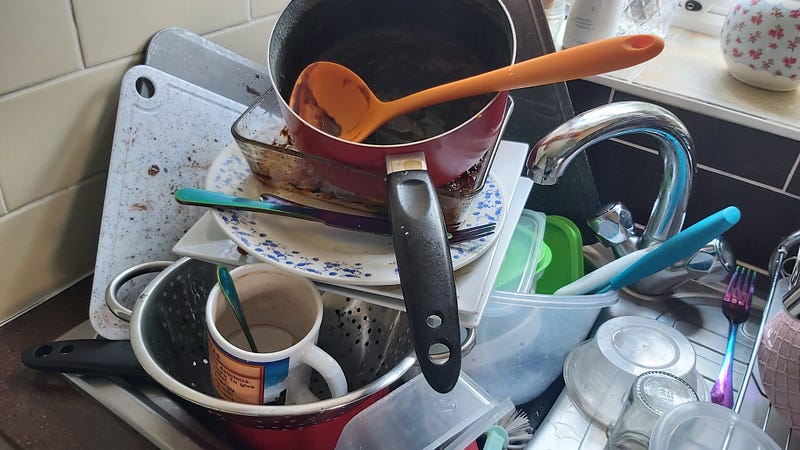
I did warn you… I even managed to break two plates and a bowl due to leaving chunks on the counter stacked in such a precarious way. Not my proudest moment.
Being conscious that I sensed myself slipping is the first step. The ability to be still in moments to mentally check in marks the beginning of reclaiming power over the situation.
Becoming mindful of my lack of mindfulness allowed me to identify the things blocking me from being the version of myself I aspire to be.
It became overwhelming to resume my routine fully again. The best thing I started doing for myself was working out small actions I could take to get back to that place again. The easier the actions, the quicker the journey.
I stopped using my mobile phone as an alarm clock and replaced it with a cheap battery-operated one.
I placed my phone on the table (and on aeroplane mode) on the opposing side of my bed and treated it like a hot potato until I had finished the more urgent things on my to-do list.
I made damn sure that I completed my self-care and home-care to-dos before sitting down to start my workday, as I usually get sucked into a writing wormhole once I start. I can’t break from it sometimes.
Sometimes we can’t catch ourselves. Sometimes the plates fall and break. and that’s ok as long as we’re able to collect the pieces (both figuratively and literally) so as not to let them harm us.
Recovering from lapses like this takes time. I learned that the last thing I should do is force the process along and torture myself with negative self-talk.
Quick fixes may feel like they work, but you are only trying to cover dampness on a wall by painting over it.
For long-term change, you need to think long-term and put yourself first.
It’s as simple and straightforward as that. But we all need time for it to feel that way.
Are you a writer looking for your tribe? Love to read? Want full access to Medium? I’ve got you covered.


