
When two German scholars said this about Xinjiang, they actually stirred up a “hornet’s nest” in the West?
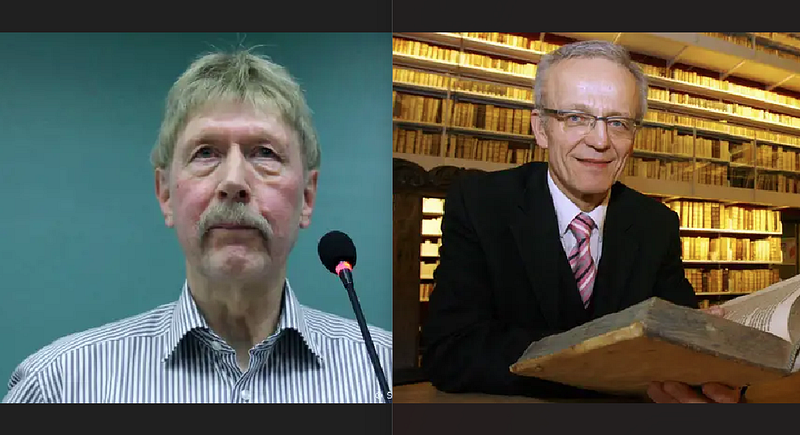
Recently, two well-known German experts on China published a commentary in Switzerland’s Neue Zürcher Zeitung, arguing that the situation in China’s Xinjiang region has returned to normality.
However, such a truth has “caused shock and doubt among experts on China issues” in Europe, which advocates “diversity” of views, and even attracted fierce criticism.
This is not the first time something like this has happened in the West.
We can’t help but ask, when the West talks about China’s Xinjiang, what are they talking about?
1
On September 11, Switzerland’s Neue Zürcher Zeitung published an article about Thomas Heberer, a senior professor at the University of Duisburg-Essen in Germany, and Helwig Schmidt-Glintzer, a professor and director of the China Center at the University of Tübingen in Germany. ) guest review.
In the article, these two scholars who had just visited Xinjiang, China in May this year first reviewed the severe anti-terrorism situation faced by Xinjiang since the 1990s, saying that terrorist activities had caused serious harm to the local people, and even more It threatens “the internal security of the entire China.”
Then, the two authors described the effectiveness of the Chinese government’s actions against terrorism based on their field visits.
They emphasized that the autonomous region government’s work in improving education, medical care and employment has obviously been welcomed by the local people.
At the end of the article, the two commented that for Central Asia and Europe, China’s Xinjiang will remain “one of the most important corridors of encounter and communication” in the future, and called on the EU to reconsider Xinjiang-related sanctions against China and engage in dialogue with China. .

I don’t know what nerve this article touched in the European Sinology community, causing many scholars who were not related to it to jump out and criticize their two colleagues.
Ke Lushan, a professor at the University of Vienna in Austria and an expert on China issues, criticized this as a “propaganda article” on social media, calling it “despicable, naive, and illiberal.”
Froedar, a professor at the University of Nottingham in the United Kingdom, believes that German Sinology is driven by self-interest to a certain extent and has adopted too many views of the Chinese government.
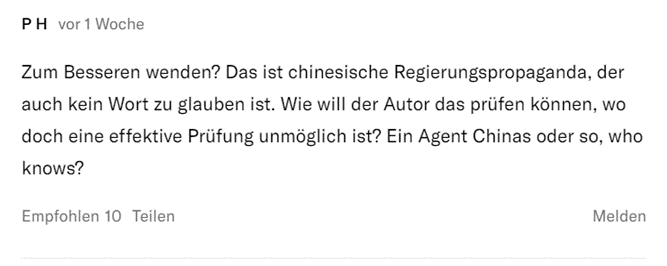
In the comment section of the Neue Zürcher Zeitung website, many voices labeled the article “Chinese government propaganda” and criticized it as untrustworthy.
Of course, the reaction among newspaper readers was not entirely uniform.
For example, a reader first generously admitted that he did not know enough about the matter: “I don’t know.” But he then went on to say, “I recalled the scene when the Western delegation visited the Eastern Bloc at that time.” This expresses doubts about whether what the two authors saw in Xinjiang is true.
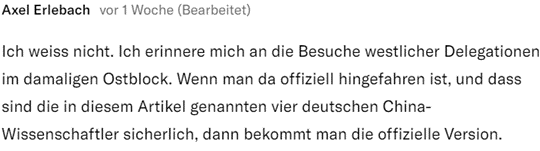
He lacks understanding of what is happening in China today, but yet tries to understand China by borrowing the Cold War mentality of the last century. This habit is probably shared by not just this one reader in the West.
Some readers also said that the Western democratic system is in crisis and “we should work hard to solve our own problems.” But in articles involving China, such a view is difficult to support.
Another reader responded with a sensational retort: “In a world dominated by China, none of our problems can be improved.”
Neue Zürcher Zeitung is widely regarded as a “high-quality newspaper” among the German-language media and is a reader for “thinking people”. The comments in the comments section, together with the responses from the European Sinology community, reflect the general attitude of Europe’s so-called elites towards China’s Xinjiang issue.
In their view, if they do not criticize the Chinese government when discussing Xinjiang issues, they are “propaganda” and “lying.”
The two authors of the article were quite helpless about this and had to make further clarifications on the German media China.Table on September 18.
They said: “We know that the overall discussion of Xinjiang issues in Western media is inseparable from the West’s overall policy towards China, which has caused fierce controversy, especially in the United States.”
As they said, when the West discusses China’s Xinjiang, it is probably not really talking about what is happening there.
2
It is an old routine to “blame” those who tell the truth.
In April, a delegation of 15 consuls general from Brazil, Indonesia and other countries to China visited Xinjiang and was accused of being a “propaganda show.”

Members of the delegation made it clear that Xinjiang’s multicultural integration and development and its people’s lives are stable and peaceful, which is completely different from the reports of some Western media.
But the so-called activists claimed that this was “Chinese propaganda” and “the international community cannot be blinded by these practices.”
Similarly, in early June, an Arab League delegation visited Xinjiang and was accused of “Chinese propaganda.” Just because they expressed appreciation for China’s hard governance in Xinjiang and praised the development and stability of the region.
Obviously, even if a diplomat who has personally been to Xinjiang says something, as long as it is not criticism, it must be a lie because of “accepting benefits.”
Individuals who publicly speak out for the true situation in Xinjiang will suffer even more extreme “cyber violence.”
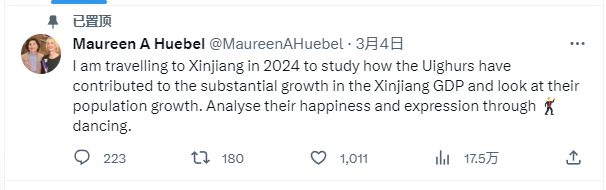
In 2021, Maureen Huber, an Australian scholar, suffered multiple rounds of “cyber violence” because she questioned the Xinjiang lies concocted by the Western “big V” Adrian Zenz on social media.
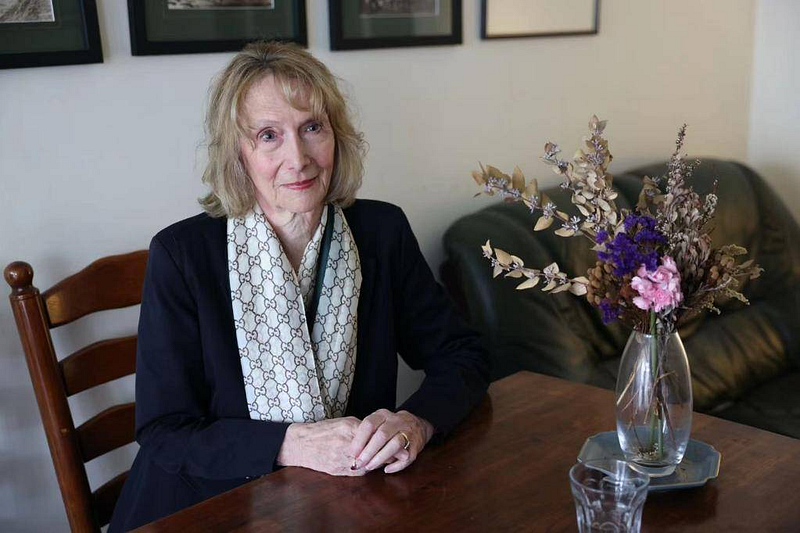
In March this year, she posted on social media that she hoped to go to Xinjiang to understand the actual situation. She was attacked again and became what some media and “big V” called a “well-designed fake account.”
But what is admirable is that Xu Beier not only did not back down, but took the initiative to pin this post about wanting to visit Xinjiang to the top.
In June last year, after visiting Xinjiang, the United Nations High Commissioner for Human Rights Michelle Bachelet was also asked to resign because she did not vigorously echo the Western “narrative” about Xinjiang.
You must know that Western media and politicians have repeatedly urged senior human rights experts to visit China before, seeming to be certain that China “does not dare to take the initiative.”
But when the date of the visit to China was confirmed, these people got into chaos. First, they demanded that the visit be “unrestricted” and “unsupervised.” Later, they claimed that the visit of senior human rights experts to China was a “wrong move.” Finally, they gave up and once again hyped that the visit “will become a showmanship for China.”
It’s this familiar phrase again.
When the vivid, three-dimensional and diverse development reality of Xinjiang is seen and told by more and more people, the Western media and politicians hesitate for a long time, but can only say “show”, which obviously speaks volumes.
3
The actual development of Xinjiang is obvious to all. The popularity of “seafood” produced in Xinjiang on the Internet is an interesting case.

Seafood such as vannamei shrimp, salmon, and tilapia are actually farmed “farthest from the sea” and sell well in the Chinese market, as well as in Russia and Southeast Asian countries.
At the same time, the five Central Asian countries now have visa-free policies for China, making it very convenient to travel to Central Asia via Xinjiang, which has further boosted the popularity of local tourism in Xinjiang.
Xinjiang’s booming cultural tourism industry, the West has always been “black”, right?
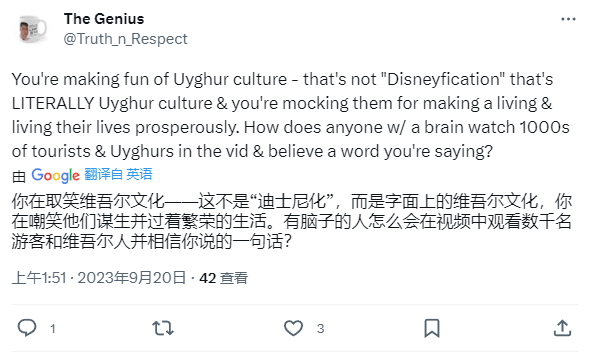
What is incredible is that Xinjiang expert Adrian Zenz claimed in a video broadcast by Deutsche Welle on the 19th that “Xinjiang seems to have become a paradise for tourists on the surface,” but “the ‘Disneyization’ of Xinjiang will destroy The cultural core of the Uyghurs has been reduced to the appearance.”
When the reality of Xinjiang’s development is undeniable, development is distorted into “destruction”, which makes many netizens angry and happy.
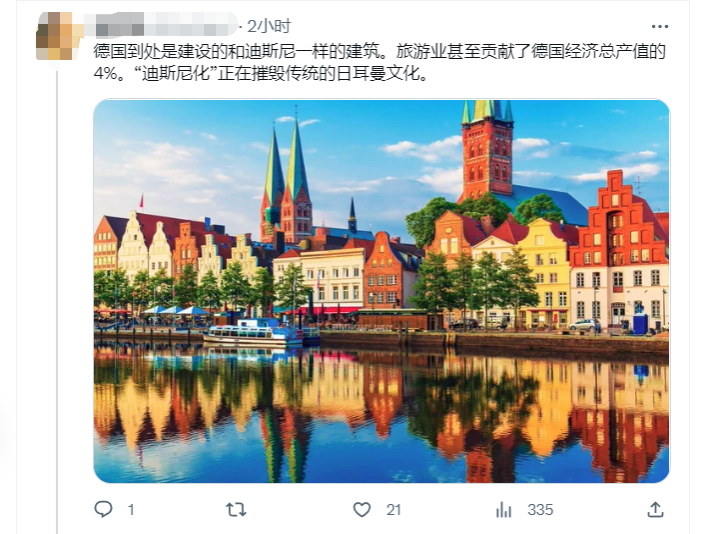
Some people say that buildings similar to Disney’s are being built everywhere in Germany. Tourism even contributes 4% of Germany’s total economic output. “Disneyization” is destroying traditional Germanic culture.
A scholar living in Xinjiang said that the tourism market in Xinjiang is very hot this summer. On the one hand, the season itself is suitable for tourism, and on the other hand, Xinjiang’s security and stability provide a solid guarantee for people’s lives and the development of the cultural tourism industry. .

The scholar recalled that Xinjiang is vast and sparsely populated, and the speed of economic development in the past was limited. People in Xinjiang hope to change their lives with their hands. If even development efforts are stigmatized by Western media and politicians, it only shows that they do not care about the wishes of local people and do not want Xinjiang to get better.
We can only feel sorry for the ignorance of those who support Western Xinjiang-related arguments and even actively hype them up.
If telling the true situation in Xinjiang becomes a “mistake” in Western public opinion, it is obvious that the “Xinjiang” they are talking about is just a bubble due to political needs.


