avatarAngela K. Irvin, Psy.D.

Free AI web copilot to create summaries, insights and extended knowledge, download it at here

2913

Abstract

ple are maggots, and he hopes we all die.</b></i></p><p id="a063">It wasn’t my first experience with racist or rude remarks. Still, my heart sank. It sank into the pit of my stomach. My mental health article had been politicized.</p><p id="6c63">So you know what I did? I deleted the comments and kept promoting my article. Because I didn’t write it for them. I wrote it to validate and empower people who are having a tough time. I wrote it in the spirit of social good.</p><figure id="7f97"><img src="https://cdn-images-1.readmedium.com/v2/resize:fit:800/1*35A3q1VEIrqdfwmZi7ASUg.jpeg"><figcaption>Image: <a href="https://unsplash.com/photos/zswLbyR_b58">Ehimetalor Akhere Unuabona/Unsplash</a></figcaption></figure><h1 id="77e5">The Spirit of Social Good</h1><blockquote id="291e"><p>“Writing isn’t about making money, getting famous, getting dates, getting laid, or making friends. In the end, it’s about enriching the lives of those who will read your work, and enriching your own life, as well.” ―Stephen King</p></blockquote><p id="814e">“Social good” refers to ideas and actions that promote a greater benefit for society. Much more than the occasional good deed, it is an encompassing mindset stemming from an empathetic desire to improve the human condition.</p><p id="8729">For this reason, I encourage people to write, regardless of their number of followers or skill level. I believe we all have something to share, and sometimes the message is more important than the level of eloquence with which we deliver it. In the spirit of improving the human condition, you never know when your words will hit the right person with the right message at the right time.</p><h1 id="164a">What Gives Me the Authority?</h1><p id="5b5b">Sometimes I receive push-back from people who are still figuring out whether they have the “authority” to speak out on certain topics. They ask, “Who’s going to care what I think? I’m just a nobody.”</p><p id="22c6">I’m always uncomfortable when people refer to themselves as nobodies, but for the sake of my next point, let’s go with it:</p><p id="89cd">In essence, we all start as nobodies. Every famous person was a nobody at some point. Being a nobody didn’t stop <a href="https://time.com/person-of-the-year-2019-greta-thunberg/">Greta Thunberg</a>, an ordinary teenager, from camping out in front of the Swedish Parliament with a handmade sign. Being a nobody didn’t stop her from becoming Time Magazine’s Person of the Year.</p><p id="cfd0">The takeaway: You don’t have to be a star for your voice to matter.</p><h1 id="cb14">Trolls Come With the Territory</h1><figure id="f581"><img src="https://cdn-images-1.readmedium.com/v2/resize:fit:800/1*57D8ibmksrZ-3rzS4I_N0w.jpeg"><figcaption>Image: <a href="https://unsplash.com/photos/mx94V7uE1eU">Mark König/Unsplash</a></figcaption></figure><p id="b280">Certain topics are guaranteed to attract trolls. Some of these topic

Options

s include:</p><ul><li>Social Justice (Race, Gender, LGBTQ, Immigration)</li><li>Women’s Issues/Reproductive Rights</li><li>Childhood Vaccines</li><li>Climate Change</li><li>Political Views</li><li>Religious Views</li><li>COVID-19</li></ul><p id="fd4e">Controversial topics should come with a black box warning: Don’t feed the trolls.</p><p id="43c8">Writing for <a href="https://theconversation.com/dont-feed-the-trolls-really-is-good-advice-heres-the-evidence-63657"><i>The Conversation</i></a>, Evita March discussed the reasons behind this cliché advice. She explained, “what really influences trolling behaviour is the social pleasure derived from knowing that others are annoyed by it. The more negative social impact the troll has, the more their behaviour is reinforced.”</p><p id="a743">Thus, the best way to deal with internet trolls is to deny them the pleasure of an emotional reaction. Ignore them (<a href="https://www.bustle.com/articles/121345-how-to-deal-with-racist-internet-trolls-according-to-franchesca-ramsey-of-mtvs-decoded-video">never respond!</a>), block them, and delete their comments.</p><h1 id="5105">Remember Your Purpose</h1><p id="1373">Having a sense of purpose serves as a beacon, guiding our actions toward higher goals. When our work aligns with our purpose, we approach our writings with a different type of energy. We are less likely to look for reasons we <b><i>can’t</i></b> do something; we focus more on the fact we <b><i>must</i></b> do something.</p><p id="22d7">As writers, we can’t allow trolls to distract us from doing our best work. The former First Lady, Michelle Obama, shared her family motto, “<a href="https://time.com/5459984/michelle-obama-go-high/">When they go low, we go high.</a>” This simple statement packs a punch. For me, it means never losing sight of my highest purpose. It compels me to continue sharing my words, despite the hate, in hopes they hit the right person with the right message at the right time.</p><p id="da19" type="7">“You have to act as if it were possible to radically transform the world. And you have to do it all the time.” ―Angela Davis</p><p id="ad10">Mentioned in this article:</p><div id="60d5" class="link-block"> <a href="https://readmedium.com/nine-ways-to-boost-resilience-during-americas-double-pandemic-938c2e9c671d"> <div> <div> <h2>Nine Ways to Boost Resilience During America’s Double Pandemic</h2> <div><h3>At the crossroads of COVID-19 + racism, self-care is crucial. But when discussing mental health is taboo, it’s hard to…</h3></div> <div><p>medium.com</p></div> </div> <div> <div style="background-image: url(https://miro.readmedium.com/v2/resize:fit:320/1*tfXV7nC88dx3NFhaTyhSuQ.png)"></div> </div> </div> </a> </div></article></body>

Hate Speech, Authority & Purpose

When They Go Low, We Keep Writing

Why you shouldn’t let trolls discourage you from speaking out.
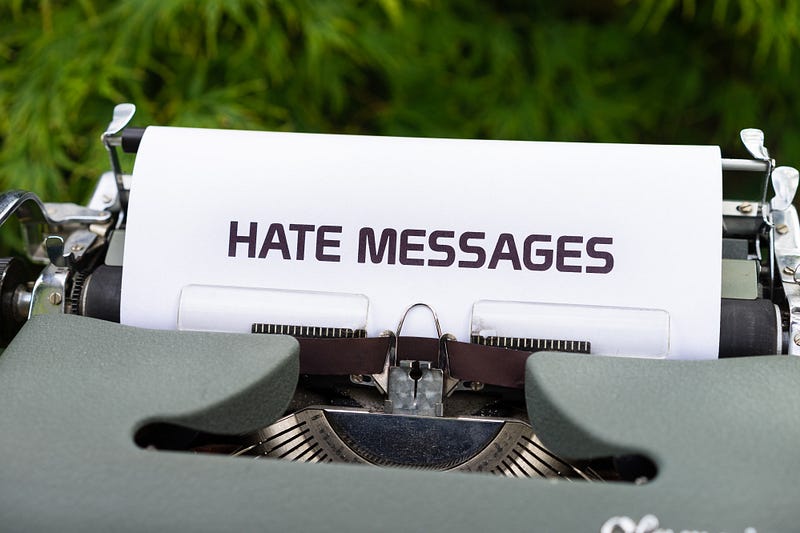
Image: Markus Winkler/Unsplash

“The purpose of a writer is to keep civilization from destroying itself.” ―Albert Camus

As writers, we have diverse motivations for putting pen to paper. Some may seek fame and fortune, while others seek catharsis. We teach, encourage, and entertain. We savor the moments when our stories go viral, feeling proud to say, “I’m a writer.” Other moments cause us to question that identity when our writings miss the mark, landing in a reader-less limbo. Regardless of which way it goes, we wake up each day with fresh ideas, ready to put ourselves out there again and again.

The first article I published on Medium was a research-based listicle titled “Nine Ways to Boost Resilience During America’s Double Pandemic.” The article provided self-care tips for people who are dealing with the double whammy of COVID-19 and race-related stress. It garnered a decent number of views (considering I only had four followers at the time) and was shared across social media. Not bad for my Medium debut.

But the experience was bittersweet. It reminded me of how I felt as a kid blowing bubbles for the first time. I remember dipping the bubble wand into the brightly colored jar, then blowing gently as I watched the bubble take shape. Once it freed itself from the wand, I watched with anticipation as it drifted toward the stratosphere…and then it popped.

My celebratory bubble popped when I started getting trolled on social media. Several people insisted COVID-19 was a hoax and ridiculed my reference to racism as a pandemic. Mind you, I didn’t coin the phrase. Racism as a pandemic has been discussed by several experts, including the president of the American Psychological Association. But I realize references are irrelevant for a person hell-bent on believing racism doesn’t exist. So I ignored them.

Then another person referred to the article as “fear-mongering.” Okay, that one stung a little. But I shook it off, still feeling pretty good.

The next commenter abandoned all pretense, expressing his racism directly. “Ur all maggots. I hope u all die.”

Note: In case you missed it, “Ur” and “u” was a reference to Black people. He believes Black people are maggots, and he hopes we all die.

It wasn’t my first experience with racist or rude remarks. Still, my heart sank. It sank into the pit of my stomach. My mental health article had been politicized.

So you know what I did? I deleted the comments and kept promoting my article. Because I didn’t write it for them. I wrote it to validate and empower people who are having a tough time. I wrote it in the spirit of social good.

Image: Ehimetalor Akhere Unuabona/Unsplash

The Spirit of Social Good

“Writing isn’t about making money, getting famous, getting dates, getting laid, or making friends. In the end, it’s about enriching the lives of those who will read your work, and enriching your own life, as well.” ―Stephen King

“Social good” refers to ideas and actions that promote a greater benefit for society. Much more than the occasional good deed, it is an encompassing mindset stemming from an empathetic desire to improve the human condition.

For this reason, I encourage people to write, regardless of their number of followers or skill level. I believe we all have something to share, and sometimes the message is more important than the level of eloquence with which we deliver it. In the spirit of improving the human condition, you never know when your words will hit the right person with the right message at the right time.

What Gives Me the Authority?

Sometimes I receive push-back from people who are still figuring out whether they have the “authority” to speak out on certain topics. They ask, “Who’s going to care what I think? I’m just a nobody.”

I’m always uncomfortable when people refer to themselves as nobodies, but for the sake of my next point, let’s go with it:

In essence, we all start as nobodies. Every famous person was a nobody at some point. Being a nobody didn’t stop Greta Thunberg, an ordinary teenager, from camping out in front of the Swedish Parliament with a handmade sign. Being a nobody didn’t stop her from becoming Time Magazine’s Person of the Year.

The takeaway: You don’t have to be a star for your voice to matter.

Trolls Come With the Territory

Image: Mark König/Unsplash

Certain topics are guaranteed to attract trolls. Some of these topics include:

  • Social Justice (Race, Gender, LGBTQ, Immigration)
  • Women’s Issues/Reproductive Rights
  • Childhood Vaccines
  • Climate Change
  • Political Views
  • Religious Views
  • COVID-19

Controversial topics should come with a black box warning: Don’t feed the trolls.

Writing for The Conversation, Evita March discussed the reasons behind this cliché advice. She explained, “what really influences trolling behaviour is the social pleasure derived from knowing that others are annoyed by it. The more negative social impact the troll has, the more their behaviour is reinforced.”

Thus, the best way to deal with internet trolls is to deny them the pleasure of an emotional reaction. Ignore them (never respond!), block them, and delete their comments.

Remember Your Purpose

Having a sense of purpose serves as a beacon, guiding our actions toward higher goals. When our work aligns with our purpose, we approach our writings with a different type of energy. We are less likely to look for reasons we can’t do something; we focus more on the fact we must do something.

As writers, we can’t allow trolls to distract us from doing our best work. The former First Lady, Michelle Obama, shared her family motto, “When they go low, we go high.” This simple statement packs a punch. For me, it means never losing sight of my highest purpose. It compels me to continue sharing my words, despite the hate, in hopes they hit the right person with the right message at the right time.

“You have to act as if it were possible to radically transform the world. And you have to do it all the time.” ―Angela Davis

Mentioned in this article:

Racism
Covid-19
Hate Speech
Trolls
Philosophy
Recommended from ReadMedium