When the Virtual Became Real
Sometimes people talk about “digital natives” or Generation Z (and now Generation Alpha) and their tendency to be more comfortable with the Internet.

But it isn’t inherently generational, nor is it about whether one grew up utilizing technology or came to it later.
Megatrend: Social Acceptance of Virtual Culture
It is about social acceptability, and how that has trended in a positive direction for the last several decades.
When I was growing up, playing video games branded me as a nerd (a label I wore proudly). Now, it would probably be considered a bit unusual for a kid to not play video games.
When I spent hours on online services and bulletin board systems, few understood what I was up to, or that I was interacting with real people.
When I met my future wife in an online game, we were weird outliers. Now, something like that is barely notable.
Social Acceptance is About Trust
Social acceptability means trust — that your counterparties in transactions, relationships, and experiences will also treat it as real.
Trust that you are participating in activities that many people will acknowledge the value of.
Trust that the institutions, capital, and industry to support it will treat it as seriously as any in the physical world.
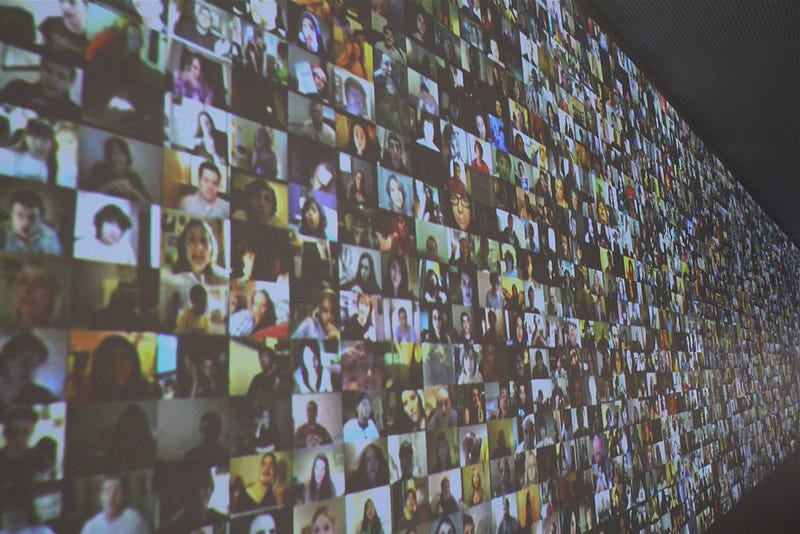
Virtual reality is just reality; friendships are real. Research has found that online friendships that last more than a year have only minimal differences from offline relationships.
Virtual currencies have real value to people. Amongst kids 4–14 in the UK, the top thing they save their pocket money for is Roblox and Fortnite. But it didn’t start with Generation Alpha — the most pronounced trend uptick in virtual-currency buying was amongst middle-aged women at the dawn of social gaming. Across this same period of time, cryptocurrencies were invented and went from “Magical Internet Money” to become a multi-trillion-dollar asset class.
Work From Home is Real Work
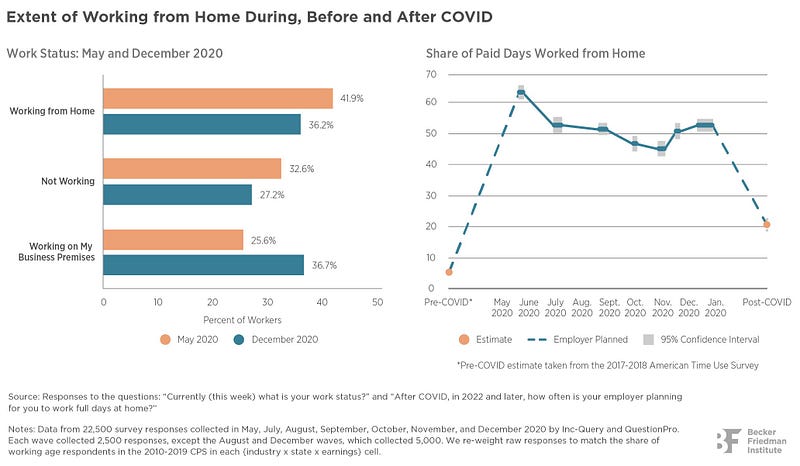
Covid-19 accelerated WFH by years — showing reluctant bosses that remote work is a viable alternative to commuting to offices. This will likely remain at 20% of the workforce post-pandemic.
Online Friendships
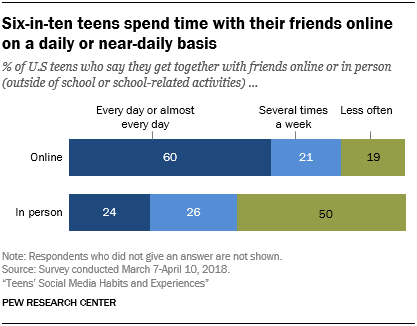
Similarly, friendships that started offline are increasingly supported by the online realm. 81% of teens spend time with their friends online at least a few times per week:
But again — it isn’t entirely generational. Studies of the elderly have shown that online experiences improve their quality of life and that their perception of receiving social support increased after experiencing online community.
Virtual Sociopaths
And of course, there’s a dark side to all this that ought to be acknowledged. Since online relationships are real — so is the potential for antisocial interaction. Cyberbullying, cybercrime, and videogame cheating are serious problems: you can simply drop the qualifying adjectives, and call them bullying, crime, and cheating.

Recently, police busted an organized crime operation that had focused on videogame cheating.
Therapists, schools, and law enforcement are increasing — if hesitatingly— realizing that sociopaths are as dangerous in virtual spaces as they are in physical space.
The Expanding Circle of Acceptance
The list of examples of the social acceptance for virtual culture goes on: For example, Esports are increasingly regarded as sports. Even the Olympics will feature esports demonstrations in 2024.
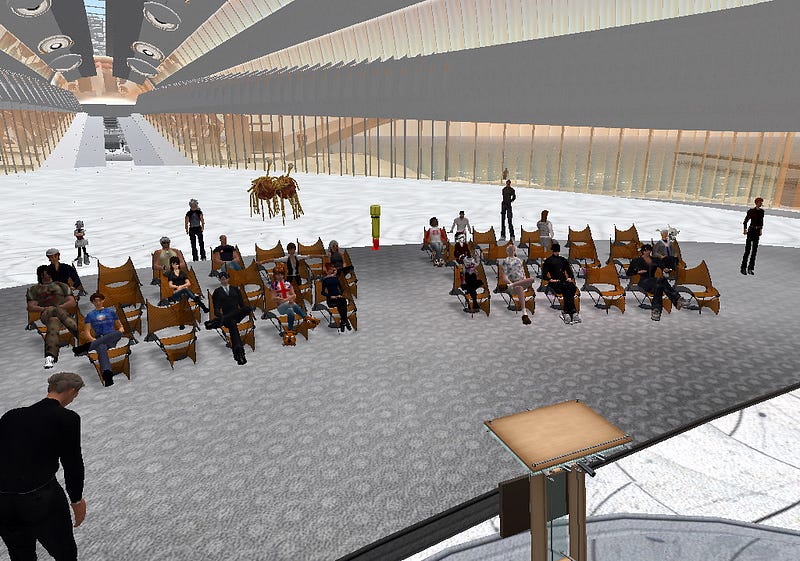
People are already attending virtual concerts in the metaverse.
How long before you take your first virtual travel experience?
How long before you attend your first virtual wedding?
How long before you move to the location you’d rather live, independent of your employer’s physical location?
Or use telepresence for some of the things you might have had to appear physically for in the past?
Because of social acceptability, you’ll be able to trust that all of the above is something that will be welcomed by other participants.
Towards An Age of Virtual Abundance
As the world heads towards 10 billion humans, with the accompanying resource scarcity and a warming planet — the metaverse will have the power to bring an age of abundance to what had previously been rare…
And the only rarity will be the person who still believes the metaverse is not real.