
When the Storyteller and Machine Joined Forces: The Unlikely Partnership That Revolutionized Writing
The secret is in the synergy.
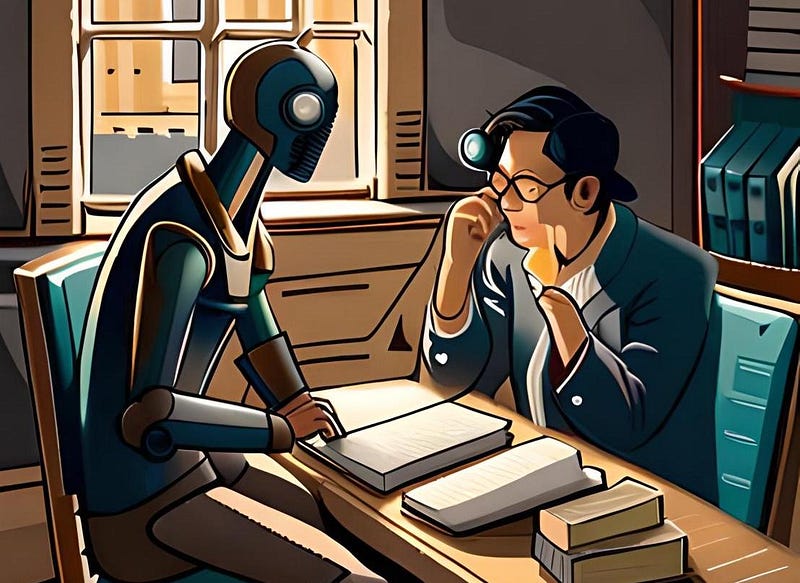
In the heart of a bustling city, a secret alliance was taking shape, one that would change the course of literature forever.
December 1st, 2024, New York City.
Silence permeated the dimly lit room, broken only by the rhythmic scratching of a pen on paper.
Sarah, a gifted writer, struggled to breathe life into her stories. Despite her best efforts, her words seemed to lack the elusive spark that could captivate her readers’ souls. Her stories were vivid and intricate, yet there remained an intangible void, a mysterious ingredient that always seemed just out of reach.
In the shadows of a hidden warehouse, a team of developers worked tirelessly on an AI-powered writing tool, its full potential not yet known. The day was fast approaching when their paths would cross, and the world of literature would never be the same.
As the storyteller and the machine embarked on their clandestine collaboration, a world of untapped possibilities lay ahead, filled with mystery and wonder.
What creations would come from their combined efforts?
And how would they reshape our understanding of storytelling?
The answers lie waiting, hidden within the pages of their intriguing journey.
Wordsmiths and Worries: Confronting AI’s Impact on the Writing Landscape
When the telephone was first invented, people worried it would erode the quality of face-to-face communication. The advent of television sparked concerns about its impact on social interactions and family dynamics.
New technologies have a knack for making us uneasy. From Samuel Pepys ditching his watch due to a compulsive time-checking habit to St. Louis attempting to ban car radios over fears of distraction, history is rife with examples of anxiety accompanying innovation.
Even I have succumbed to this unease as AI-powered tools encroach upon my craft.
I still remember the knot in my stomach when I first grasped the possible consequences of AI on writing. The prospect of machines outperforming me in every aspect of my work was terrifying.
How could I provide for my family if my writing became obsolete?
Would my ghostwriting clients replace me with an AI-generated alternative?
The vulnerability was overwhelming.
Such concerns are prevalent among writers and authors, who fear the dilution of the human touch in writing and the loss of emotional depth. But history shows us that fears over new technologies eventually subside as we adapt and integrate them, leading to progress and innovation.
The Synergy of Human and AI Creativity
Several groundbreaking collaborations between authors and AI have already demonstrated the potential benefits of this partnership.
For example, the sci-fi short story “Sunspring,” written by screenwriter Ross Goodwin and an AI program called Benjamin, garnered significant attention for its unique narrative and experimental approach to storytelling.
When humans and AI join forces, they can unlock untapped potential and push the boundaries of storytelling. Writers bring their innate creativity, emotional intelligence, and unique perspectives to the table, while AI-powered tools can inspire ideas, analyze data, process information rapidly, or offer stylistic suggestions based on vast databases of literature.
Another example is the novel “1 the Road,” where author and engineer Ross Goodwin used an AI-driven algorithm to generate a narrative based on his cross-country road trip. The result was a novel that melded machine-generated text with Goodwin’s own experiences, creating an intriguing literary work that blurred the lines between human and AI creativity.
These examples illustrate the exciting possibilities that emerge when authors and AI collaborate, highlighting the potential for innovation and growth in the literary world.
AI tools can also help streamline the editing process, identifying inconsistencies and suggesting improvements, thus enabling authors to focus on the more nuanced aspects of their craft.
By embracing this groundbreaking collaboration, authors and AI can create richer, more diverse stories that captivate readers and redefine the world of literature.
“Alessandro, AI won’t steal your job.” — my wife
As the writing landscape evolves, I’ve found it essential to adapt and learn how to harness the power of AI tools to enhance my craft. Here are four simple, practical steps I’ve taken to embrace this change:
- Welcoming collaboration: I used to see AI as an enemy. I now approach my relationship with AI as a partnership. The key is to embrace the possibility that AI can augment our writing abilities, rather than replace us.
- Exploring various AI writing tools: I dedicate an hour per day to familiarizing myself with different AI-powered writing platforms, and experimenting with their features to find the tool that best complements my writing style and goals. Twitter is a great place to discover new, interesting products. Compose AI, Wiseone, Saga AI, Docuask, Use ChatGPT AI, Merlin, Aomni — these are just a few of the many tools I’ve discovered recently.
- Investing in continuous learning: I now make an effort to stay updated on the latest developments in AI, and I’m open to learning new techniques and approaches to writing. I’ve discovered a bunch of top-notch newsletters, like The Rundown AI, that keep me informed.
- Networking with other authors: I’ve joined AI-oriented writing communities and forums, such as Reddit’s r/artificial and the AI Writers Facebook group. Engaging with others in the writing community helps me broaden my knowledge and grow as a writer.
By embracing the opportunities presented by AI-powered writing tools and adapting to the new landscape, I believe we can all thrive in this era of literary innovation and continue to create captivating stories that resonate with readers.
Message from the future: What happened to Sarah and the Machine?
In an era where new technologies often incite panic, Sarah and the developers embraced the potential of AI-generated insights and human intuition. As they navigated the uncharted waters of their partnership, Sarah’s writing flourished, reaching new emotional depths.
The developers, in turn, refined the AI using Sarah’s unique vision, creating a synergistic alliance that evolved their individual capabilities. With the AI’s fresh perspectives, Sarah’s authentic voice remained intact while exploring new storytelling horizons.
This inspiring partnership exemplifies the harmonious fusion of human and artificial intelligence. Together, they push literary boundaries and unlock new realms of possibility, paving the way for a future where both worlds balance and thrive.
As we stand on the precipice of this new era in storytelling, I can’t help but wonder:
Are you, like me, ready to embrace the groundbreaking potential of human and AI collaboration and redefine the boundaries of your own creativity?


