avatarJoseph Serwach

Free AI web copilot to create summaries, insights and extended knowledge, download it at here

3483

Abstract

ion=ESV">Psalm 111:2</a> ESV).</p></blockquote><p id="3f36">Both scientists and theologians can come up with multiple interpretations of the same data or words. There are multiple versions of The Bible and multiple, often conflicting, scientific studies.</p><p id="a027">So there isn’t exactly one “The Science” or even one edition of “The Bible,” though Christians agree on the vast majority of Biblical teachings. At the same time, science is ever-changing with every new study or finding.</p><blockquote id="c1e1"><p>“Where were you when I laid the foundation of the earth? Tell me, if you have understanding. Who determined its measurements — surely you know! Or who stretched the line upon it? On what were its bases sunk, or who laid its cornerstone, when the morning stars sang together and all the sons of God shouted for joy? Or who shut in the sea with doors when it burst out from the womb.’’ (Job 38:4–30 ESV).</p></blockquote><h2 id="13f8">Culture means “the cult of what you worship’’</h2><p id="9bc5">I’ve written about science for years, loving the researchers I’ve worked with. But when someone says “the science,’’ two ’80s songs pop into my head.</p><p id="ad1d">These two ’80s songs about science show why culture means “the cult of what you worship.’’ When you reject God, your new top life’s priority can become a false idol. People expecting all needs to be met by “the science’’ keep reminding me of these two songs, both called:</p><h2 id="6e13">“Blinded by science and “She blinded me with science’’</h2> <figure id="6acf"> <div> <div> <img class="ratio" src="http://placehold.it/16x9"> <iframe class="" src="https://cdn.embedly.com/widgets/media.html?src=https%3A%2F%2Fwww.youtube.com%2Fembed%2FYQg4toiZ8oM%3Ffeature%3Doembed&amp;display_name=YouTube&amp;url=https%3A%2F%2Fwww.youtube.com%2Fwatch%3Fv%3DYQg4toiZ8oM&amp;image=https%3A%2F%2Fi.ytimg.com%2Fvi%2FYQg4toiZ8oM%2Fhqdefault.jpg&amp;key=a19fcc184b9711e1b4764040d3dc5c07&amp;type=text%2Fhtml&amp;schema=youtube" allowfullscreen="" frameborder="0" height="480" width="640"> </div> </div> </figure></iframe></div></div></figure><p id="42bb">The band Foreigner asked, “What’s in the future, has it just begun? Blinded by science, I’m on the run…I wonder ‘bout the lies I’ve been reading. I wonder where this madness is leading. There must be something we can believe in.”</p><p id="275f">It’s a bit easier to believe the central teachings of Christianity, which have remained constant for 2,000 years. Few know that the scientific method was invented by the Church to understand God’s Plan better.</p><h2 id="1bbc">So religion begat science — science is an offspring rather than a rival</h2><blockquote id="4fde"><p>“Who has measured the waters in the hollow of his hand and marked off the heavens with a span, enclosed the dust of the earth in a measure, and weighed the mountains in scales and the hills in a balance?” (Isaiah 40:12 ESV).</p></blockquote><p id="5808">The Roman “gods” were much like us: irrational creatures who could do all sorts of crazy things on a whim, for no particular reason. When a catastrophe hit, ancient Romans and Greeks assumed their irrational gods were “angry” for no justifiable reason.</p><p id="5854">With one perfect, all-knowing, all-powerful God, the Jewish and Christian faiths agreed that everything God does must be right and just, done for a reason or purpo

Options

se. So, church fathers thought, scientists could study the world to learn the natural laws and the science of “the language of God.’’</p><blockquote id="dfb5"><p>“The simple believes everything, but the prudent gives thought to his steps.” (Proverbs 14:15 ESV).</p></blockquote><p id="7c5e">So the Church invented science (or at least perfected it) for an important reason: to understand better God’s Plan, aka “the laws of nature,” aka “natural law.”</p><p id="465c">Yes, we can believe in science without agreeing with every conclusion: it’s the scientific method (developed 400 years ago) that teaches these steps to science:</p><ul><li>Systematic observation.</li><li>Measurement.</li><li>Experiment.</li><li>Formulation.</li><li>Testing.</li><li>Modification of hypotheses.</li></ul><blockquote id="5ae7"><p>“And he is before all things, and in him, all things hold together.” (Colossians 1:17 ESV).</p></blockquote><p id="5957">It was Thomas Dolby who best characterized this obsession with “the science’’ whenever he sang, “It’s poetry in motion… She blinded me with science!”</p><blockquote id="2367"><p>“For his invisible attributes, namely, his eternal power and divine nature, have been clearly perceived, ever since the creation of the world, in the things that have been made. So they are without excuse.” (Romans 1:20 ESV).</p></blockquote> <figure id="c66f"> <div> <div> <img class="ratio" src="http://placehold.it/16x9"> <iframe class="" src="https://cdn.embedly.com/widgets/media.html?src=https%3A%2F%2Fwww.youtube.com%2Fembed%2FV83JR2IoI8k%3Ffeature%3Doembed&amp;display_name=YouTube&amp;url=https%3A%2F%2Fwww.youtube.com%2Fwatch%3Fv%3DV83JR2IoI8k&amp;image=https%3A%2F%2Fi.ytimg.com%2Fvi%2FV83JR2IoI8k%2Fhqdefault.jpg&amp;key=a19fcc184b9711e1b4764040d3dc5c07&amp;type=text%2Fhtml&amp;schema=youtube" allowfullscreen="" frameborder="0" height="480" width="640"> </div> </div> </figure></iframe></div></div></figure><div id="0716" class="link-block"> <a href="https://readmedium.com/only-the-author-can-say-why-and-who-218d8a9932ce"> <div> <div> <h2>Only the Author Can Say Why and Who</h2> <div><h3>Your life is a sub-narrative of the greatest story</h3></div> <div><p>medium.com.</p></div> </div> <div> <div style="background-image: url(https://miro.readmedium.com/v2/resize:fit:320/0*7-gwKEmtTujiqp1Z)"></div> </div> </div> </a> </div><div id="647e" class="link-block"> <a href="https://readmedium.com/why-these-are-the-best-of-times-yes-now-b4411c736594"> <div> <div> <h2>Why These Are the Best of Times — Yes Now</h2> <div><h3>A 40-year-old Styx song takes on new meaning, perfectly answering our times</h3></div> <div><p>medium.com.</p></div> </div> <div> <div style="background-image: url(https://miro.readmedium.com/v2/resize:fit:320/1*Ce-KSpIsMN30BIYuW_QYiQ.jpeg)"></div> </div> </div> </a> </div><figure id="4332"><img src="https://cdn-images-1.readmedium.com/v2/resize:fit:800/1*b-N7OvtSD1vuULvYFOJ0Og.jpeg"><figcaption>Encouraging, empowering, and entertaining. In Christ.</figcaption></figure></article></body>

When “the Science” Sounds Like “the Bible”

False idols? Try not to hear these ’80s songs every time talking heads say “the science!’’
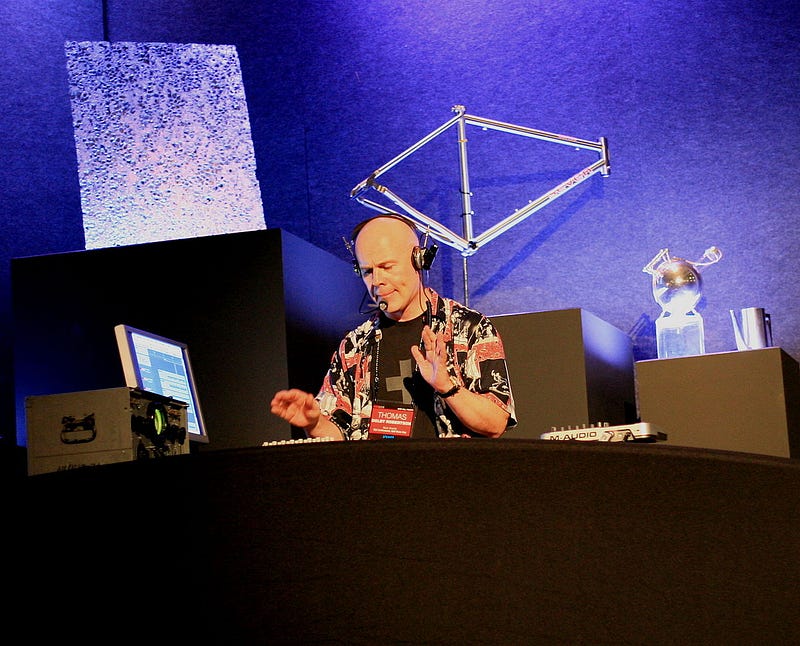
Thomas Dolby, British musician best known for his 1982 synth-pop hit “She Blinded Me With Science.” Photo via Wikimedia Commons.

One of the biggest buzz phrases of 2020? “We are following the science.” Public officials and politicians love that particular talking point.

You hear it daily. It’s added to commercials and sales pitches. Driving today, I listened to the radio:

“I will follow the science. I will listen to the scientists. I will empower them.’’

OK, but there are multiple kinds of science and four big branches of science that don’t always agree:

  • Mathematics and logic.
  • Biological science.
  • Physical science.
  • Social science.

There are all kinds of scientific disciplines within the four branches with all sorts of scientists with all sorts of opinions. They are always conducting research and coming up with discoveries they argue over for years or decades. So there isn’t “The Science’’ the way there is “The Bible’’ or “the faith.’’

What happens when scientists disagree? When we delete God from our lives, whatever is №1 on our priority list becomes our false idol. Whoever or whatever you hold sacred becomes your new religion. Do they have all the best answers?

The first three commandments are about putting God first, but we often put something higher on our priority list. Thomas Aquinas warned we too often reject God to bow to the four false idols of money, power, pleasure, and honor.

People who reject or deny God have a habit of saying God isn’t real, and science is. Some even say science is the new god they trust above all else. But isn’t worshiping “the science’’ replacing one religion with a false one?

How would you react to “we are following The Bible?’’

The next time you hear someone repeat their talking point about following (or not following) “the science,” imagine how you’d react if they instead said, “We are following The Bible.”

Good Christians have different interpretations of The Bible even though its main teachings have been agreed upon (even among various branches of Christianity) for more than 2,000 years. We can say, “we are following the Bible,’’ but we still read, research, and preach, always trying to learn more.

To deepen our faith and understanding.

Only the Author can say why and who. Science explains much, but only authors can say why something occurs or identify who their stories are for and about. Only the author can tell you the intended point and purpose, what their creation is designed to mean. Science is more about “how it all works.”

“Great are the works of the Lord, studied by all who delight in them.” (Psalm 111:2 ESV).

Both scientists and theologians can come up with multiple interpretations of the same data or words. There are multiple versions of The Bible and multiple, often conflicting, scientific studies.

So there isn’t exactly one “The Science” or even one edition of “The Bible,” though Christians agree on the vast majority of Biblical teachings. At the same time, science is ever-changing with every new study or finding.

“Where were you when I laid the foundation of the earth? Tell me, if you have understanding. Who determined its measurements — surely you know! Or who stretched the line upon it? On what were its bases sunk, or who laid its cornerstone, when the morning stars sang together and all the sons of God shouted for joy? Or who shut in the sea with doors when it burst out from the womb.’’ (Job 38:4–30 ESV).

Culture means “the cult of what you worship’’

I’ve written about science for years, loving the researchers I’ve worked with. But when someone says “the science,’’ two ’80s songs pop into my head.

These two ’80s songs about science show why culture means “the cult of what you worship.’’ When you reject God, your new top life’s priority can become a false idol. People expecting all needs to be met by “the science’’ keep reminding me of these two songs, both called:

“Blinded by science and “She blinded me with science’’

The band Foreigner asked, “What’s in the future, has it just begun? Blinded by science, I’m on the run…I wonder ‘bout the lies I’ve been reading. I wonder where this madness is leading. There must be something we can believe in.”

It’s a bit easier to believe the central teachings of Christianity, which have remained constant for 2,000 years. Few know that the scientific method was invented by the Church to understand God’s Plan better.

So religion begat science — science is an offspring rather than a rival

“Who has measured the waters in the hollow of his hand and marked off the heavens with a span, enclosed the dust of the earth in a measure, and weighed the mountains in scales and the hills in a balance?” (Isaiah 40:12 ESV).

The Roman “gods” were much like us: irrational creatures who could do all sorts of crazy things on a whim, for no particular reason. When a catastrophe hit, ancient Romans and Greeks assumed their irrational gods were “angry” for no justifiable reason.

With one perfect, all-knowing, all-powerful God, the Jewish and Christian faiths agreed that everything God does must be right and just, done for a reason or purpose. So, church fathers thought, scientists could study the world to learn the natural laws and the science of “the language of God.’’

“The simple believes everything, but the prudent gives thought to his steps.” (Proverbs 14:15 ESV).

So the Church invented science (or at least perfected it) for an important reason: to understand better God’s Plan, aka “the laws of nature,” aka “natural law.”

Yes, we can believe in science without agreeing with every conclusion: it’s the scientific method (developed 400 years ago) that teaches these steps to science:

  • Systematic observation.
  • Measurement.
  • Experiment.
  • Formulation.
  • Testing.
  • Modification of hypotheses.

“And he is before all things, and in him, all things hold together.” (Colossians 1:17 ESV).

It was Thomas Dolby who best characterized this obsession with “the science’’ whenever he sang, “It’s poetry in motion… She blinded me with science!”

“For his invisible attributes, namely, his eternal power and divine nature, have been clearly perceived, ever since the creation of the world, in the things that have been made. So they are without excuse.” (Romans 1:20 ESV).

Encouraging, empowering, and entertaining. In Christ.
Music
Science
Christianity
Bible
Journalism
Recommended from ReadMedium