
When the Pen is Mightier than the Keyboard
Why I believe that writing with pen and paper can improve one’s writing
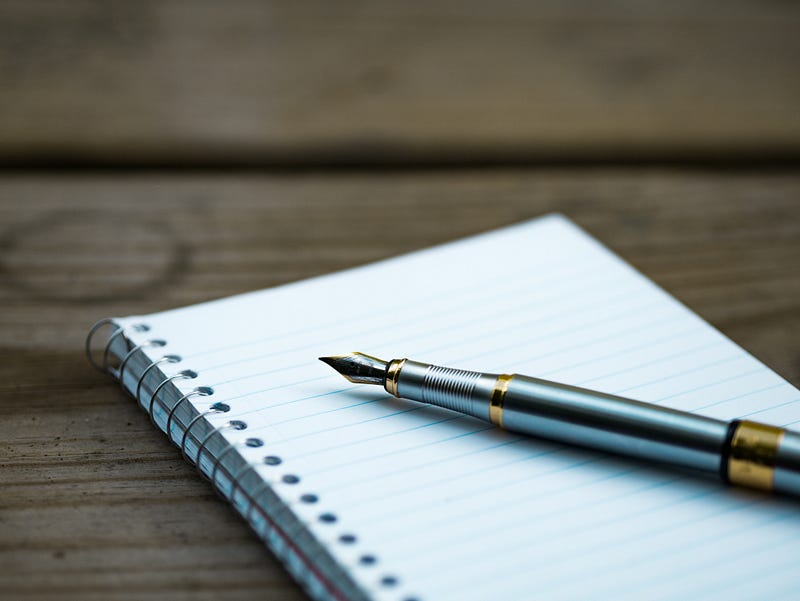
Writing is a process that is becoming increasingly simple to work into my daily life. Technological companies are producing phones with increasingly large screen sizes while laptop producers are finding more ways to turn their next ultrabook even lighter and portable. This means that now, I can easily jot down any ideas I have throughout the day on my phone and flesh them out into my next story or article on my laptop no matter where I am. With such convenience, it is no wonder that most of us no longer have to use pen and paper to do any form of writing after leaving our schools. Despite this, I still find myself back at my desk hunching over my notebooks and writing with my favourite pens frequently.
Of course, like most writers, I do most of my heavy writing on a computer or laptop. When compared to the time it takes to write a blog post by hand, typing the same blog post would take less than half the time needed. The word processor on my laptop also makes editing easier by marking out my mistakes as I type.
Furthermore, as I share all of my writings online (be it through a blog, a website like Medium or email), it makes more sense to write on my laptop. As such, I am not attempting to argue against the use of technology or discredit anyone who writes on their phone, tablet or laptop. However, there are many reasons and instances that I believe writing by hand to be beneficial.
Using the traditional pen and paper takes much more time. While this is definitely a drawback when someone wants to complete a book or create daily blog posts, it becomes an advantage when one is planning or drafting. Because physically writing takes more time and effort, one would likely deliberate ideas further instead of simply typing out everything that comes to mind. Individuals would also often find ways to rephrase long sentences instead of writing everything down like they would when using a laptop. This forces the writer to think deeply about the idea, allowing for more well thought out arguments and concepts.
Writing on pen and paper also allows for writers to escape from the confines of a linear word processor. While it is true that many tablets and 2-in-1 laptops now have functions that mirror this capability, many writers are still using their word processors while drafting (with reasons like not being able to afford a tablet with that function, preferring to stick with their normal word processors and difficulty to transfer information from the planning programme to their final draft).
On the other hand, pen and paper is easily accessible to most. When drafting on pen and paper, authors can utilise mind maps and timelines to visualise concepts like character growth. With a pen and paper, creativity becomes the only thing limiting the writer. In situations where I am unable to find words that describe what I am thinking, I am able to draw out what I am imagining, giving me the ability to revisit my drafts at a later time to think of words that fit in that particular situation.
Being able to see all the pointers on a piece of paper also makes it easier for me to (physically!) draw links between different ideas and add more details, allowing for whatever I am writing to flow better.
Aside from the benefits writing by hand brings to the writing itself, writing by hand can also help writers by improving the writing process. When I write on a laptop or phone, it is difficult for me to not become distracted sometimes. With so many apps and the entirety of the internet at my fingertips, all it takes is a simple notification to break my concentration and take me away from my writing.
Furthermore, most of the time I spend planning consists of me staring blankly at what I have written, trying to conquer the latest writer’s block my mind has conjured. By doing my planning on paper, I can remove the strain the screen would have placed on my eyes, allowing me to plan for longer periods before my eyes cry out for a break.
Writing down my milestones on a post-it that is stuck onto my computer also helps me become a more efficient writer. With my goals staring directly at my face, I feel so much more guilty whenever I slack off (instead of a note on my desktop or phone that I can easily hide), reminding me that these are the goals that I have set out to accomplish. This way, I become much a more motivated writer, working hard constantly to achieve my goals.
Of course, with everything being said, typing is still the most efficient method for writers to write after the initial drafting and planning phase. After all, I doubt that there are many publishers or agents that would be happy to receive a handwritten manuscript in today’s day and age. However, in our rush to embrace the quick and efficient way of completing our stories, it might be helpful to sit down at the desk and utilise the trusty pen and paper and adopt the traditional methods of writing every once in a while.
You may also be interested in reading: