
NATURE | BIRDLIFE
When the Father is Left as the Sole Caretaker
And has to raise seven young chicks
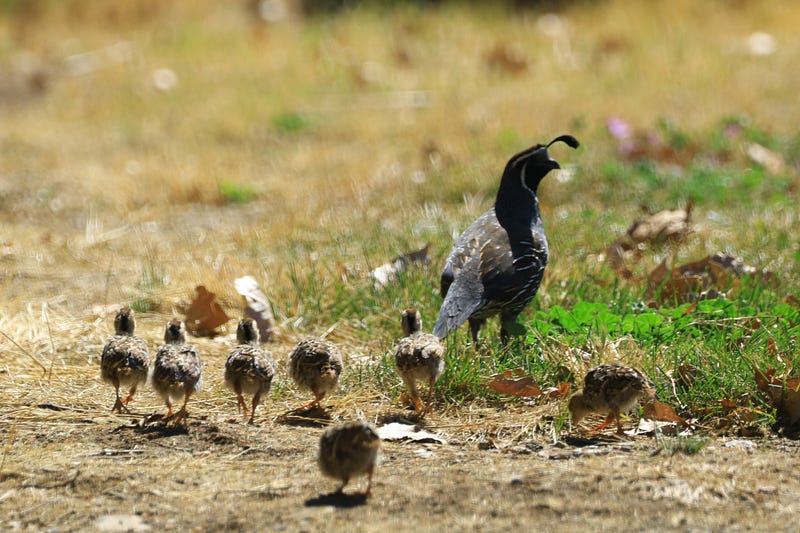
When I saw the couple of quails just down the road with a whole flock of chicks I almost died of cuteness overload. Those tiny birds looked so fragile and their high-pitched chirping sounded like a cry for help for any creature with parental instincts.
It's been two months now since we moved to New Zealand and if there is one thing next to the actual grapes growing around us that characterizes living out on the vineyard the most, it is the birds.
They sing long before I wake up and chirp on the ground or in the bushes until late at night. If native or immigrant doesn't matter, they are now all home to this land and pick for seeds on our doorstep.
The birds sit on branches and tiny twigs on the tree next to me counting my push-ups and telling me if I was lazy for a few days skipping the exercise rounds.
While I wouldn't call myself a bird watcher, I have come to learn the joy of watching and photographing all kinds of feathered species. Thanks to my mom who identifies the ones I capture on camera, I now not only know a bit more about birds but also can recognize a few of them.
Like the quails for example. One pair in particular must be living somewhere around our property and comes often to our doorstep showing off their unique but characteristic top-knot.
While New Zealand had a native species of quails, they became extinct sometime around the arrival of the early settlers, most probably due to diseases introduced by imported bird species.
The bird home to these lands today is the California Quail. Common in open shrublands, they are to be seen throughout most of the country. The females are duller in color and carry a less obvious plume, the males have a striking black face bordered with white carrying a forward-curling black plume on the top of their heads.
Gathering in larger coveys for feeding in autumn, I have only ever seen them in pairs as I arrived during breeding time. And while these birds very much can fly, they are mostly seen walking around, often crossing the dirt road leading to our property as we come around the corner.
I have never in my life seen so many animals lying dead on the road, countless birds, rabbits, hedgehogs and possums fall victim to road kills in New Zealand.
While you can't do much when driving 100kph on the highway, when we're on the small and less frequented by cars gravel road, David uses all methods trying to avoid hitting birds. He uses the horn to shoo off any feathered species sitting on the dirt road, hits the breaks as hard as he can without getting us in danger and, most importantly, talks to the birds.
To add to the scenario I must admit, these quails are not the smartest of all birds. While they can fly, they often run for their lives ahead of us and only once the tire almost touches their wings, they will take off and fly up to escape and find rescue in a nearby tree.
Being the most common bird we encounter on the roads, I was left speechless when we came around the corner a few weeks ago seeing more than a dozen tiny little feathered somethings running between their parents.
Of course, they were on the road. David hit the brakes and swerved to the left as the father and most of his chicks escaped to the bushes to the right. Mom though ran to the left with two of her offspring and when our tire got close to her, she panicked and kind of stepped onto one of the chicks while trying to escape herself.
We made it out of the encounter alive and so did all of them but after this, I was never the same. "Did you see how cute the tiny chicks were? Oh my world, that was not what I expected."
While all other birds keep their offspring in nests, the quail take them with them on their feeding walks. The chicks can fly from three weeks on but will be mostly using their feet to get from A to B.
So here I was now knowing about that cuteness overload and every time we drove down the road, my eyes were wide open and alert looking for the same family and sure enough, we encountered them a handful of times, always more or less on the same spot.
Since I could never spot them from far away and they'd often appear from the shade, we always had close encounters and I never managed to photograph them.
Talking to our landlords, they agreed about how cute the chicks are but said the couple residing around our home never had offspring or at least doesn't breed nearby. I was sad hearing that as I had hoped I could at least document their young ones.
Either way, the other day on my way heading up to my spot on the hill, I was just walking past the lush green vineyards when I saw another male quail standing just next to the tall, brown grass. I stopped within the moment as I had a feeling. He didn't fly off, just stared me down with a concerned look on his face.
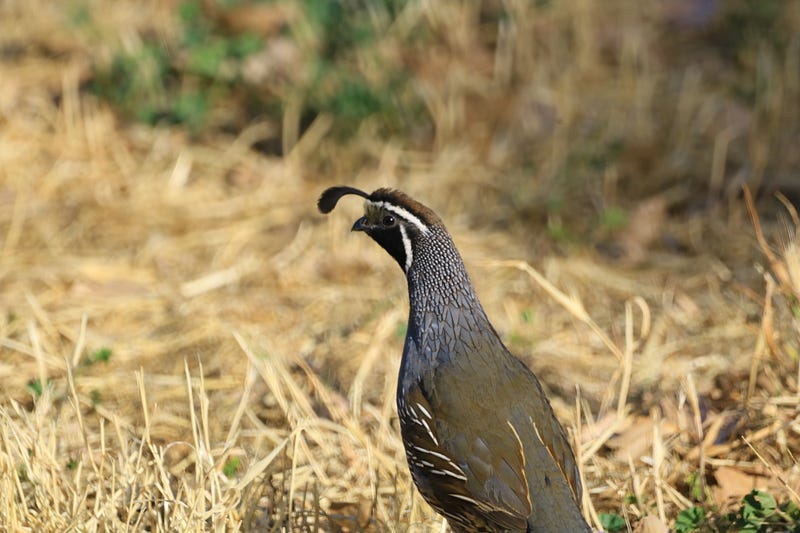
While taking out my camera, I listened carefully and sure enough I could hear the vulnerable and high-pitched cheeping of the chicks. They must be hiding in the grass I thought and decided to stand still and wait.
The father flew up on the fence and back down on the other side again making me a sign he was on his way down the hill. I walked past the fence further up in the direction I was heading anyway and then heard the chicks as they simply climbed through the fence and the dead grass.
There they were. Perfectly camouflaged in the brown surroundings of Cromwell's semi-arid climate, they are only visible to the trained eye.

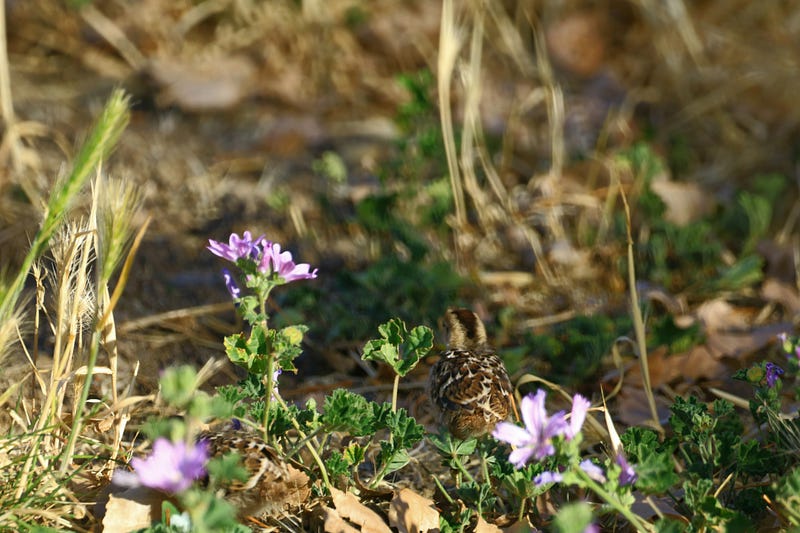
Now I began to wonder where the other parent was. I only ever saw California Quails in pairs. The couple sticks together as they wonder about foraging for food.
Where would the mother be?
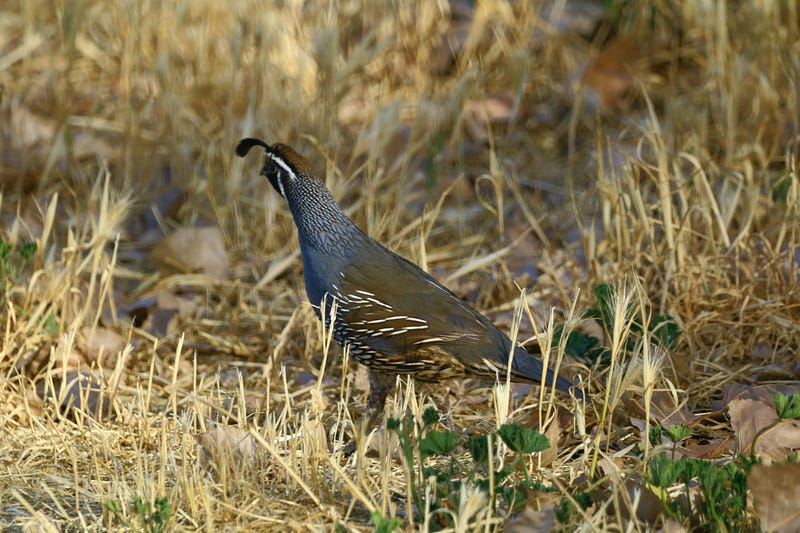
Just as I was getting sad realizing the whereabouts of the mother, the chicks emerged from the high grass and allowed me a glimpse of their soft plumage.
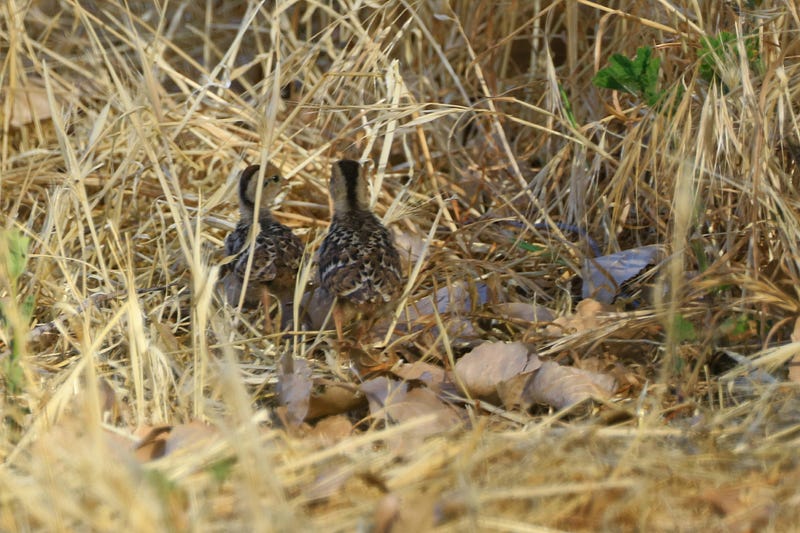
The father didn’t seem to be depressed about having lost his life partner. How could he? He now had all hands full, or feathers, fending for his offspring and protecting them from potential predators.
I decided not to add more stress to him and moved on.
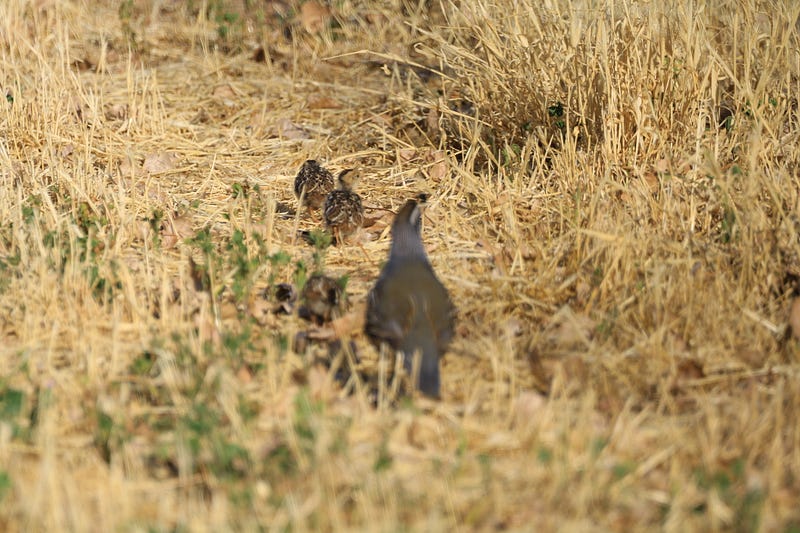
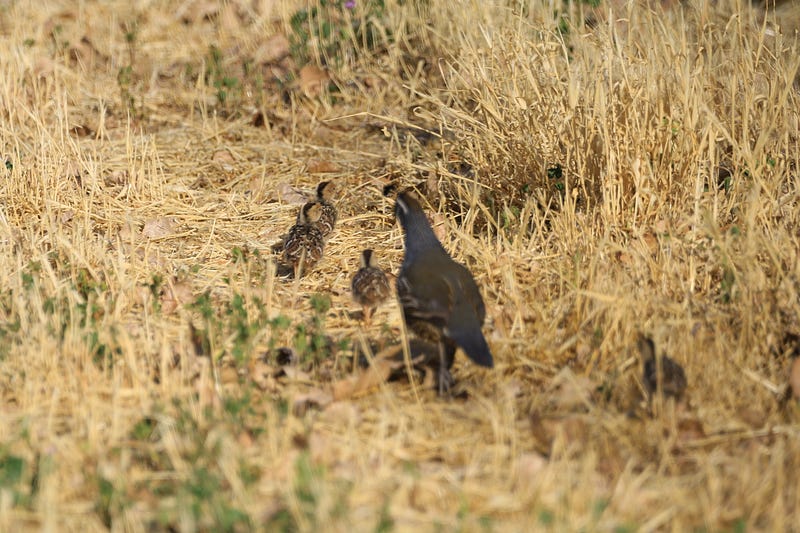
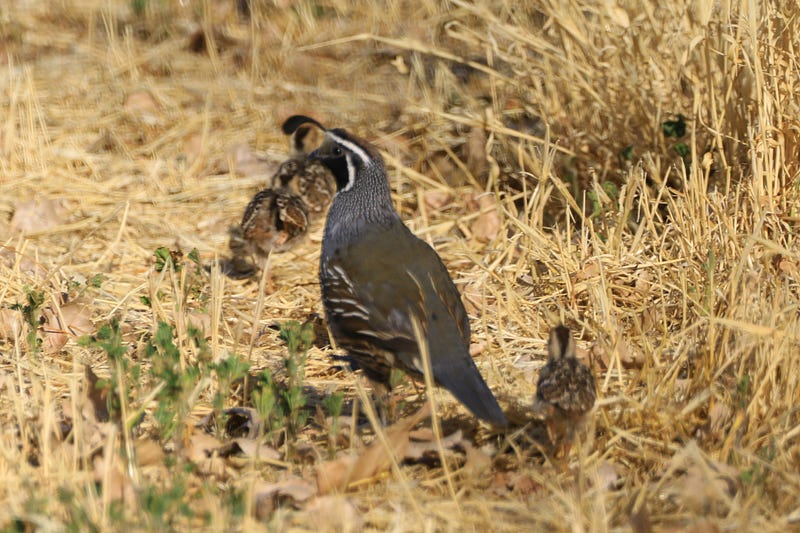
Only one day later as I was sitting on my lounging chair in the living room, I watched the broken family walk by our front door. Now it was clear, that no mama was left in this family.
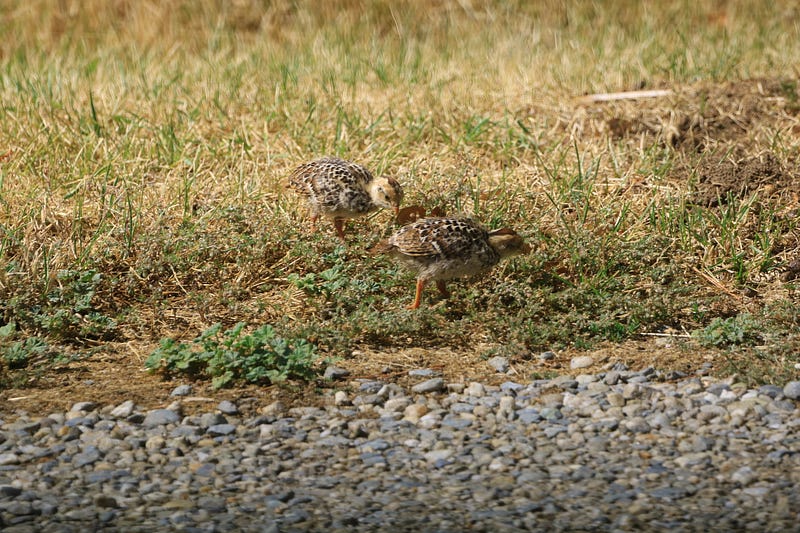
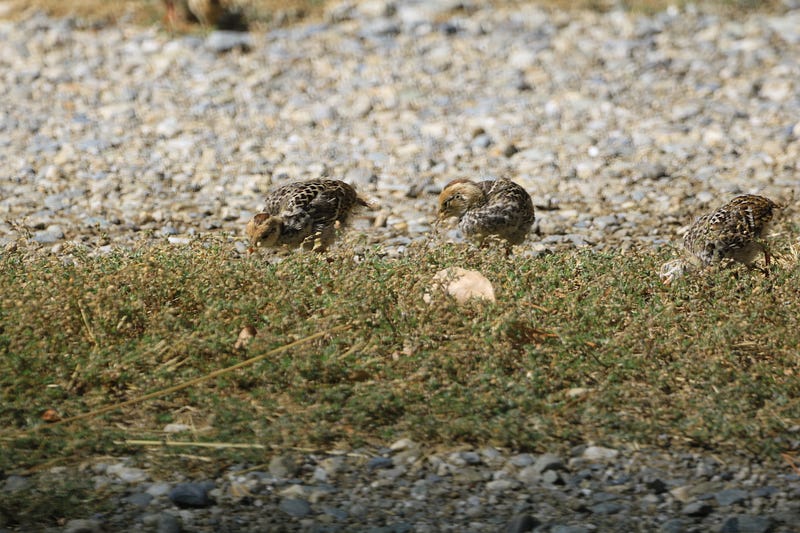
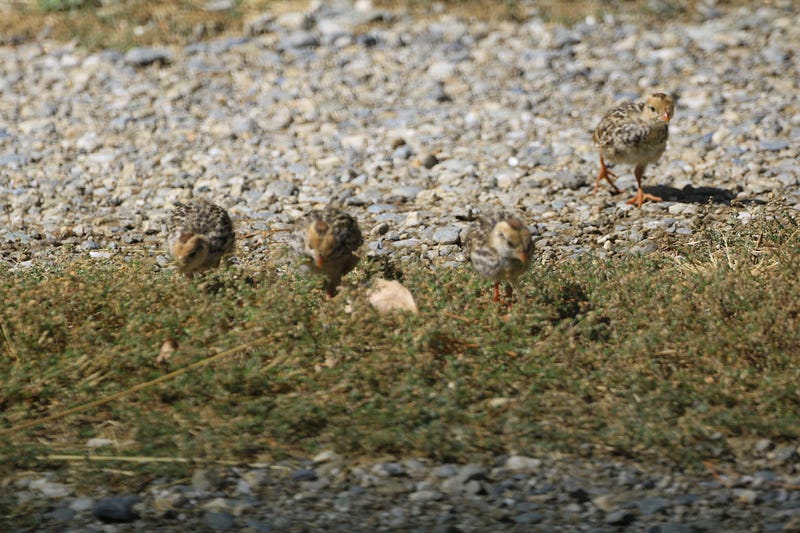
The chicks were picking carefree in between the pebbles while the father was always on alert observing the surroundings.
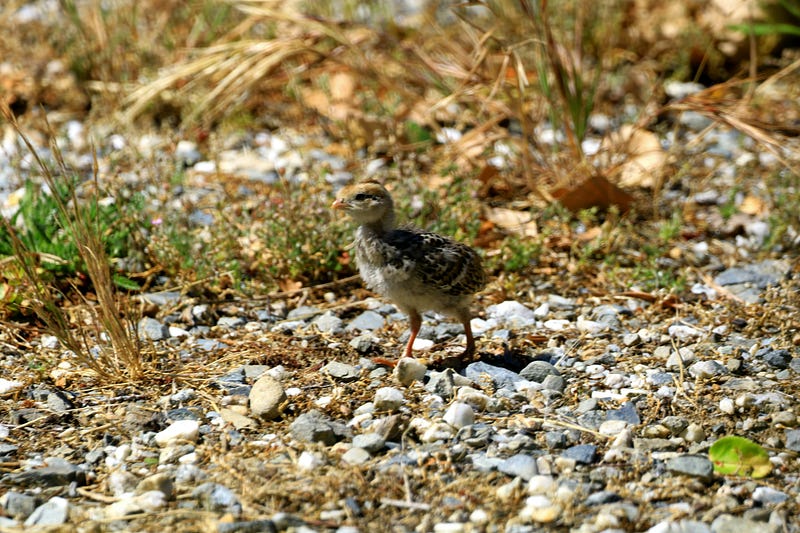
Since I had the camera lying next to me, I pointed the lens and barely moved as I knew any movement would scare away the father. After all, I was only meters away and only a thin shield of glass was between us.
I was admiring the chicks and their incredibly well-camouflaged feathers.
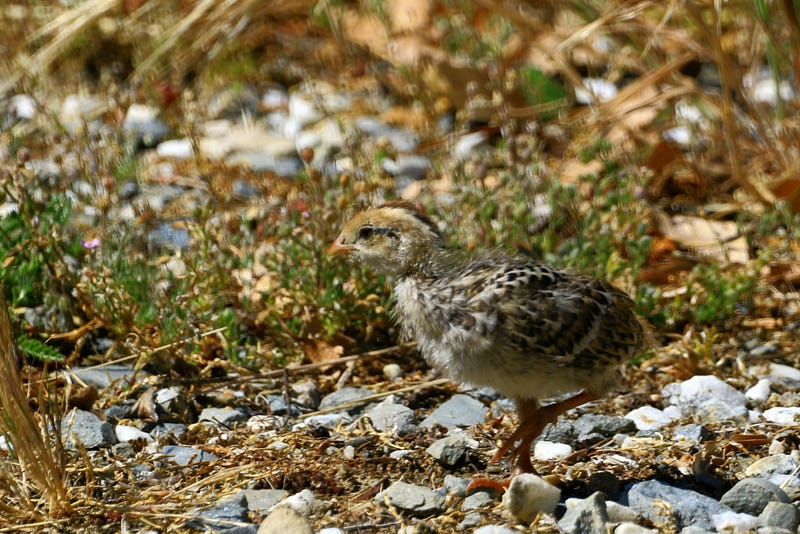
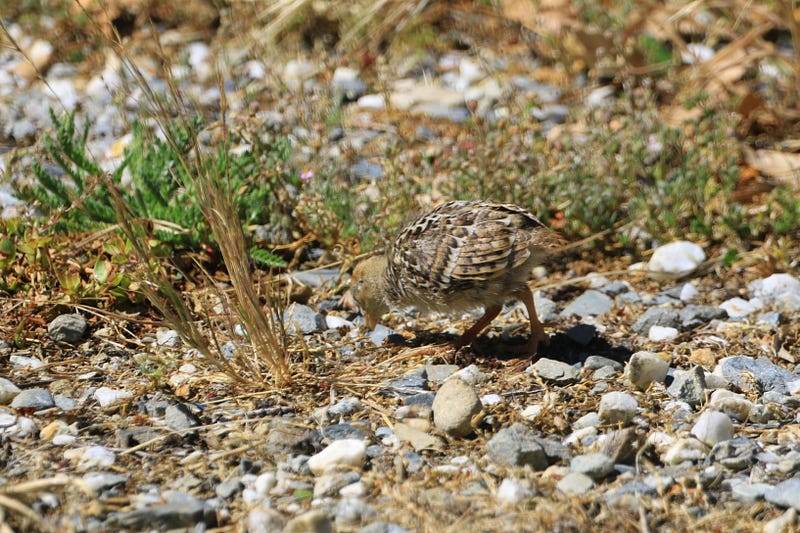
I stretched my leg and there they went. It was one movement too much. The father made a sound and the chicks quickly ran toward safety. A bush filled with so many other native and foreign birds.
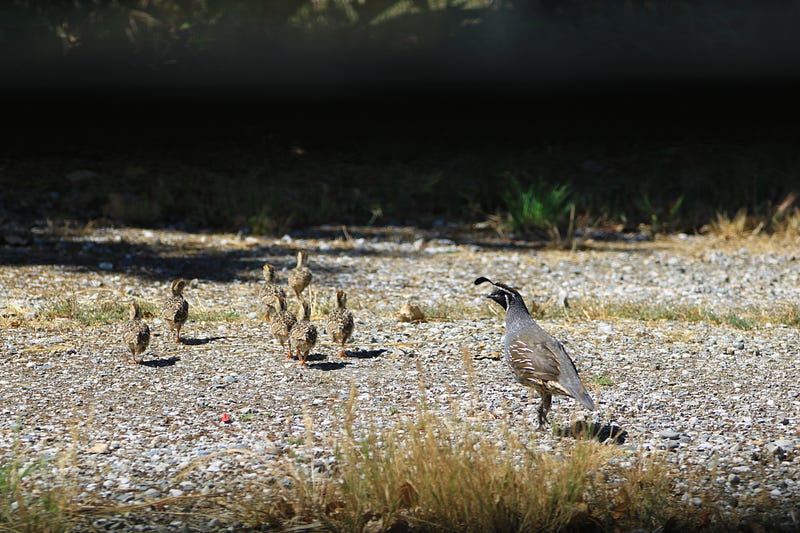
As I remain still, the chicks reappear and I click a few more shots with twigs and blades of grass between me and the young quails.
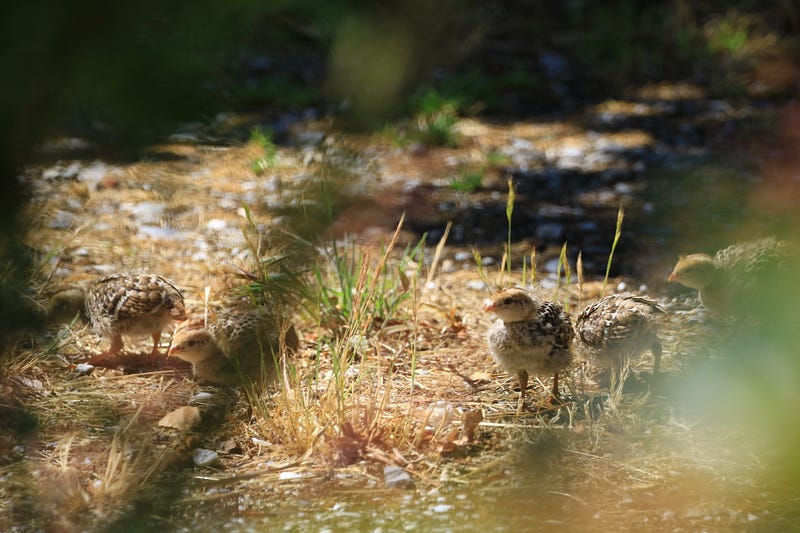
I decide to use the moment and document part of the life of this very precious family stepping over the doorstep while pushing the sliding door aside.
As expected, the father hushed his offspring back into the bushes. I certainly do look like a threat. And even if it’s just due to my size.
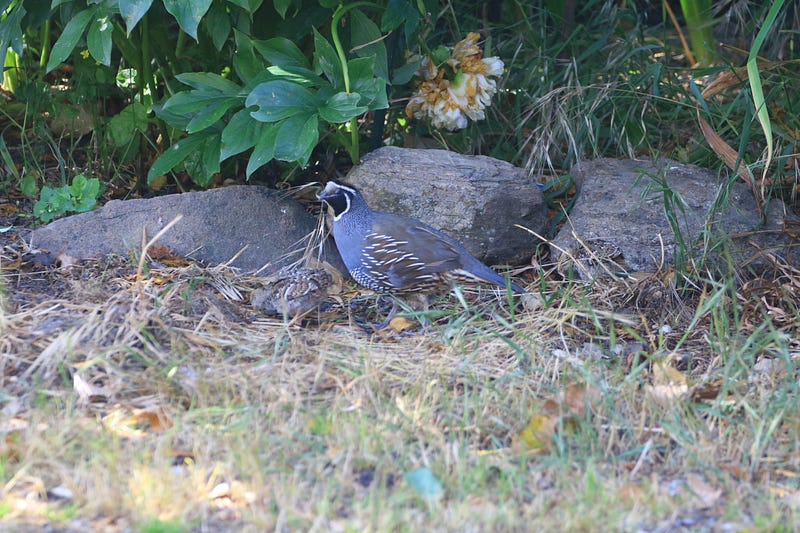
I sit down on the concrete just behind another bush, waiting for the family to reappear. I know it. They are heading up the hill. Waiting patiently, I can see the male caretaker reappearing and smelling the air. Not quite safe yet but one of his young ones never quite listens and walks out behind him.
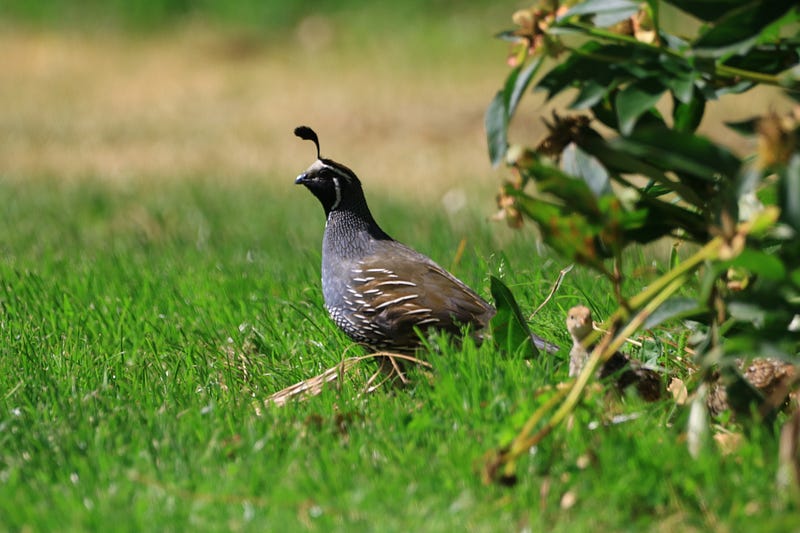
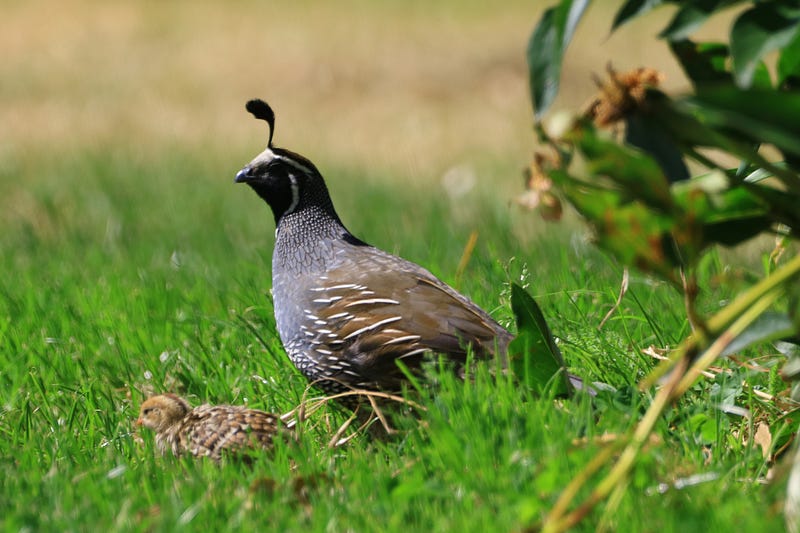
I don’t move and wait for them to all come out but just as the father felt safe enough, Pip, the landlord's dog walks up between us scaring the entire family back away.
They don’t know it but this dog is no threat to any birds. Being blind and partly deaf, she walks her rounds every day but is too old and slow to chase anything but our kitchen smell.
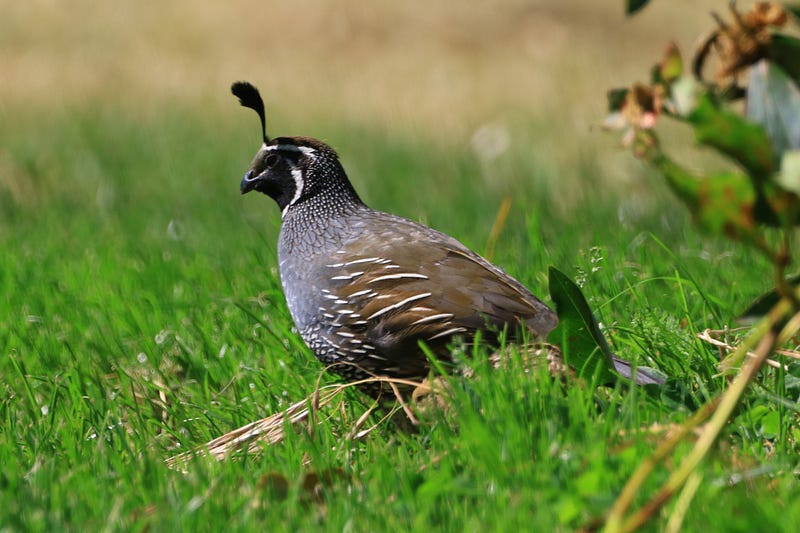
I look up and see the father has escaped into the tree. Staring me down I feel the tension and decide to give up my spot to allow them free path toward the hill.
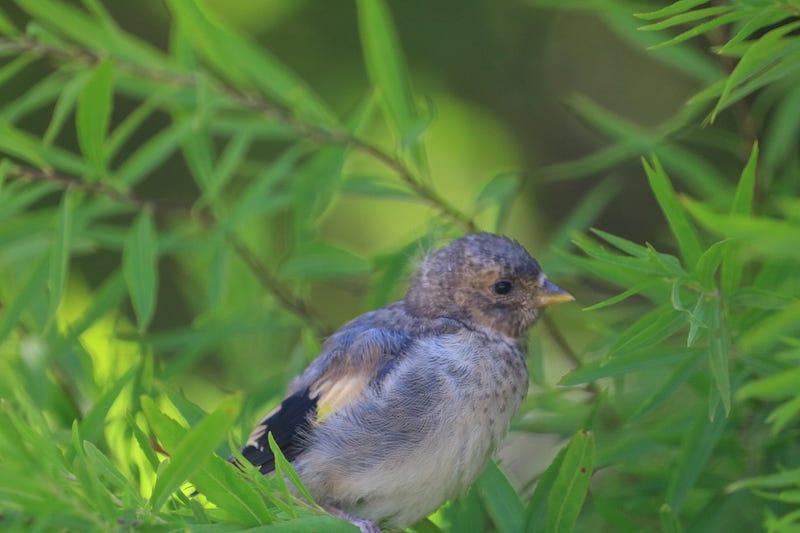
I only turn my back to him when I stare into this young bird’s eyes in one of the other bushes when he escapes.
As I look up again, I can see the father with all his seven chicks making a run.
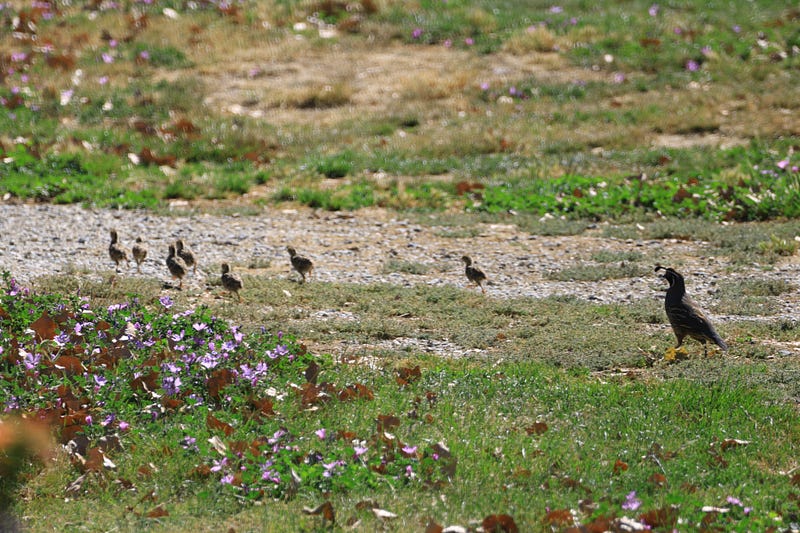
Back in the grass and feeling safe, they all slow down and begin to pick seeds again. While the father stands out from the surroundings, the chicks can’t be separated looking like the brown leaves surrounding them.
Perfect camouflage.
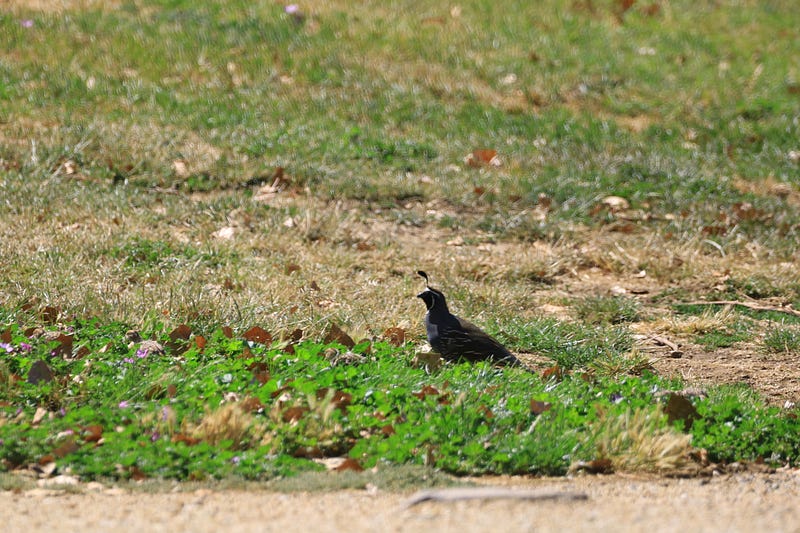
I decide to let them be and head back inside.
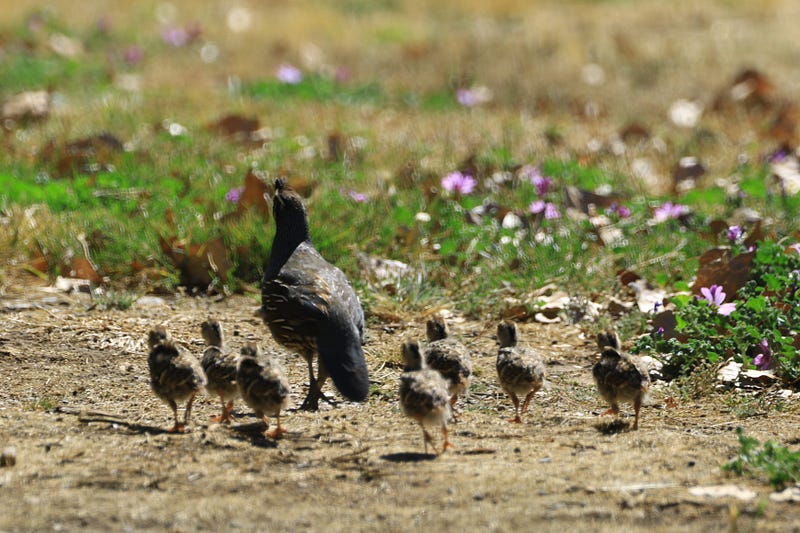
Later that evening, cutting David’s hair, the family comes by again walking right past our doorstep and not caring at all about us moving inside. Maybe the father has learned his family is safe on these premises. I hope so. And I hope he will return and hang around for longer. I would love to watch his offspring grow up.
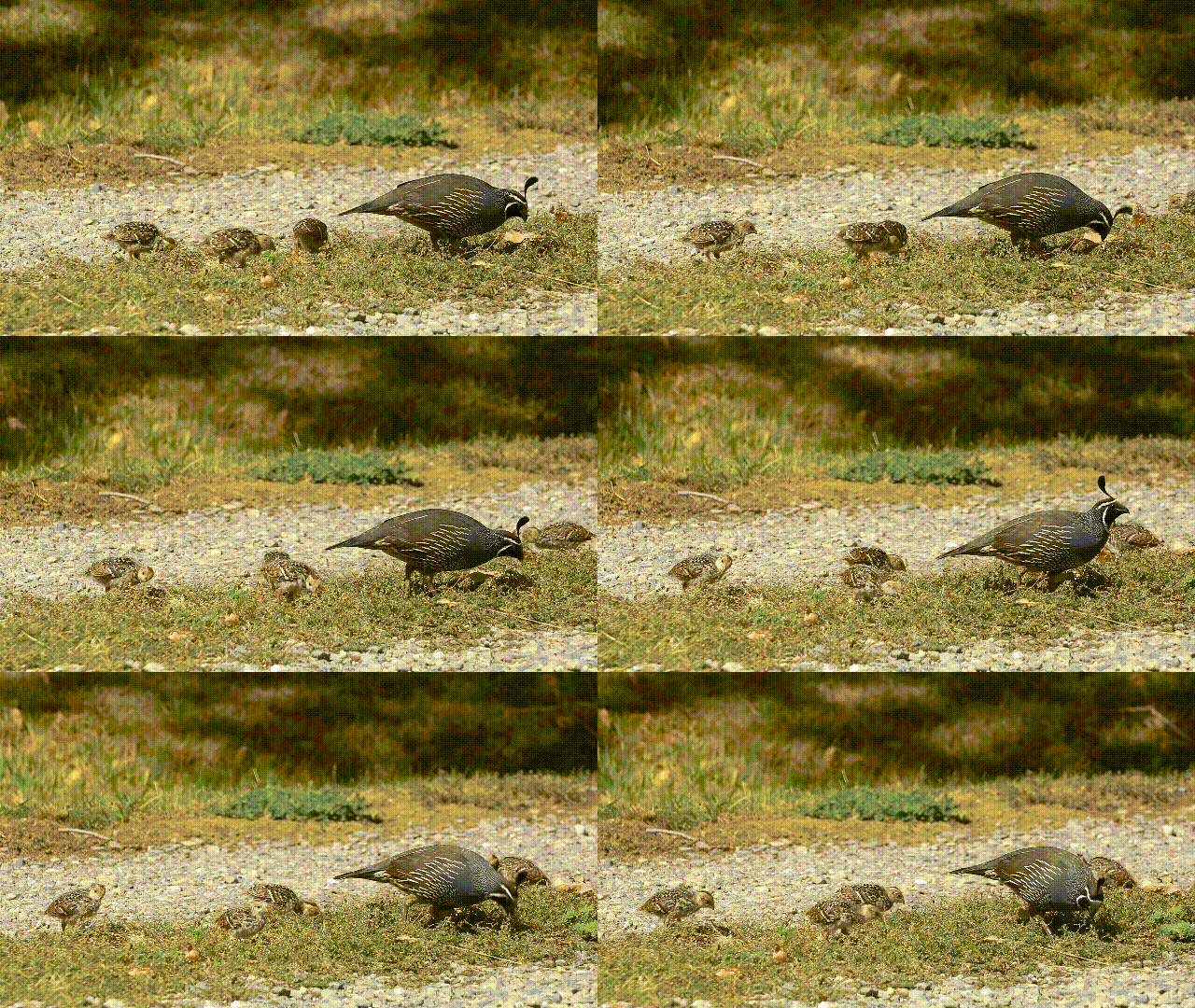
The following morning, I’m lying in bed when I hear the soft but distinct chirping of the little ones. I raise my head and see the family walking by the bedroom window.
A smile emerges on my face.
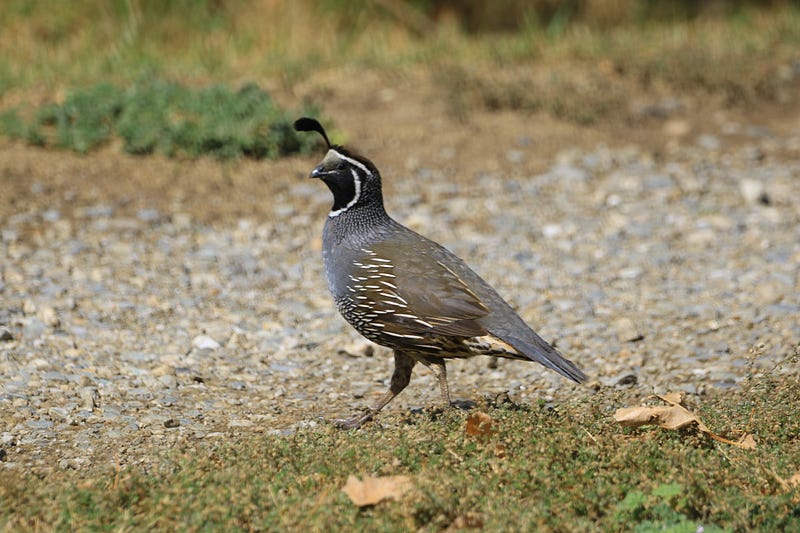
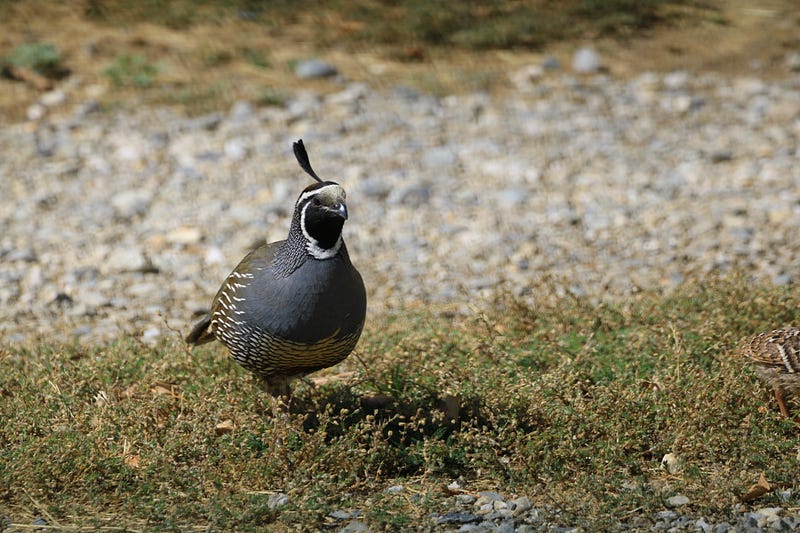
The father, proud as and always alert, is looking at me. Confidently and calmly. I admire his strength in raising not one but seven chicks and let him know by nodding.
He bows his head and continues picking for food.

The chicks, unaware of our interaction, move about only focusing on feeding. The way it should be. Still carefree and happy. I count them again. Still seven. I sigh out of relief.
I wonder if the chicks do know what happened to their mother or if they never met her. Who knows. I hope their trauma isn’t too bad and I’m thankful for their loving dad they still have.
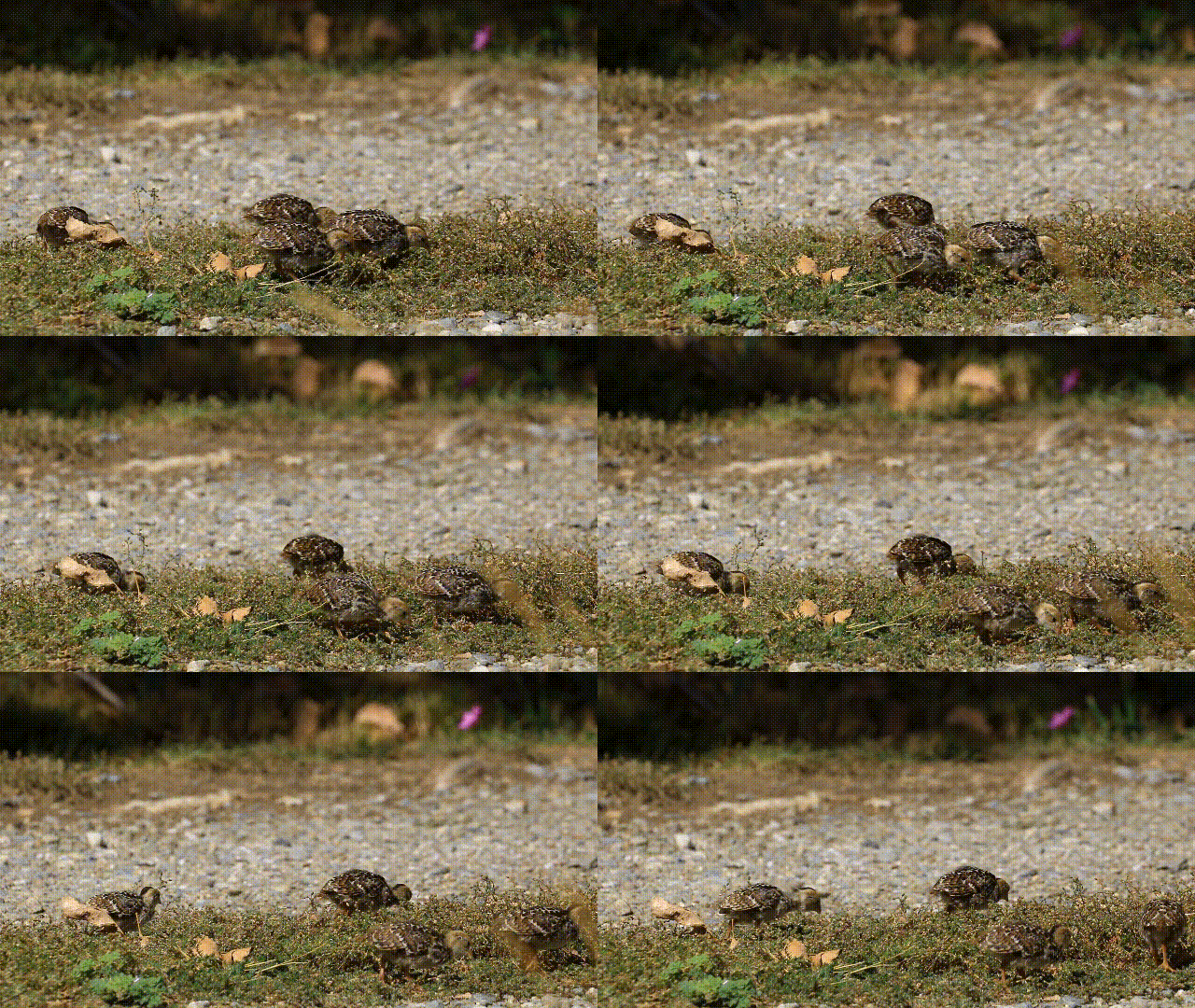
Leaving you with this last moving image, I hope I’ll be able to keep you updated about the progress of this little family. Hopefully, they will hang around, stay far from the roads and grow strong.
Thank you, Warren Thurlow, for giving this piece a home with your publication ‘Simply Wild’.
Join my email list here if you would like to read more photo essays.
Shutterstock | Instagram | YouTube | Mailchimp | Amazon | Redbubble


