
When Storm Clouds Roll In
How to deal with trolling online
The more you use social media, the more likely you will come across trolling behavior. It’s no big deal to just block a troll if your social media usage is casual. For those who use social media for commercial choices — i.e. selling a book, raising funds for a non-profit, or activism — examining troll behavior and how to best manage that behavior is a must for maintaining a digital profile. Trolls come to online profiles, but you can keep them away. Here are a few ideas of how trolling interaction should be kept in check.
Trolling by definition is lurking to create chaos. Trolls create discord by starting quarrels or making comments meant to upset people. They do this on the internet by posting inflammatory or off-topic messages in an online community. Basically, social media trolls are people who purposely say something controversial in order to get a rise out of other users. Weaponize dog whistles & identity politics. Trolls traffic in contentions and confusions.
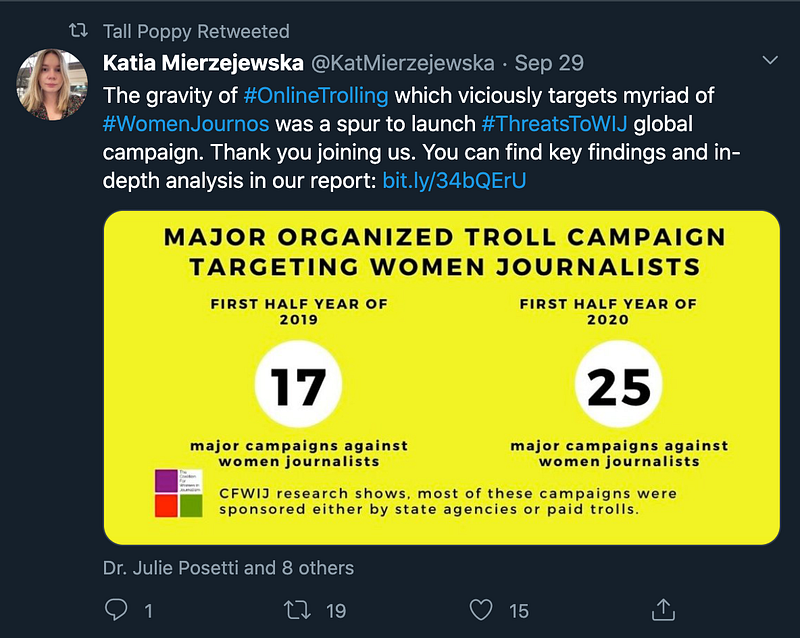
Because of the lurking nature and desire to be seen, trolls have gamed the attention economy. Their usage of bad faith arguments is meant to bring attention to themselves, with follow-up commentary that has been aimed at professionals with misogynistic and racist intent.
One point that should be made. Eliminating trolling is not the same as responding to cancel culture, although sometimes people confuse the two concepts. Cancel culture is the discontinuation of a relationship based on a principle. Trolling involves ongoing commentary on going directed commentary towards a particular individual or entity long after it was established that there was disapproval.
Part of the confusion stems from how social media platforms were designed. The intent was more commercial or organized dialogue, rather than a less formal conversation structure on which trolls thrives. Social media is built from the programming languages used for websites and apps — HTML, JavaScript, and CSS, with posts that may have a jpg or MP4 attached on occasion. As we have adopted social media in our lives, we forget that our interactions affirm a particular action with the elements built from those programming languages — when you click on a button you are affirming that you want a download or a white paper or to see a video play. These affirmations communicate a singular function — yes I want this item or affirm that I like a video. Yet in a discussion and debate, the actions from a conversation are much more nuanced. There are various responses based on what the person sees and hears. Having debates on social media have become so broad in scope and so frequent that it can be difficult to tell the difference between trolling versus another activity. The single-action nature of programmed elements adds to the confusion.
No matter what platform is used, trolls post not to have a conversation with you but to spam you. You’re dealing with someone who is not really interested in any sort of engagement. They just want to be seen, not connect to you in any way reasonable. It’s a waste of your time.
So what can you do to fight trolling behavior? Here are a few ideas to keep in mind when you do choose to confront bad behavior.
- Review the feed look at the profile. Doing so gives you a clue about whether or not the profile is managed by a real person or a dummy profile. You are essentially looking at the posts to see if they are remaining on topic. Each social media platform is different. If it’s a Twitter profile, inspect to see if there are a lot of retweets. A lot of retweets may be a sign of misusing the platform but it is considered spam according to Twitter community guidelines.
- Never stoop to a troll’s heckling. Doing so feeds the troll with more information and more chances to respond. It is ok to make your point and then leave the exchange, block, etc. But most times you’ll have to leave the troll behind.
- Get to know the terms of usage for each social media platform you use. Each platform is a little different. Knowing the differences can aid how you choose to report or defend your activity. Facebook has a harassment policy that states that harassment must be towards you or a friend, not somebody else on the feed. On Twitter, however, you can call or highlight tweets that are harassing somebody else on the feed. Thus you should go to the website for each platform and understand the terms of service for each.
- Be aware when you are acting troll-like when confronting someone on a personal page. People can not see the intention in what is being said online, so there is potential for a conversation to deteriorate into a back and forth. No matter how angry you are, always recognize how your public anger could come back to haunt you later. To help keep your point front and center, use a debate framework, the PREP technique, in explaining your response.
- Point — make your main point at the start, then
- Reason — explain in a sentence or two what the reason is that supports your point
- Example — give a supporting example for your point
- Point — remind the person what your point is
If you can’t remember that in the heat of digital battle, just get your supporting details straight and hammer at your key points. Point out what is in the troll’s interpretation is wrong, and if they are not understanding, then be ready to block.
5. Finally make sure that you block not only on one platform but on others if the person who is trolling has multiple social media accounts. For example, many developers have experienced harassment on Twitter. Yet the harasser also has a Linked In profile (I have seen people highlight several profiles when the person is clearly identified). The reason you will want to do a sweeping block is to prevent a backdoor harassment from another channel.
There is no one way to stop trolling. The best ways involve a mix of empathy and being aware of the medium you are using to keep bad actors out.