
KEEPING PERSPECTIVE
When Someone Asks Me Why I Write
I don't give them a quick answer
"We write to taste life twice, in the moment and in retrospect." — Anaïs Nin
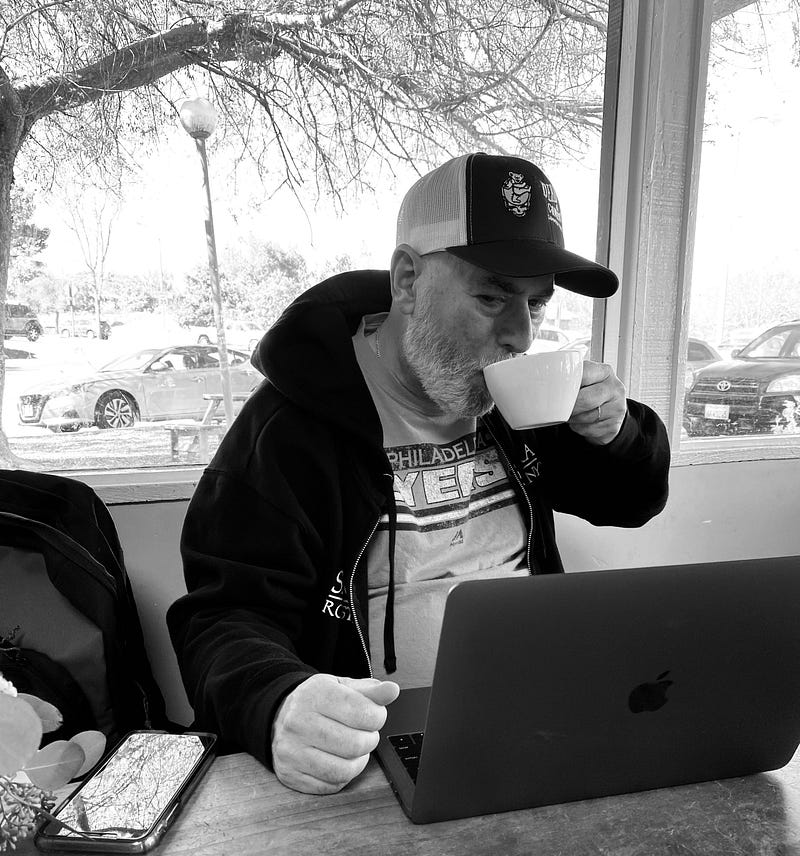
Why I write depends on who asks me, my mood, or what famous writer's biography I've just read. I might have a different answer after each piece I've written. And I do not write to be grand, to change the world, inspire people, or help others find enlightenment. Writing is all about me. It's my favorite thing to do alone. It's my beginning, middle, and ending. When juggling words on a screen, I'm trying to express a thought as clearly as possible and in the best form I know.
Writing helps me be mindful of my inner voice.
I write because I want to know what's inside my head. Sometimes, it is hard to get at, like I'm numb with novocaine. The more I write, the more I can hear that faint voices crying out to be heard. It rears up unexpectedly and rarely arrives with ease. I've spent much of my life hiding from it, distracting myself with family, work, and finances. I've suffocated it, and it's often reluctant to appear on command.
My writing is a passion and not an obsession.
Some might think my writing is an obsession because I'm constantly tapping away at my computer. But it's a passion. If I found something more interesting than writing, I'd do that. I used to have a passion for psychotherapy, but when that ended, I rediscovered creative writing. A passion is a strong enthusiasm for something you do because you love it. You have little control over an obsession.
“The difference between passion and addiction is that between a divine spark and a flame that incinerates.” — Gabor Mate, physician and author
I write so strangers can know me.
I don't write for family or friends or show them my work. I prefer writing for people I don't know — strangers with an open mind who read edgy small-lit magazines. Strangers seem more willing to hear my words and make honest criticisms. Relatives and friends might praise me in front of my face and then disparage my work behind my back.
Writing creates an intimacy with the world.
With all the technology at our disposal, it's easy to detach from the world. I enjoy photography, but photos aren't enough to capture my feelings. Writing gets deeper and on a personal level. I can attach an emotion to a calla lily or a story to a Philadelphia street corner.
I write to let others know I exist and what I think.
My writing tells people I exist. I'm not just one of the eight billion humans bouncing around on Earth, a party to the life cycle. My published writing documents my experiences and leaves a legacy. Otherwise, what's the point if we can't leave something of ourselves to those who come after us?
“In a world that doesn’t really care whether we live or die tell it you do and why” -Steve Scafidi
To find richness in the lives of the neglected and disenfranchised.
I'm an underdog, like one of Philly's sports teams. I was an only child, a religious minority, and my mother had a mental illness. That's why I am fascinated with the neglected or those who got a raw deal. I write a lot about minorities, the homeless, and those souls lost or forgotten.
Writing is my way of figuring out what I see.
There's a lot to figure out — personal, social, environmental, and economic problems. We're living in a human predicament known as the Rat Race. When I try to figure it out in my head, it hurts. Most of the stuff is mindboggling, so I need to put it down in print, sort it out, and call it a poem, story, or parody.
Writing is the most effective way of expressing myself.
Writing is the most effective way to express myself—and I'm not alone in thinking that. I dabble in art and music, but none can compare to the power of the written word when I mold it into something poetic, artsy, or funny. Who doesn't want their words heard or felt? Who doesn't want a poem or a story with their name attached? It's liberating.
I write to re-experience the pleasant and unpleasant.
I write a lot about my embarrassing childhood moments in Philadelphia. Those times have affected my life, good and bad. They were when I felt most alive, free, adventurous, and humbled. For instance, I once shoplifted from Lit Brothers as a teenager. I knew it was wrong, but it was exciting and powerful. When I proudly showed my stolen booty to my father — he made me return the merchandise and grounded me. I stopped shoplifting, but the memory remains.
“Make it personal enough, so you feel embarrassed to share it.” Quentin Tarantino
I write about the people I care about.
If I care about someone or something, I'll write about them. My writing will sound dull when I don't have a strong connection to my subject. My subject doesn't have to be someone I love or know well. It could be a stranger with an emotional connection. He could be a down-and-out guy on the street who catches my attention or sympathy. It could be an inanimate object, an old chair my father used to sit on.
I write to remember my dreams.
The older I get, the more in tune I become with my dreams. They are full of symbolism. They tell me what I lack, what I love, and what I fear. Most dreams are quickly forgotten, but the ones I remember try to immortalize them in words.
I write because it makes me feel good.
It's that simple sometimes. There is no noble or glorious reason why I write. It all comes down to pleasing myself — making myself feel more powerful. It's my therapy, my vengeance, and my ticket to sanity. Like the late great inebriated writer Bukowski once said —
"Hey baby, when I write, I'm the hero of my shit."
© 2024 Mark Tulin
Here’s another fine essay on the writing life by Grace Delphia:


