
When Signs Lie: Dark Humor and Satirical Artwork on the Road
When the background shifts, a sign’s meaning may change
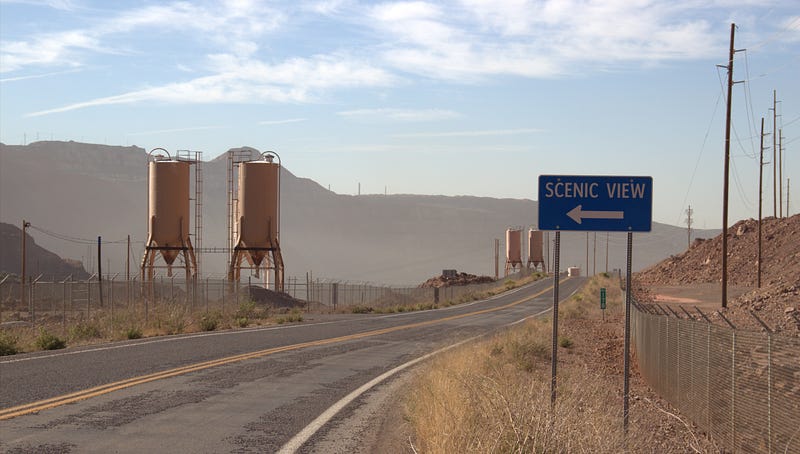
Looking through my old photos of signage from around the world, I noticed a theme among the most memorable shots: signs that — accidentally or by design — play with our expectations.
A “lying sign” may be one that was altered or one that no longer delivers an accurate or intended message because the conditions around it have changed.
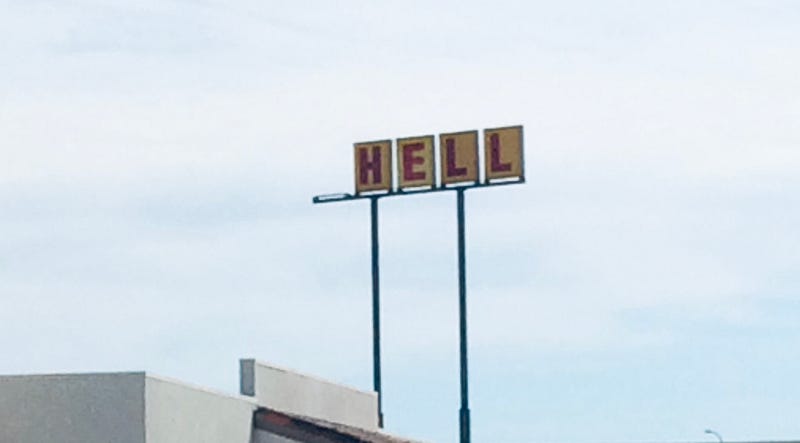
For example, when this abandoned Shell gas station in California lost its S, a darkly comic message was left behind.
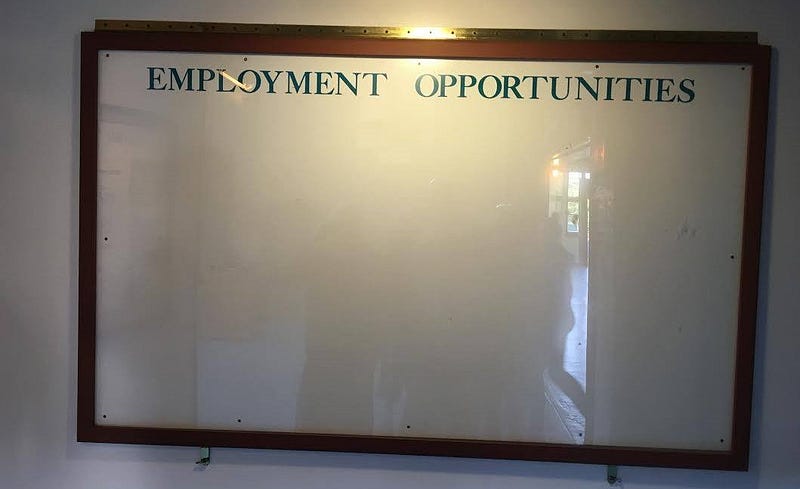
Similarly, this sign struck me as sadly humorous: a job board with absolutely nothing posted on it.
Sometimes, a sign is funny or profound by accident. Or, signage can be an art form that deliberately makes passersby stop, take notice, and contemplate.
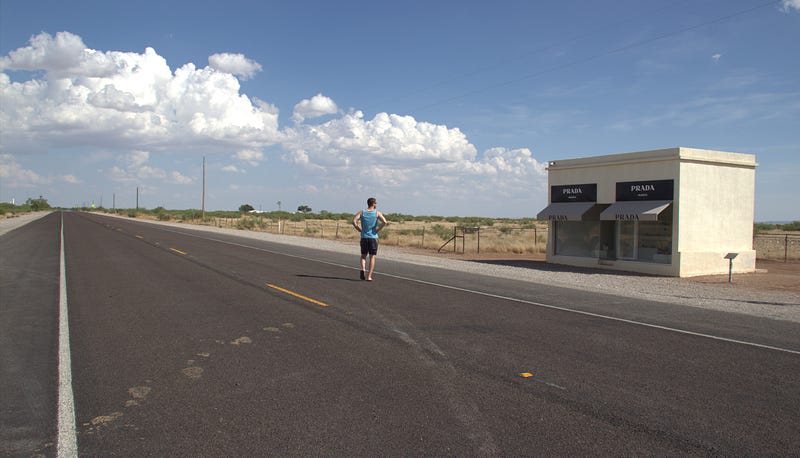
For example, if you saw signs for a Prada store, what images would come to mind? Leather handbags, wealth, Italian fashion?
You probably don’t associate Prada with this sort of setting:
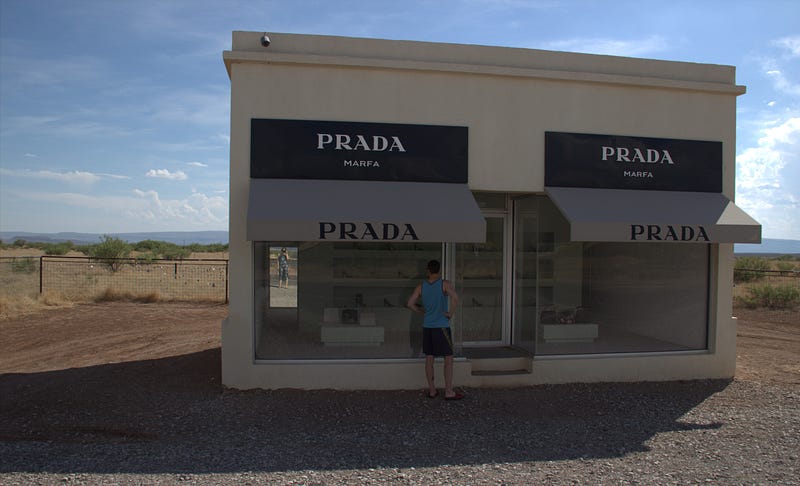
In 2005, the artist duo Elmgreen & Dragset created the permanent installation Prada Marfa (Marfa is a nearby town) in the Texas desert. The exhibit plays with a viewer’s notions about where we do and don’t expect fancy things to exist.
The “lying” storefront signage indicates a luxury shopping opportunity. But, there’s no one inside. The doors are always locked. Here in the middle of nowhere, you won’t be buying an Italian leather handbag.
I came upon the Prada Marfa exhibit a few years ago during a cross-country road trip. The flat emptiness of the Texas desert helps the strange structure stick out like a sore thumb.
You find yourself peering through the windows…looking around… strolling aimlessly… then discussing the meaning of what you just saw with your travel companion as you resume your journey through the desert.
Earlier on during that same road trip, we encountered one of the strangest, most memorable signs I’ve ever seen.
We had just spent the night camping in Arizona’s Apache National Forest. The surroundings were breathtaking and there didn’t seem to be another human being within hundreds of miles of us.
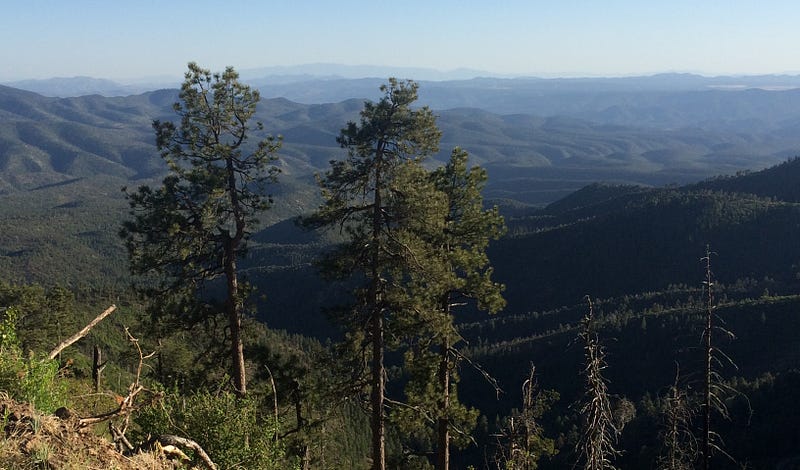
Driving through the forest the next morning, we basked in the afterglow that comes from a night spent in a beautiful campsite.
Then, the forest ended suddenly, as if it had been mechanically severed — which was, more or less, the case.
The edge of the forest borders the Morenci Copper Mine. This was my first direct look at a major active mine, and I was horrified.
The Morenci Copper Mine is one of the world’s largest open pit mines and has been operated continuously since 1872. In 2022, the mine produced an unfathomable 900 million pounds of copper.
On the border of the forest and the mine, we could look to our left to see the beautiful natural landscape that was meant to be. Then, we could look to the right for a glimpse of the brutal cost of modern consumerism.
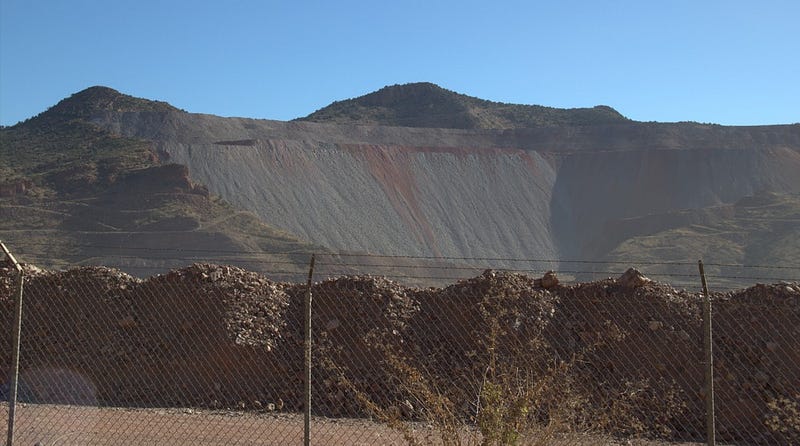
Across from the stripped-bare mountainside, the alien-like mining apparatuses, and the barbed-wire fence, there was a sign that read:
SCENIC VIEW
We assumed that the sign was installed during a time when it pointed toward magnificent green mountains — not the gray hellscape that we beheld.
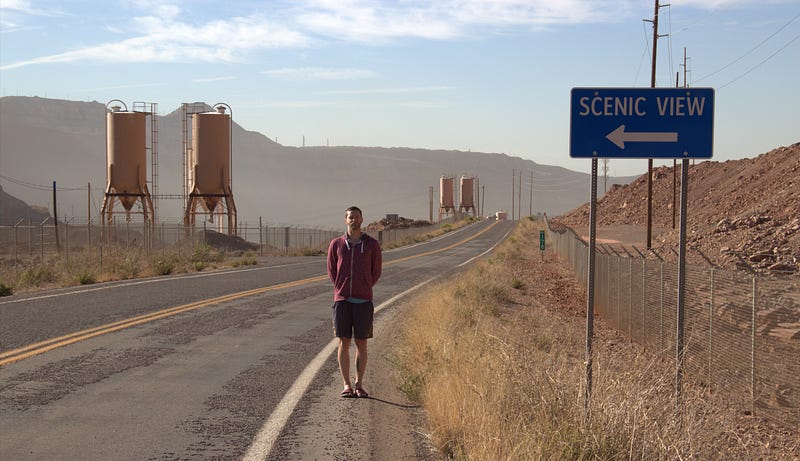
The sign was a remnant of a beautiful past. Its lingering presence created a bizarre, surreal piece of scenery.
We were captivated by the imagery and couldn’t stop taking photos. Something about the combination of the hideous landscape, the use of somber body language, and the lying “scenic view” marker created images that were equal parts silly, poignant, and tragic.
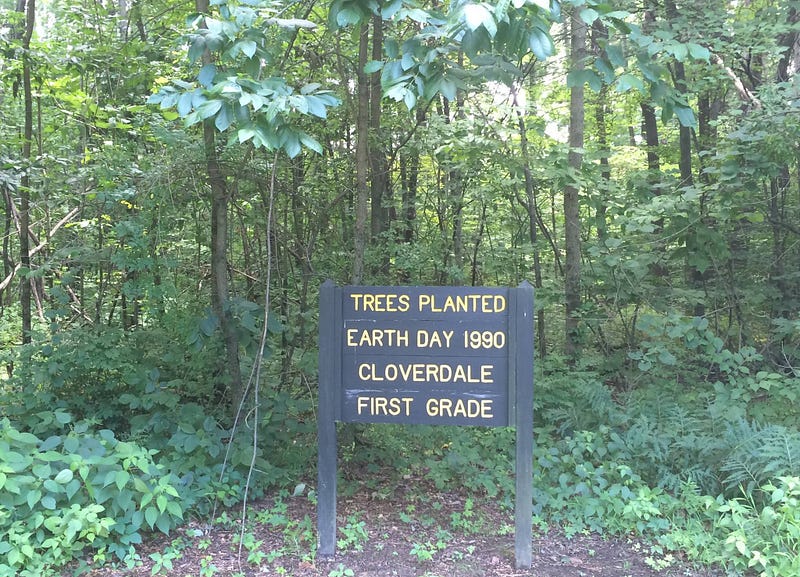
While the “scenic view” sign pointed to trees that no longer existed, I’ll end with a photo that tells the opposite story. This sign I encountered in Indiana shows a triumphant result from a community service project.
I hope the former Cloverdale first-graders are proud of their work.
From Jillian Amatt - Artistic Voyages and Brad Yonaka, here are two more Globetrotters pieces on the monthly theme (signs) that I enjoyed:


