
When should you use cold or heat exposure in your exercise routine?
It depends on the type of exercise and when you do your exposure
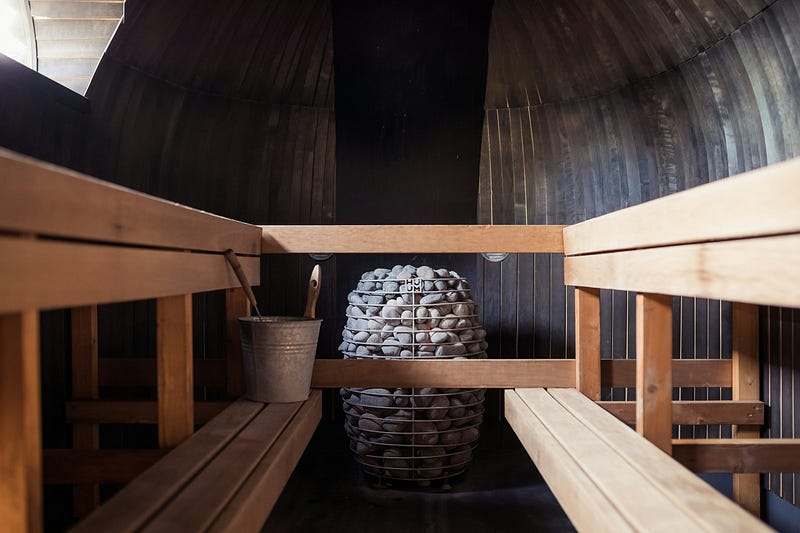
Cold plunges and saunas.
Both have become pretty popular on social media in the healthcare space.
And it’s with good reason too, both cold and heat exposure have been shown to have certain health benefits.
Knowing this, you might want to add one or both to your daily routine, or you may be doing it already. But are you aware of the effects that they can have on your training?
Depending on when you add heat or cold exposure relative to your exercise session, it could be helpful or you could be wasting your time.
There are two things you need to consider if you want to add some form of heat or cold exposure to your routine:
- What are your training goals? (ex: strength, hypertrophy, endurance, etc.)
- What are you trying to maximize, adaptation or recovery?
If you’re training for hypertrophy or strength
You should avoid cold after training, especially in the case of hypertrophy.
The cold will blunt the hypertrophy signal in your cells, and you’ll have essentially wasted that training session.
It’s unclear if cold showers are enough to have an interference effect (they aren’t researched enough), but if you’re really looking to maximize your results it would be better to completely avoid the cold after training.
In the case of strength, the effect doesn’t seem to be as strong, but it’s probably better to avoid the cold immediately after your training session if possible.
Ideally, you should leave your cold exposure for a different day.
The best option would be to do it on a recovery day, because cold immersion is beneficial for recovery. If you can’t do it on a different day than your training, then try to do it as far away from the training session as possible (at least 4h later). It would be even better if you can do it before your training session.
When it comes to heat, there isn’t musch evidence of it helping directly with hypertrophy.
But, there is research showing that heat exposure can increase growth hormone. And since growth hormone will help increase muscle protein synthesis (the process by which you create more muscle), increasing growth hormone will help increase muscle mass.
So adding some heat exposure after your hypertrophy training session will help improve your gains.
If you’re aiming to maximize recovery
Cold is your friend.
Evidence shows that cold water immersion is effective at reducing muscle soreness. It will also reduce inflammation.
And the quicker you can reduce your soreness and inflammation, the quicker you’ll be ready for more action.
The point of maximizing recovery is to be ready to perform again as soon as possible. It might be because you just finished a game and you have another one coming up shortly. It might be because you’ve been overreaching and you’re at risk of putting yourself out of action for several days. In cases like these, you really don’t care about losing some of the gains you would have made, because you’re optimizing for long-term performance, not short-term.
Once again, cold showers probably aren’t enough to have a significant effect. You need to get the full body immersion to achieve the benefits you’re looking for.
There’s some research that shows heat can help with post-exercise recovery. But the paper also highlights that most of the research was done in animal models and human research is still limited.
There may be some benefits here, but there isn’t enough proof yet.
Personally, I like to use heat when I’m feeling sore or fatigued. I find it helps me feel more relaxed and I feel more recovered the next day.
And since it doesn’t seem to interfere with training effects, I don’t mind using it even with limited research.
If you want to maximize adaptation
You generally want to stay away from the cold.
Like I mentioned above, cold is detrimental for hypertrophy and strength because it blunts your adaptation signals. And when you’re maximizing adaptation, it doesn’t matter if you’re not feeling great immediately after your training session. Your goal here is to let your body fully experience the stimulus of training so it can respond and adapt.
The only exception here is if you’re training for endurance. There’s some evidence that cold water may have benefits after endurance training. However, the research is limited and there’s still more work to be done in this space.
Adding heat exposure after training is a good idea to help enhance adaptation.
Some studies have shown that using heat leads to increased muscle strength and cross-sectional area (muscle size). And like I said earlier, heat can boost hypertrophy as well because of its effects on growth hormone.
In summary
- You should use cold exposure if you want to recover as quickly as possible or if you aren’t worried about blunting your adaptations from training.
- If you just finished a strength or hypertrophy training session, don’t do any cold exposure. Heat can be helpful.
- If you just finished an endurance session, you should be ok doing cold exposure.
- We don’t know if heat helps with recovery, but I use it from time to time.
Want to reduce your stress and live a healthier life? Subscribe to my newsletter to receive weekly tips to better manage your time and your health.


